
Levels Of Organization The levels of organization from
- Slides: 10
Levels Of Organization
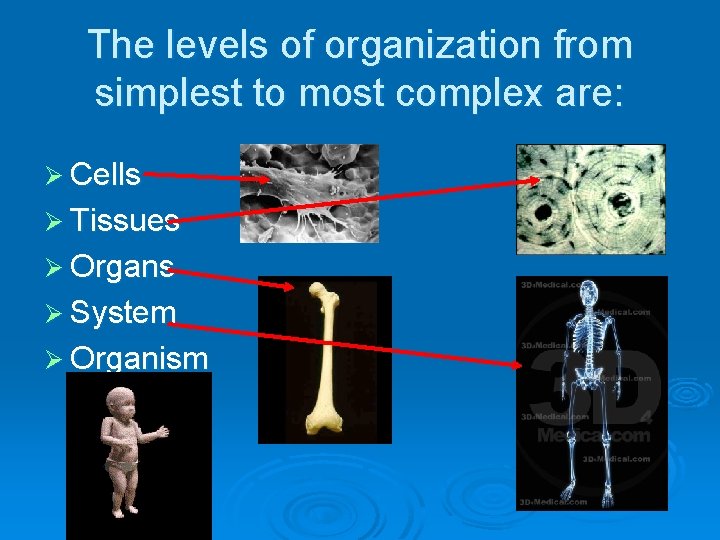
The levels of organization from simplest to most complex are: Ø Cells Ø Tissues Ø Organs Ø System Ø Organism
Cells Ø The basic unit of structure and function in the human body Ø Though all cells perform the processes that keep humans alive, they also have specialized functions as well. Ø Examples may be nerve cells (neurons), blood cells, and bone cells.
Tissues A group of specialized cells that work together to perform the same function. Ø There are four basic types of tissue in the human body: Ø
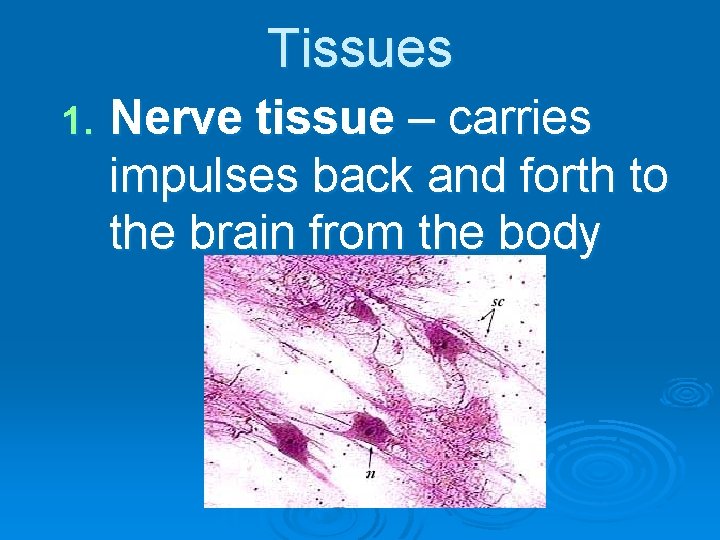
Tissues 1. Nerve tissue – carries impulses back and forth to the brain from the body
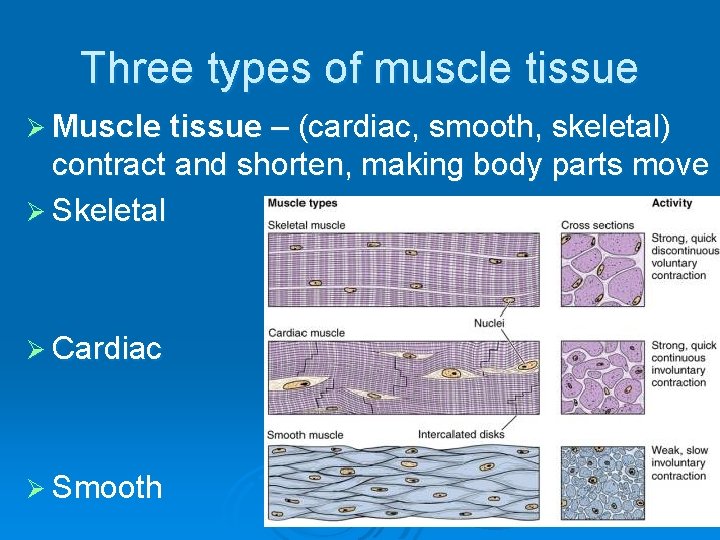
Three types of muscle tissue Ø Muscle tissue – (cardiac, smooth, skeletal) contract and shorten, making body parts move Ø Skeletal Ø Cardiac Ø Smooth
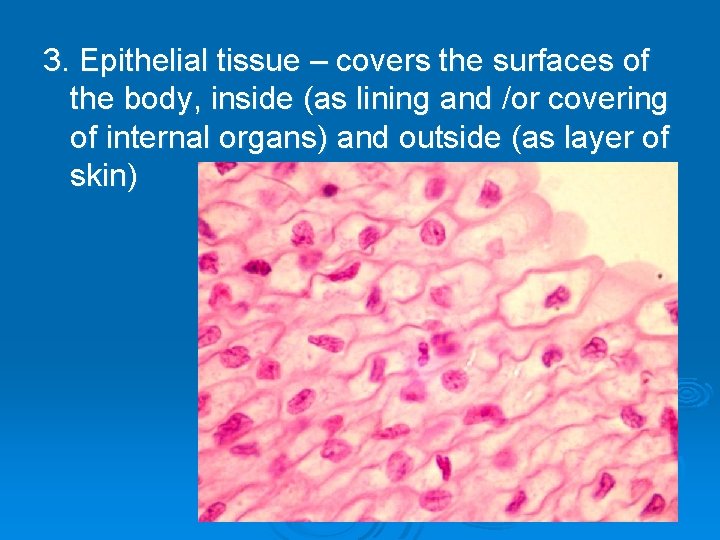
3. Epithelial tissue – covers the surfaces of the body, inside (as lining and /or covering of internal organs) and outside (as layer of skin)
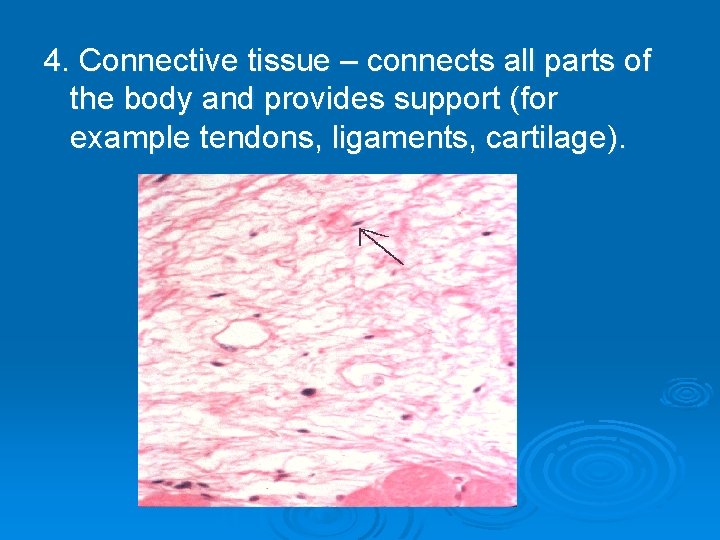
4. Connective tissue – connects all parts of the body and provides support (for example tendons, ligaments, cartilage).
Organs Ø A group of two or more different types of tissue that work together to perform a specific function. Ø The task is generally more complex than that of the tissue. Ø For example, the heart is made of muscle and connective tissues which functions to pump blood throughout the body.
Systems Ø A group of two or more organs that work together to perform a specific function. Ø Each organ system has its own function but the systems work together and depend on one another. Ø There are eleven different organ systems in the human body: circulatory, digestive, endocrine, excretory (urinary), immune, integumentary, muscular, nervous, reproductive, respiratory, and skeletal.