
Levels of Organization How do unicellular and multicellular
- Slides: 21
Levels of Organization • How do unicellular and multicellular organisms differ? • How does cell differentiation lead to the organization within a multicellular organism?
Unicellular Organisms Unicellular organisms carry out all characteristics of life within one cell. • A unicellular organism made of one prokaryotic cell is called a prokaryote. • A unicellular organism made of one eukaryotic cell is called a eukaryote.
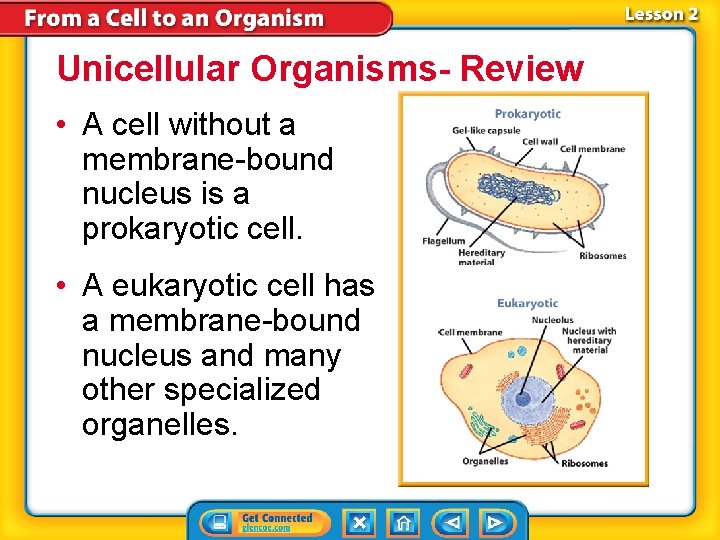
Unicellular Organisms- Review • A cell without a membrane-bound nucleus is a prokaryotic cell. • A eukaryotic cell has a membrane-bound nucleus and many other specialized organelles.
Multicellular Organisms Multicellular organisms are made of many types of eukaryotic cells working together, each with a specialized function. How do unicellular and multicellular organisms differ?
Multicellular Organisms (cont. ) • All cells in a multicellular organism come from preexisting cells – Mitosis – Meiosis • Cell differentiation- the process by which cells become different types of cells
Multicellular Organisms (cont. ) Stem cells are unspecialized animal cells that are able to develop into many different cell types. Ex: • Muscle cells • Blood cells • Nerve cells
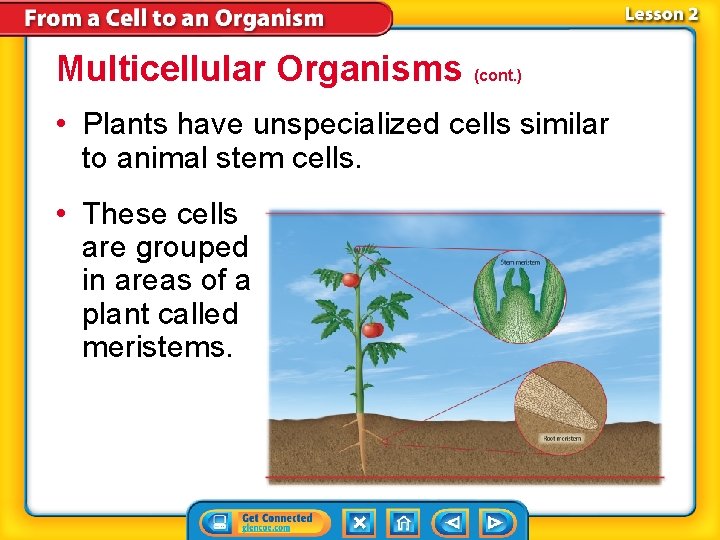
Multicellular Organisms (cont. ) • Plants have unspecialized cells similar to animal stem cells. • These cells are grouped in areas of a plant called meristems.
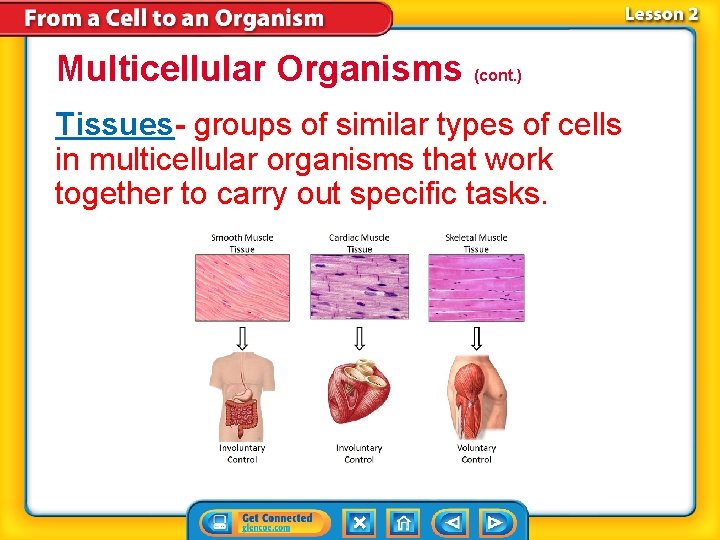
Multicellular Organisms (cont. ) Tissues- groups of similar types of cells in multicellular organisms that work together to carry out specific tasks.
Multicellular Organisms (cont. ) • Humans, like most other animals, have four main types of tissue: muscle, connective, nervous, and epithelial. • The three main types of plant tissue are dermal, vascular, and ground tissue.
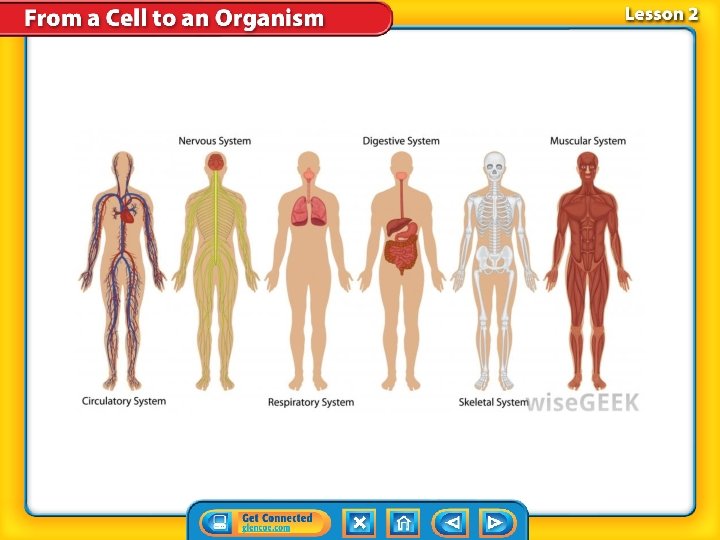
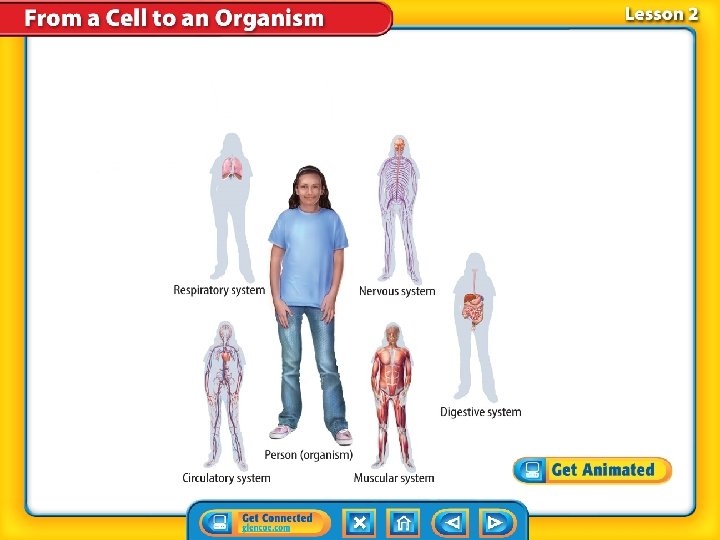
Multicellular Organisms (cont. ) • Organs- groups of different tissues working together to perform a particular job. • Organ systems- groups of different organs that work together to complete a series of tasks.
Multicellular Organisms (cont. ) Multicellular organisms usually have many organ systems that work together to carry out all the jobs needed for the survival of the organism. How does cell differentiation lead to the organization within a multicellular organism?
Levels of Organization • Atoms • Molecules • Cells • Tissue • Organs • Organ Systems • Organisms
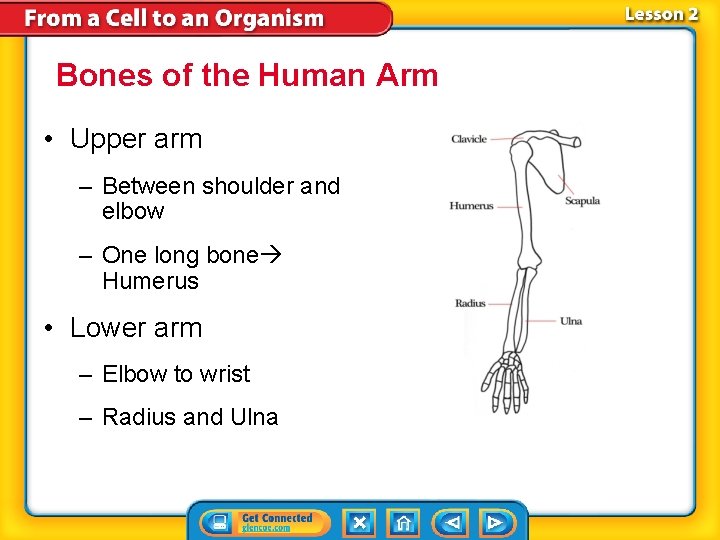
Bones of the Human Arm • Upper arm – Between shoulder and elbow – One long bone Humerus • Lower arm – Elbow to wrist – Radius and Ulna
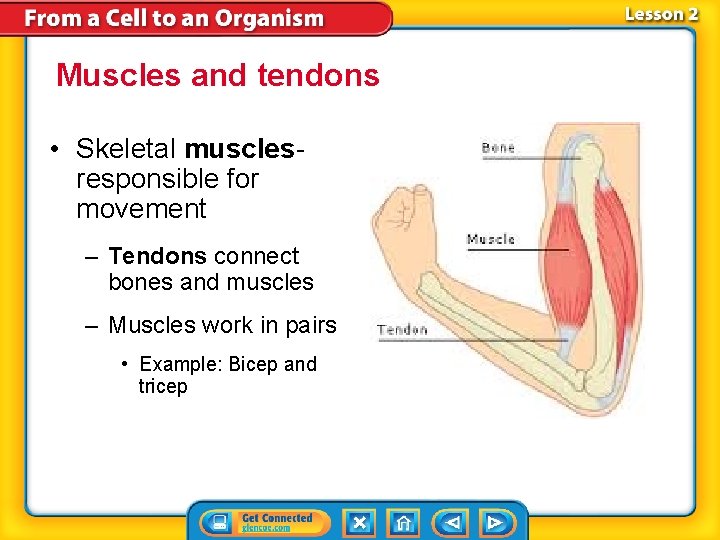
Muscles and tendons • Skeletal musclesresponsible for movement – Tendons connect bones and muscles – Muscles work in pairs • Example: Bicep and tricep
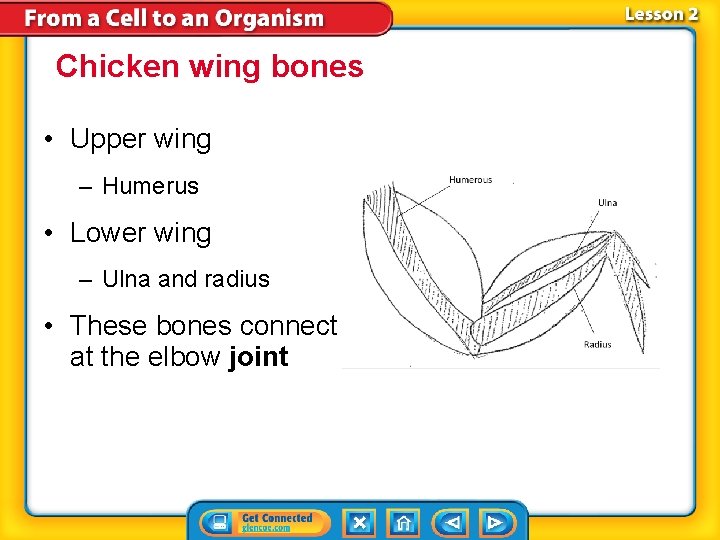
Chicken wing bones • Upper wing – Humerus • Lower wing – Ulna and radius • These bones connect at the elbow joint
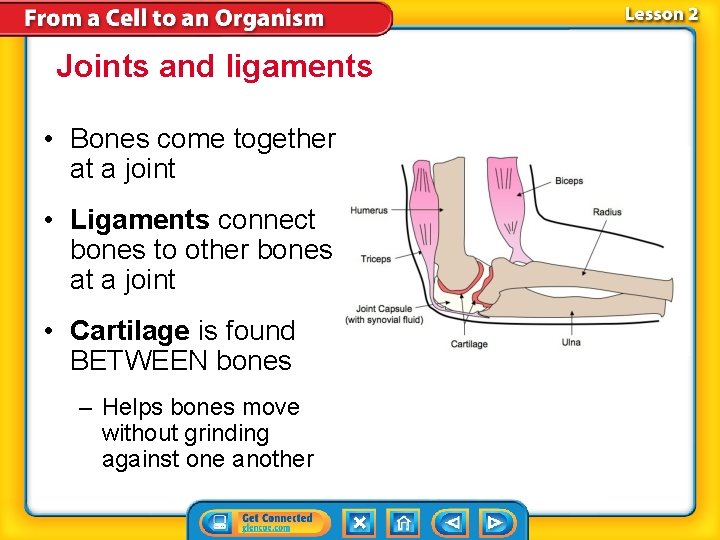
Joints and ligaments • Bones come together at a joint • Ligaments connect bones to other bones at a joint • Cartilage is found BETWEEN bones – Helps bones move without grinding against one another
What you should look for… • Bones • Skin • Fat- yellowish tissue clumped together • Muscle- bundles of pale pink tissue • Tendons- shiny white tissue at the end of muscles that connect to bones • Ligaments- shiny white covering of the joint surfaces
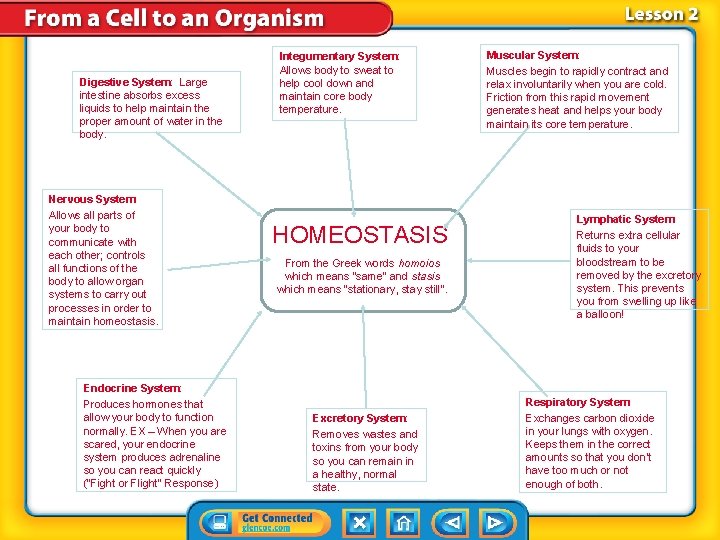
Digestive System: Large intestine absorbs excess liquids to help maintain the proper amount of water in the body. Nervous System: Allows all parts of your body to communicate with each other; controls all functions of the body to allow organ systems to carry out processes in order to maintain homeostasis. Endocrine System: Produces hormones that allow your body to function normally. EX – When you are scared, your endocrine system produces adrenaline so you can react quickly (“Fight or Flight” Response) Integumentary System: Allows body to sweat to help cool down and maintain core body temperature. HOMEOSTASIS From the Greek words homoios which means “same” and stasis which means “stationary, stay still”. Excretory System: Removes wastes and toxins from your body so you can remain in a healthy, normal state. Muscular System: Muscles begin to rapidly contract and relax involuntarily when you are cold. Friction from this rapid movement generates heat and helps your body maintain its core temperature. Lymphatic System: Returns extra cellular fluids to your bloodstream to be removed by the excretory system. This prevents you from swelling up like a balloon! Respiratory System: Exchanges carbon dioxide in your lungs with oxygen. Keeps them in the correct amounts so that you don’t have too much or not enough of both.