
LEVELS OF ORGANIZATION ATOMS smallest units that possess
- Slides: 26
LEVELS OF ORGANIZATION
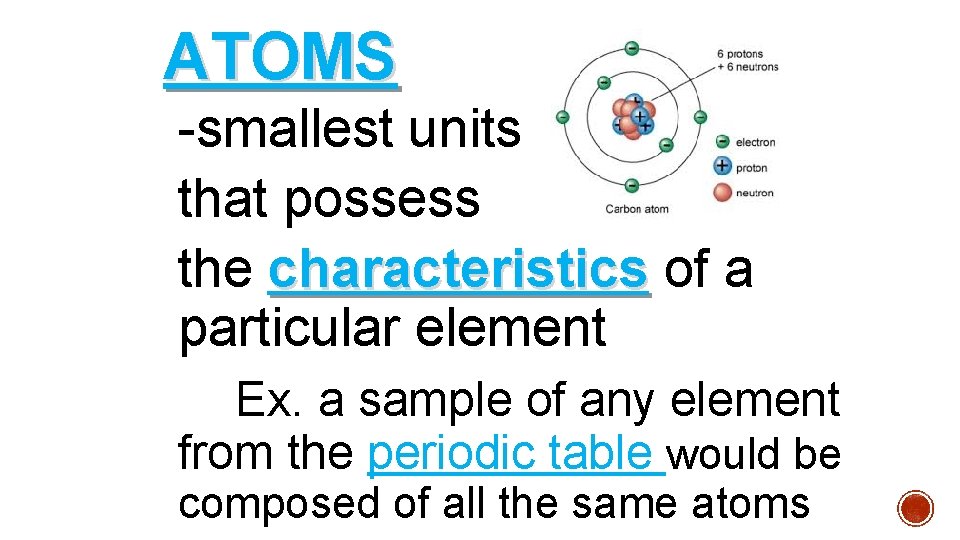
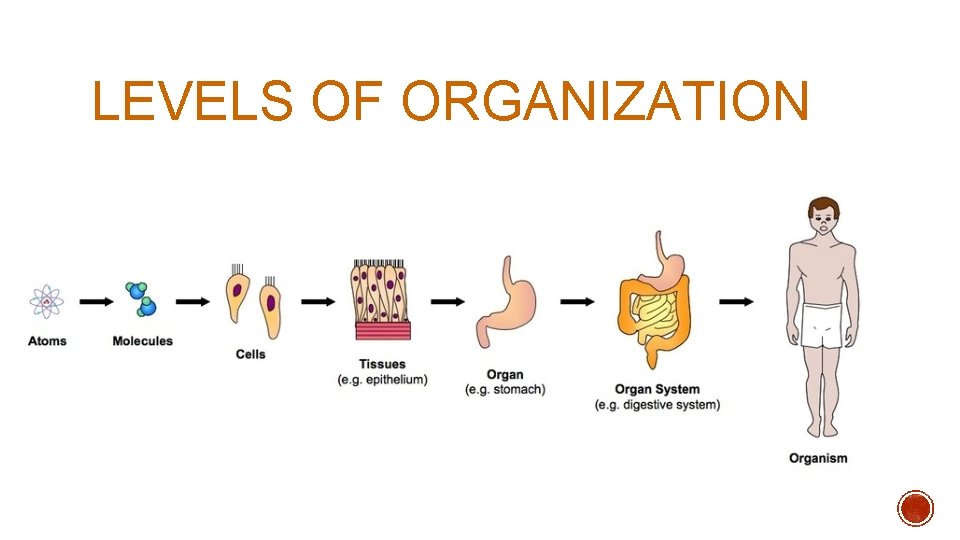
ATOMS -smallest units that possess the characteristics of a particular element Ex. a sample of any element from the periodic table would be composed of all the same atoms
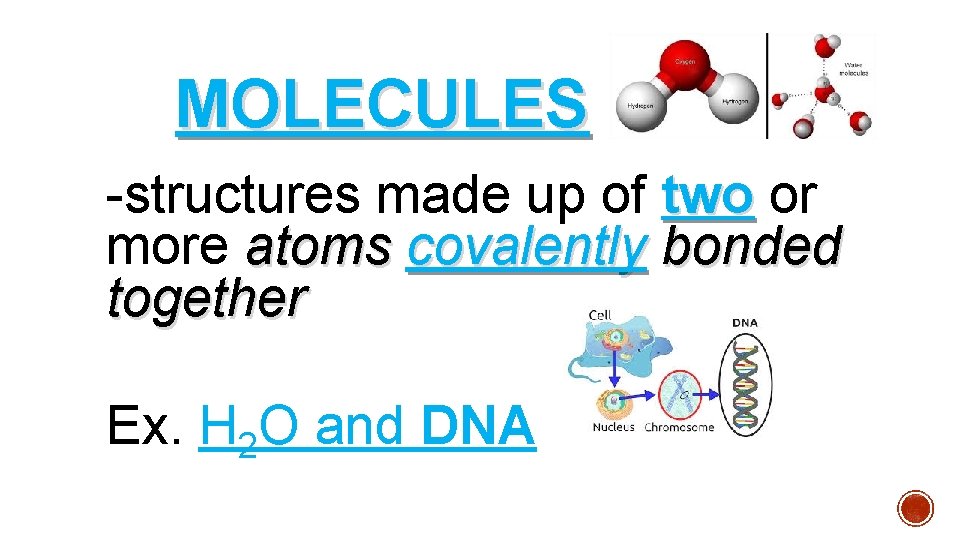
MOLECULES -structures made up of two or more atoms covalently bonded together Ex. H 2 O and DNA
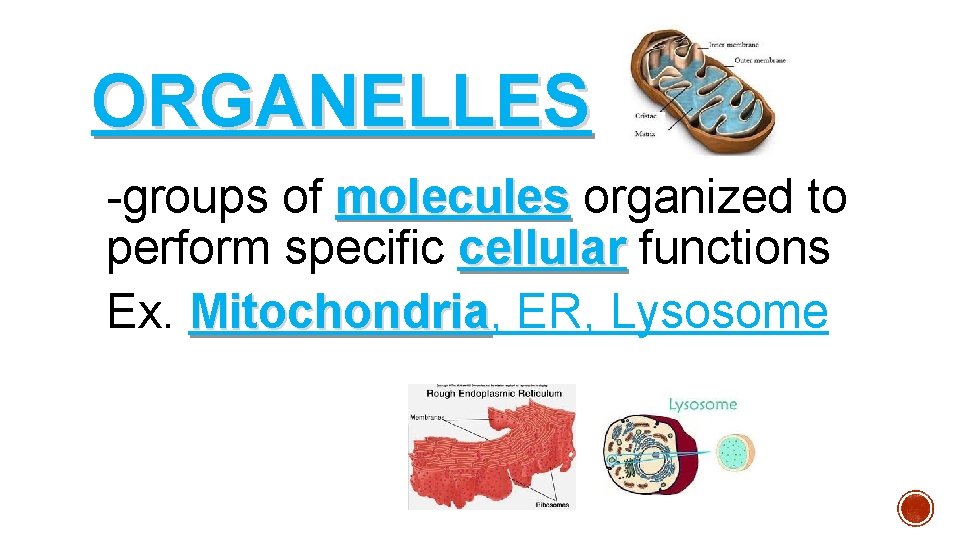
ORGANELLES -groups of molecules organized to perform specific cellular functions Ex. Mitochondria, Mitochondria ER, Lysosome
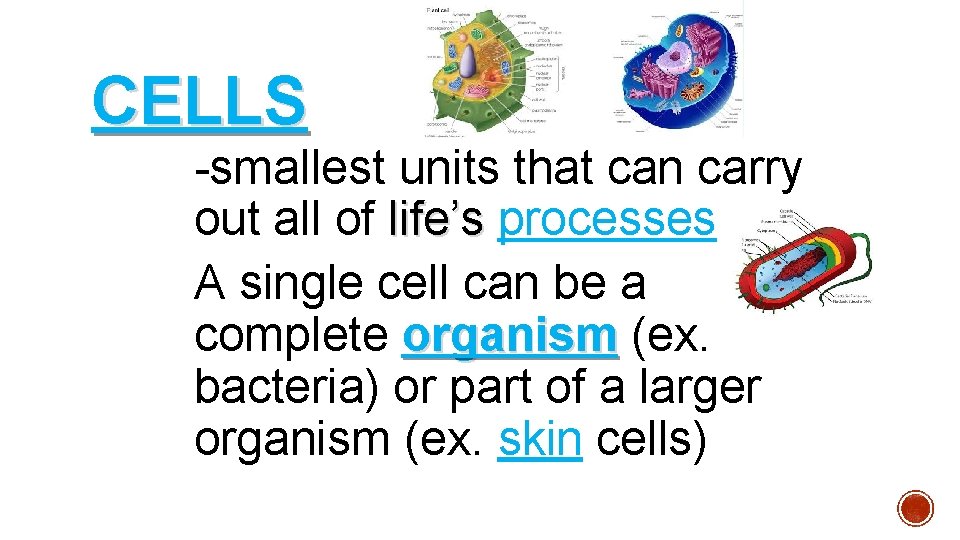
CELLS -smallest units that can carry out all of life’s processes A single cell can be a complete organism (ex. bacteria) or part of a larger organism (ex. skin cells)
DIFFERENTIATION IN CELLS Eukaryotic cells are tiny systems with organelles that allow them to carry out life processes.
DIFFERENTIATION Individual cells of a multicellular organism do not have to carry out every life function; instead, different cells perform different jobs. These cells are differentiated, or specialized to a particular function.
Structure impacts function STRUCTURE FUNCTION
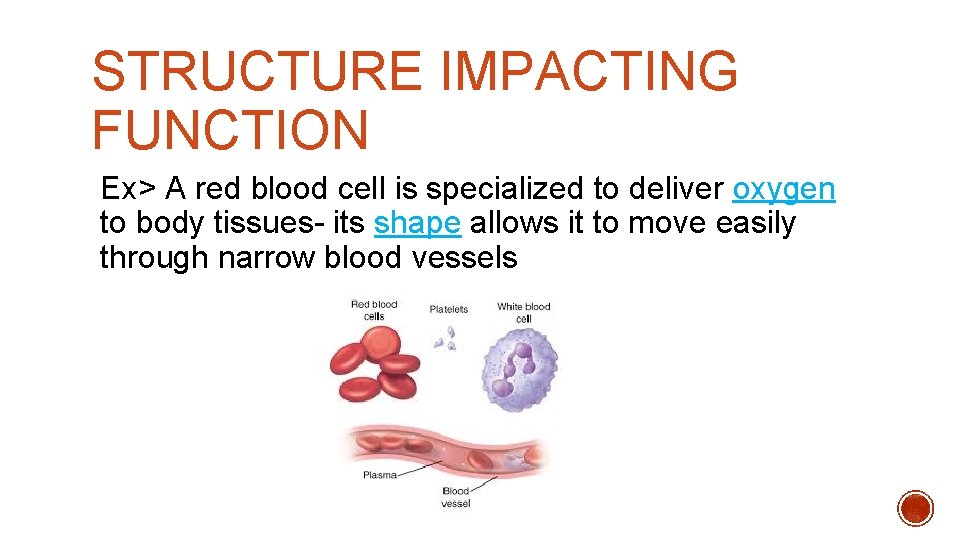
STRUCTURE IMPACTING FUNCTION Ex> A red blood cell is specialized to deliver oxygen to body tissues- its shape allows it to move easily through narrow blood vessels
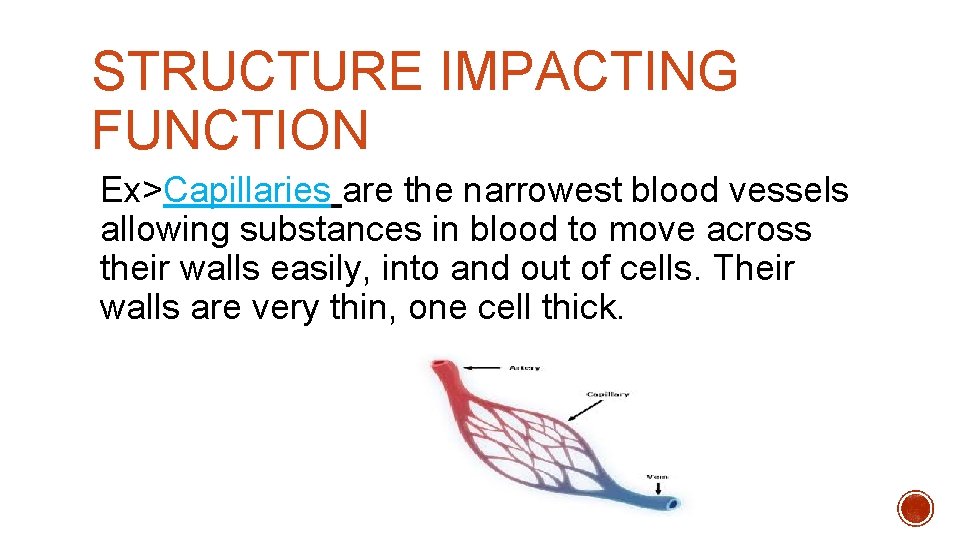
STRUCTURE IMPACTING FUNCTION Ex>Capillaries are the narrowest blood vessels allowing substances in blood to move across their walls easily, into and out of cells. Their walls are very thin, one cell thick.
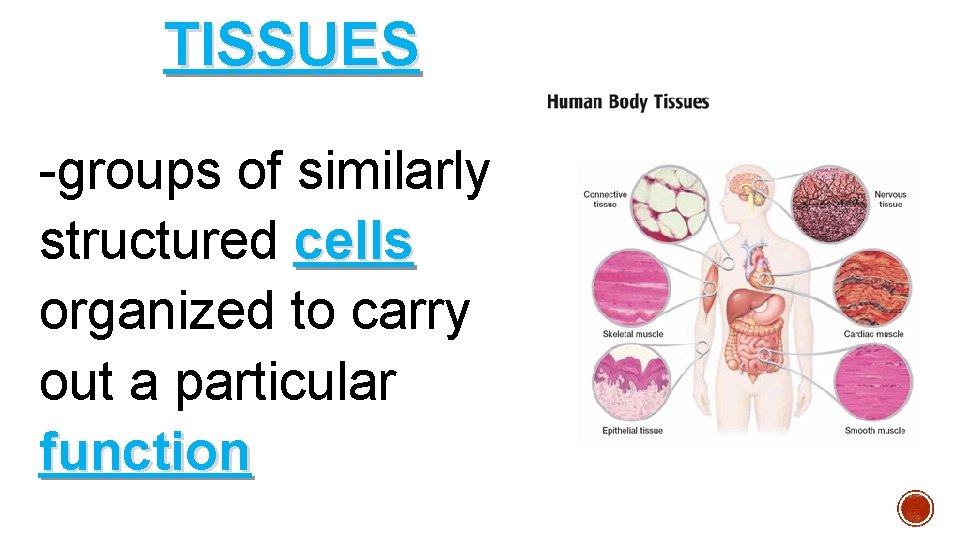
TISSUES -groups of similarly structured cells organized to carry out a particular function
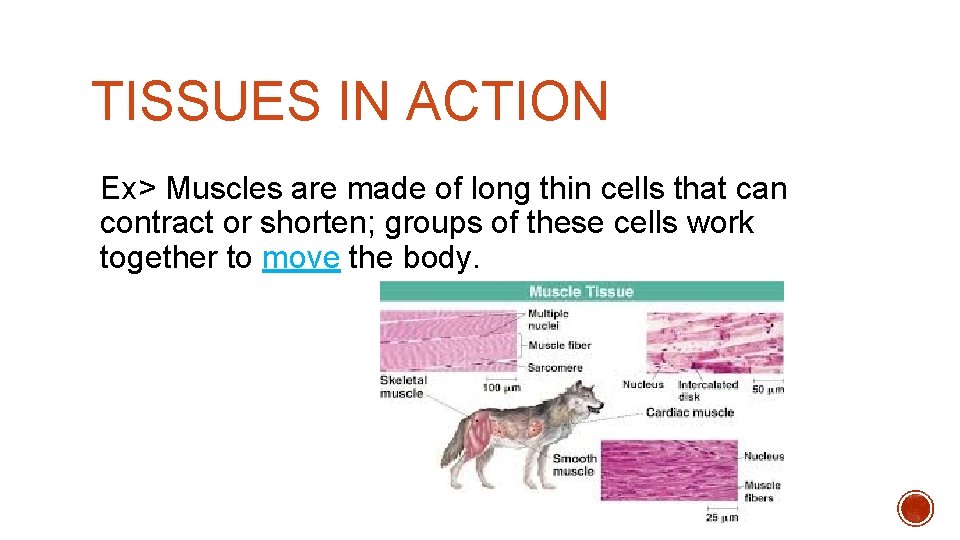
TISSUES IN ACTION Ex> Muscles are made of long thin cells that can contract or shorten; groups of these cells work together to move the body.
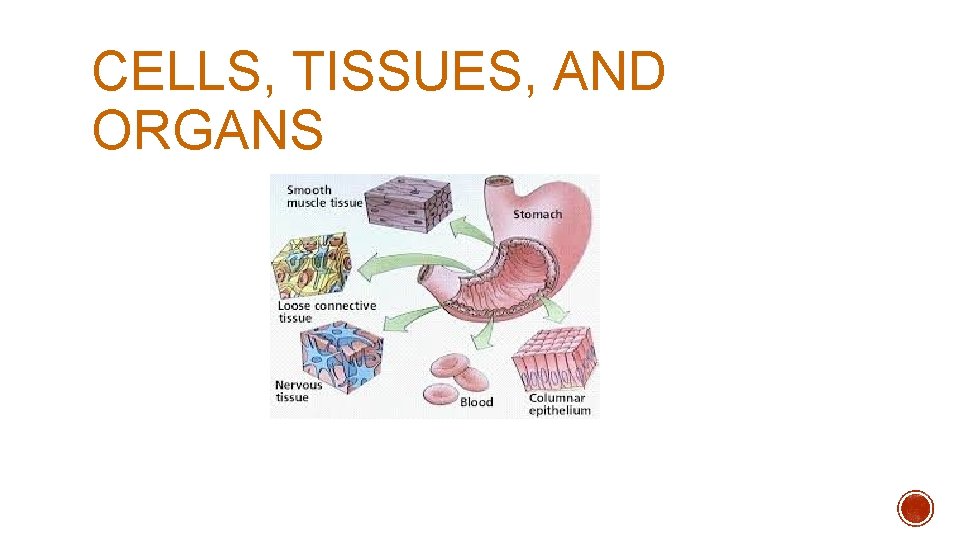
ORGANS -groups of tissues organized to carry out a particular function; each type of tissue performs an essential task to help the organ function Ex. Heart made up of muscle tissue, blood tissue, & nerve tissue
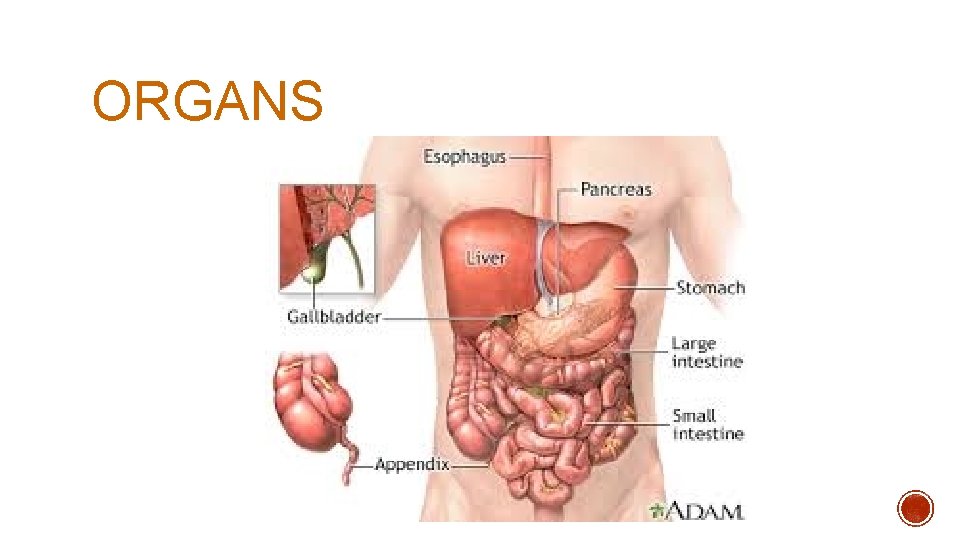
ORGANS
CELLS, TISSUES, AND ORGANS
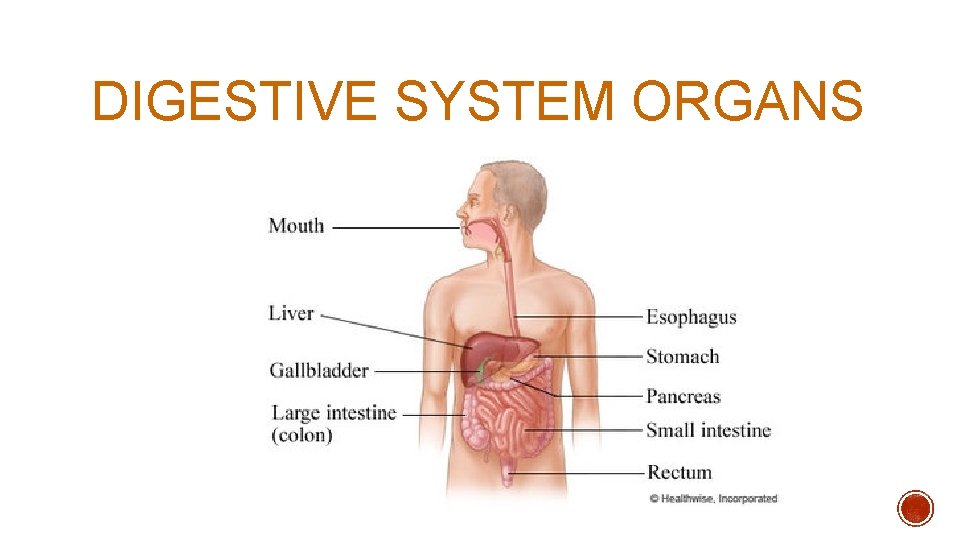
ORGAN SYSTEMS -groups of organs designed to carry out a particular task Ex. Digestive system
DIGESTIVE SYSTEM ORGANS
ORGAN SYSTEMS Organ systems function to meet the needs of cells throughout the body; although cells are specialized, they cannot carry out all life functions on their own; they rely on the body’s systems to meet some of their needs, such as: Exchanging materials with the environment Transporting materials to and from cells Allowing movement Storing nutrients for later use Responding to stimuli In a unicellular organism, a single cell would carry out all of these functions.
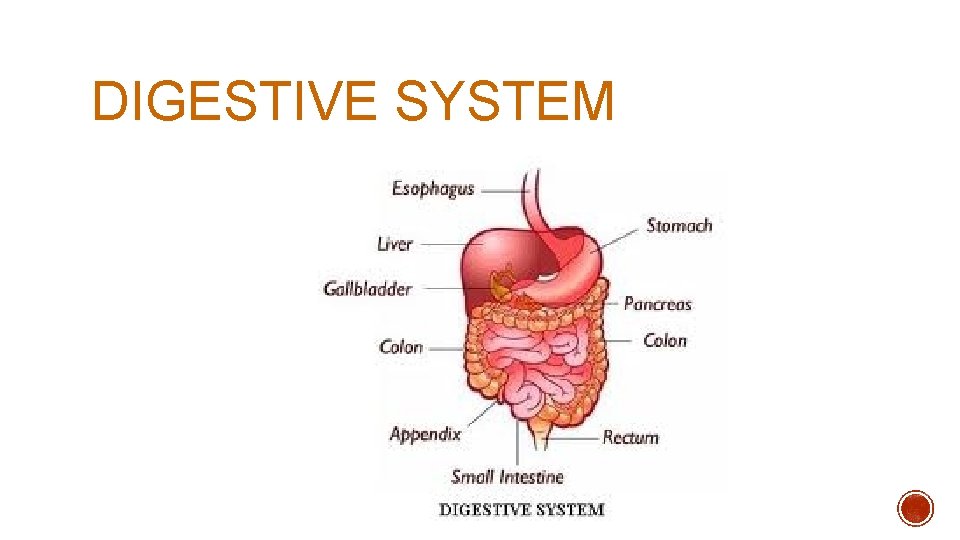
DIGESTIVE SYSTEM IN ACTION The digestive system includes the mouth, esophagus, stomach, intestines, gallbladder, liver, and pancreas; these organs all work together to break down food into small molecules. After food is digested, blood vessels in the intestines absorb useful molecules that are transported to cells everywhere in the body to be used for energy and as raw materials to repair and build new cells.
DIGESTIVE SYSTEM
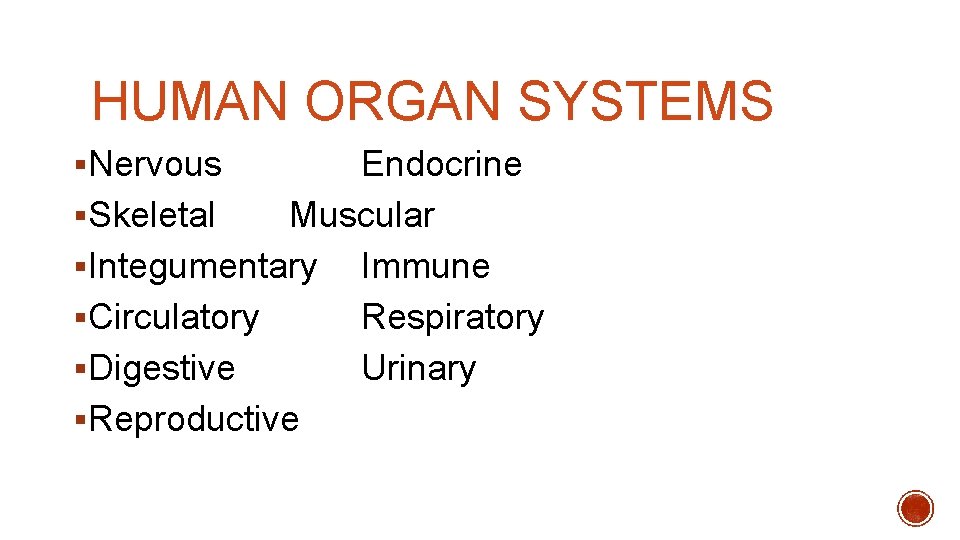
HUMAN ORGAN SYSTEMS §Nervous Endocrine §Skeletal Muscular §Integumentary Immune §Circulatory Respiratory §Digestive Urinary §Reproductive
INTERRELATED ORGAN SYSTEMS Organ systems can have a single function or share multiple functions with other systems. Ex> the respiratory system brings oxygen to the body and removes carbon dioxide produced by cells; in the alveoli, oxygen moves into capillaries as carbon dioxide moves from capillaries into the alveoli and is exhaled; this process is called gas exchange
INTERRELATED ORGAN SYSTEMS While capillaries have a role in the respiratory system, they are part of the circulatory system, including the heart, blood, arteries and veins. The circulatory system transports oxygen, nutrients, carbon dioxide, and metabolic wastes throughout the body.
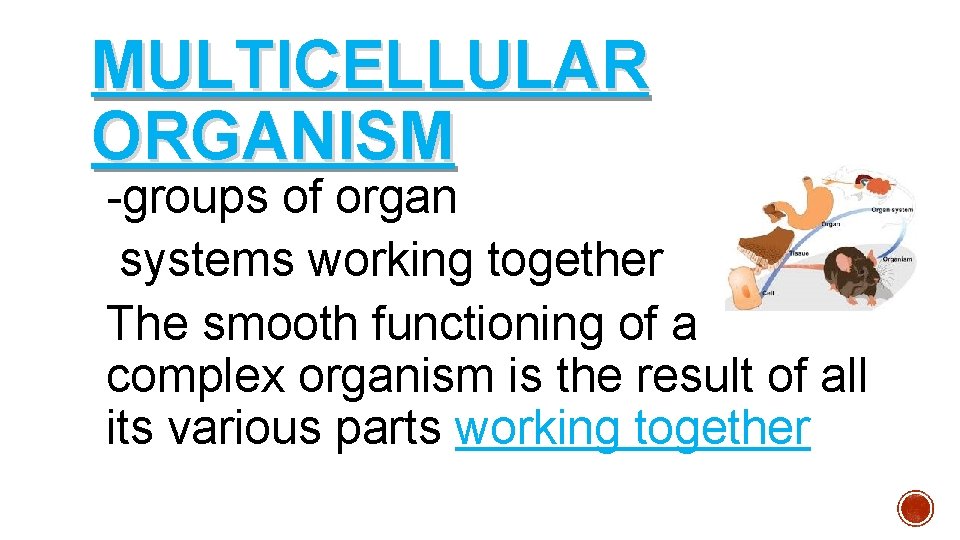
MULTICELLULAR ORGANISM -groups of organ systems working together The smooth functioning of a complex organism is the result of all its various parts working together
LEVELS OF ORGANIZATION
MAINTAINING HOMEOSTASIS Communication between cells is key in order for the cells to work together to maintain homeostasis and for survival of the organism. Some cells are in direct contact with each other and others use chemical signaling.