
Levels of Government Provincial and Municipal Three Levels
- Slides: 25
Levels of Government: Provincial and Municipal
Three Levels of Government • Federal • Provincial • Municipal
Provincial Governmnet
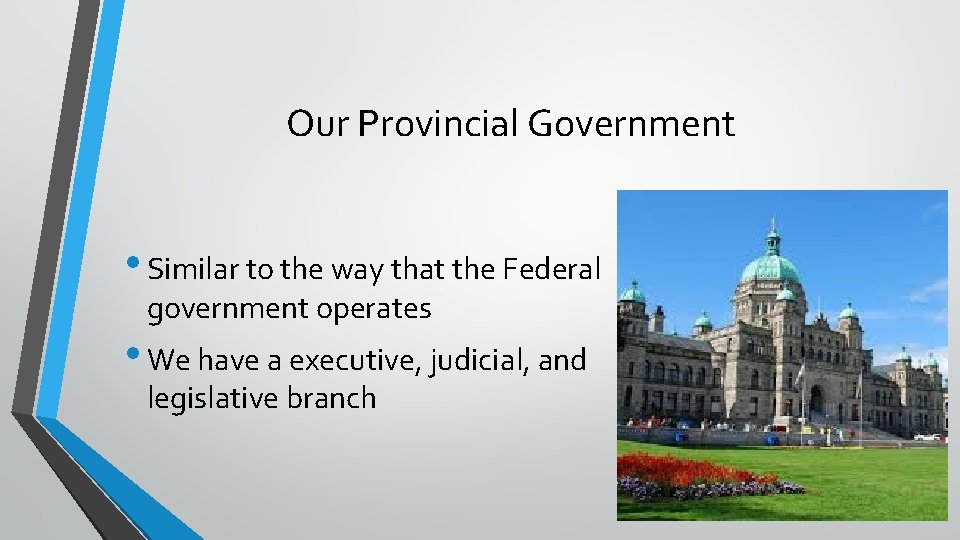
Our Provincial Government • Similar to the way that the Federal government operates • We have a executive, judicial, and legislative branch
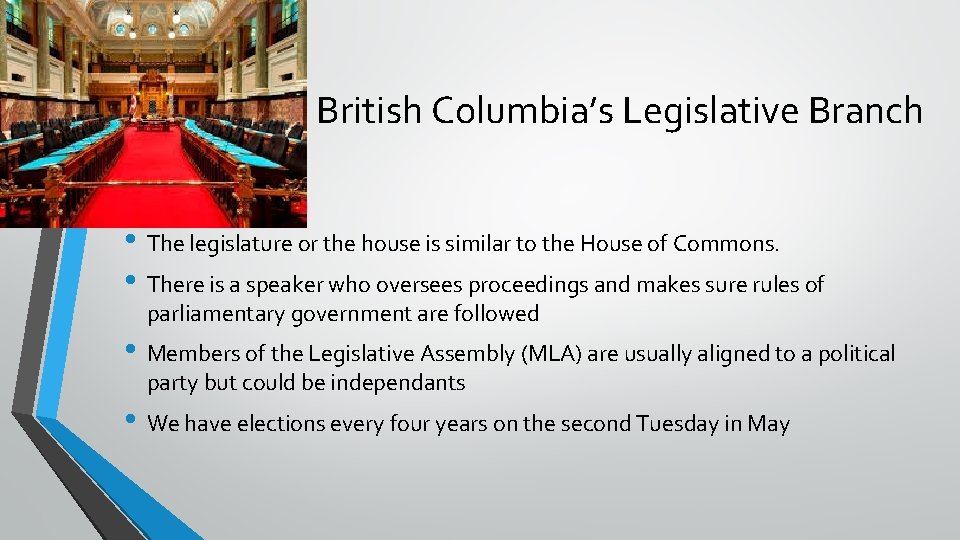
British Columbia’s Legislative Branch • The legislature or the house is similar to the House of Commons. • There is a speaker who oversees proceedings and makes sure rules of parliamentary government are followed • Members of the Legislative Assembly (MLA) are usually aligned to a political party but could be independants • We have elections every four years on the second Tuesday in May
Legislative Branch • Similar to in the House of Commons • The leader of the party with the most seats is called upon by the Lieutenant Governor to form the government • The party with the second most seats form the official opposition
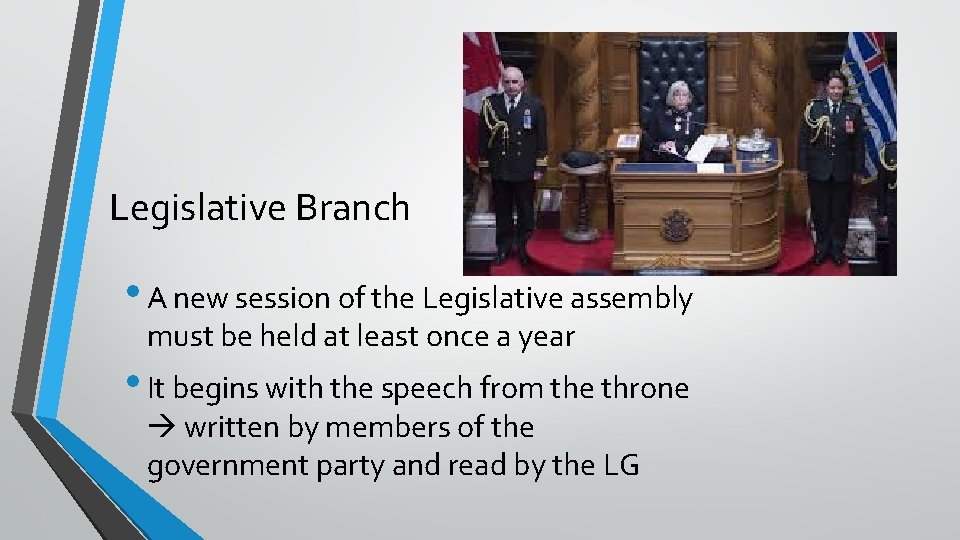
Legislative Branch • A new session of the Legislative assembly must be held at least once a year • It begins with the speech from the throne written by members of the government party and read by the LG
Legislative Branch: Passing Legislation (Bill to Law) • • • Bills are often suggested by a provincial ministry then after cabinet reviews the bill they choose one of three options 1. Adopt the proposal as a government policy – this would only affect the day to day internal government operations 2. Cabinet can pass an order in council – usually made a result of power granted in specific statutes, they have the force of law 3. The third option is to try and make a proposal law by introducing the bill into the legislature Bills go through the same states as in the House of commons – but there is no senate If the LG signs it it becomes a law
Legislative Branch • In a committee of the whole house the MLAs consider each section of the bill in aggressive detail, voting on each section separately • Changes are made and voted on during the third reading • FINALLY it is passed (if the LG signs)
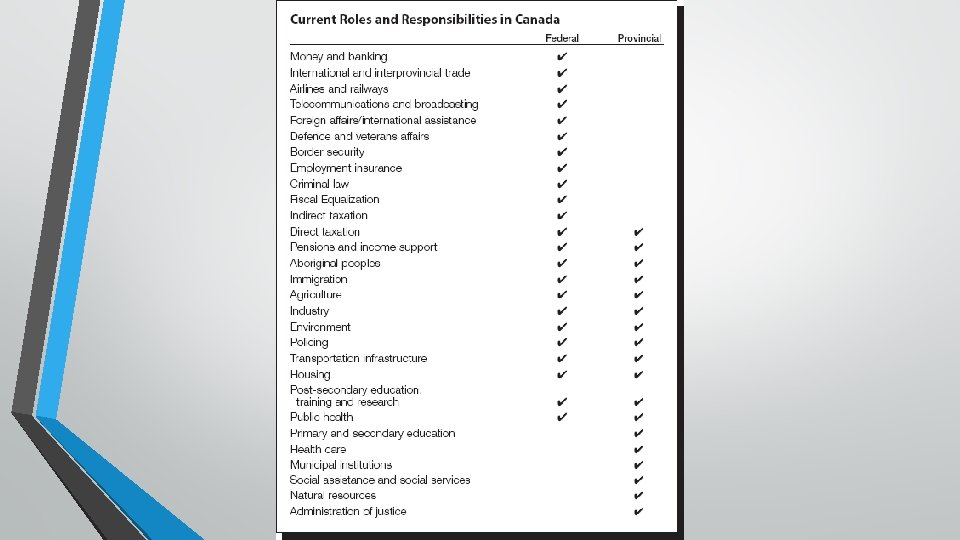
Powers • Because we live in a federal system there are federal powers and provincial powers
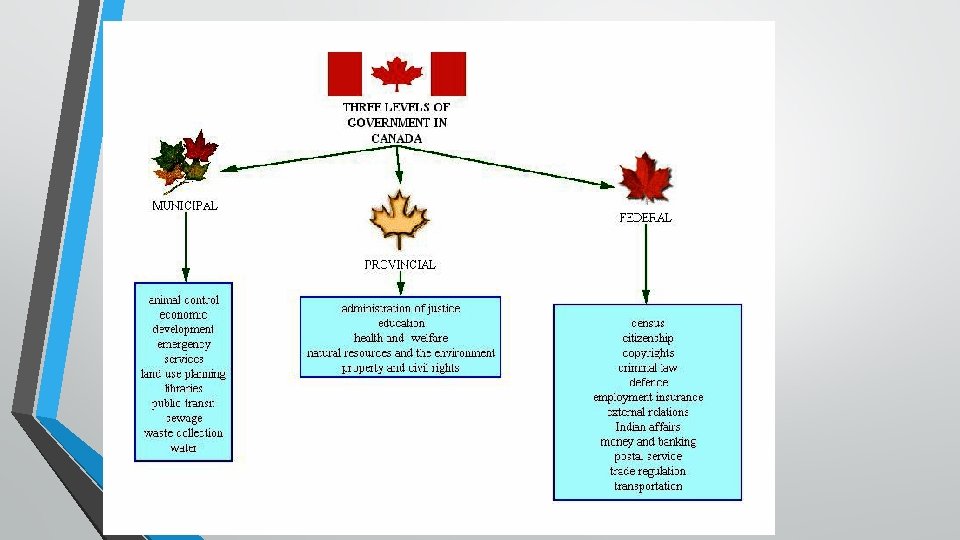
Provincial Powers • • Provinces are responsible for: 1. property and civil rights 2. Administration of justice 3. Natural Resources and the Environment 4. Education 5. Health 6. Welfare
Municipal Government
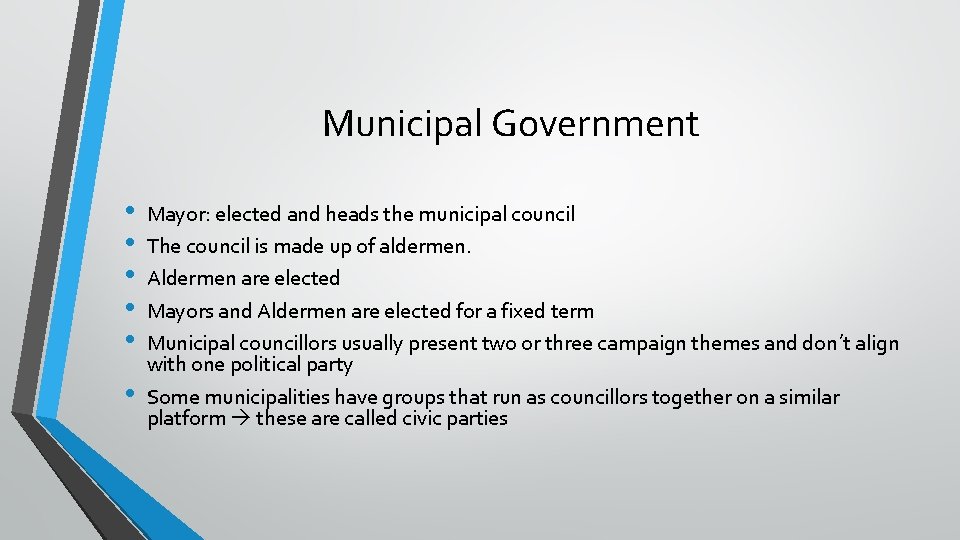
Municipal Government • • • Mayor: elected and heads the municipal council The council is made up of aldermen. Aldermen are elected Mayors and Aldermen are elected for a fixed term Municipal councillors usually present two or three campaign themes and don’t align with one political party Some municipalities have groups that run as councillors together on a similar platform these are called civic parties
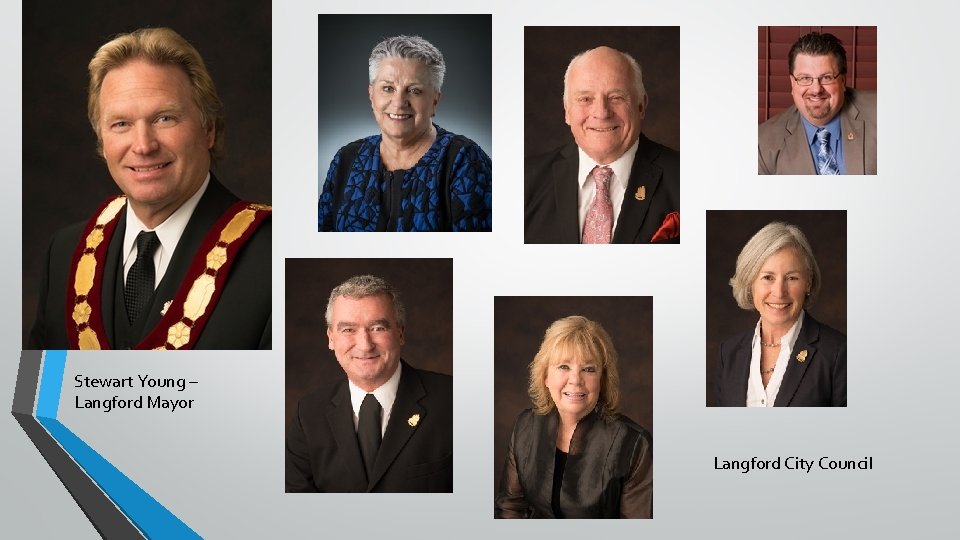
Stewart Young – Langford Mayor Langford City Council
What Do They Control? • Things that generally affect our daily life • Ex: garbage disposal and water supply
Municipal Act of BC • Sets out powers of municipal councils and regional districts • The CRD (Capital Regional District) is an example of a regional district
Other Acts • The Police Act, The Highway Act, The Schools Act, The Fire Services Act • Generally the Provincial law prevails if there is ever conflict
Municipal By-Laws • By-laws passed by municipal governments usually go through a committee stage and 3 reading process as well • These readings generally take place in the same sitting
Regional Districts • In areas in BC of low population and high population density • To avoid under funding in low density areas and over funding in high density areas BC created 28 regional districts in the 1960 s
More Local Authorities • School Districts: Run the schools with a Provincially approved budget • Improvement District: Supply services such as water, fire, garbage • Library Boards: funded by Provincial government, local or regional libraries
Municipal Government Responsibilities • • • Water Sewage Waste Collection Public Transit Land use planning Libraries Emergency services Animal control Economic Development
The End