
Levels of Economic Activity First a few terms




- Slides: 25
Levels of Economic Activity
First a few terms • Subsistence agriculture-consuming everything you produce to survive. • Commerical agriculture-producing enough to sale for profit. • Cottage industries: these are usually secondary activities that come from someone’s home.
Primary: Definition • Harvest or extracting of natural resources
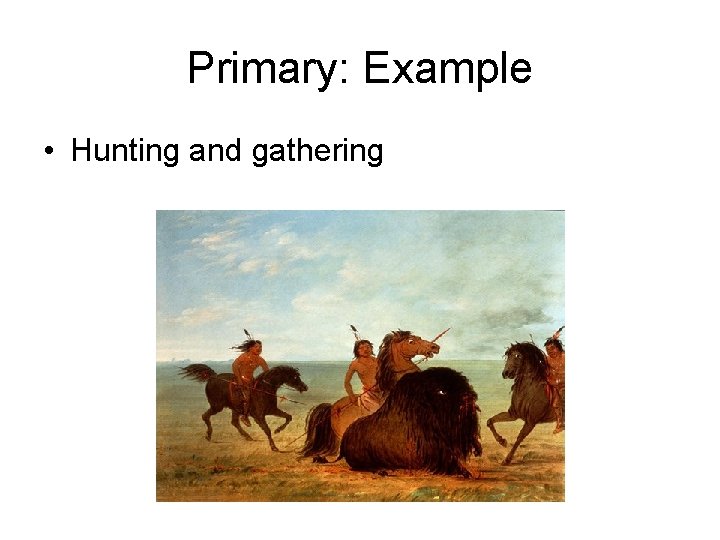
Primary: Example • Hunting and gathering
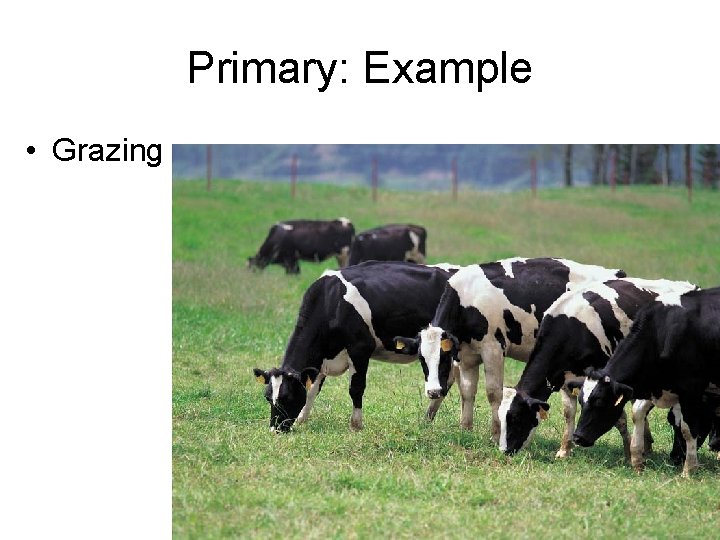
Primary: Example • Grazing
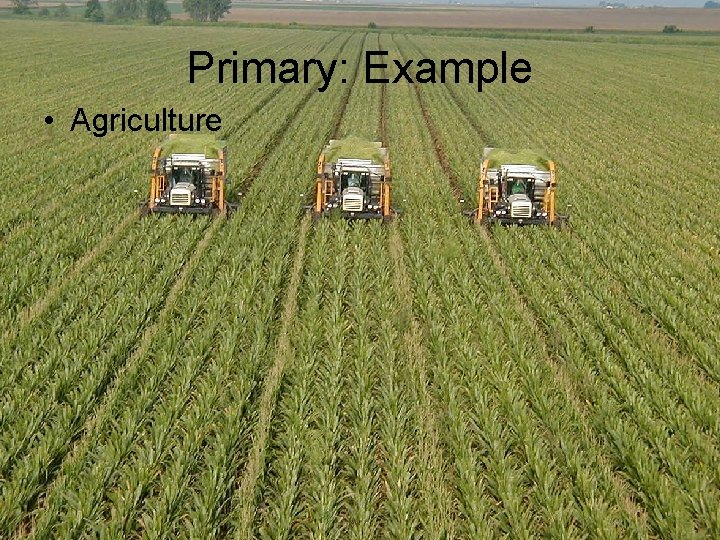
Primary: Example • Agriculture
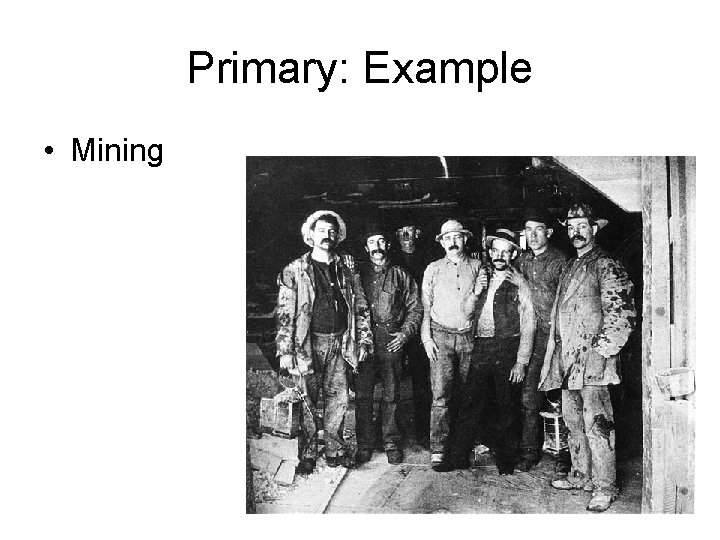
Primary: Example • Mining
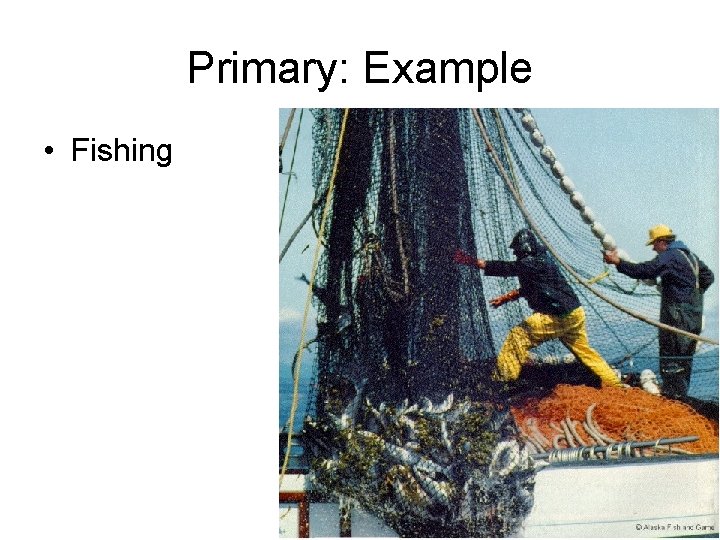
Primary: Example • Fishing
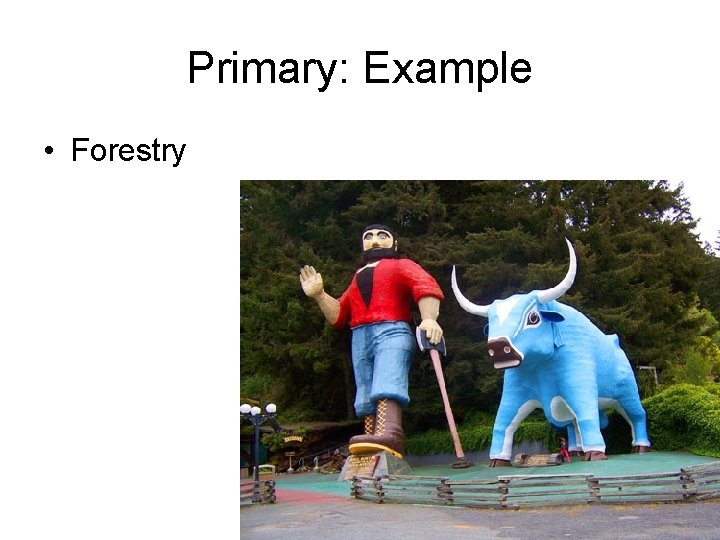
Primary: Example • Forestry
Primary: Locational Factors • Close to natural resources
Secondary: Definition • Add value to raw materials by making them useful • Those that process, transform, fabricate, or assemble the raw materials derived from primary activities or that reassemble, refinish, or package manufactured goods
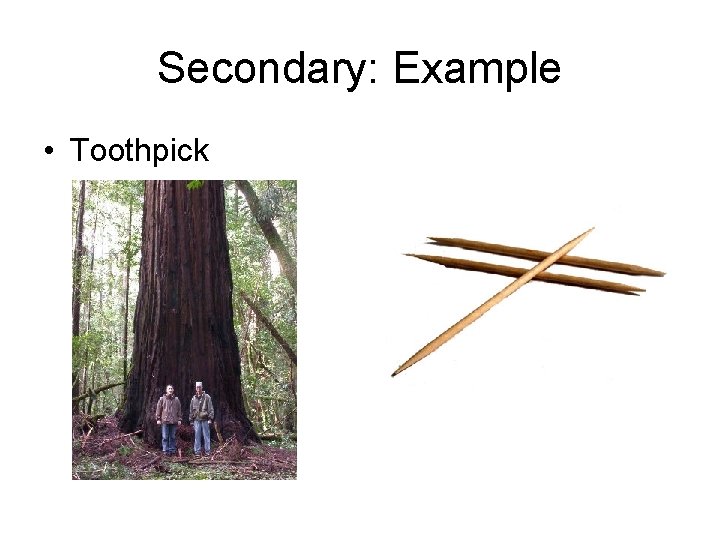
Secondary: Example • Toothpick
Secondary: Example • Fish Sticks
Secondary: Locational Factors • Easy access to raw materials, energy sources and markets
Tertiary: Definition • Provides services (don’t make anything) • Those involving the sale and exchange of goods and services
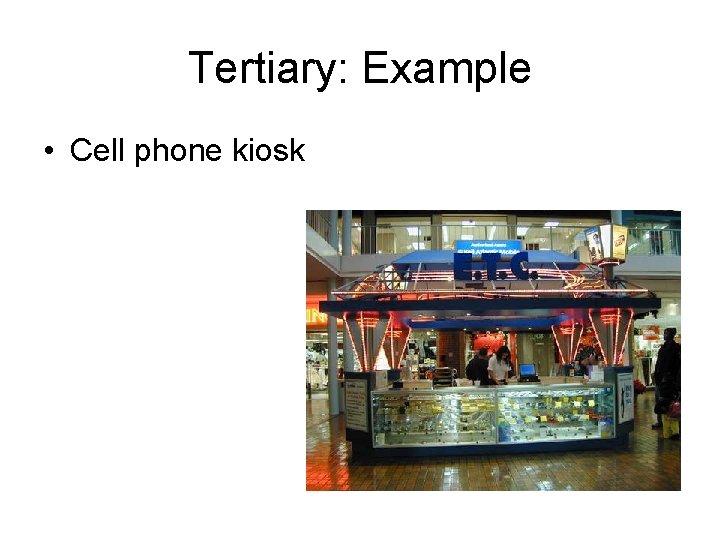
Tertiary: Example • Cell phone kiosk
Tertiary: Example • Bank Teller
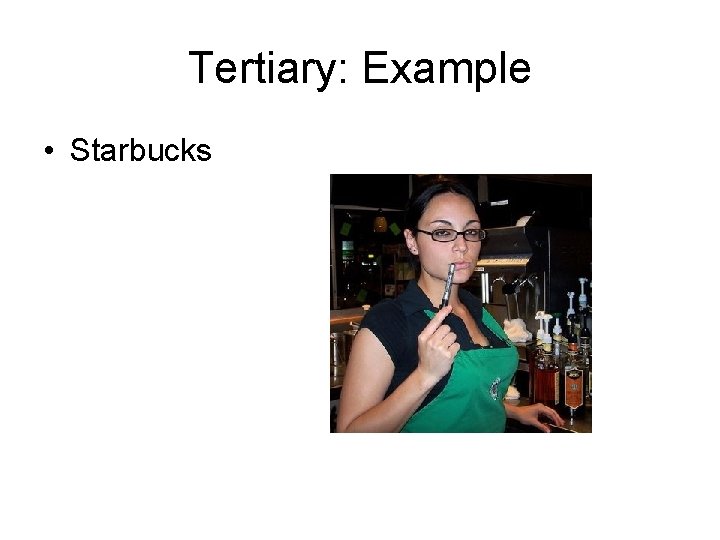
Tertiary: Example • Starbucks
Tertiary: Locational Factors • Close to markets
Quaternary: Definition • Processing and dissemination of information • Those concerned with information or the exchange of money and goods
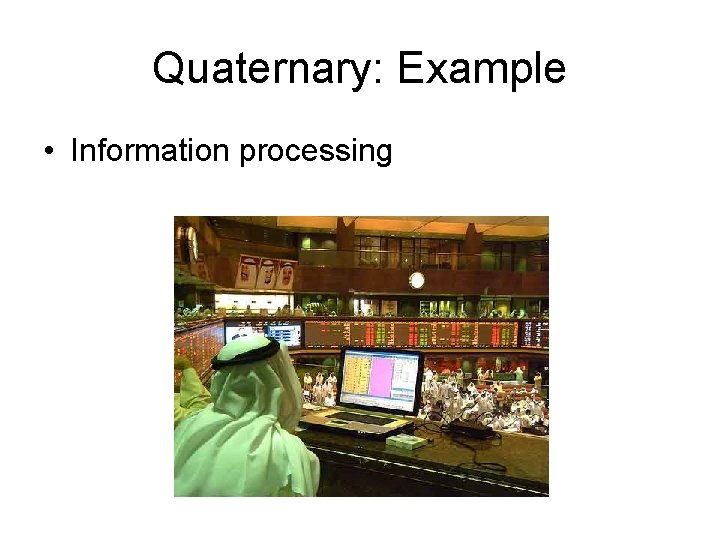
Quaternary: Example • Information processing
Quaternary: Example • Computer Nerds
Quaternary: Locational Factors • Good infrastructure and skilled labor
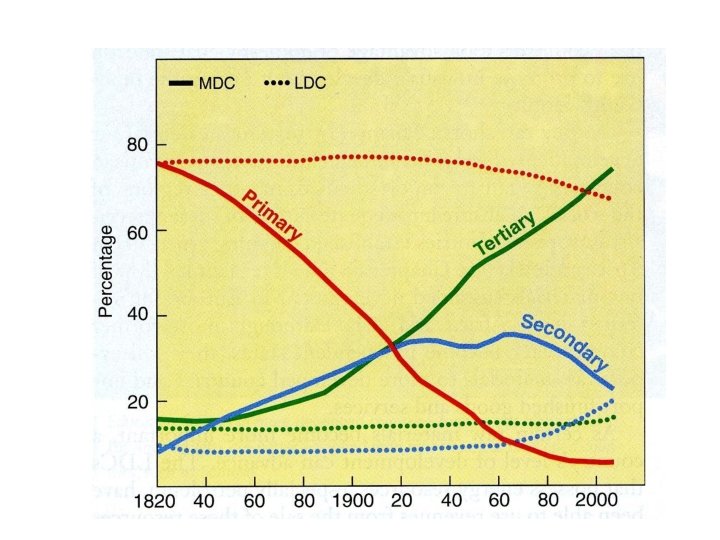
What is important to understand about this? • Less developed countries depend on primary and secondary economic activities • More developed countries have economies based on Tertiary, Quaternary and Quinary activities