
LEVELS OF CONSTRAINT AND RESEARCH DESIGN 1 The

- Slides: 42
LEVELS OF CONSTRAINT AND RESEARCH DESIGN 1. The ideas of levels of constraint and research designs and their relationship to 2. Research Objectives and Hypotheses
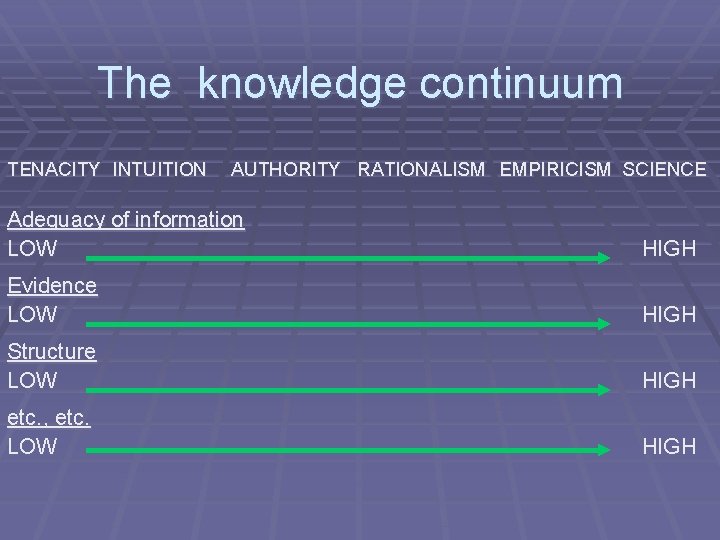
The knowledge continuum TENACITY INTUITION AUTHORITY RATIONALISM EMPIRICISM SCIENCE Adequacy of information LOW HIGH Evidence LOW HIGH Structure LOW HIGH etc. , etc. LOW HIGH
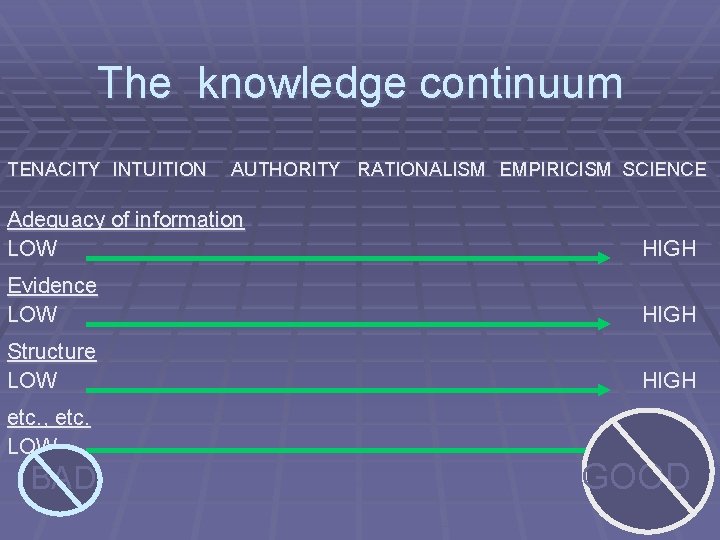
The knowledge continuum TENACITY INTUITION AUTHORITY RATIONALISM EMPIRICISM SCIENCE Adequacy of information LOW HIGH Evidence LOW HIGH Structure LOW HIGH etc. , etc. LOW BAD GOOD
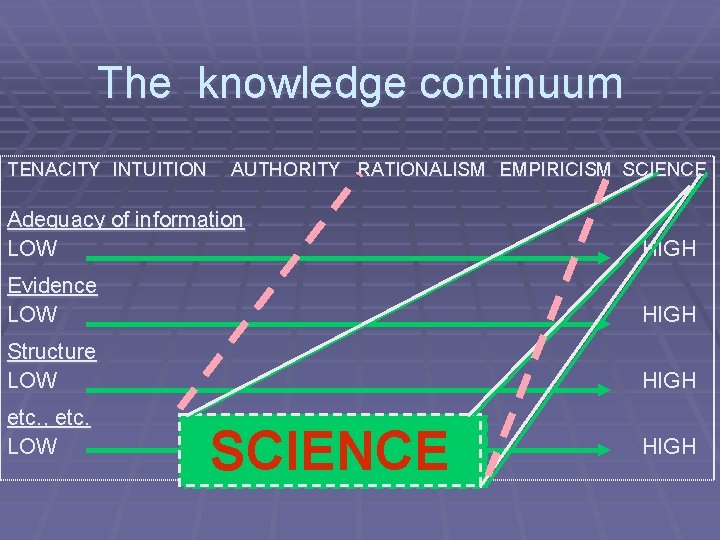
The knowledge continuum TENACITY INTUITION AUTHORITY RATIONALISM EMPIRICISM SCIENCE Adequacy of information LOW HIGH Evidence LOW HIGH Structure LOW HIGH etc. , etc. LOW SCIENCE HIGH
We “concluded” § Science places a high demand on evidence. What we will see today is § HOW and WHY we collect that evidence dictates WHAT we can say with it.
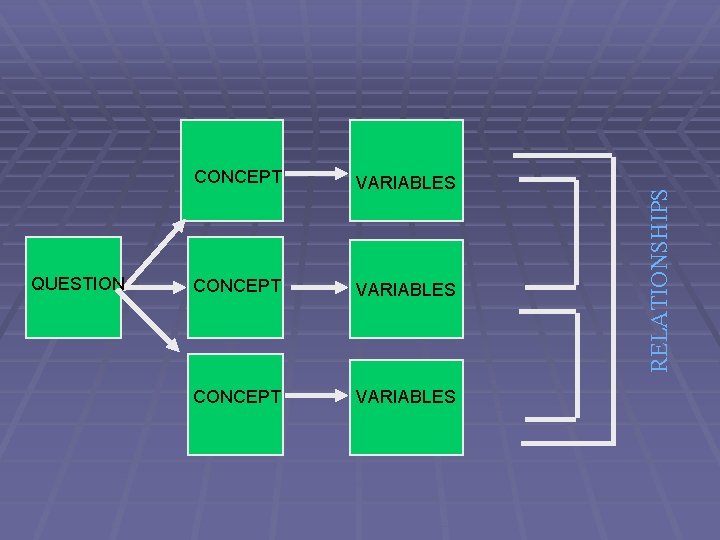
Or, put another way: § Science is a “high demand” pursuit of knowledge. § It is fueled by questions and facts. § The type of questions you ask determines the types of facts you can uncover. § What determines the type of questions you can ask?
VARIABLES CONCEPT VARIABLES RELATIONSHIPS QUESTION CONCEPT
Earlier we entertained the question: § “How do you know which variables or attributes to measure? ” § Knowledge, experience, theory! § For example, a person with training as a mountain climber, with access to equipment will prefer to climb very differently from a novice.
Thus. . . § Both climbers make it to the top of their respective mountains, using different tools and methods. Both had quality experiences. Both operated appropriate to their contexts and ability. Both would be out of place in the others’ environment. § So it is with research!
So it is with research! § You match what you already know about the topic of study with what you would like to learn, and decide on an appropriate course of action that you follow for all the steps of the research process. § That course of action is defined by THE LEVEL OF CONSTRAINT you are willing to accept.
CONSTRAINT § LOW CONSTRAINT: fairly general findings; unrefined decisions about questions and procedures; context. § HIGH CONSTRAINT: very specific findings; refined ideas; precise hypotheses; detailed procedures; complex analyses; “causality. ”
CONSTRAINT § Neither is inherently BETTER than the other, but one is more APPROPRIATE for the conditions. § If you haven’t asked it yet, you are probably wondering “constraint on what? ”
CONSTRAINT § As the research questions become more complex, demanding and precise the activities in each phase become correspondingly complex, demanding and precise. § To cope we impose constraints on our performance and we begin to loose flexibility but gain control over the situation.
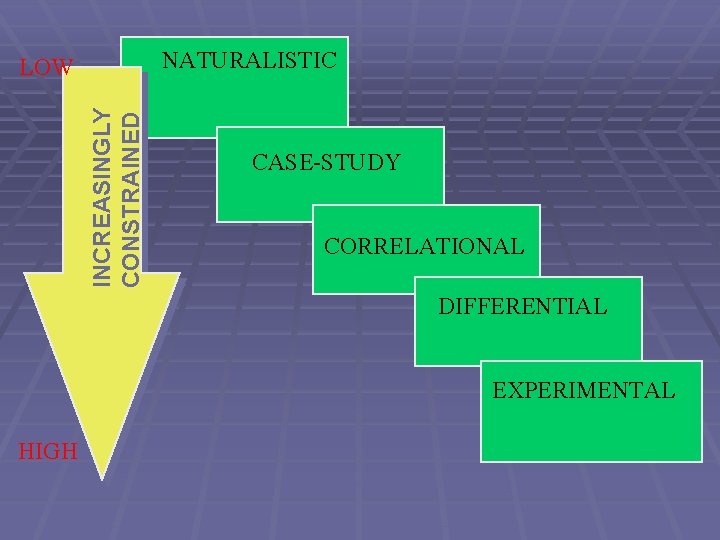
NATURALISTIC INCREASINGLY CONSTRAINED LOW CASE-STUDY CORRELATIONAL DIFFERENTIAL EXPERIMENTAL HIGH
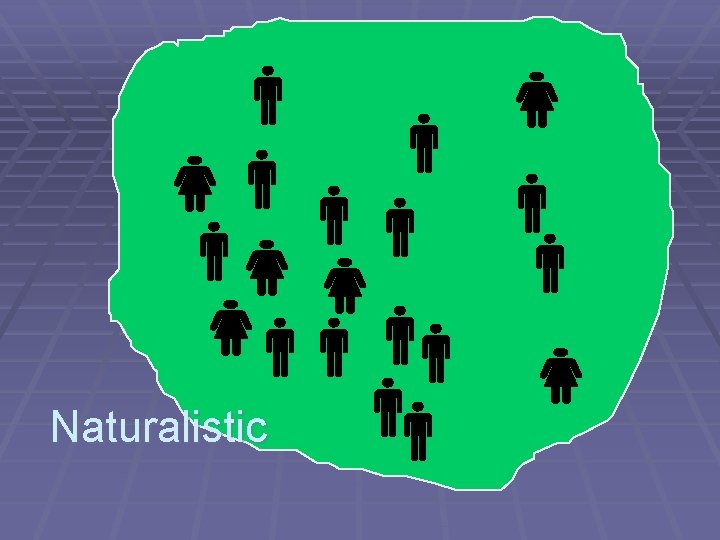
Naturalistic § § § Study of object behavior in natural settings. No manipulation of objects or the settings. Bound by objectives, not hypotheses. Focus can shift as situation demands. Flexible; common in early stages of knowledge acquisition, but can be the final stage!
Naturalistic
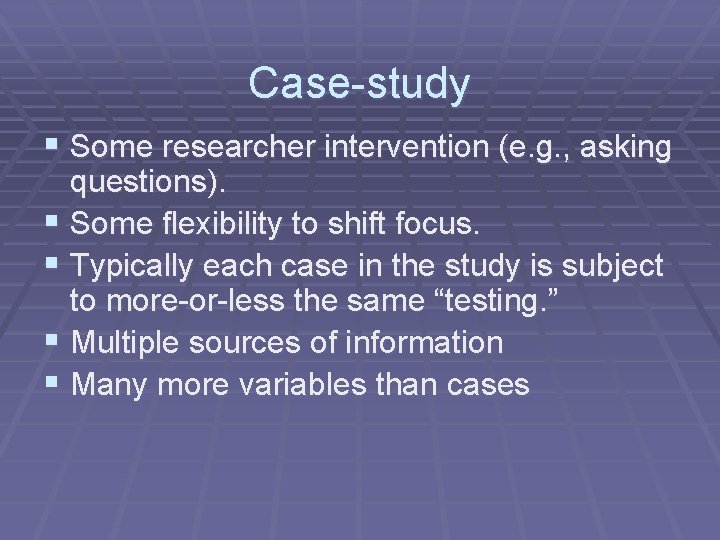
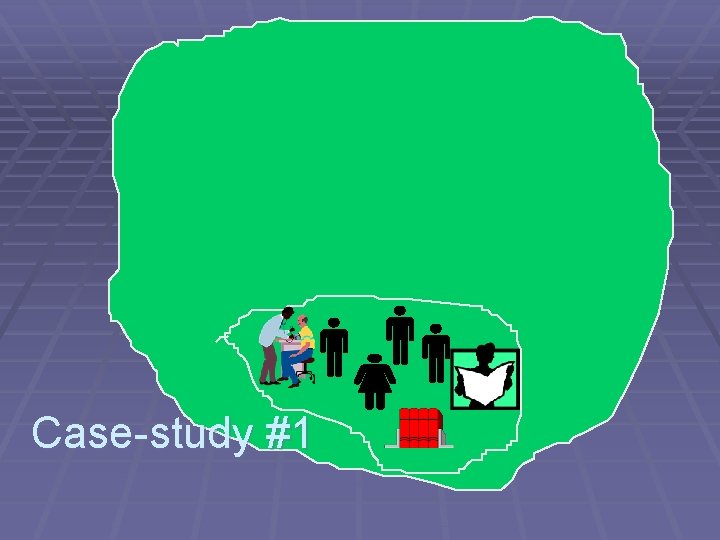
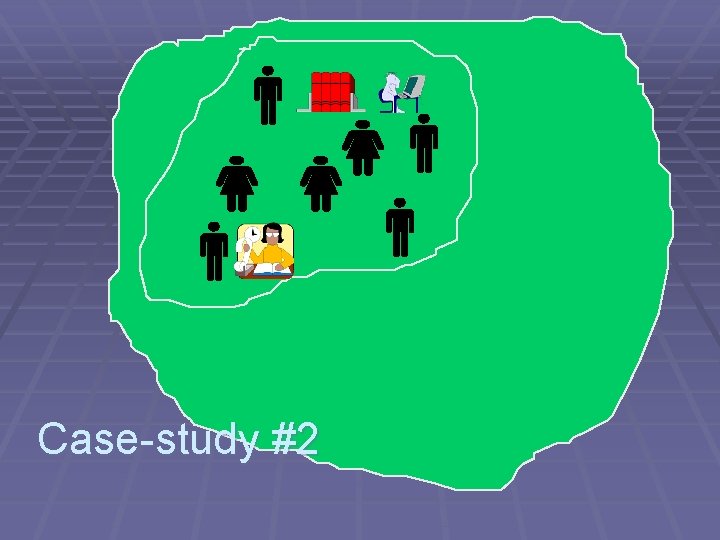
Case-study § Some researcher intervention (e. g. , asking questions). § Some flexibility to shift focus. § Typically each case in the study is subject to more-or-less the same “testing. ” § Multiple sources of information § Many more variables than cases
Case-study #1
Case-study #2
Correlational § Setting can range from natural to artificial. § Focus is on quantifying the relationship between two or more pre-selected variables. § Each variable is measured in a precise and identical way for each case (person).
Correlational
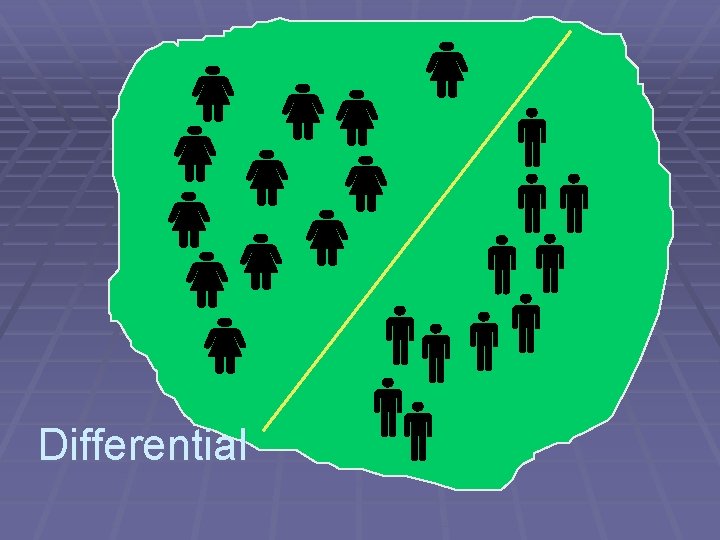
Differential § A direct comparison between two or more groups of subjects. § Groups are categorized on the basis of one or more subject variables (independent variables) that are NOT under researcher control, and that pre-exist. § Dependent variable/s are measured exactly and precisely across all groups.
Differential
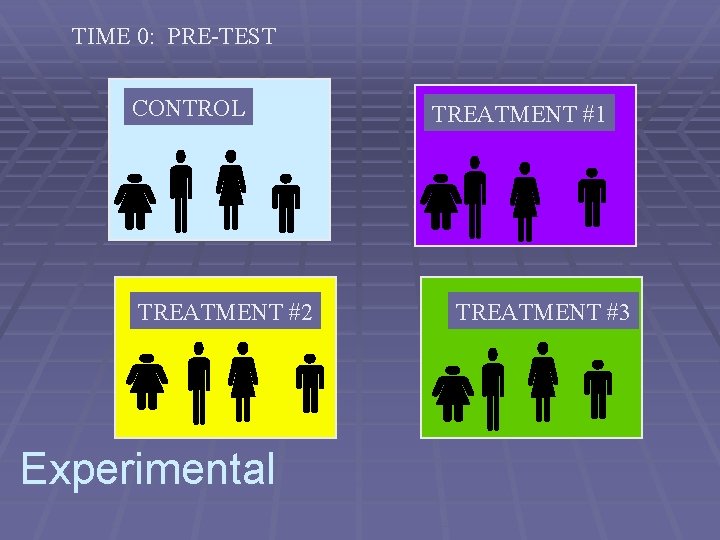
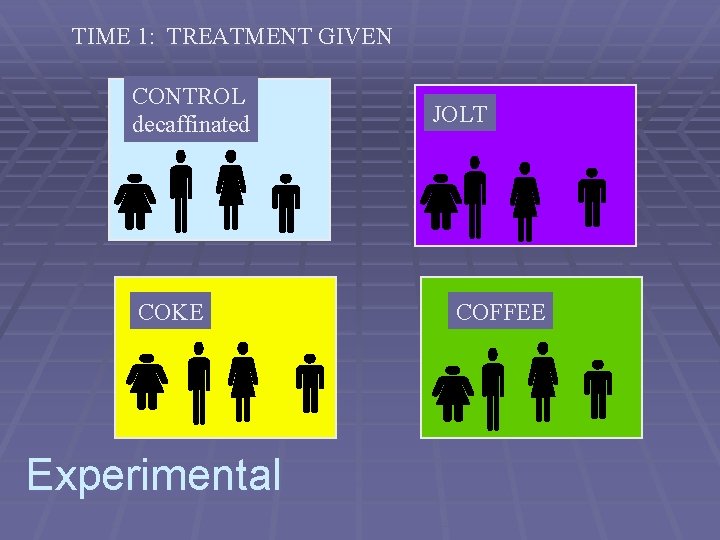
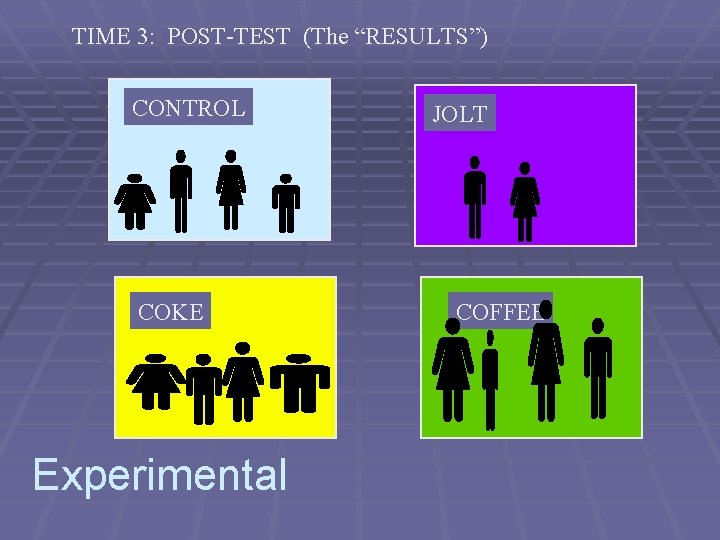
Experimental § Comparisons are made under different and controlled conditions. § Subjects are assigned to each type of condition in an unbiased manner, usually matched or random. § Although causality can sometimes be inferred, results may not be applicable outside of the experimental setting.
TIME 0: PRE-TEST CONTROL TREATMENT #2 Experimental TREATMENT #1 TREATMENT #3
TIME 1: TREATMENT GIVEN CONTROL decaffinated COKE Experimental JOLT COFFEE
TIME 3: POST-TEST (The “RESULTS”) CONTROL COKE Experimental JOLT COFFEE
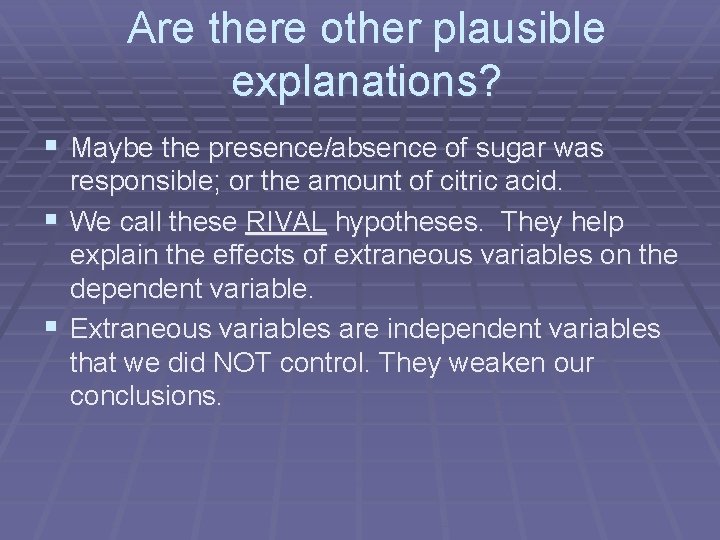
Are there other plausible explanations? § Maybe the presence/absence of sugar was responsible; or the amount of citric acid. § We call these RIVAL hypotheses. They help explain the effects of extraneous variables on the dependent variable. § Extraneous variables are independent variables that we did NOT control. They weaken our conclusions.
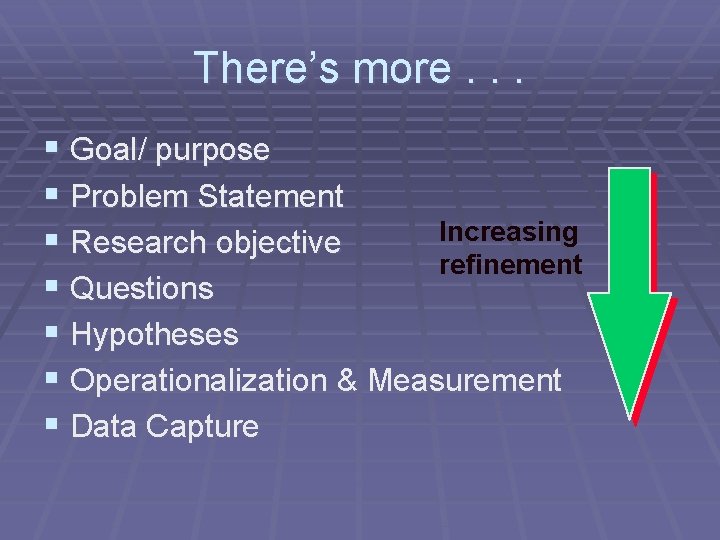
There’s more. . . § Goal/ purpose § Problem Statement Increasing § Research objective refinement § Questions § Hypotheses § Operationalization & Measurement § Data Capture
Some thoughts about problem statements, goals, objectives, and research hypotheses § § § Focus in on the problem. Show real need. Relate research to your interest/ability. Show scope of the problem. Include evidence. Show impact and benefits.
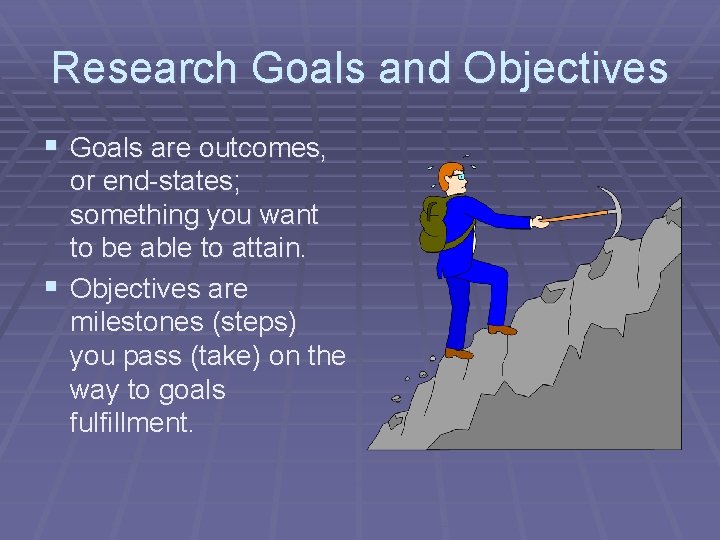
Research Goals and Objectives § Goals are outcomes, or end-states; something you want to be able to attain. § Objectives are milestones (steps) you pass (take) on the way to goals fulfillment.
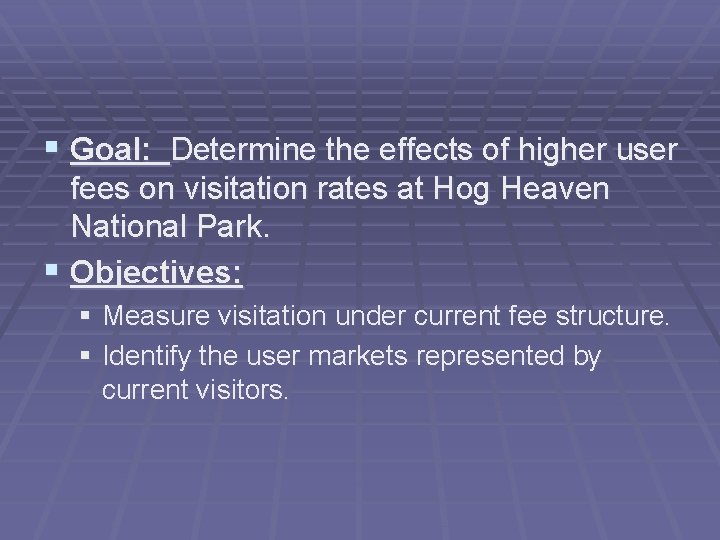
§ Goal: Determine the effects of higher user fees on visitation rates at Hog Heaven National Park. § Objectives: § Measure visitation under current fee structure. § Identify the user markets represented by current visitors.
and. . § Objectives (continued): § Use contingent-valuation to assess potential change in visitation. § Predict which market segments are most likely to change under new fee regimes. § Identify strategies to prevent loss of market share.
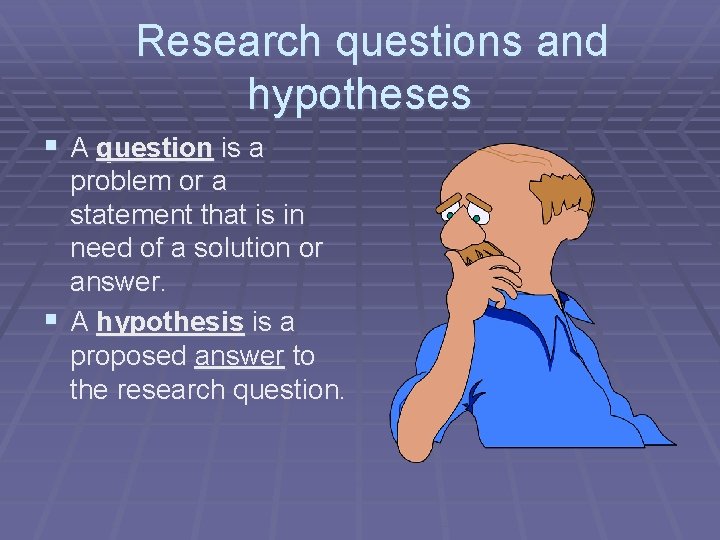
Research questions and hypotheses § A question is a problem or a statement that is in need of a solution or answer. § A hypothesis is a proposed answer to the research question.
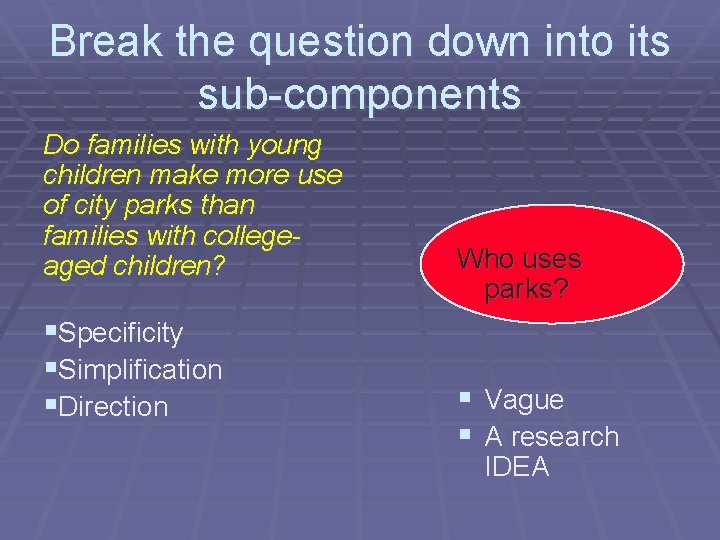
Break the question down into its sub-components Do families with young children make more use of city parks than families with collegeaged children? §Specificity §Simplification §Direction Who uses parks? § Vague § A research IDEA
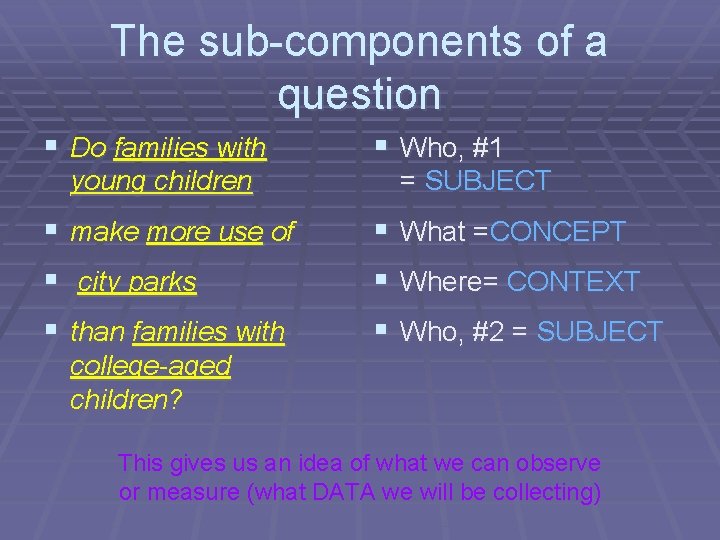
The sub-components of a question § Do families with young children § Who, #1 = SUBJECT § make more use of § What =CONCEPT § city parks § Where= CONTEXT § than families with § Who, #2 = SUBJECT college-aged children? This gives us an idea of what we can observe or measure (what DATA we will be collecting)
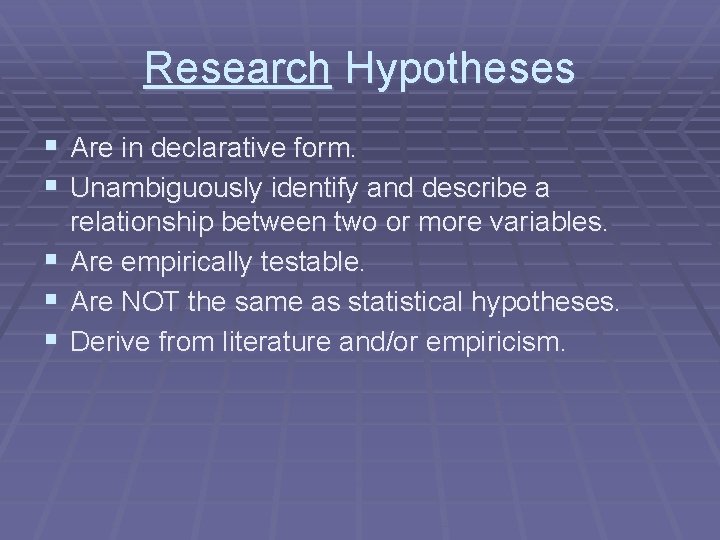
Research Hypotheses § Are in declarative form. § Unambiguously identify and describe a § § § relationship between two or more variables. Are empirically testable. Are NOT the same as statistical hypotheses. Derive from literature and/or empiricism.
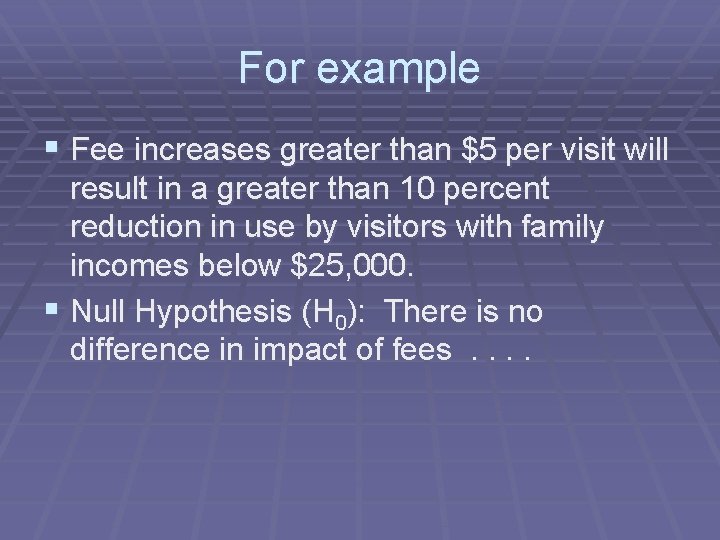
For example § Fee increases greater than $5 per visit will result in a greater than 10 percent reduction in use by visitors with family incomes below $25, 000. § Null Hypothesis (H 0): There is no difference in impact of fees. .
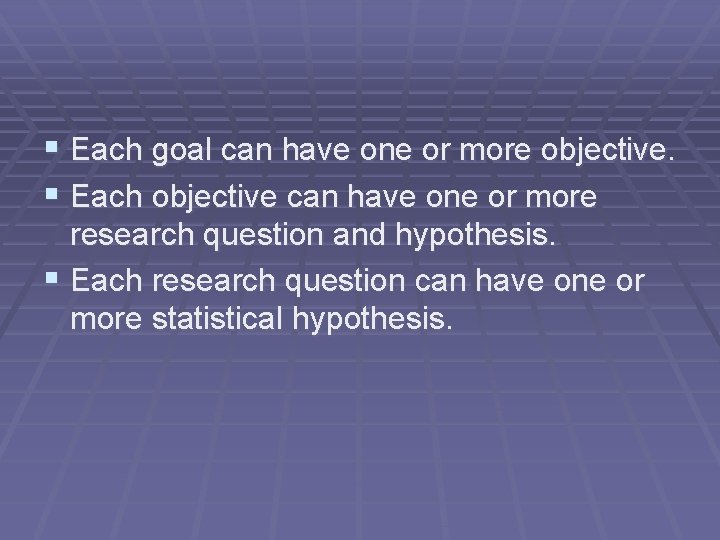
§ Each goal can have one or more objective. § Each objective can have one or more research question and hypothesis. § Each research question can have one or more statistical hypothesis.
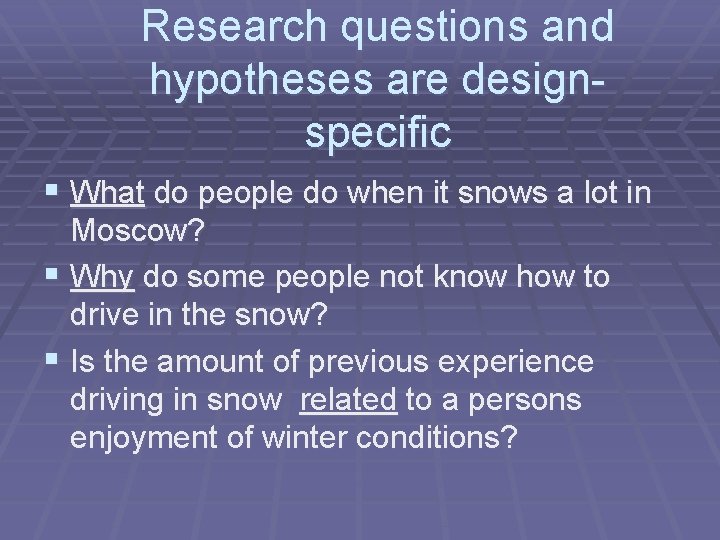
Research questions and hypotheses are designspecific § What do people do when it snows a lot in Moscow? § Why do some people not know how to drive in the snow? § Is the amount of previous experience driving in snow related to a persons enjoyment of winter conditions?
and. . § CSS students are more skilled snow drivers than ECB students. § A Ford Taurus with an automatic transmission will handle worse in snow than will an identical car with a manual transmission (regardless of driver characteristics, skill level and experience).