
Levels of Biological Organization Levels of Organization 1
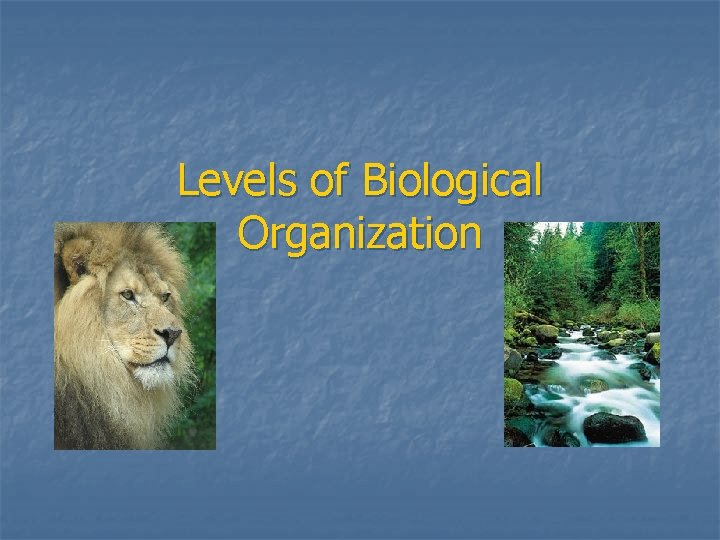
Levels of Biological Organization
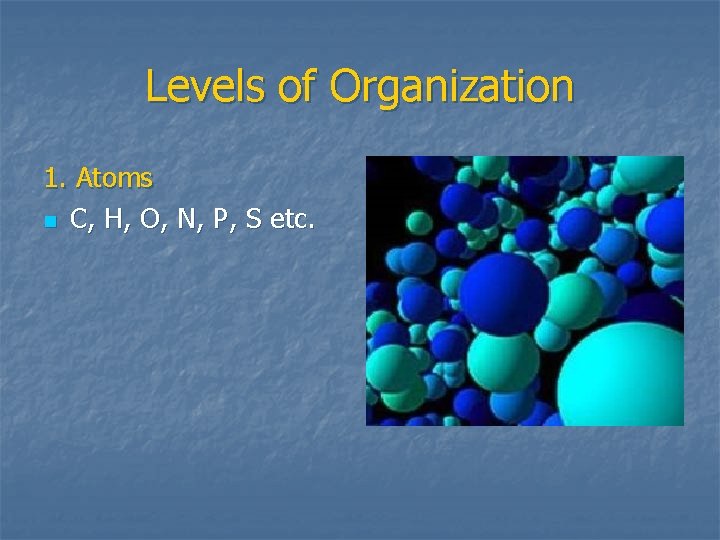
Levels of Organization 1. Atoms n C, H, O, N, P, S etc.

Levels of Organization 2. Chemical Building Blocks n Amino Acids, Nucleotides, monosaccharides, fatty acids
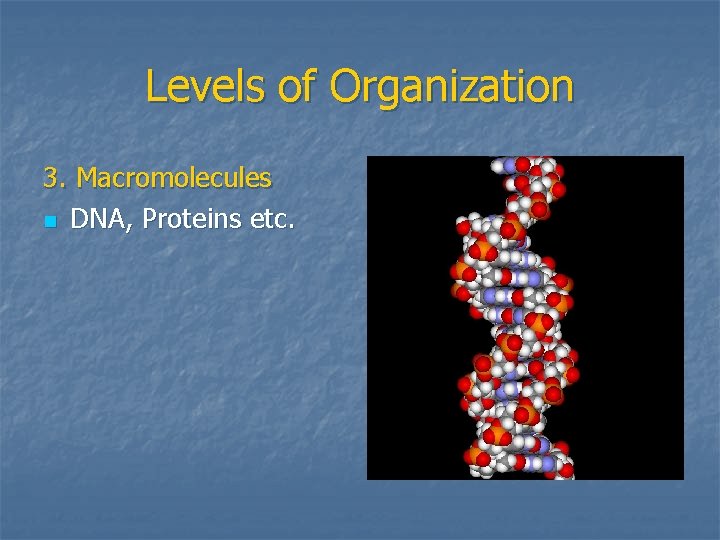
Levels of Organization 3. Macromolecules n DNA, Proteins etc.

Levels of Organization 4. Organelles n Mitochondrion, etc n 0. 0000001 m
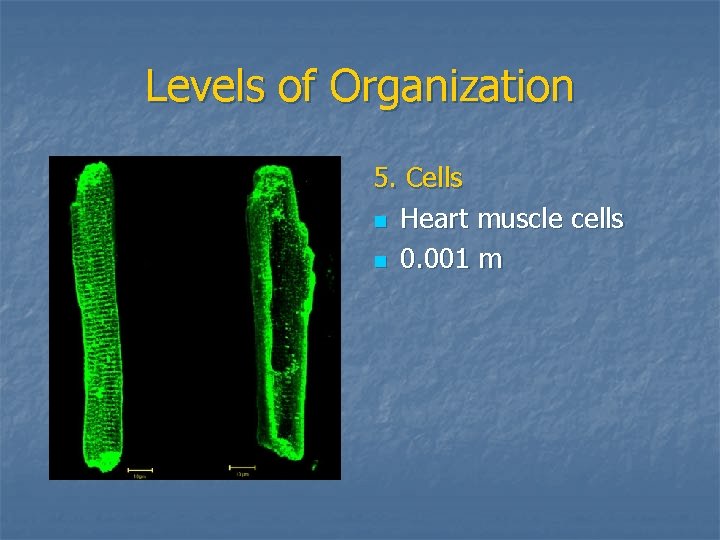
Levels of Organization 5. Cells n Heart muscle cells n 0. 001 m
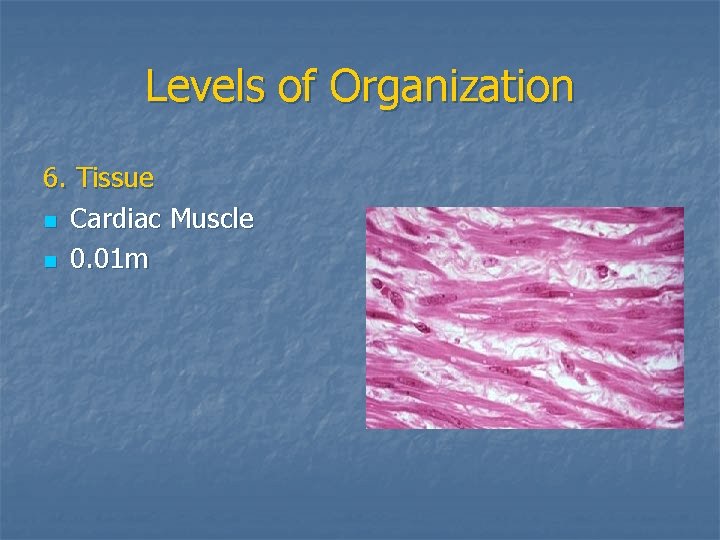
Levels of Organization 6. Tissue n Cardiac Muscle n 0. 01 m
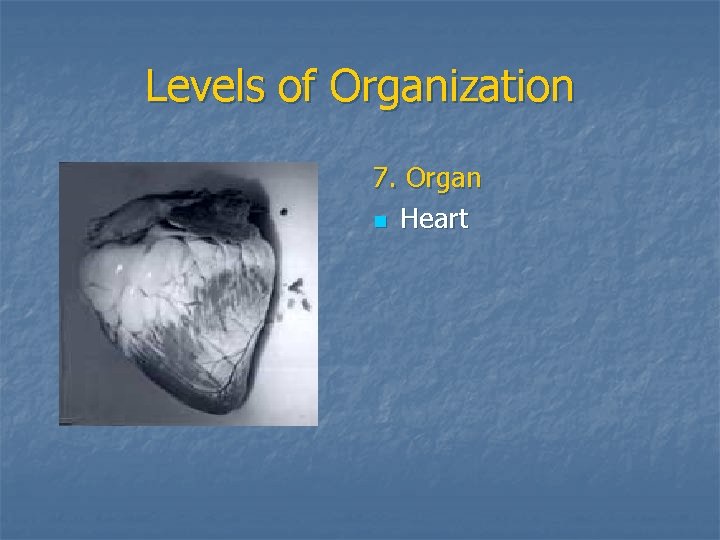
Levels of Organization 7. Organ n Heart
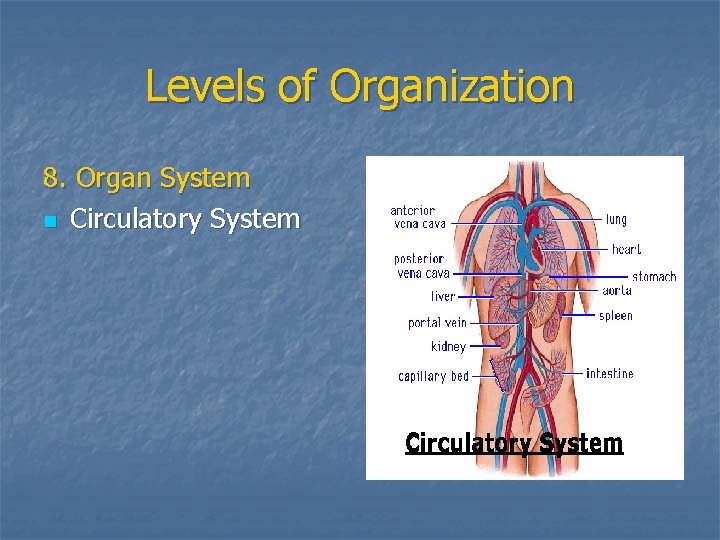
Levels of Organization 8. Organ System n Circulatory System
Levels of Organization 9. Individual
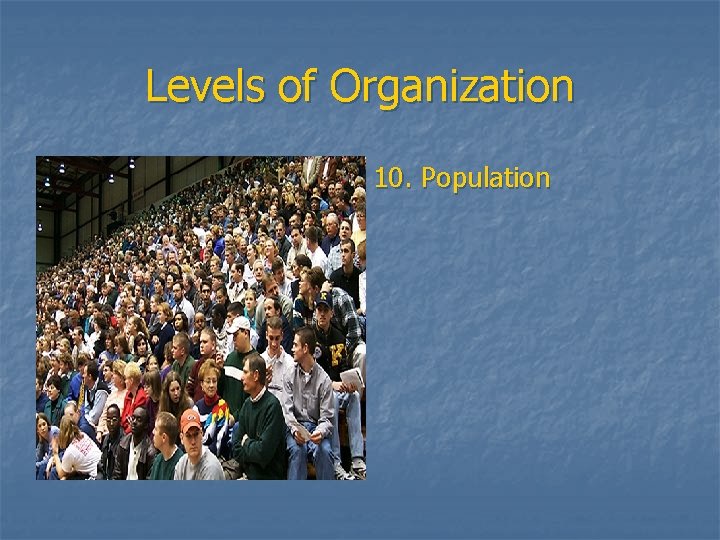
Levels of Organization 10. Population
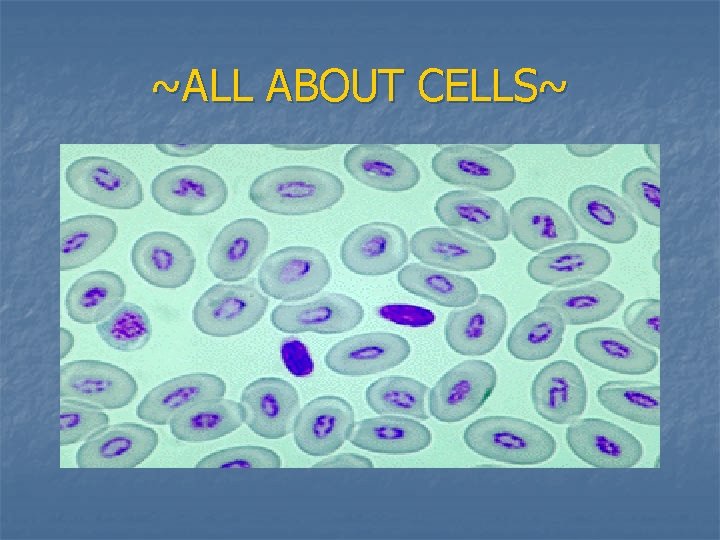
~ALL ABOUT CELLS~
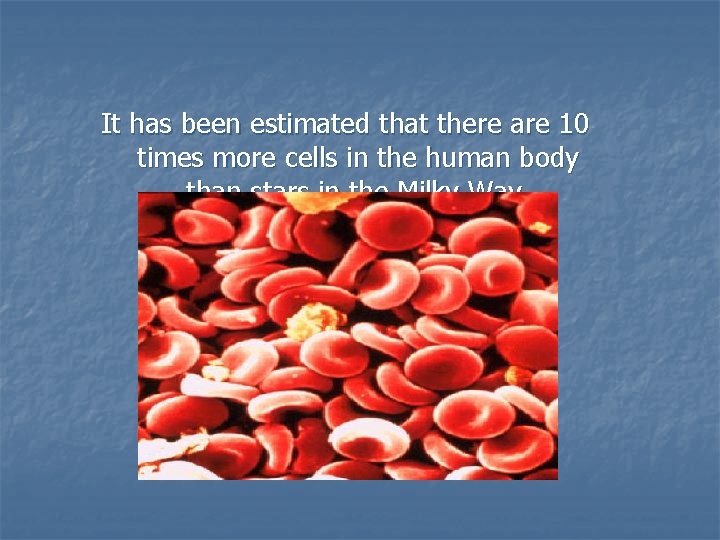
It has been estimated that there are 10 times more cells in the human body than stars in the Milky Way.

"I'm sorry, Mr. Johnson, but my stem cell research funding has been cut. I'm afraid you'll never walk again. "
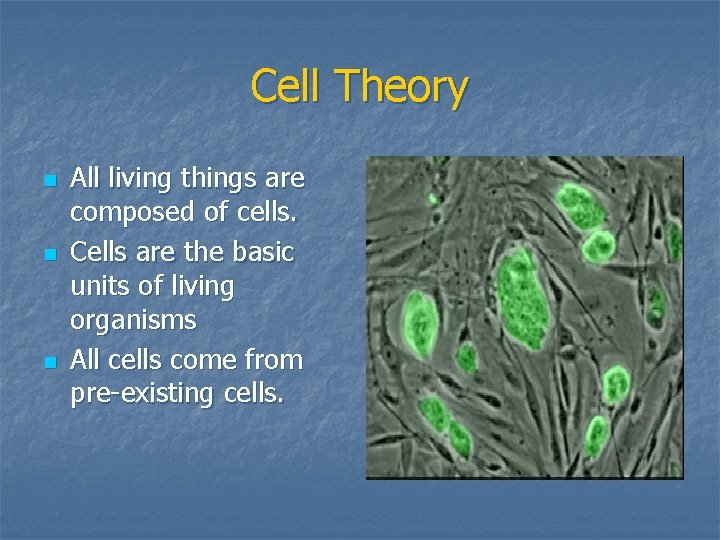
Cell Theory n n n All living things are composed of cells. Cells are the basic units of living organisms All cells come from pre-existing cells.
Cell Theory The Human body is estimated to have 100 trillion cells. n Different cells are specialized to perform various tasks. Examples: n Nerve Cells transmit electrochemical messages. n Muscle Cells contract. All cells: n Digest nutrients n Excrete wastes n Synthesize needed chemicals n Reproduce n
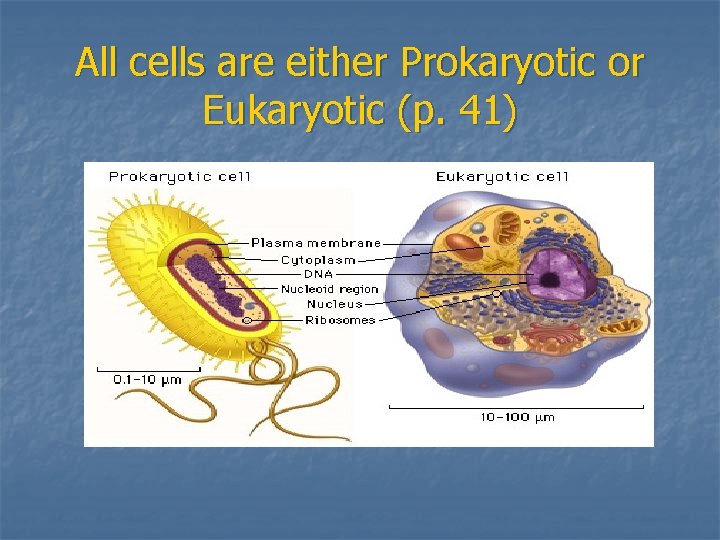
All cells are either Prokaryotic or Eukaryotic (p. 41)
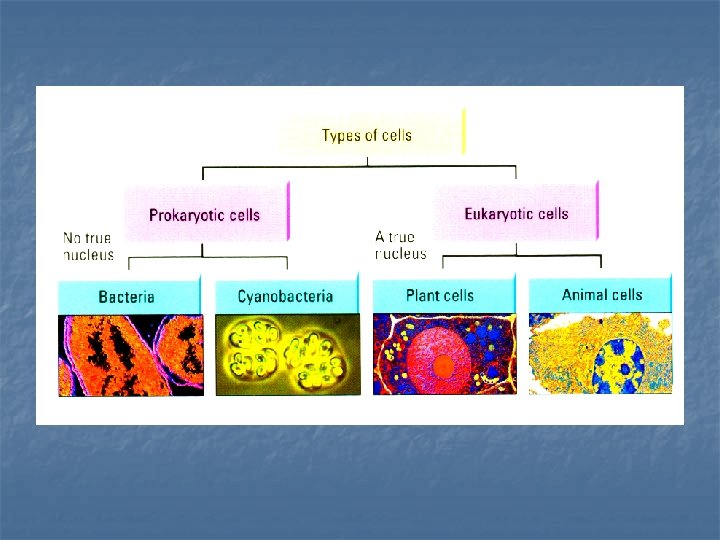
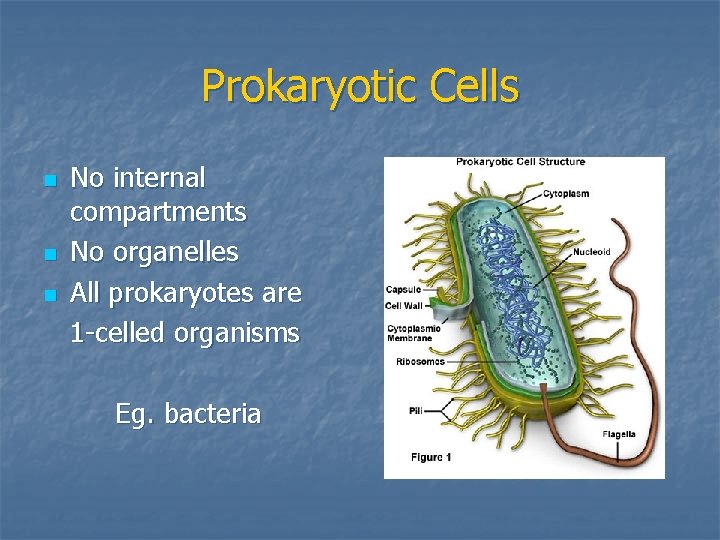
Prokaryotic Cells n n n No internal compartments No organelles All prokaryotes are 1 -celled organisms Eg. bacteria
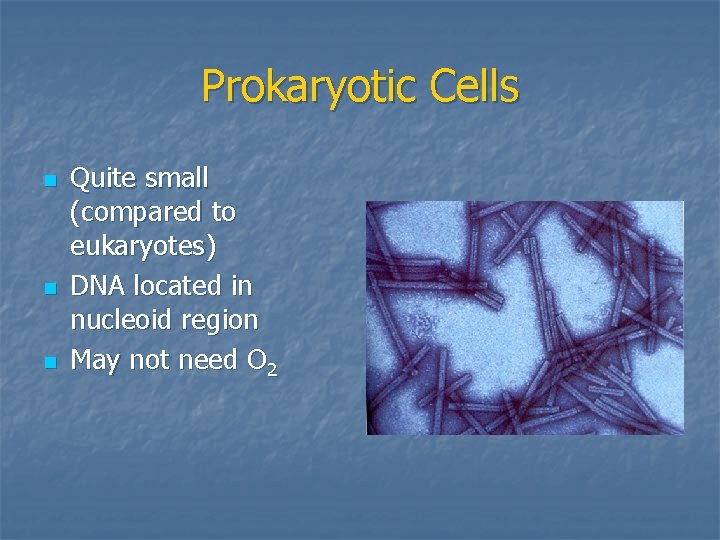
Prokaryotic Cells n n n Quite small (compared to eukaryotes) DNA located in nucleoid region May not need O 2
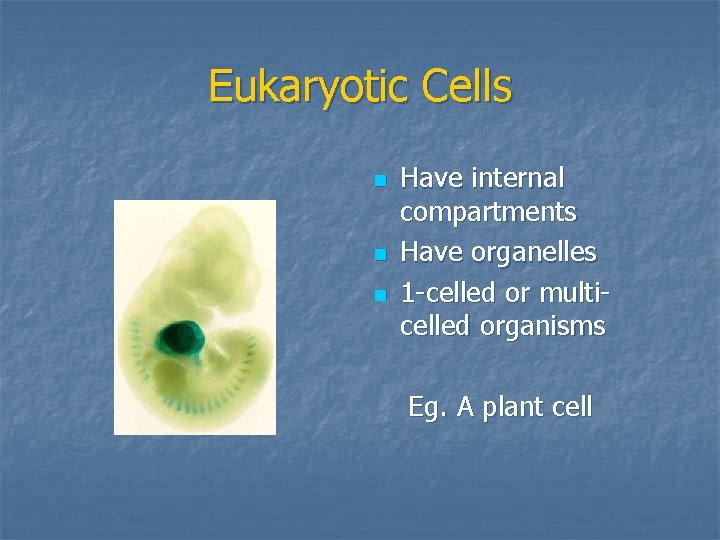
Eukaryotic Cells n n n Have internal compartments Have organelles 1 -celled or multicelled organisms Eg. A plant cell
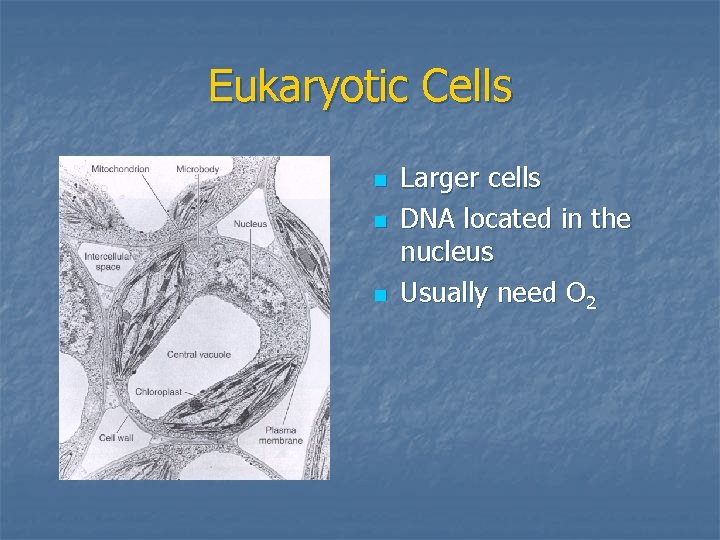
Eukaryotic Cells n n n Larger cells DNA located in the nucleus Usually need O 2
More cellular humour
- Slides: 23