
Levels of Authority in Church Teaching The New
- Slides: 14
Levels of Authority in Church Teaching The New Testament Document #: TX 002187
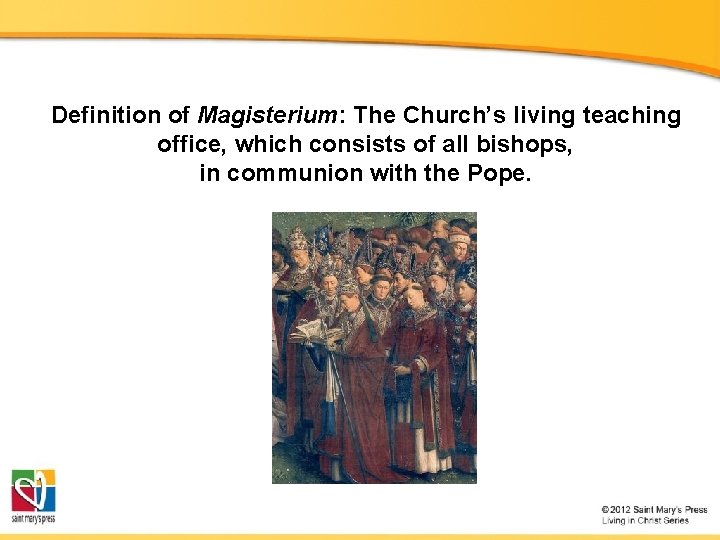
Definition of Magisterium: The Church’s living teaching office, which consists of all bishops, in communion with the Pope.
Not all statements are created equal! There are levels of authority in documents that the Magisterium issues.
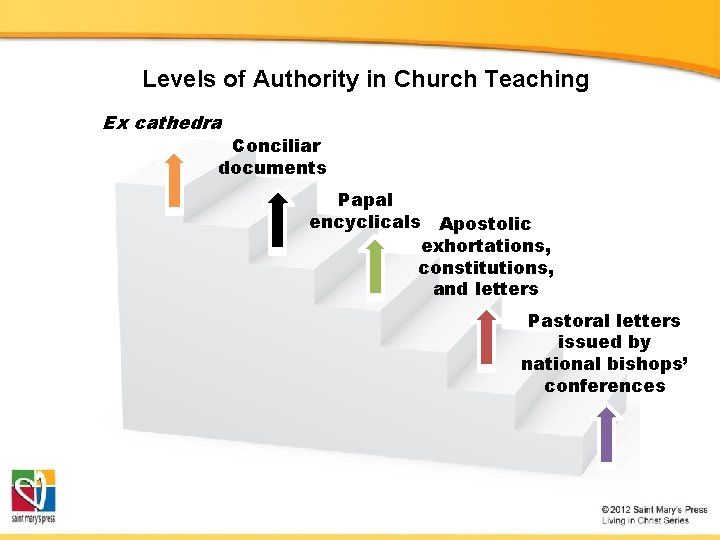
Levels of Authority in Church Teaching Ex cathedra Conciliar documents Papal encyclicals Apostolic exhortations, constitutions, and letters Pastoral letters issued by national bishops’ conferences
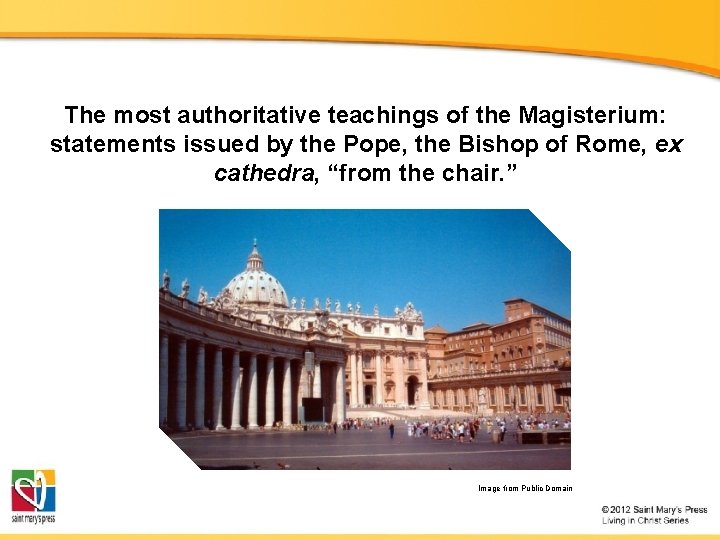
The most authoritative teachings of the Magisterium: statements issued by the Pope, the Bishop of Rome, ex cathedra, “from the chair. ” Image from Public Domain
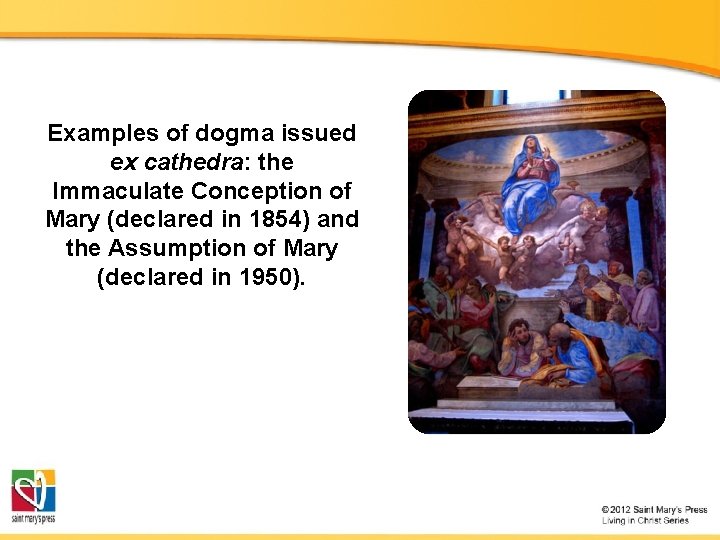
Examples of dogma issued ex cathedra: the Immaculate Conception of Mary (declared in 1854) and the Assumption of Mary (declared in 1950).
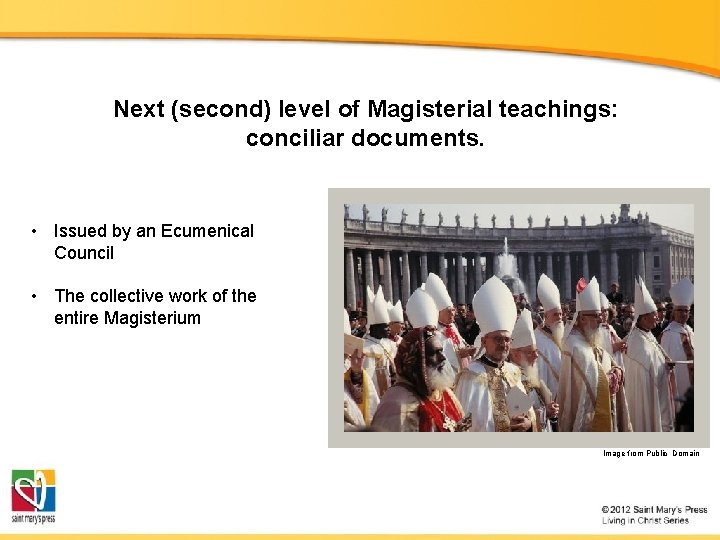
Next (second) level of Magisterial teachings: conciliar documents. • Issued by an Ecumenical Council • The collective work of the entire Magisterium Image from Public Domain
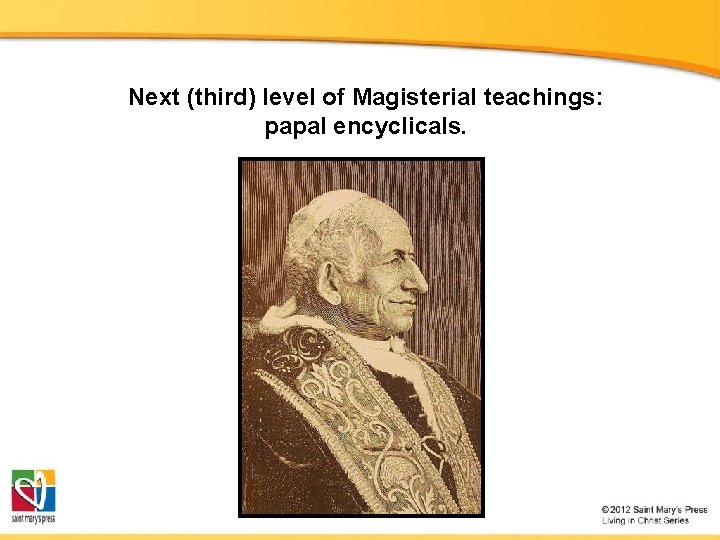
Next (third) level of Magisterial teachings: papal encyclicals.
Next (fourth) level of Magisterial teachings: apostolic exhortations, constitutions, and letters.
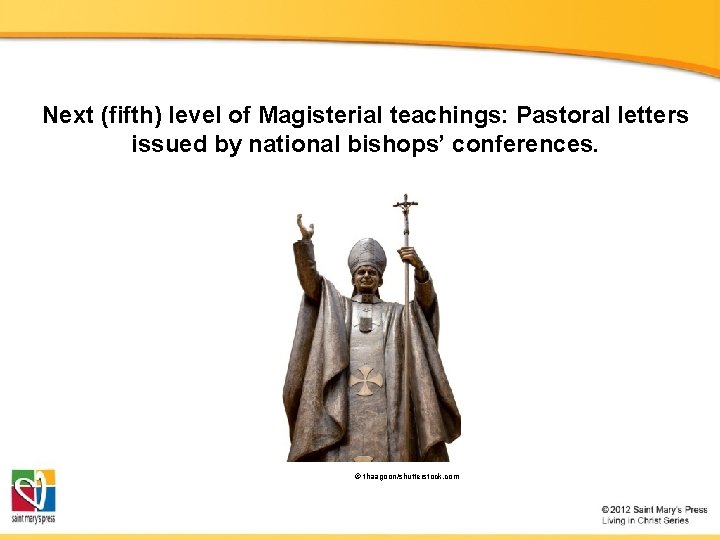
Next (fifth) level of Magisterial teachings: Pastoral letters issued by national bishops’ conferences. © thaagoon/shutterstock. com
A few additional notes: • Remember that the general term used to refer to Church teaching, at any level, is doctrine. • These five levels of Church doctrine are not exhaustive.
A few additional notes: • These levels of authority in Church doctrine help us to understand a teaching of the Second Vatican Council, stated in its Decree on Ecumenism: the hierarchy of truths.
A few additional notes: • Scripture informs every doctrine of the Church, at every level of authority.
Small-group work: exploring Scripture in the doctrine of the Church, at various levels of authority.