
Level of Service and Risk Whats the Connection
- Slides: 31
Level of Service and Risk: What’s the Connection? Leanne Brannigan Advisor, Asset Management, Region of Peel CNAM 2014 Conference Toronto, Ontario May 20 -23, 2014
Outline • Peel’s Corporate Asset Management Program • Risk • Framework • Connecting Risk and LOS • Applications: a mini case study • Advantages • Conclusions 2
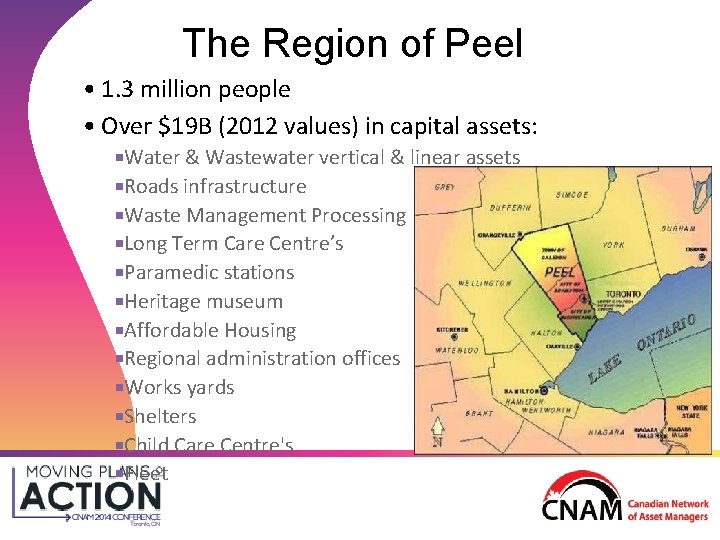
The Region of Peel • 1. 3 million people • Over $19 B (2012 values) in capital assets: Water & Wastewater vertical & linear assets Roads infrastructure Waste Management Processing Long Term Care Centre’s Paramedic stations Heritage museum Affordable Housing Regional administration offices Works yards Shelters Child Care Centre's Fleet
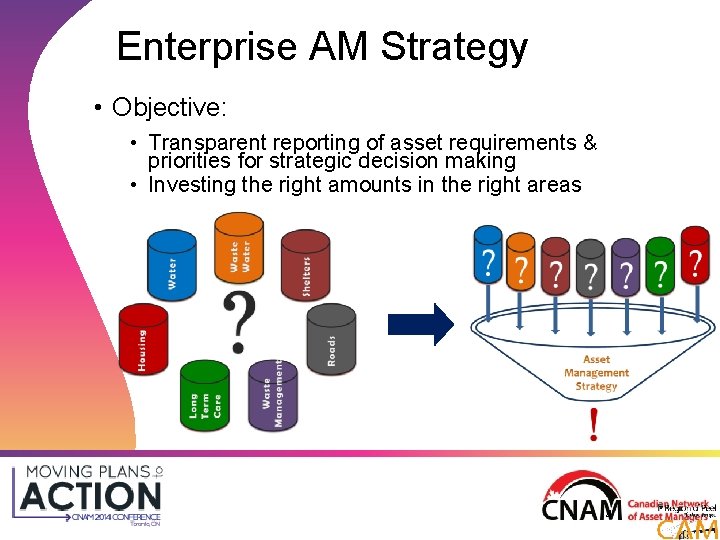
Enterprise AM Strategy • Objective: • Transparent reporting of asset requirements & priorities for strategic decision making • Investing the right amounts in the right areas 4
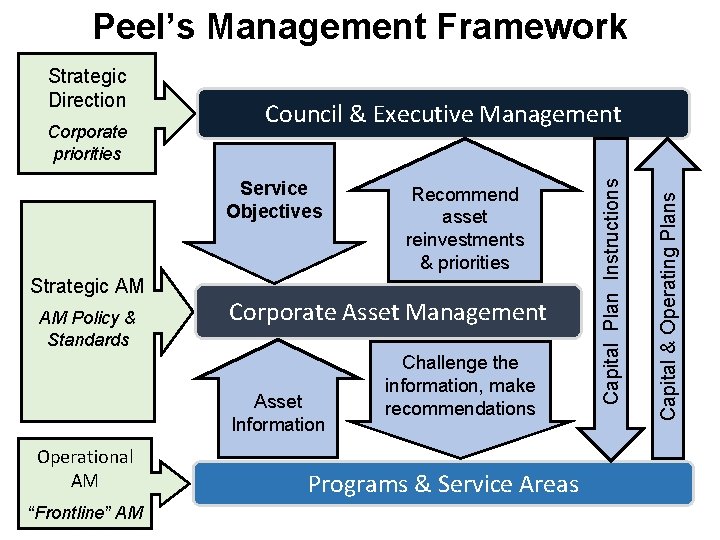
Peel’s Management Framework Service Objectives Strategic AM AM Policy & Standards Corporate Asset Management Asset Information Operational AM “Frontline” AM Recommend asset reinvestments & priorities Challenge the information, make recommendations Programs & Service Areas Capital & Operating Plans Corporate priorities Council & Executive Management Capital Plan Instructions Strategic Direction
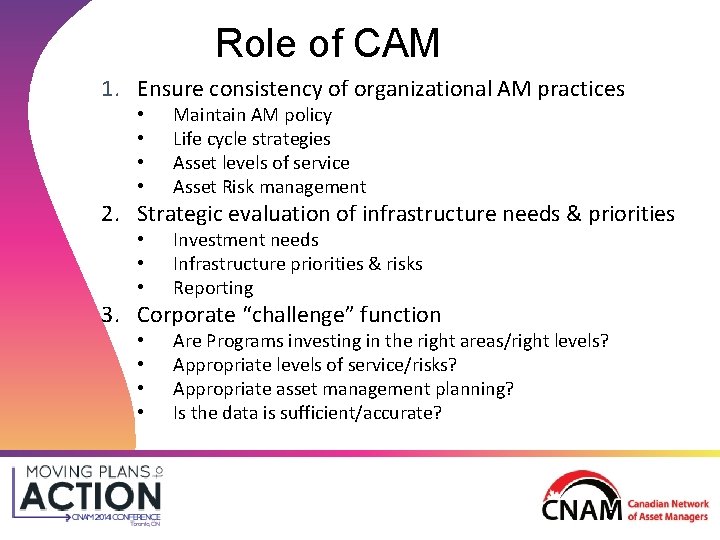
Role of CAM 1. Ensure consistency of organizational AM practices • • Maintain AM policy Life cycle strategies Asset levels of service Asset Risk management 2. Strategic evaluation of infrastructure needs & priorities • • • Investment needs Infrastructure priorities & risks Reporting 3. Corporate “challenge” function • • Are Programs investing in the right areas/right levels? Appropriate levels of service/risks? Appropriate asset management planning? Is the data is sufficient/accurate? 6
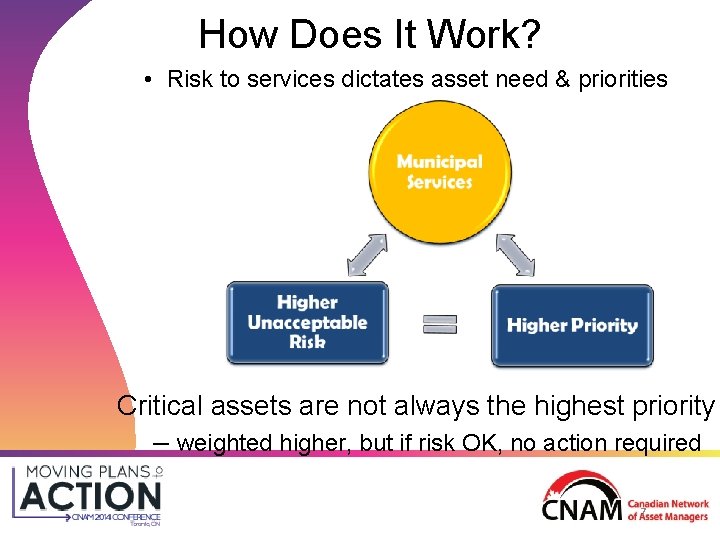
How Does It Work? • Risk to services dictates asset need & priorities Critical assets are not always the highest priority – weighted higher, but if risk OK, no action required 7
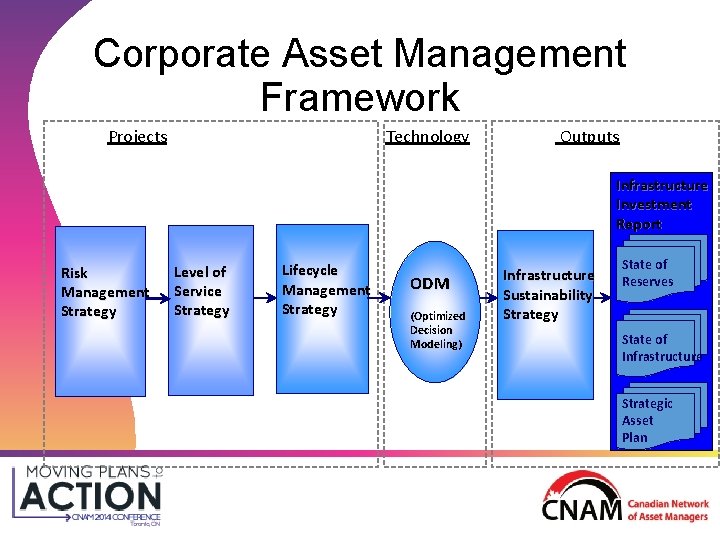
Corporate Asset Management Framework Projects Technology Outputs Infrastructure Investment Report Risk Management Strategy Level of Service Strategy Lifecycle Management Strategy ODM (Optimized Decision Modeling) Infrastructure Sustainability Strategy State of Reserves State of Infrastructure Strategic Asset Plan
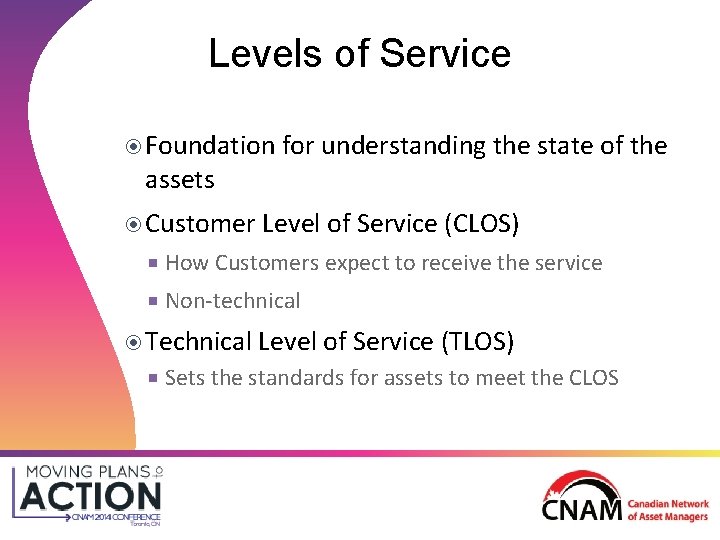
Levels of Service Foundation assets Customer for understanding the state of the Level of Service (CLOS) How Customers expect to receive the service Non-technical Technical Level of Service (TLOS) Sets the standards for assets to meet the CLOS
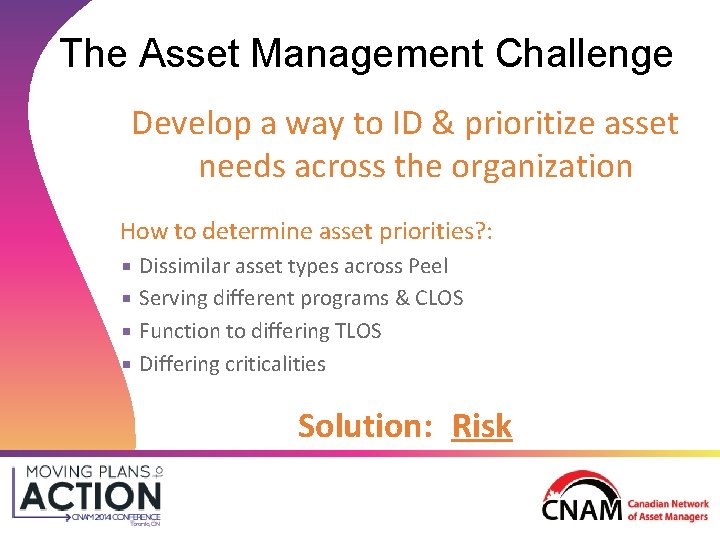
The Asset Management Challenge Develop a way to ID & prioritize asset needs across the organization How to determine asset priorities? : Dissimilar asset types across Peel Serving different programs & CLOS Function to differing TLOS Differing criticalities Solution: Risk
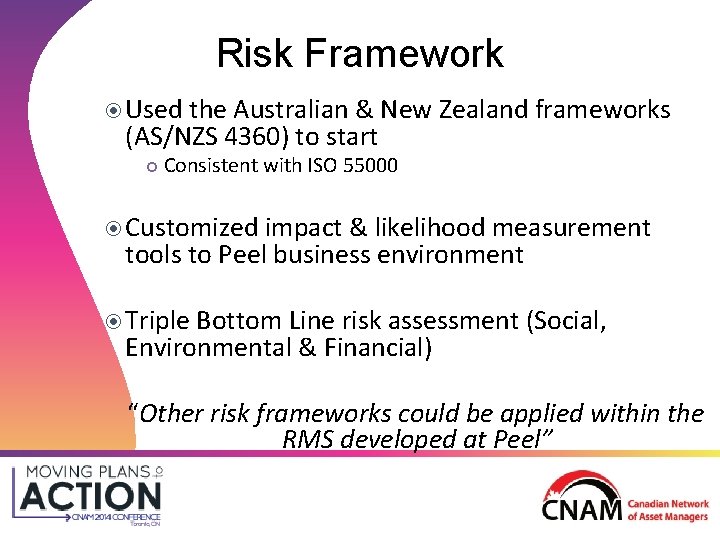
Risk Framework Used the Australian & New Zealand frameworks (AS/NZS 4360) to start Consistent with ISO 55000 Customized impact & likelihood measurement tools to Peel business environment Triple Bottom Line risk assessment (Social, Environmental & Financial) “Other risk frameworks could be applied within the RMS developed at Peel”
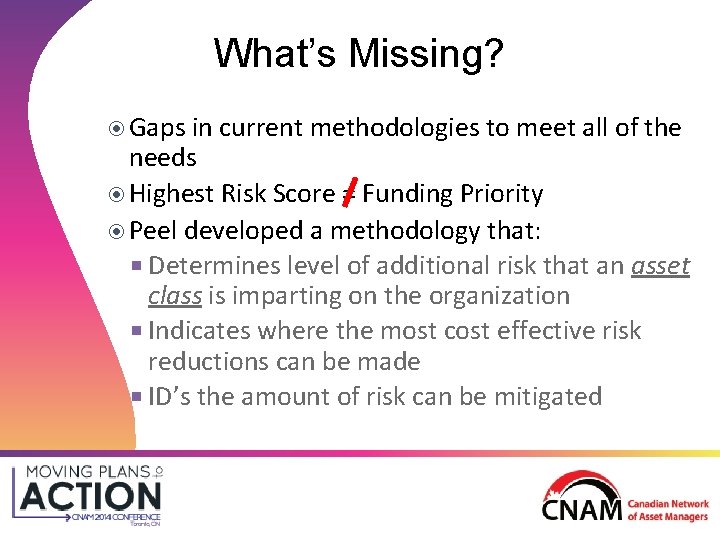
What’s Missing? Gaps in current methodologies to meet all of the needs Highest Risk Score = Funding Priority Peel developed a methodology that: Determines level of additional risk that an asset class is imparting on the organization Indicates where the most cost effective risk reductions can be made ID’s the amount of risk can be mitigated
Goals of Peel’s RMS Risk is measured relative to the end services; An organizational context on the level of risk; Correlation between the asset LOS needs & risk it imparts on the services; A dynamic comparative basis for prioritization across diverse assets; A connection between comparative risk & funding.
Where Do You Start? Methodologies Organizations BUT… exist to assess current Risk can define their current LOS How do they connect? How do changes in one affect the other? It starts with assessing the assets risk profile
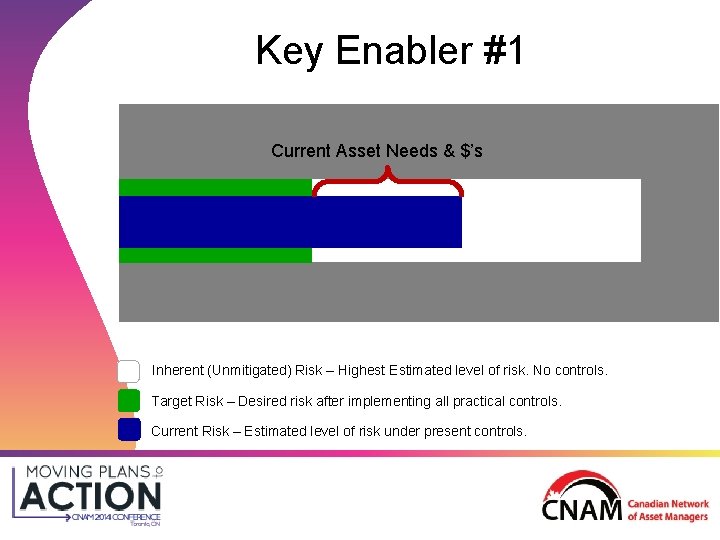
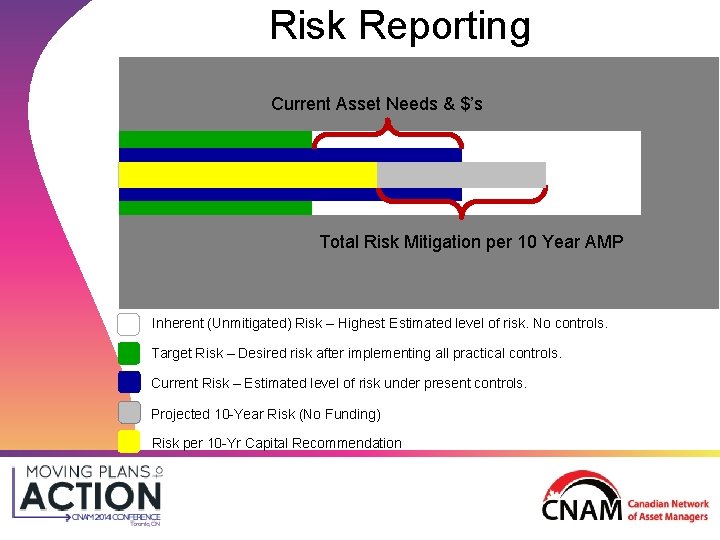
Key Enabler #1 Current Asset Needs & $’s Inherent (Unmitigated) Risk – Highest Estimated level of risk. No controls. Target Risk – Desired risk after implementing all practical controls. Current Risk – Estimated level of risk under present controls.
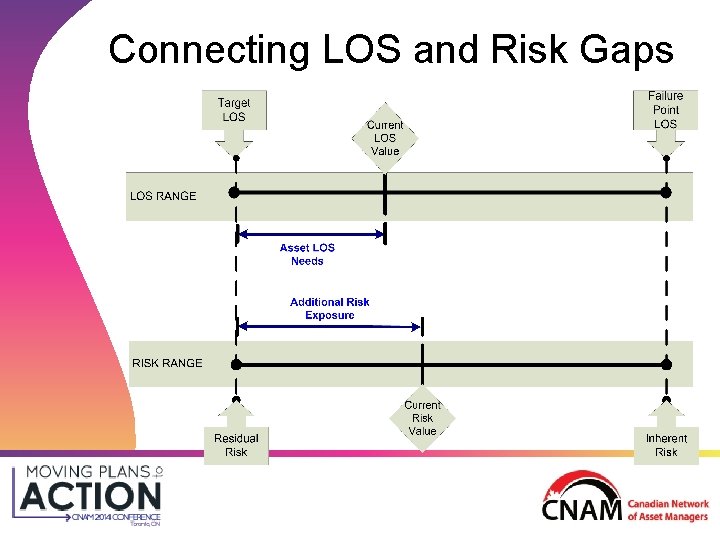
Connecting LOS and Risk Gaps
Key Enabler #2 EQUALIZING LOS MEASURES To enable the plotting of the current LOS of diverse assets along the LOS range. Assessment of where the asset class as a whole falls along the LOS range. % Avg. % of Assets Condition LOS Assets = + Not x Assets Not Value Meeting LOS LOS
Key Enabler #3 DEFINING LOS TO RISK RELATIONSHIP Determined the LOS Gap Determined how to Calculate LOS Value Determined the Risk Gap How does this relate to the Risk Value?
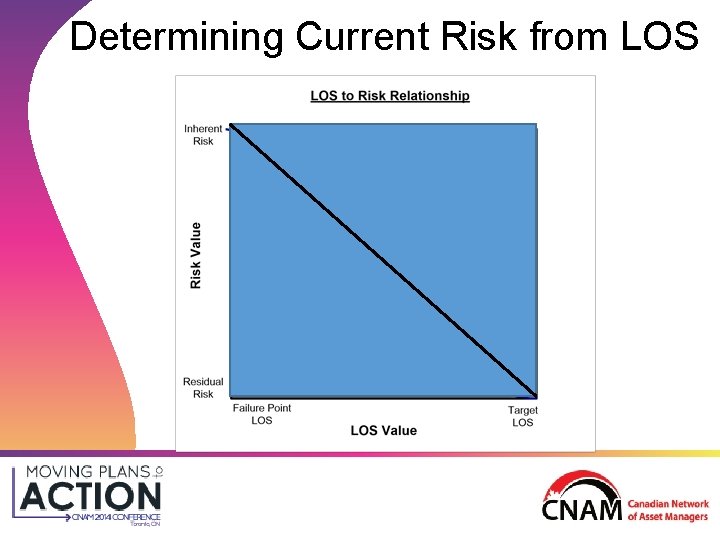
Determining Current Risk from LOS
The Complete Connection LOS to risk relationship: Key Enabler #1 – identifies the risk and LOS ranges & how they connect; Key Enabler #2 – facilitates the placement of the current LOS value along the LOS range; Key Enabler #3 – defines the LOS to risk range relationship enabling the placement of the current risk value along the risk range.
Practical Applications • Enhanced Risk Reporting • Organizational Prioritization • Corporate Budgeting & Reserve Planning • Program Decision Making • Mini case study
Risk Reporting Current Asset Needs & $’s Total Risk Mitigation per 10 Year AMP Inherent (Unmitigated) Risk – Highest Estimated level of risk. No controls. Target Risk – Desired risk after implementing all practical controls. Current Risk – Estimated level of risk under present controls. Projected 10 -Year Risk (No Funding) Risk per 10 -Yr Capital Recommendation
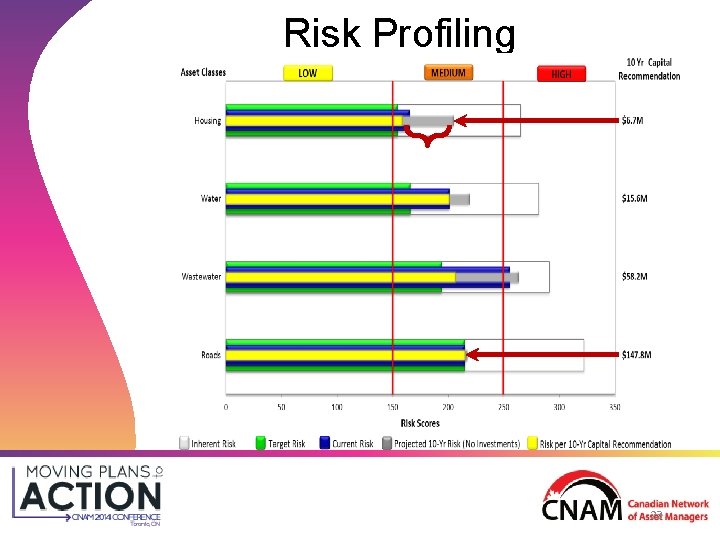
Risk Profiling 23
Long Term Expenditure Forecast
Program Level Decision Making • Peel’s high level Corporate Asset Management application at program level: • To highlight detailed asset priorities • To support budget asks for program improvements • To support asset Repair/Replace/Dispose decisions • To assess Level of Service Changes
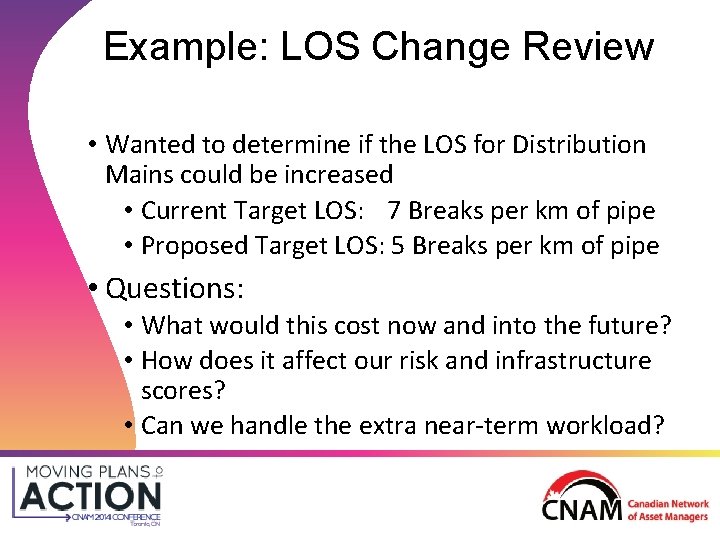
Example: LOS Change Review • Wanted to determine if the LOS for Distribution Mains could be increased • Current Target LOS: 7 Breaks per km of pipe • Proposed Target LOS: 5 Breaks per km of pipe • Questions: • What would this cost now and into the future? • How does it affect our risk and infrastructure scores? • Can we handle the extra near-term workload?
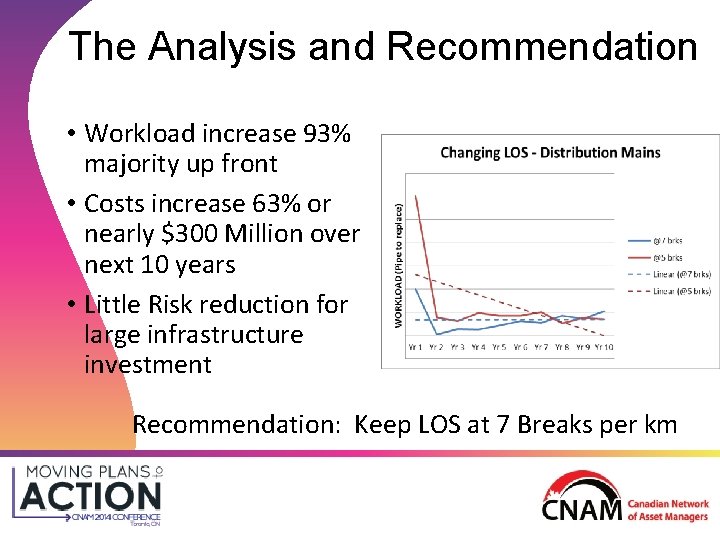
The Analysis and Recommendation • Workload increase 93% majority up front • Costs increase 63% or nearly $300 Million over next 10 years • Little Risk reduction for large infrastructure investment Recommendation: Keep LOS at 7 Breaks per km
Advantages… 1. The establishment of a link between an asset’s current LOS and current risk, 2. 3. Allows dynamic and current performance monitoring of assets across the organization If you can forward model LOS, you can forward model Risk accordingly The Risk gaps can be used to prioritize asset needs across many classes. Applying cost to LOS needs enables a direct relationship between Risk and $. Dollars can be optimized for Risk Reduction.
Advantages… 4. 5. 6. 7. Performance measures can be established to track improvements in LOS and risk over time. Boundary risk scores can be adjusted at any time, as programs & the environments in which they operate change. This holistic view of the asset infrastructure enables the establishment of risk tolerances & changes to LOS. Proven beneficial at a portfolio basis as evidence to support program level decision making.
Conclusions Peel’s risk-centric approach aids strategic decision-making It optimizes funding across all asset groups i. e. How do we best “stretch” the citizens’ tax dollar? Helps prioritize asset needs Is an integral piece of Optimized Decision Modeling at Peel
Questions? Contact Me: Leanne Brannigan Advisor, Asset Management Region of Peel leanne. brannigan@peelregion. ca