
Level 2 Stroke Awareness Award Blockage TIA Stroke
Level 2 Stroke Awareness Award Blockage TIA Stroke Awareness time FAST Day 1 Sf. C QCF Unit SCM 201
Group Agreement • • • Confidentiality Respect Mobile Phones Break times Domestics (Fire, WC) Introductions Sf. C QCF Unit SCM 201
Aims • Provide an understanding of different types of Stroke. Signs, symptoms and effect on the person. • Promote appropriate responses in the event of a Stroke and positive management and support following a Stroke Sf. C QCF Unit SCM 201
Learning Outcomes • Know what a Stroke is • Know how to recognise Stroke • Understand the management of risk factors • Understand the importance of emergency response and treatment • Understand the management of Stroke Sf. C QCF Unit SCM 201
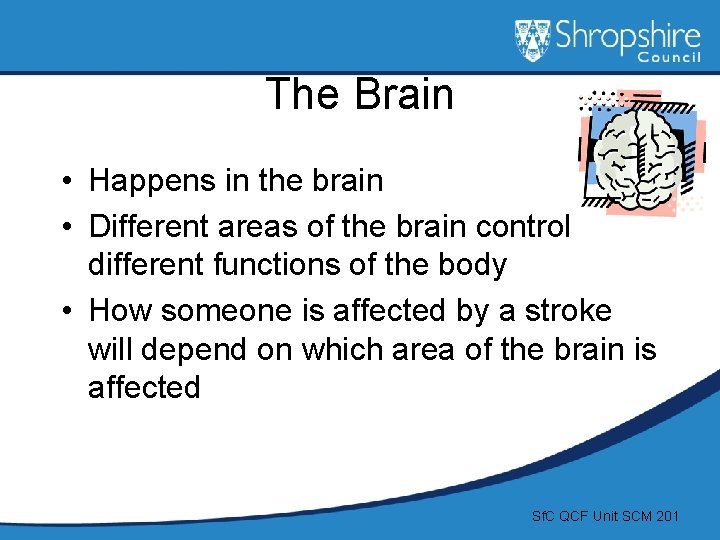
The Brain • Happens in the brain • Different areas of the brain control different functions of the body • How someone is affected by a stroke will depend on which area of the brain is affected Sf. C QCF Unit SCM 201
BRAIN Sf. C QCF Unit SCM 201
What is a Stroke? • The blood supply is cut off to the brain • Stops oxygen and nutrients reaching the brain • Damages or kills brain cells and stops parts of the brain working properly Sf. C QCF Unit SCM 201
Other conditions mistaken for stroke • Hypoglycemia (low blood sugar) • Bells Palsy • Migraine • Epilepsy Sf. C QCF Unit SCM 201
What is Stroke? • Two types of stroke • Ischaemic – most common type of stroke (approx 80%) • Hemorrhagic- less common type of stroke (approx 20%) Sf. C QCF Unit SCM 201
Ischaemic Stroke • A blockage • cerebral thrombosis a blood clot in an artery to the brain • cerebral embolism a clot, air bubble of globule of fat carried to the brain and causing a blockage Sf. C QCF Unit SCM 201
Haemorrhagic Stroke • A bleed • Intracerebral haemorrhage a blood vessel bursts in the brain • Subarachnoid haemorrhage a blood vessel burst in the space between the brain and skull Sf. C QCF Unit SCM 201
Stroke animation stroke Sf. C QCF Unit SCM 201
Trans Ischaemic Attack • TIA or mini stroke • Similar signs to a stroke • Temporary disruption of supply of blood Sf. C QCF Unit SCM 201
Trans Ischaemic Attack • Part of the brain goes without oxygen and nutrients for a brief period of time • A sign that parts of the brain aren't getting enough oxygen Sf. C QCF Unit SCM 201
Trans Ischaemic Attack • Only lasts a short period of time minutes or hours up to 24 hours • Don’t Ignore signs increased risk of stroke Sf. C QCF Unit SCM 201
TIA Experience NHS CHOICES TIA Sf. C QCF Unit SCM 201
Sf. C QCF Unit SCM 201
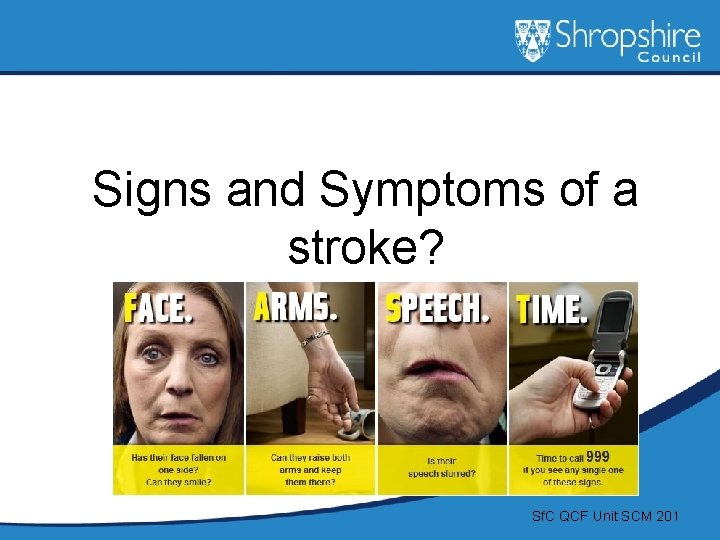
Signs and Symptoms of a stroke? Sf. C QCF Unit SCM 201
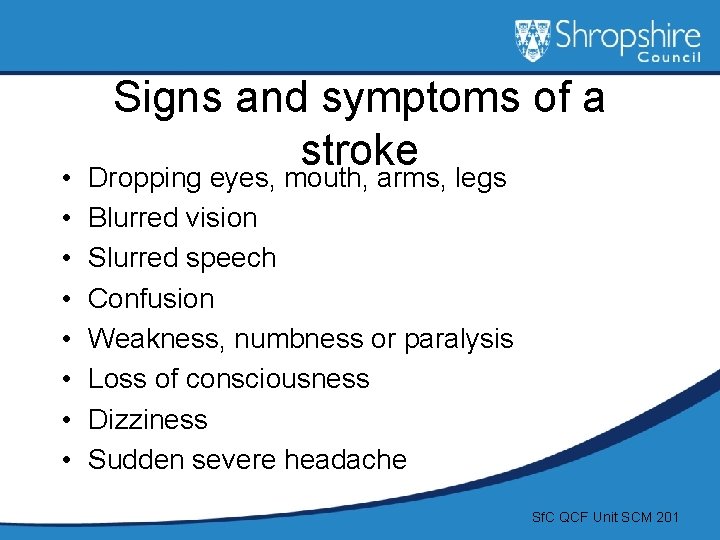
• • Signs and symptoms of a stroke Dropping eyes, mouth, arms, legs Blurred vision Slurred speech Confusion Weakness, numbness or paralysis Loss of consciousness Dizziness Sudden severe headache Sf. C QCF Unit SCM 201
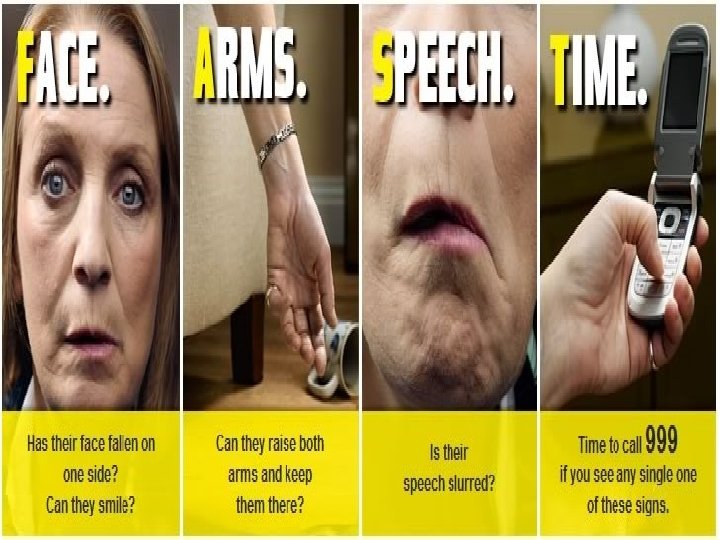
ACT FAST Sf. C QCF Unit SCM 201
Key stages of stroke • Symptoms usually develop quickly and suddenly • As a result of a blockage or bleed in the brain • Different areas of the brain relate to different areas of the body Sf. C QCF Unit SCM 201
Key Stages of stroke • This may happen when someone is asleep and they can wake up with symptoms • Symptoms include weakness, confusion, slurred speech and drooping of eyes, mouth or face Sf. C QCF Unit SCM 201
Key stages of stroke • Everyone's stroke is different and depending on the area of the brain that is effected and the damage that is done • FAST can help recognise the symptoms • Emergency treatment is needed Sf. C QCF Unit SCM 201
Key Stages of stroke • Admitted to hospital where test and scans such as MRI and CT are preformed to confirm stroke and its type • Admitted to specialist stroke unit and treatment would be given depending on the type of stroke Sf. C QCF Unit SCM 201
Key stages of stroke • Treatment is given depending on the type of stroke that has happened such as clot busting medication for ischemic strokes • As the swelling decreases damaged areas of the brain may recover Sf. C QCF Unit SCM 201
Key Stages of Stroke • Other areas of the brain can learn to take over from the parts that are too damaged to recover Sf. C QCF Unit SCM 201
Key stages of stroke • Most recovery usually happens in the first few months following a stroke however recovery can take many years • Assessments and support would be available such as SALT and physiotherapists Sf. C QCF Unit SCM 201
Key stages of stroke • Rehabilitation happens in specialist units or at home • Prevention is important as following a stroke you are at risk of having another one. Sf. C QCF Unit SCM 201
How can a stroke effect somebody? Sf. C QCF Unit SCM 201
Affected by stroke • • Eating and drinking Continence Communication Memory Behaviour Changes in mood Changes in personality Sf. C QCF Unit SCM 201
Sf. C QCF Unit SCM 201
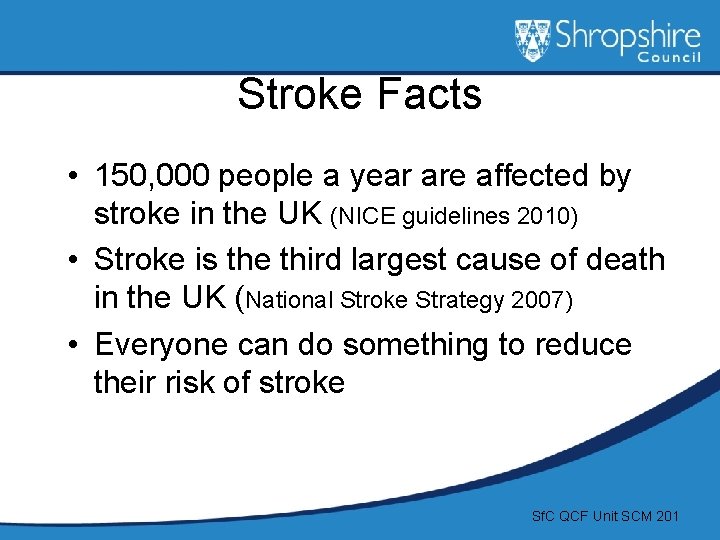
Stroke Facts • 150, 000 people a year are affected by stroke in the UK (NICE guidelines 2010) • Stroke is the third largest cause of death in the UK (National Stroke Strategy 2007) • Everyone can do something to reduce their risk of stroke Sf. C QCF Unit SCM 201
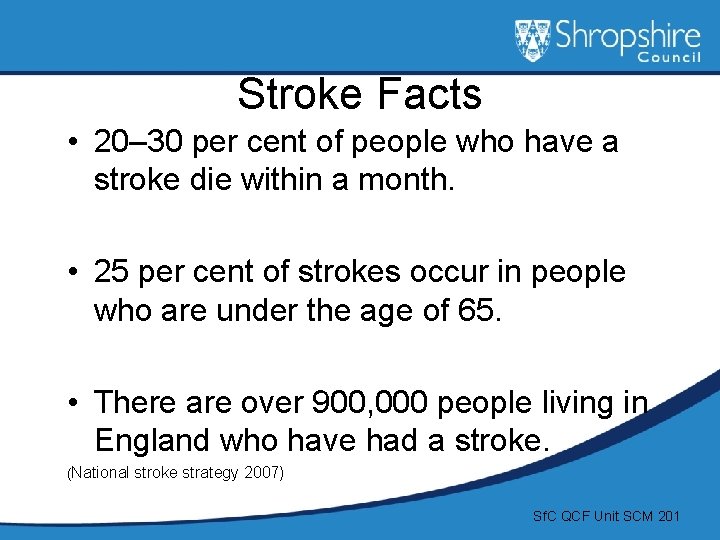
Stroke Facts • 20– 30 per cent of people who have a stroke die within a month. • 25 per cent of strokes occur in people who are under the age of 65. • There are over 900, 000 people living in England who have had a stroke. (National stroke strategy 2007) Sf. C QCF Unit SCM 201
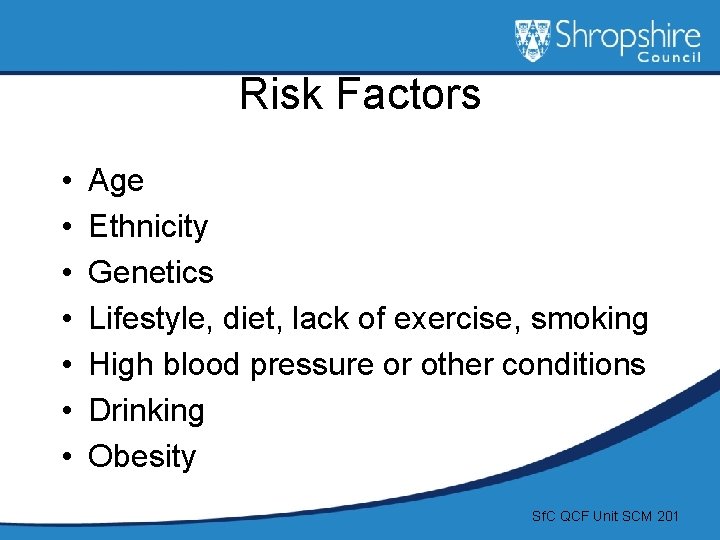
Risk Factors • • Age Ethnicity Genetics Lifestyle, diet, lack of exercise, smoking High blood pressure or other conditions Drinking Obesity Sf. C QCF Unit SCM 201
How might risk change? How might these risk factors change in different settings? Sf. C QCF Unit SCM 201
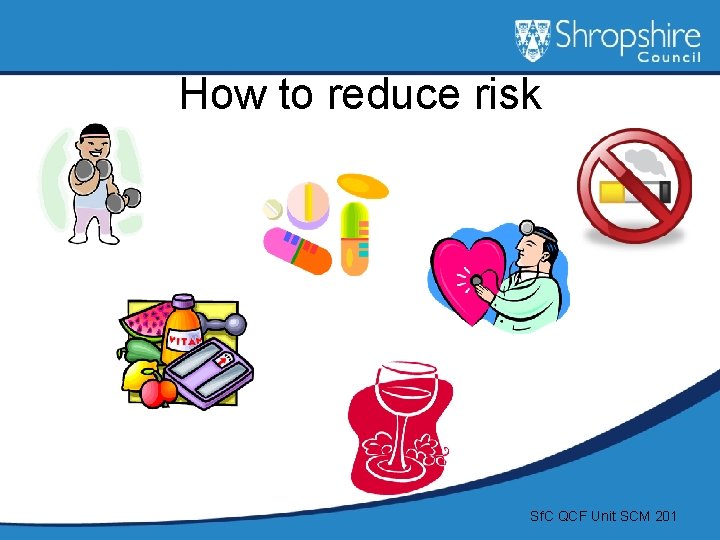
How to reduce risk Sf. C QCF Unit SCM 201
Review of day 1 • Know what a Stroke is • Know how to recognise Stroke • Understand the management of risk factors • Understand the importance of emergency response and treatment • Understand the management of Stroke Sf. C QCF Unit SCM 201

Homework • Revisit skills today and practice • Make a start on completing workbook • Complete reflective journal from todays session • Record all your learning and hours Sf. C QCF Unit SCM 201
How to contact me • Phone 01743 254815 • Email jade. matravers@shropshire. gov. uk Sf. C QCF Unit SCM 201
Level 2 Stroke Awareness Award Blockage TIA Stroke Awareness time FAST Day 2 Sf. C QCF Unit SCM 201
Group Agreement • • • Confidentiality Respect Mobile Phones Break times Domestics (Fire, WC) Introductions Sf. C QCF Unit SCM 201
Aims • Provide an understanding of different types of Stroke. Signs, symptoms and effect on the person. • Promote appropriate responses in the event of a Stroke and positive management and support following a Stroke Sf. C QCF Unit SCM 201
Learning Outcomes • Know what a Stroke is • Know how to recognise Stroke • Understand the management of risk factors • Understand the importance of emergency response and treatment • Understand the management of Stroke Sf. C QCF Unit SCM 201
What did we cover last week? Sf. C QCF Unit SCM 201

Bubble Busters A Trainer Bubble Production Sf. C QCF Unit SCM 201 © Trainer Bubble
Restart H B H I A T B L P S W S B T D F B G R O © Trainer Bubble
Why is stroke a medical emergency? • TIME = BRAIN • The quicker help is sort the quicker treatment is can be given • Limiting the damage to the brain Sf. C QCF Unit SCM 201
Suspecting Stroke • FAST • Check in safe position • Do not give food/drink whist waiting for help • Check airway is open and clearrecovery position • Call 999 – check your policies and procedures. Sf. C QCF Unit SCM 201

• • • Impact on individual of key stages of stoke Onset Diagnosis Treatment Rehabilitation Prevention Sf. C QCF Unit SCM 201
Sf. C QCF Unit SCM 201
What would you need to record following this incident? Sf. C QCF Unit SCM 201
Recording • • • Time eg first symptoms When, where, who What symptoms you observed Any observations taken What action you took eg FAST, Recovery position etc Sf. C QCF Unit SCM 201
Recording • Time you summoned help, who you called, name or reference number • Who else was there, help received • Who else you contacted eg relative, manager etc • Any other medical information Sf. C QCF Unit SCM 201
Why is stroke care important? Aim one (National stroke strategy 2007) • For those who have had a stroke and their relatives and carers, whether at home or in care homes, to achieve a good quality of life and maximise independence, well-being and choices. Sf. C QCF Unit SCM 201
Why is stroke care important? • • • Psychological and emotional well being Improved recovery Active participation Quality of life Needs met Sf. C QCF Unit SCM 201
Support ? Sf. C QCF Unit SCM 201
- Slides: 57