
LEV VYGOTSKY Laura Rees 4 7 10 Alexis
- Slides: 12
LEV VYGOTSKY Laura Rees (4, 7, 10), Alexis Vander Tuig (3, 6, 9), and Nichole Simon (2, 5, 8)
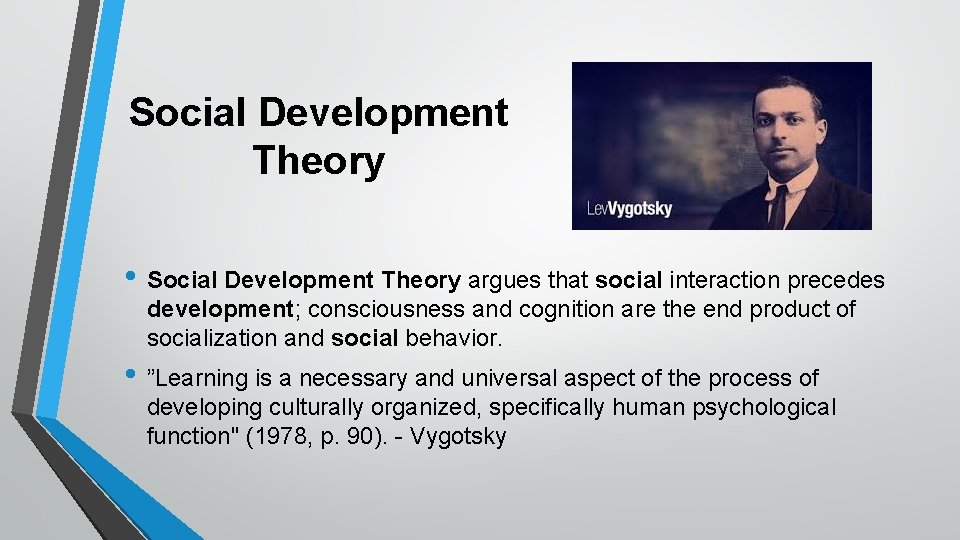
Social Development Theory • Social Development Theory argues that social interaction precedes development; consciousness and cognition are the end product of socialization and social behavior. • ”Learning is a necessary and universal aspect of the process of developing culturally organized, specifically human psychological function" (1978, p. 90). - Vygotsky
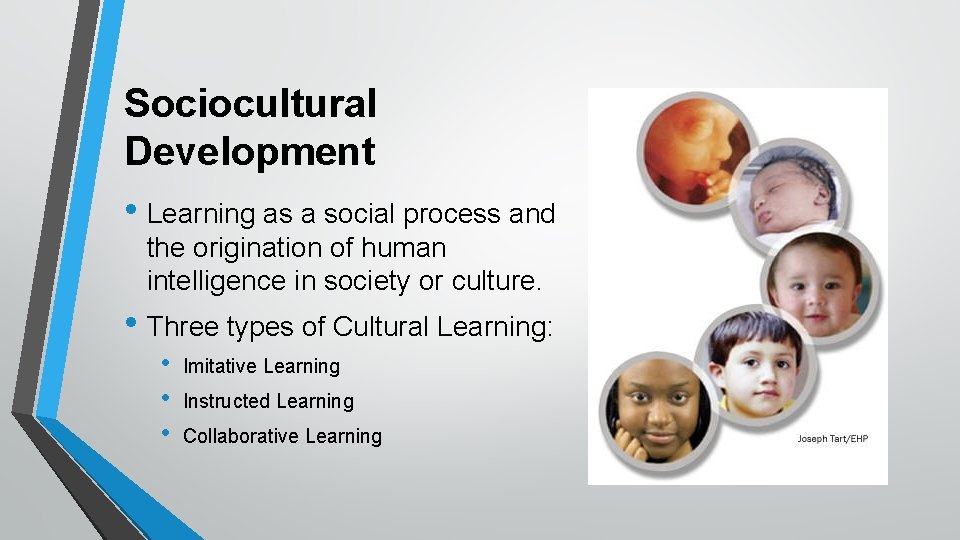
Sociocultural Development • Learning as a social process and the origination of human intelligence in society or culture. • Three types of Cultural Learning: • • • Imitative Learning Instructed Learning Collaborative Learning
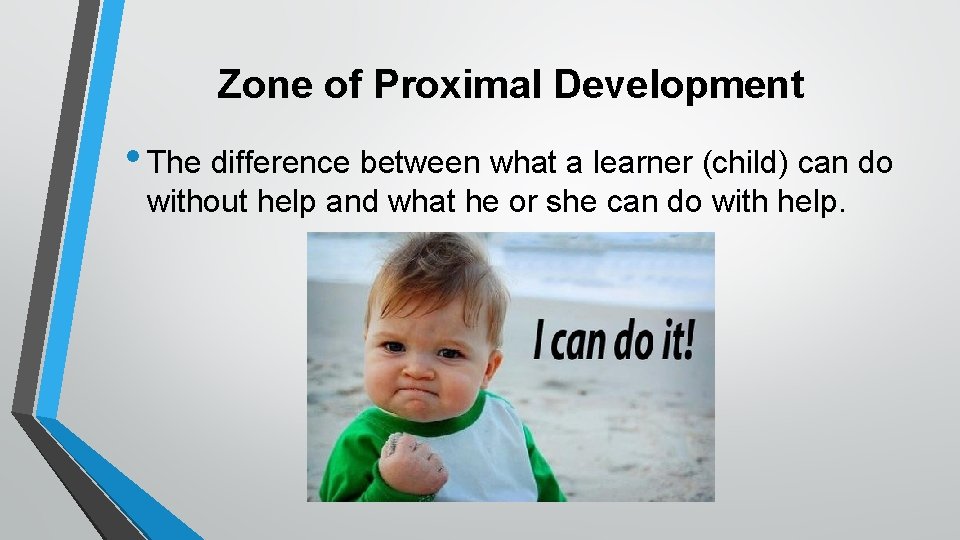
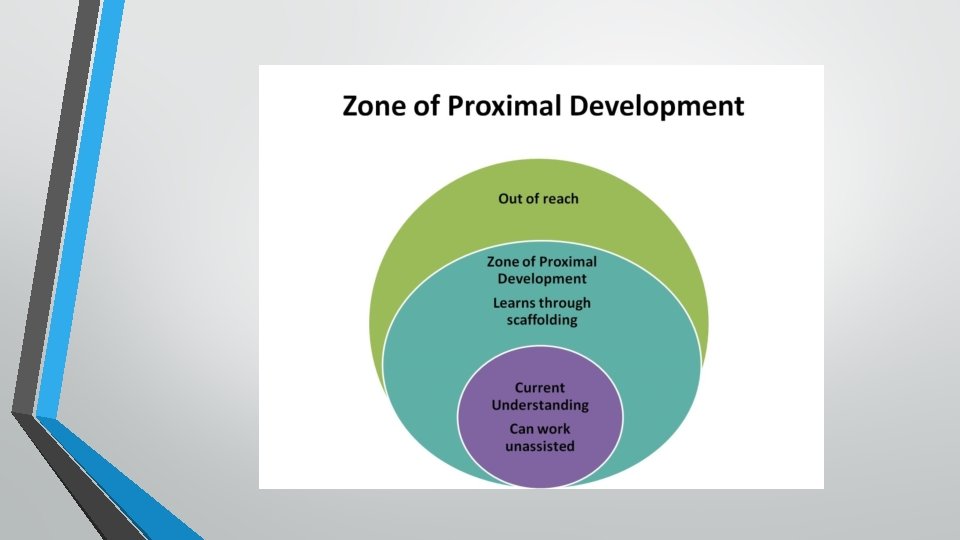
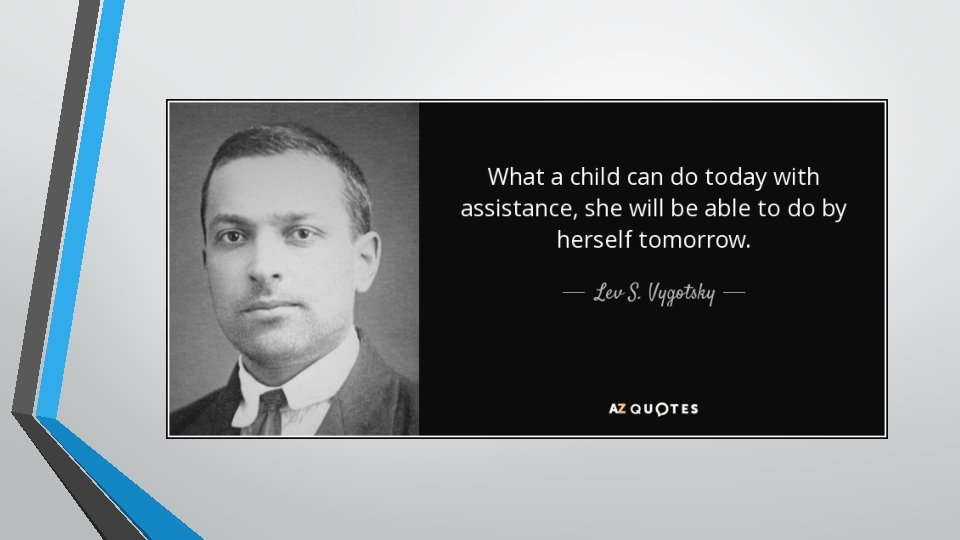
Zone of Proximal Development • The difference between what a learner (child) can do without help and what he or she can do with help.
Language Developme nt • Lev Vygotsky also stressed the importance of language in the development of infants and children linked to their surroundings. • One of the first psychologists to document the importance of language.
Pre-Intellectual Social Speech • No thoughts constructed through the use of language. • Speech used for social change. • 0 -3 years of age
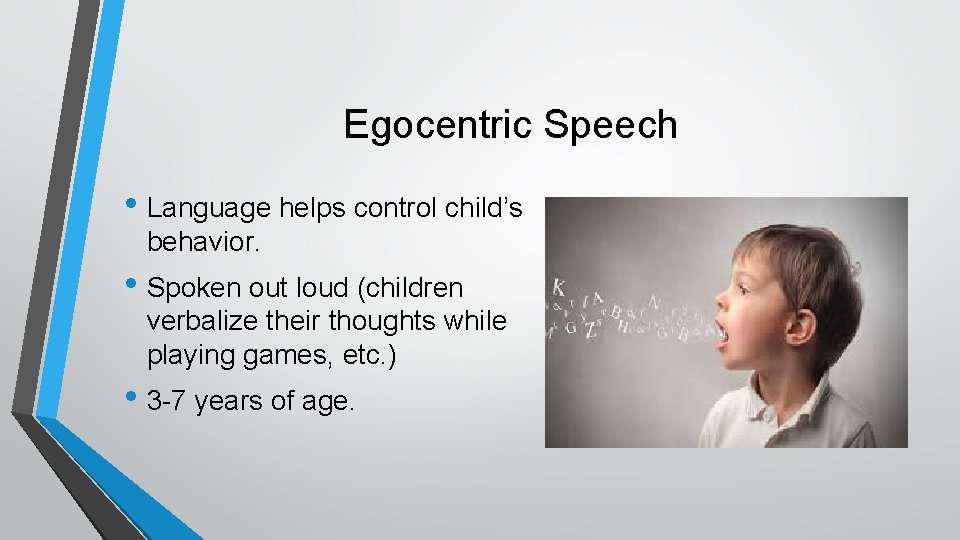
Egocentric Speech • Language helps control child’s behavior. • Spoken out loud (children verbalize their thoughts while playing games, etc. ) • 3 -7 years of age.
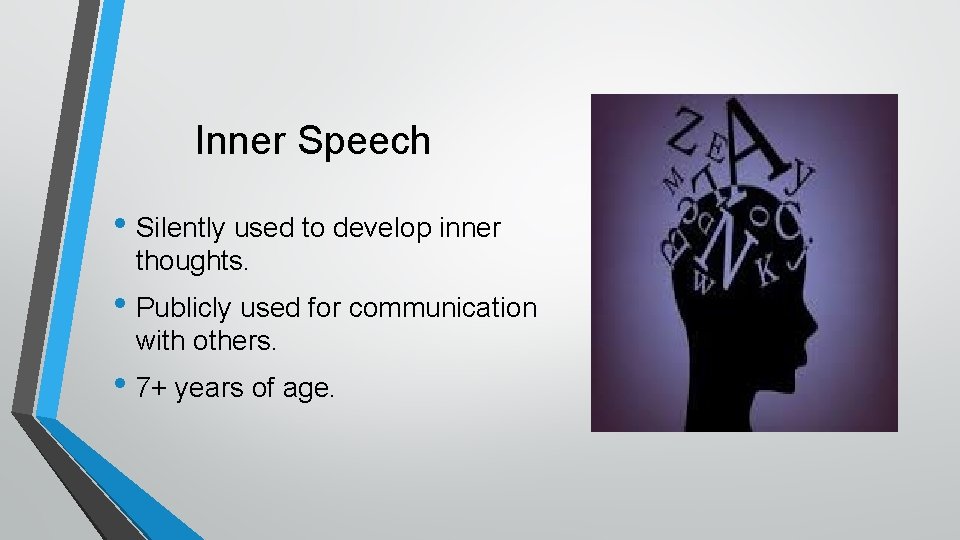
Inner Speech • Silently used to develop inner thoughts. • Publicly used for communication with others. • 7+ years of age.
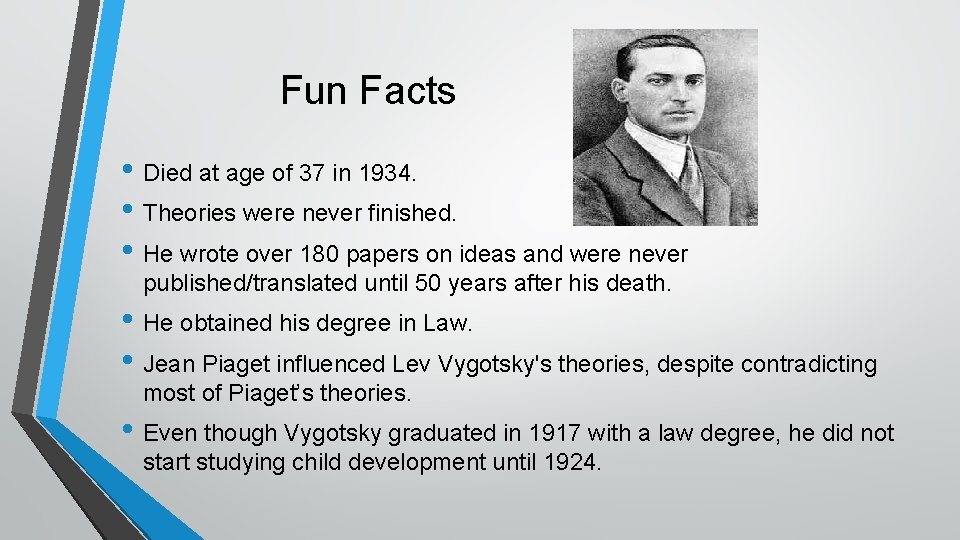
Fun Facts • Died at age of 37 in 1934. • Theories were never finished. • He wrote over 180 papers on ideas and were never published/translated until 50 years after his death. • He obtained his degree in Law. • Jean Piaget influenced Lev Vygotsky's theories, despite contradicting most of Piaget’s theories. • Even though Vygotsky graduated in 1917 with a law degree, he did not start studying child development until 1924.
References • Lev Vygotsky. (n. d. ). Retrieved July 11, 2016, from • • http: //www. newworldencyclopedia. org/entry/Lev_Vygotsky Mc. Leod, S. (2007). Lev Vygotsky. Retrieved July 12, 2016, from http: //www. simplypsychology. org/vygotsky. html Vygotsky’s theories. Retrieved July 15, 2016, from http: //genderandvygotsky. weebly. com/vygotskys-theories. html