
LEUKOCORIA DIFFERENTIAL DIAGNOSIS LEUKOCORIA Congenital Cataract n Retinoblastoma


LEUKOCORIA

DIFFERENTIAL DIAGNOSIS
LEUKOCORIA Congenital Cataract n Retinoblastoma n Retinopathy of Prematurity n Persistent Hyperplastic Primary Vitreous n Retrolental Fibroplasia n Toxocariasis n Toxoplasmosis n Incontinentia pigmenti n Retinal Detachment n Cytomegalovirus Retinitis n
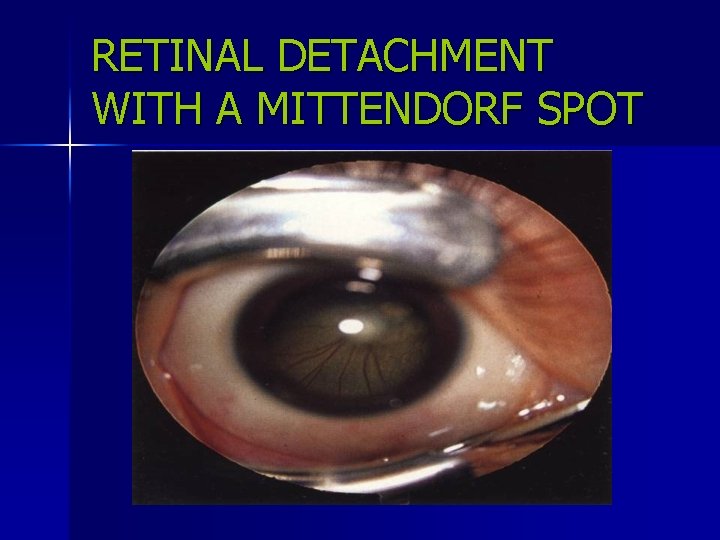
RETINAL DETACHMENT WITH A MITTENDORF SPOT
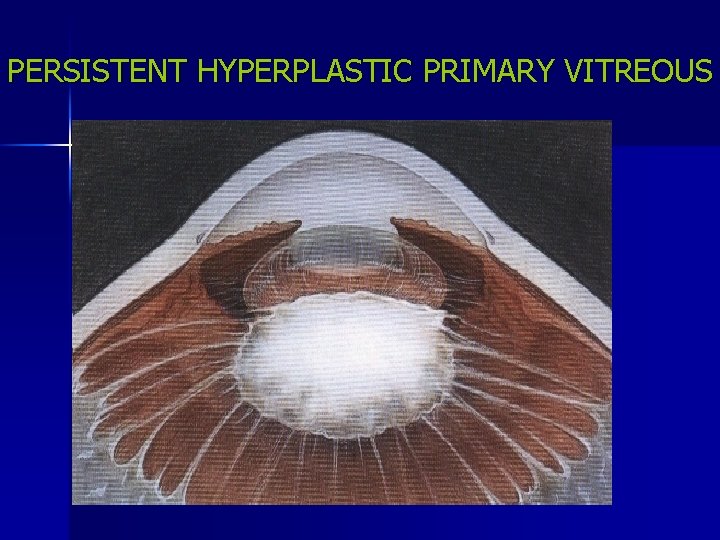
PERSISTENT HYPERPLASTIC PRIMARY VITREOUS
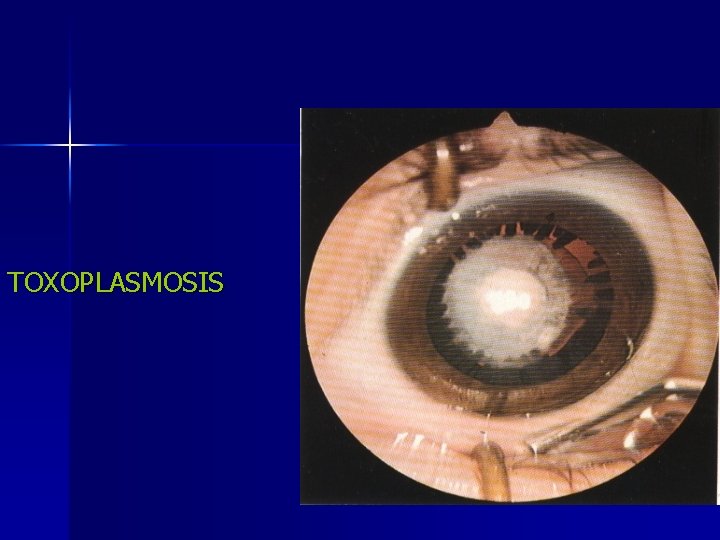
TOXOPLASMOSIS
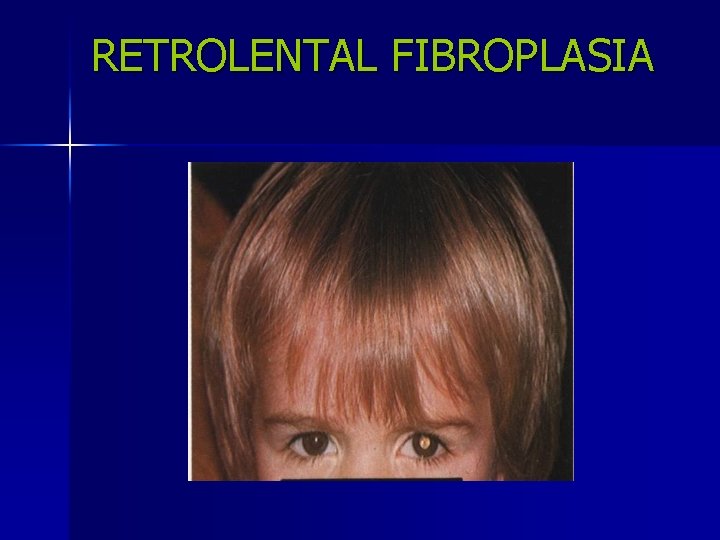
RETROLENTAL FIBROPLASIA
CONGENITAL CATARACT n An opacity in the crystalline lens, present at the time of birth or appears with in first three months of life
TYPES OF CATARACT n CONGENITAL 80 -90% n TRAUMATIC 10 -20%
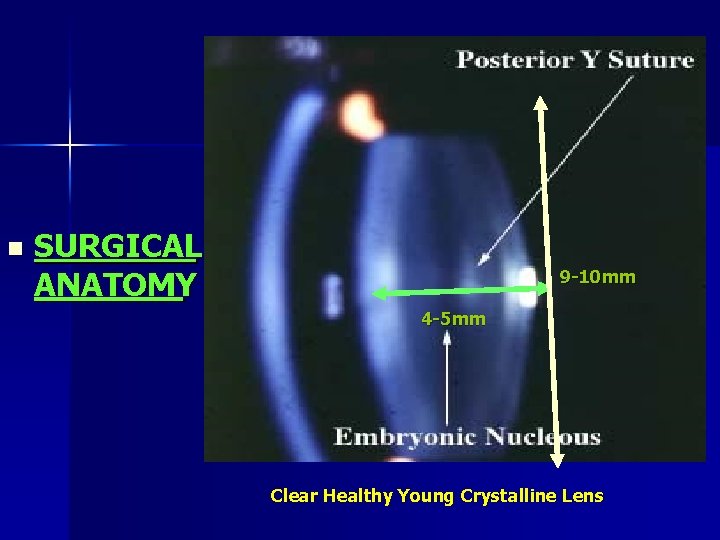
n SURGICAL ANATOMY 9 -10 mm 4 -5 mm Clear Healthy Young Crystalline Lens
INCIDENCE n n n Constitutes 20% of treatable blindness in the world Occurs in 1 in 250 live births Maybe unilateral or bilateral
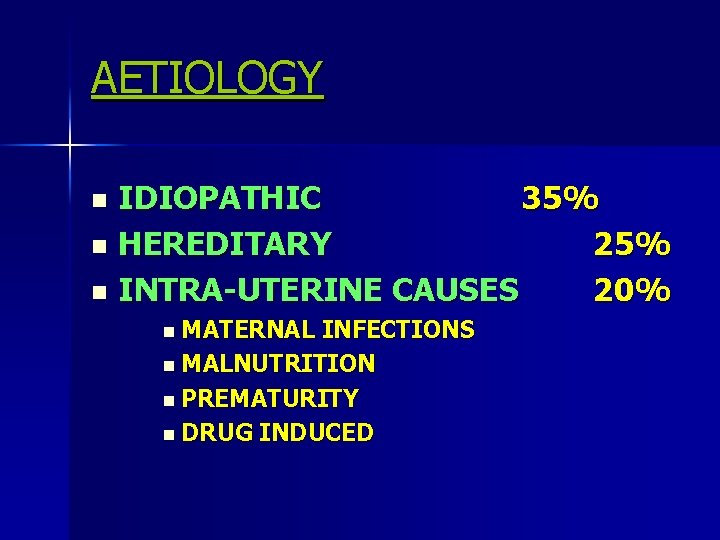
AETIOLOGY IDIOPATHIC 35% n HEREDITARY 25% n INTRA-UTERINE CAUSES 20% n n MATERNAL INFECTIONS n MALNUTRITION n PREMATURITY n DRUG INDUCED
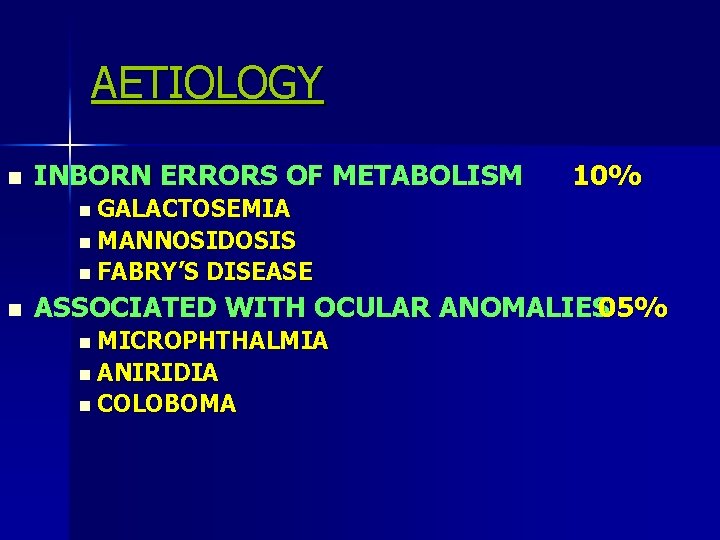
AETIOLOGY n INBORN ERRORS OF METABOLISM 10% n GALACTOSEMIA n MANNOSIDOSIS n FABRY’S n DISEASE ASSOCIATED WITH OCULAR ANOMALIES 05% n MICROPHTHALMIA n ANIRIDIA n COLOBOMA
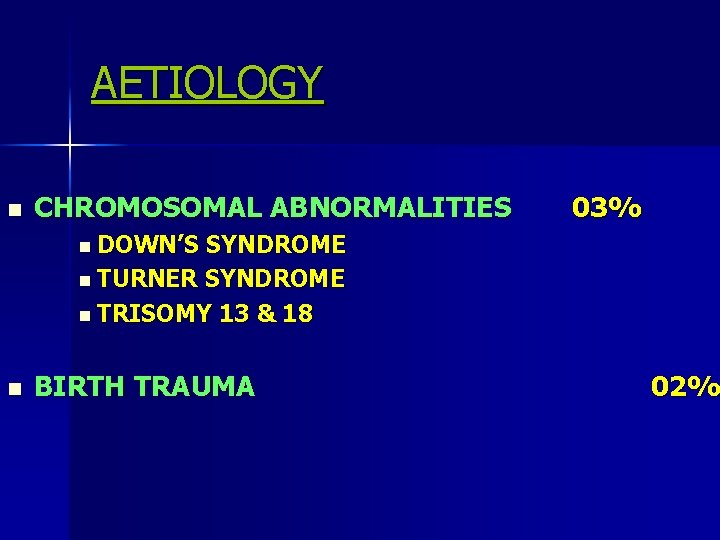
AETIOLOGY n CHROMOSOMAL ABNORMALITIES 03% n DOWN’S SYNDROME n TURNER SYNDROME n TRISOMY 13 & 18 n BIRTH TRAUMA 02%
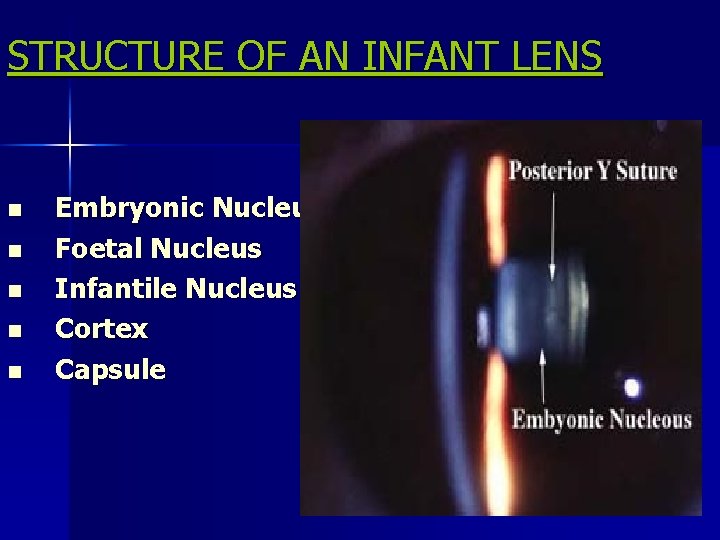
STRUCTURE OF AN INFANT LENS n n n Embryonic Nucleus Foetal Nucleus Infantile Nucleus Cortex Capsule
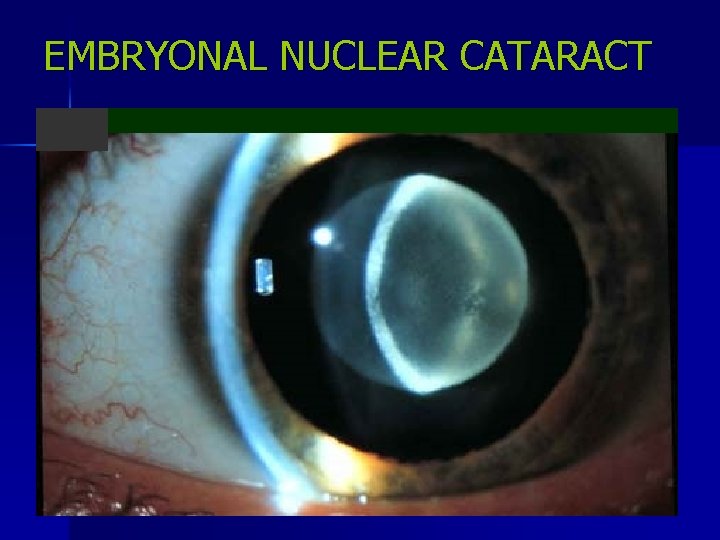
EMBRYONAL NUCLEAR CATARACT
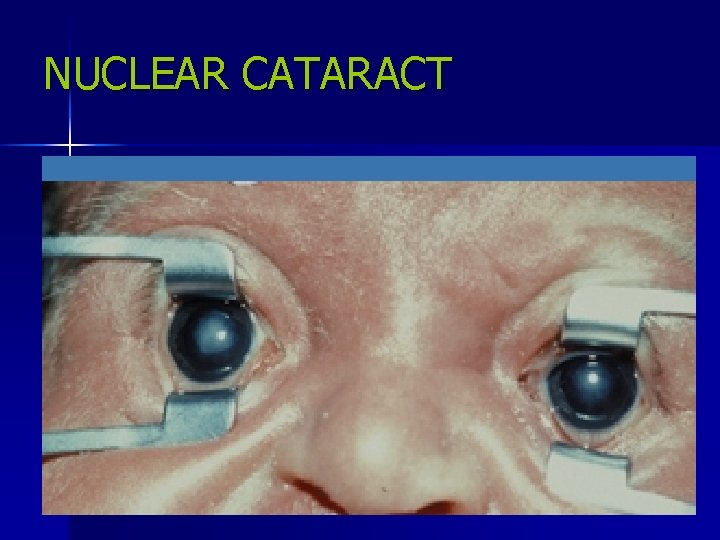
NUCLEAR CATARACT
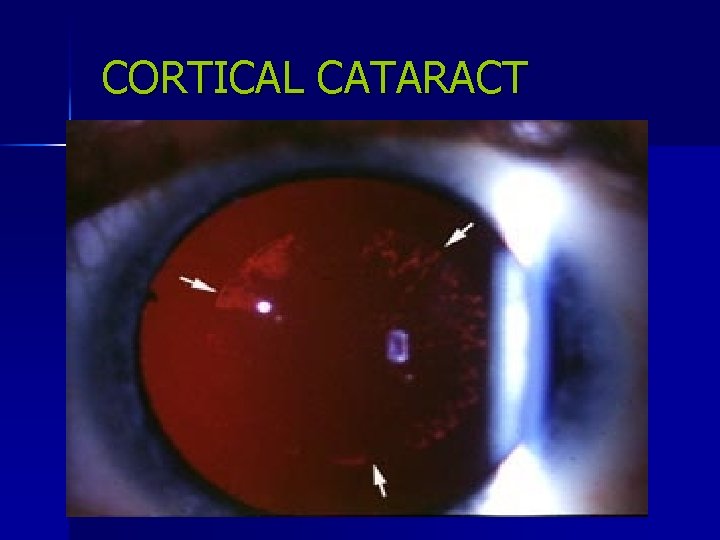
CORTICAL CATARACT
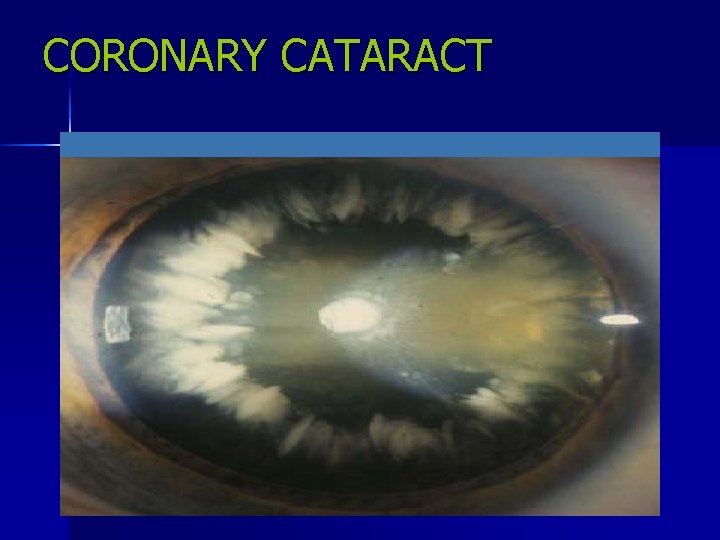
CORONARY CATARACT
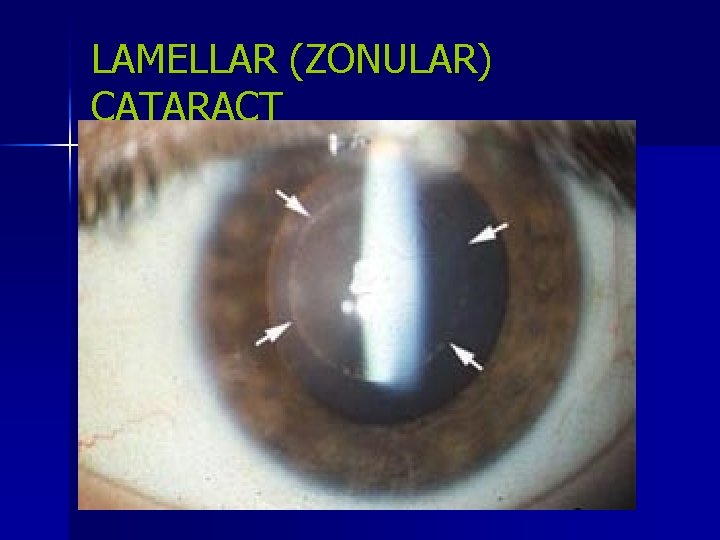
LAMELLAR (ZONULAR) CATARACT
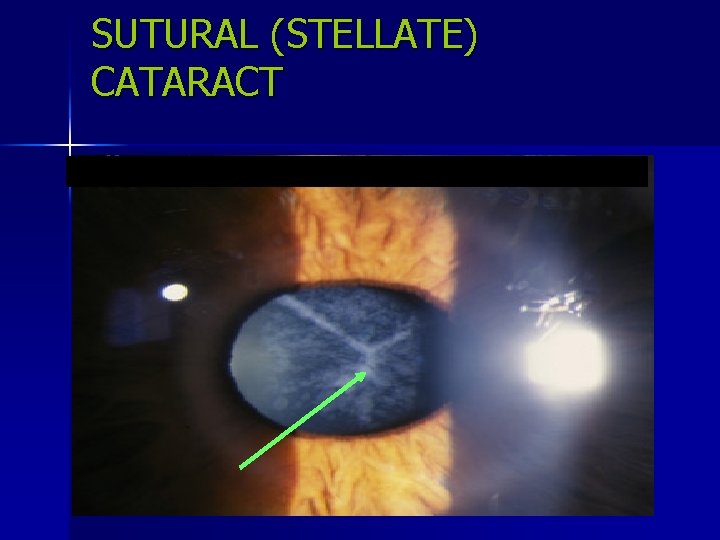
SUTURAL (STELLATE) CATARACT
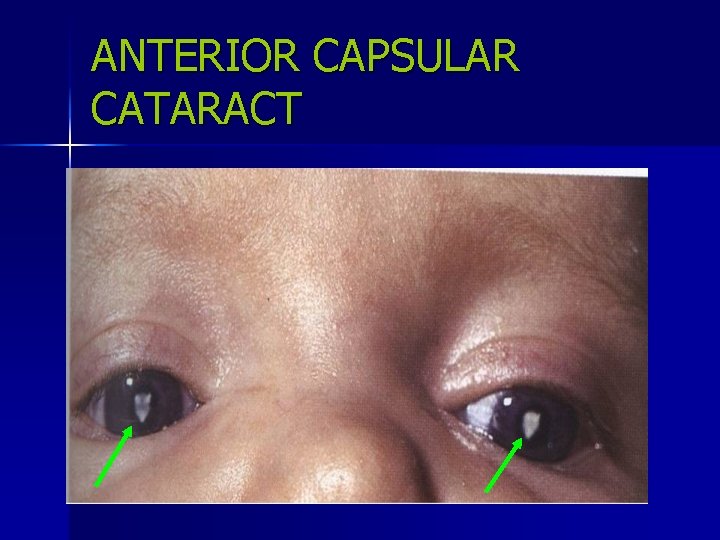
ANTERIOR CAPSULAR CATARACT
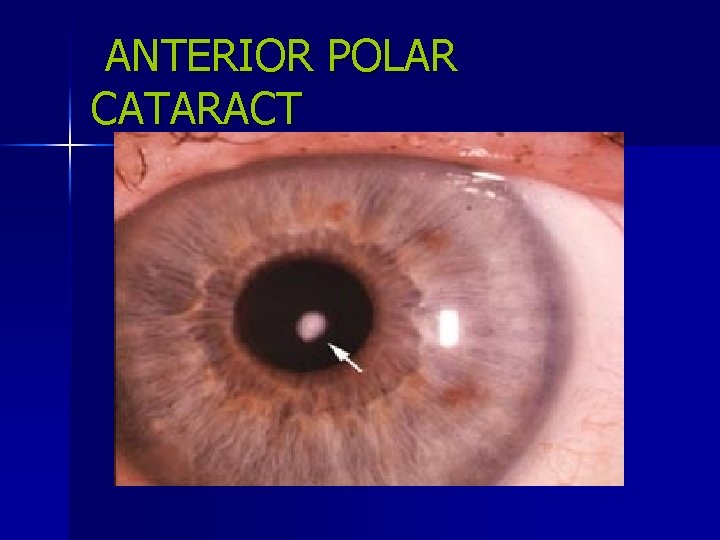
ANTERIOR POLAR CATARACT
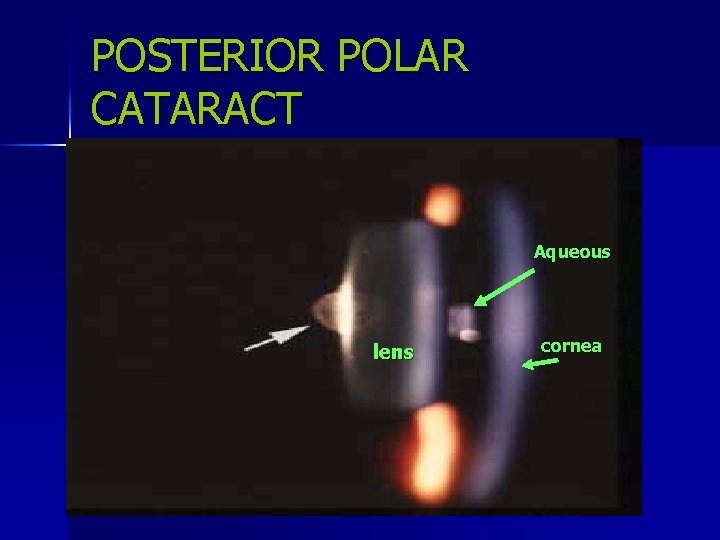
POSTERIOR POLAR CATARACT Aqueous lens cornea
CLINICAL FEATURES n n n White pupillary reflex Poor Visual Acuity Nystagmus
CLINICAL EVALUATION n n Purpose: To know: 1. Cataract density 2. Type of cataract 3. Condition of retina and optic nerve 4. Any associated ocular anomaly Steps: 1. Torch examination 2. Examination under Anesthesia – Ophthalmoscopy direct / indirect
PAEDIATRIC CONSULTATION – Dysmorphic features or suspicion of associated systemic diseases
LABORATORY INVESTIGATIONS n n TORCH screening Blood Complete picture Blood Glucose levels Urine: n Routine examination n Reducing substances
VISUAL FUNCTION EVALUATION n Visual Acuity – – – n n n Follows light or not Colour targets Reaction to occlusion Pupillary Reflexes Fixation Reflex Visual Evoked Responses (VER)
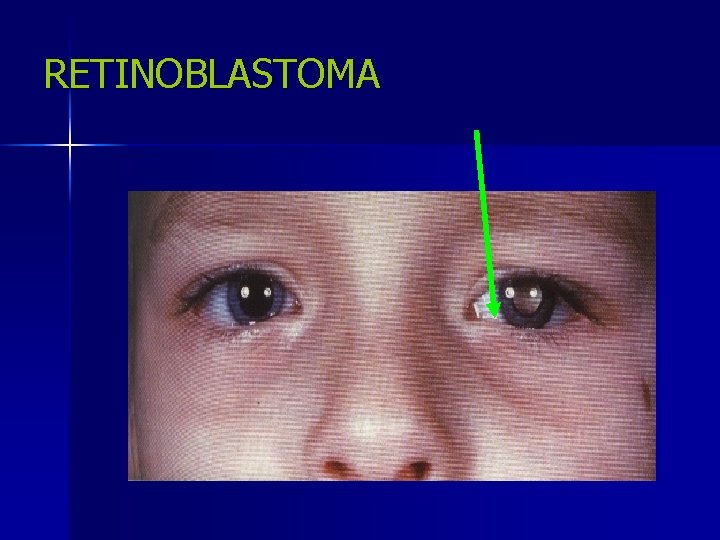
RETINOBLASTOMA
MANAGEMENT SURGERY is the only solution whenever indicated n INDICATIONS OF SURGERY – Very Dense Cataract – Moderately Dense Cataract – Mild Cataract(Central)
SURGICAL TECHNIQUES n BEFORE 18 MONTHS – Lensectomy with Anterior Vitrectomy – Simple Lens Aspiration n AFTER 18 MONTHS – Extracapsular Cataract Extraction with Posterior Chamber IOL – Phacoemulsification with Posterior Chamber IOL – Secondary IOL
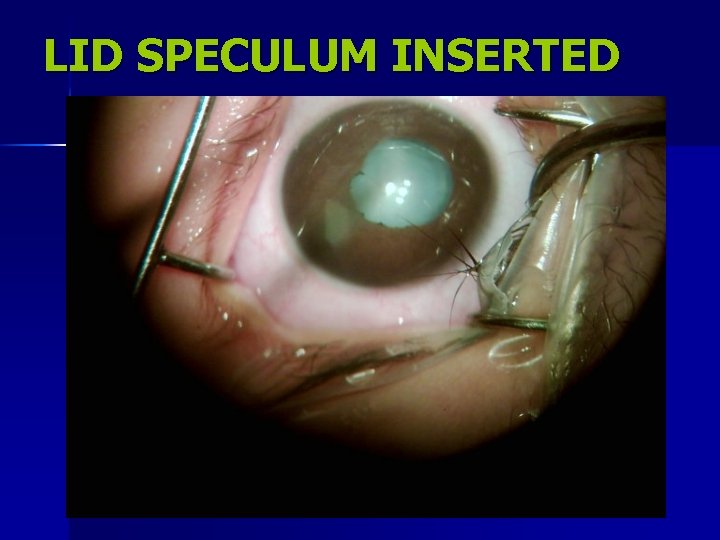
LID SPECULUM INSERTED
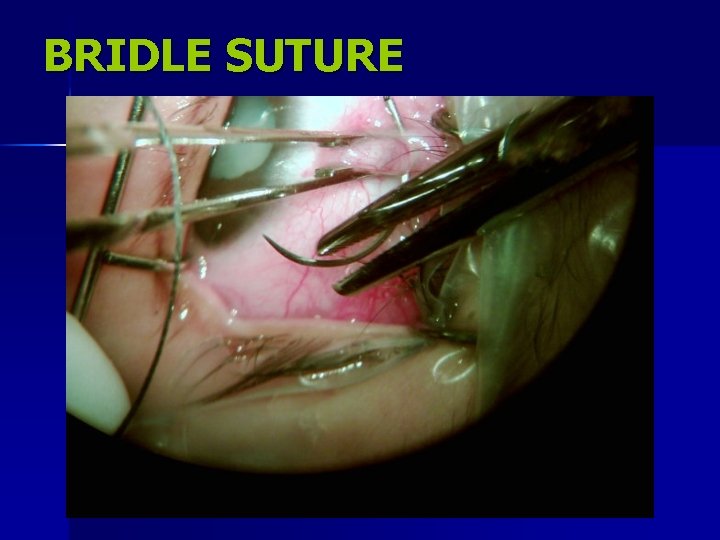
BRIDLE SUTURE
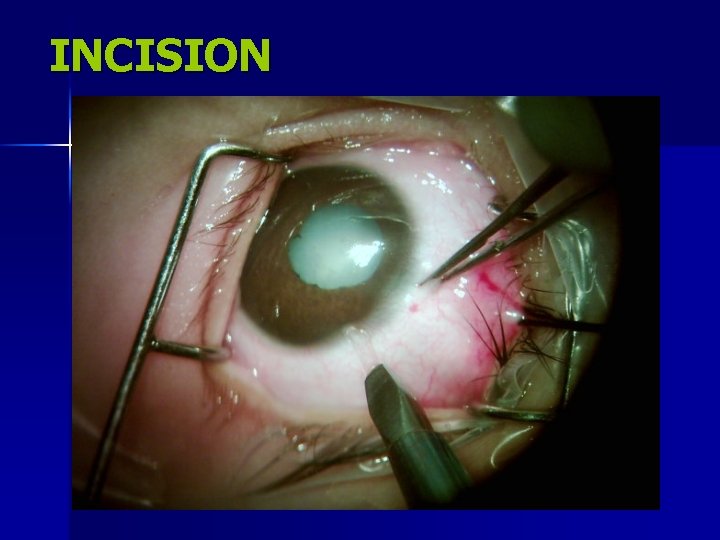
INCISION
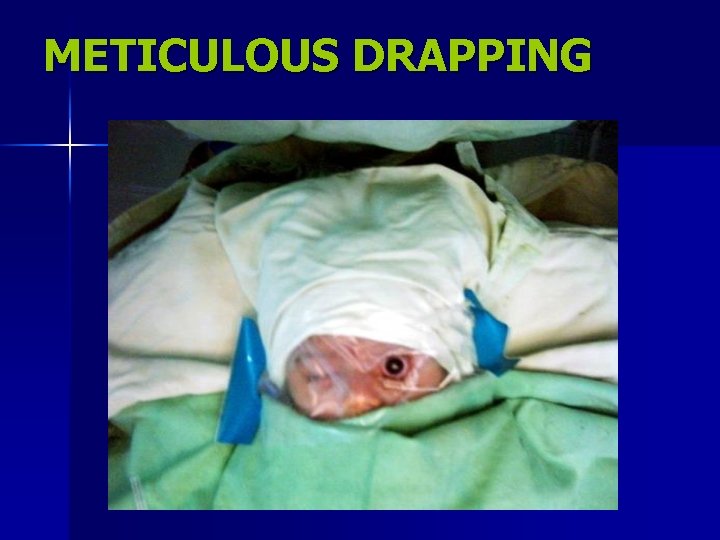
METICULOUS DRAPPING
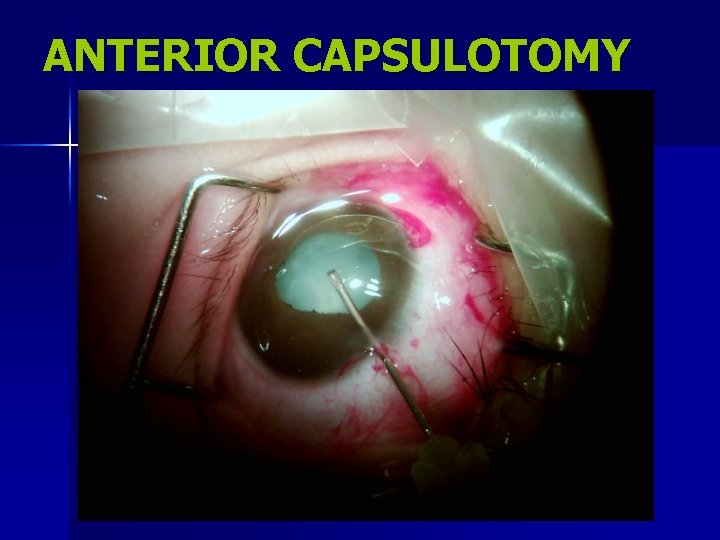
ANTERIOR CAPSULOTOMY
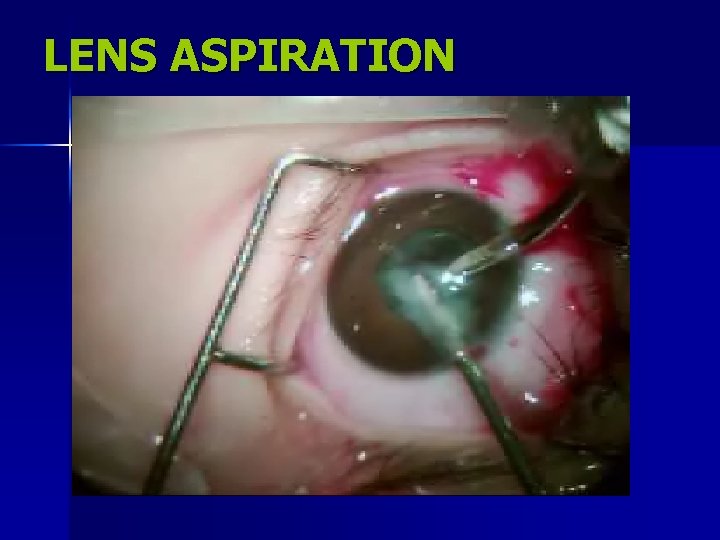
LENS ASPIRATION
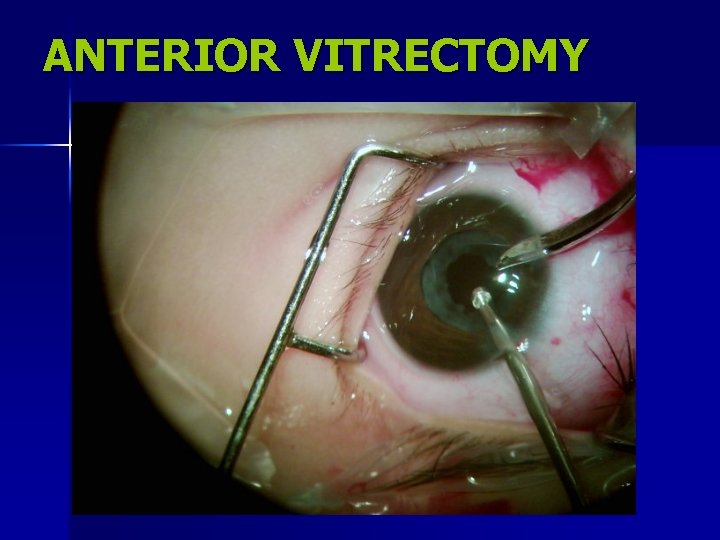
ANTERIOR VITRECTOMY
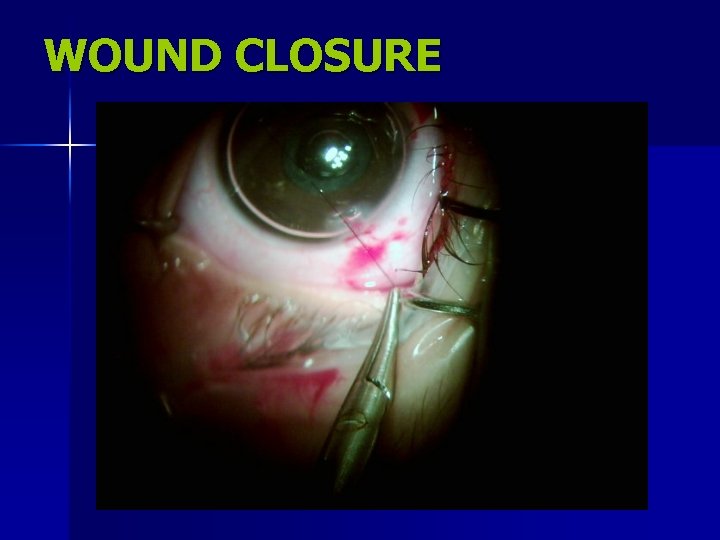
WOUND CLOSURE
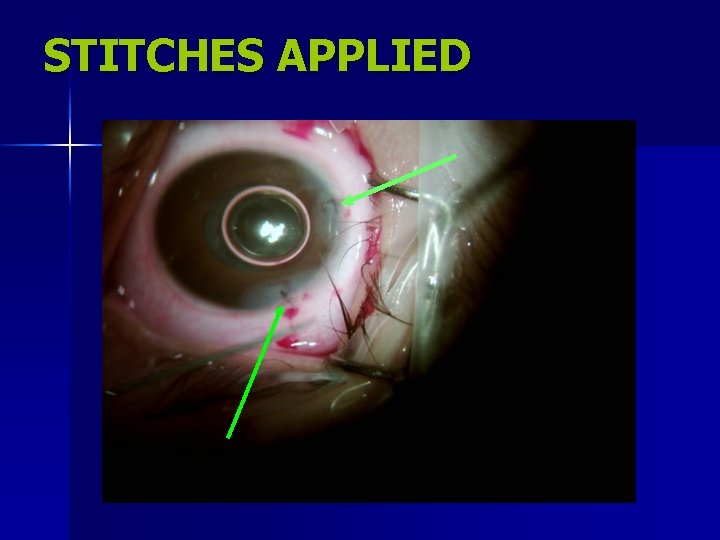
STITCHES APPLIED
MANAGEMENT OF APHAKIA n n n SPECTACLES (Bilateral Aphakia) CONTACT LENSES (Before 2 years / Unilateral aphakia) INTRAOCULAR LENS IMPLANTATION (18 months onwards)
PROGNOSIS n Encouraging results in bilateral cases (before 03 months) n Not very encouraging results in unilateral cases unless the cataract is removed very early, with in first few weeks of life
PROGNOSIS n Visual morbidity may result from deprivation amblyopia, refractive amblyopia, glaucoma (10% post surgical removal), squint, secondary cataract and retinal detachment n Mental retardation, deafness, kidney disease, heart disease, and metabolic disorders may be part of the presentation

THANK YOU
- Slides: 46