
LEUKEMIAS Dr Mehboob Khan Pathologist Leukemias are malignancies

LEUKEMIAS Dr Mehboob Khan Pathologist
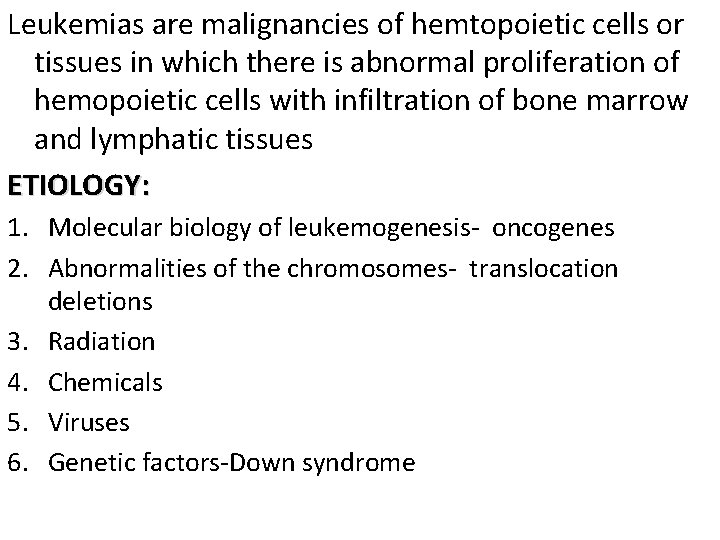
Leukemias are malignancies of hemtopoietic cells or tissues in which there is abnormal proliferation of hemopoietic cells with infiltration of bone marrow and lymphatic tissues ETIOLOGY: 1. Molecular biology of leukemogenesis- oncogenes 2. Abnormalities of the chromosomes- translocation deletions 3. Radiation 4. Chemicals 5. Viruses 6. Genetic factors-Down syndrome
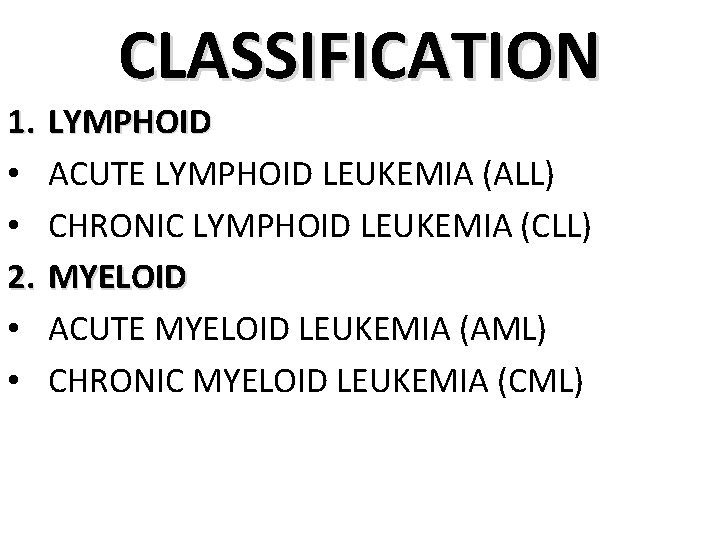
CLASSIFICATION 1. LYMPHOID • ACUTE LYMPHOID LEUKEMIA (ALL) • CHRONIC LYMPHOID LEUKEMIA (CLL) 2. MYELOID • ACUTE MYELOID LEUKEMIA (AML) • CHRONIC MYELOID LEUKEMIA (CML)

ACUTE MYELOID LEUKEMIA
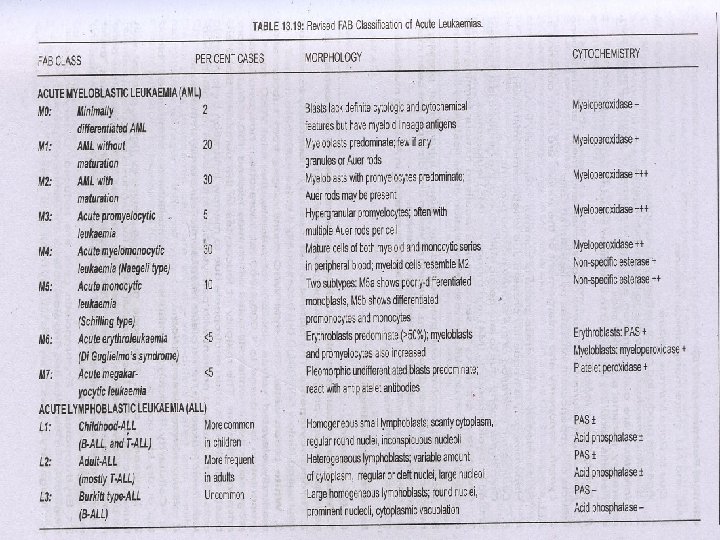
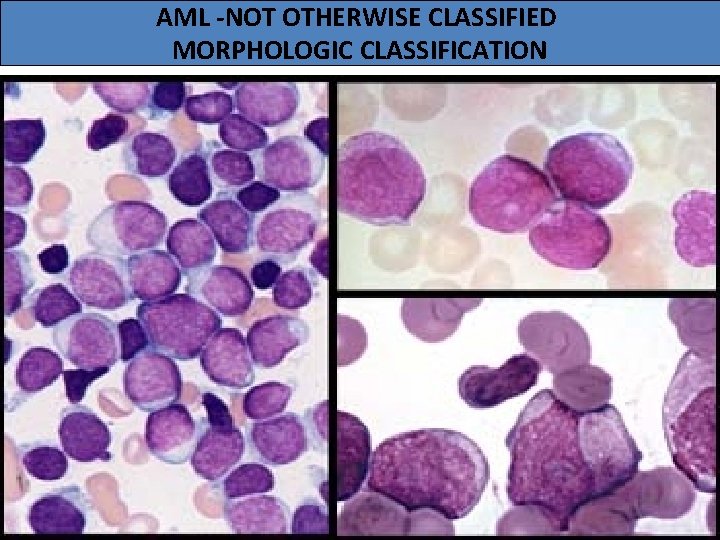
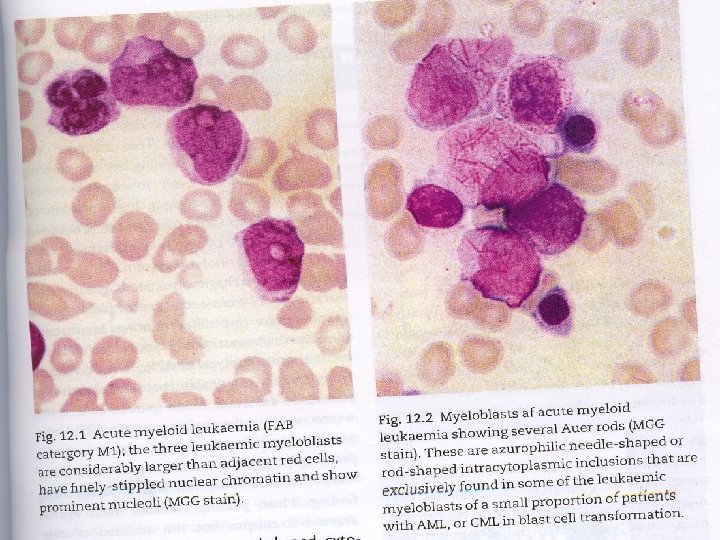
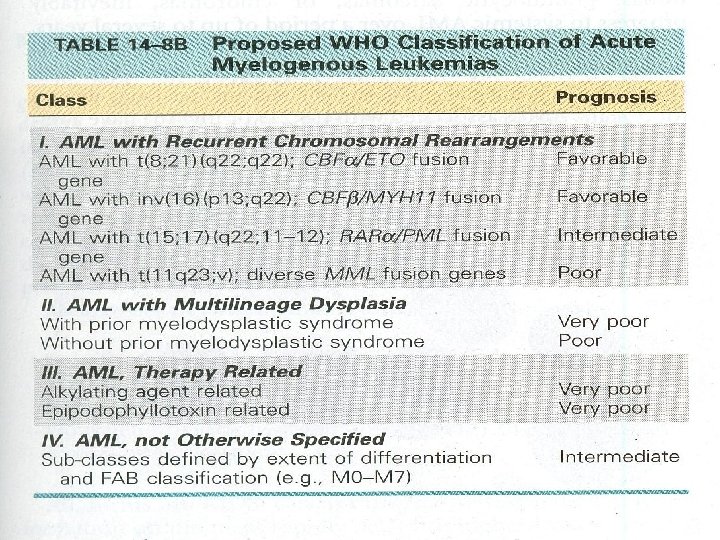
AML -NOT OTHERWISE CLASSIFIED MORPHOLOGIC CLASSIFICATION
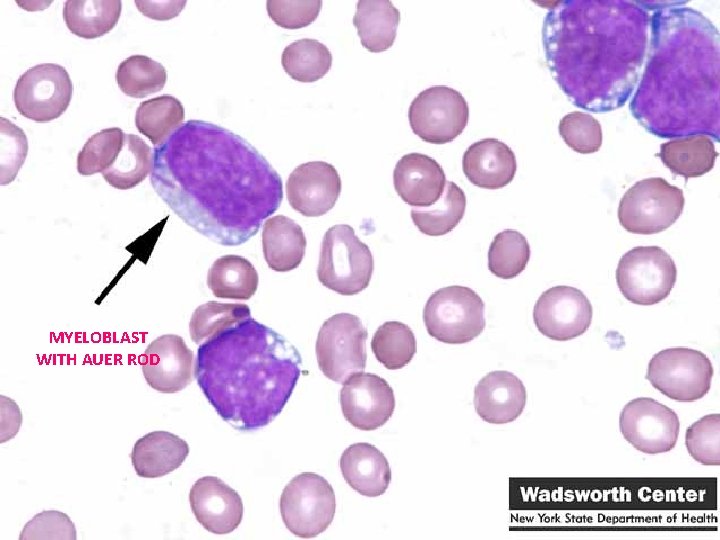
MYELOBLAST WITH AUER ROD
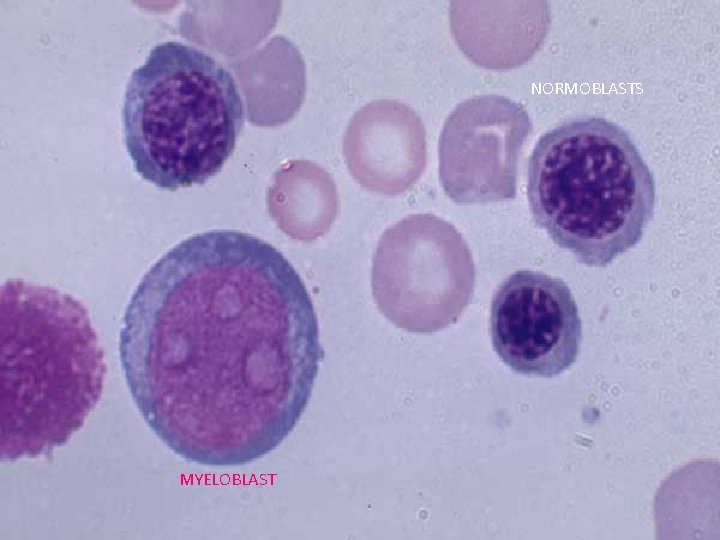
NORMOBLASTS MYELOBLAST
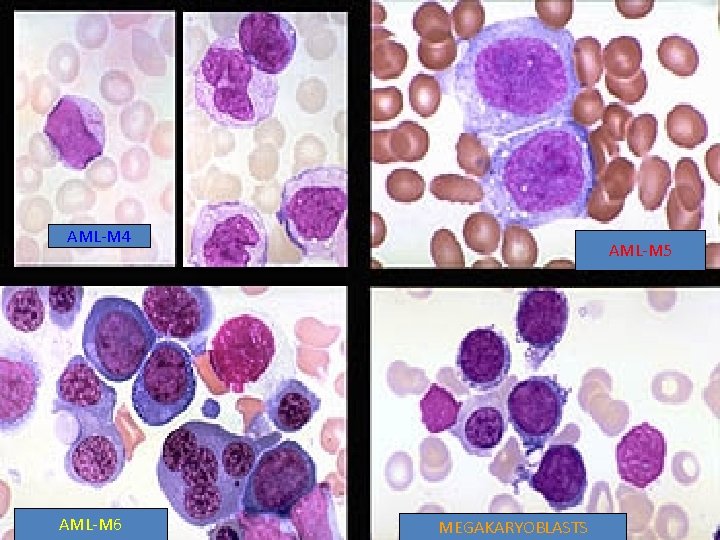
AML-M 4 AML-M 6 AML-M 5 MEGAKARYOBLASTS
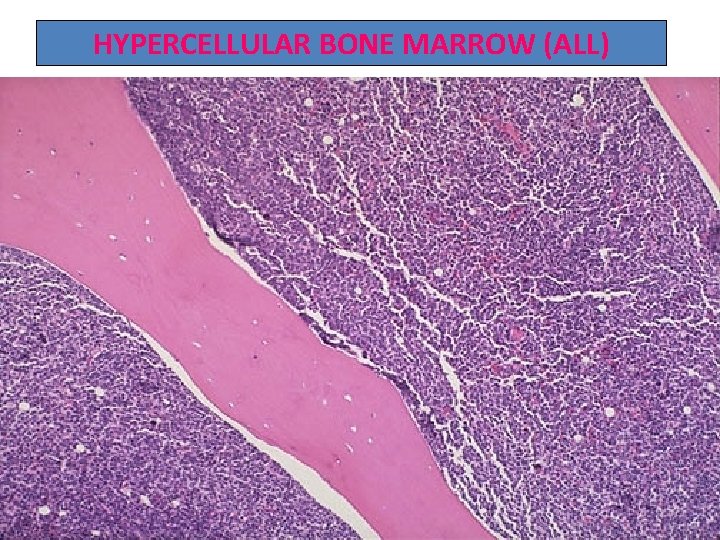
HYPERCELLULAR BONE MARROW (ALL)
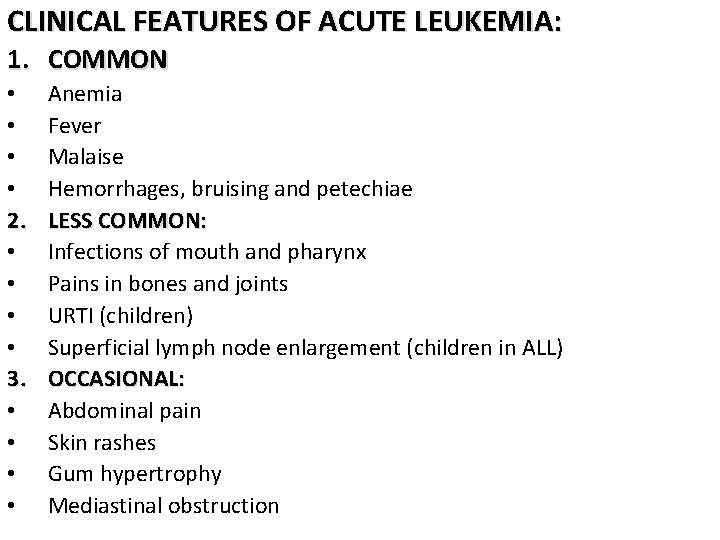
CLINICAL FEATURES OF ACUTE LEUKEMIA: 1. COMMON • • 2. • • 3. • • Anemia Fever Malaise Hemorrhages, bruising and petechiae LESS COMMON: Infections of mouth and pharynx Pains in bones and joints URTI (children) Superficial lymph node enlargement (children in ALL) OCCASIONAL: Abdominal pain Skin rashes Gum hypertrophy Mediastinal obstruction
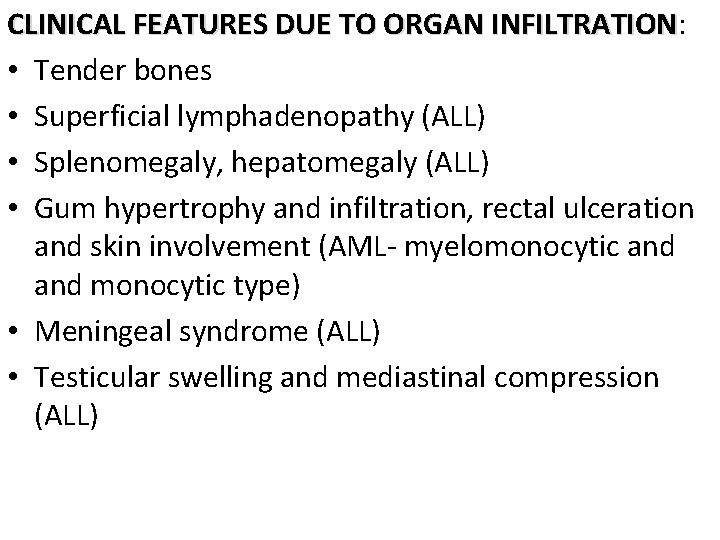
CLINICAL FEATURES DUE TO ORGAN INFILTRATION: INFILTRATION • Tender bones • Superficial lymphadenopathy (ALL) • Splenomegaly, hepatomegaly (ALL) • Gum hypertrophy and infiltration, rectal ulceration and skin involvement (AML- myelomonocytic and monocytic type) • Meningeal syndrome (ALL) • Testicular swelling and mediastinal compression (ALL)
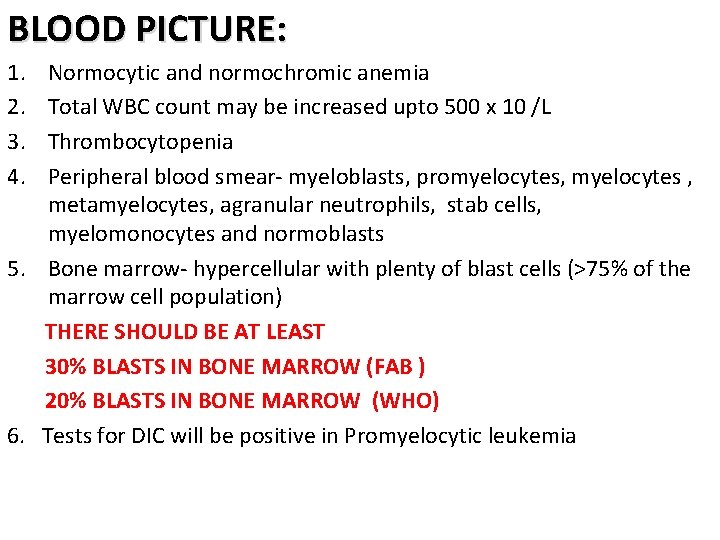
BLOOD PICTURE: 1. 2. 3. 4. Normocytic and normochromic anemia Total WBC count may be increased upto 500 x 10 /L Thrombocytopenia Peripheral blood smear- myeloblasts, promyelocytes, myelocytes , metamyelocytes, agranular neutrophils, stab cells, myelomonocytes and normoblasts 5. Bone marrow- hypercellular with plenty of blast cells (>75% of the marrow cell population) THERE SHOULD BE AT LEAST 30% BLASTS IN BONE MARROW (FAB ) 20% BLASTS IN BONE MARROW (WHO) 6. Tests for DIC will be positive in Promyelocytic leukemia
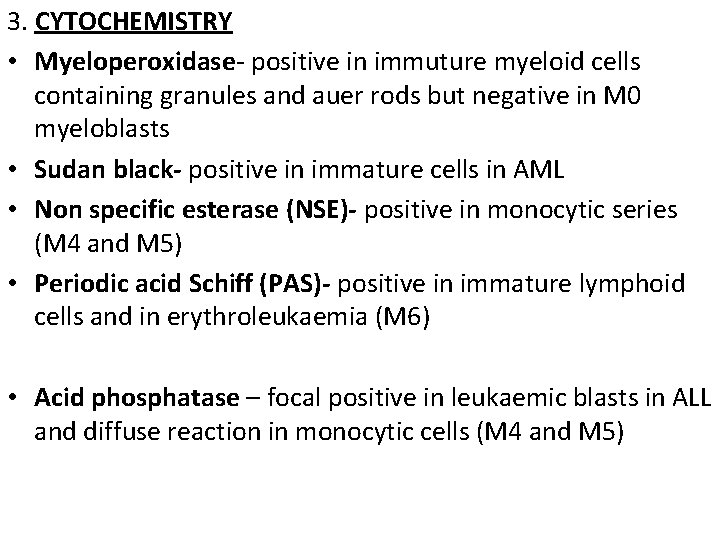
3. CYTOCHEMISTRY • Myeloperoxidase- positive in immuture myeloid cells containing granules and auer rods but negative in M 0 myeloblasts • Sudan black- positive in immature cells in AML • Non specific esterase (NSE)- positive in monocytic series (M 4 and M 5) • Periodic acid Schiff (PAS)- positive in immature lymphoid cells and in erythroleukaemia (M 6) • Acid phosphatase – focal positive in leukaemic blasts in ALL and diffuse reaction in monocytic cells (M 4 and M 5)
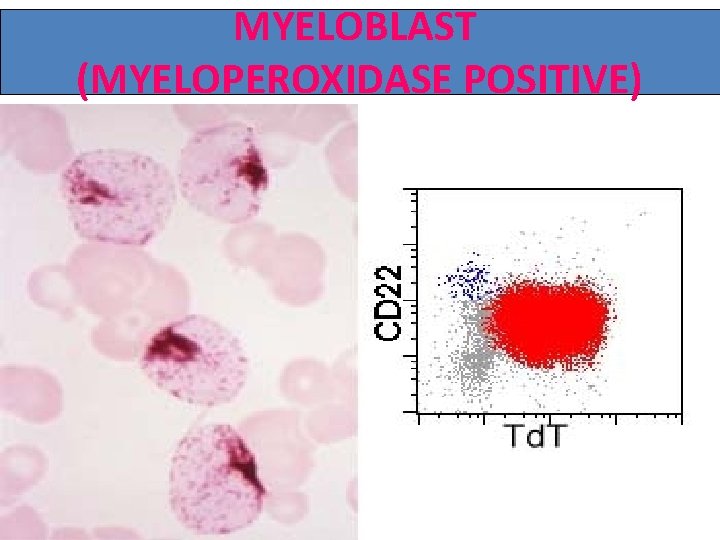
MYELOBLAST (MYELOPEROXIDASE POSITIVE)
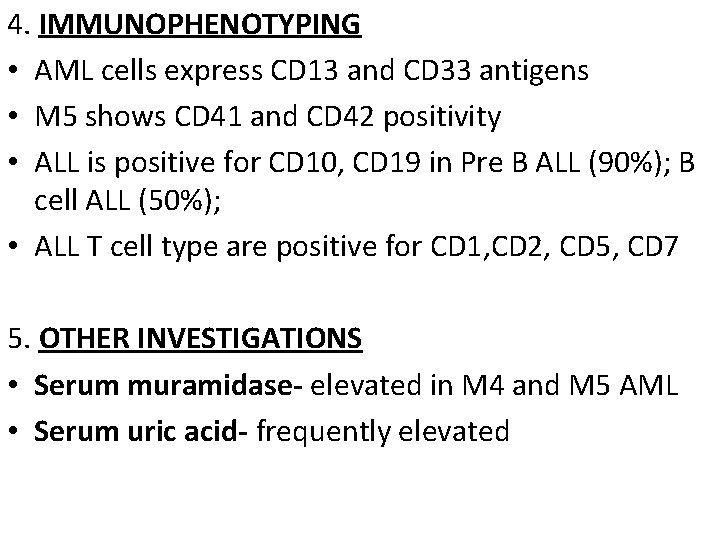
4. IMMUNOPHENOTYPING • AML cells express CD 13 and CD 33 antigens • M 5 shows CD 41 and CD 42 positivity • ALL is positive for CD 10, CD 19 in Pre B ALL (90%); B cell ALL (50%); • ALL T cell type are positive for CD 1, CD 2, CD 5, CD 7 5. OTHER INVESTIGATIONS • Serum muramidase- elevated in M 4 and M 5 AML • Serum uric acid- frequently elevated
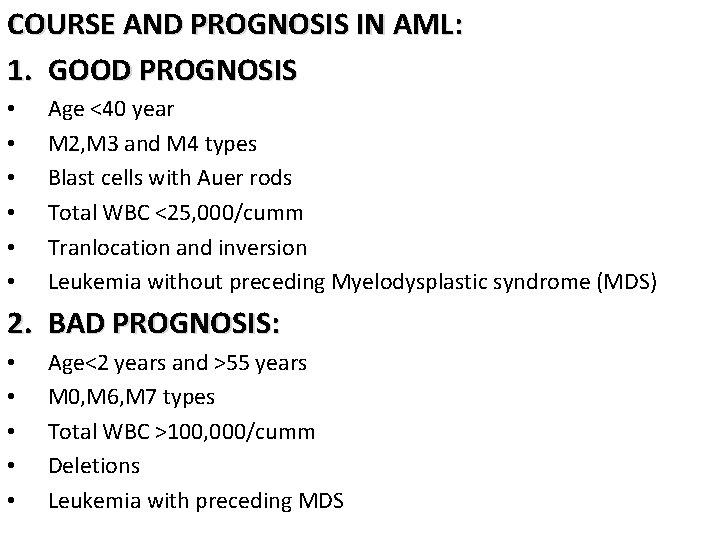
COURSE AND PROGNOSIS IN AML: 1. GOOD PROGNOSIS • • • Age <40 year M 2, M 3 and M 4 types Blast cells with Auer rods Total WBC <25, 000/cumm Tranlocation and inversion Leukemia without preceding Myelodysplastic syndrome (MDS) 2. BAD PROGNOSIS: • • • Age<2 years and >55 years M 0, M 6, M 7 types Total WBC >100, 000/cumm Deletions Leukemia with preceding MDS

ACUTE LYMPHOBLASTIC LEUKEMIA (ALL)
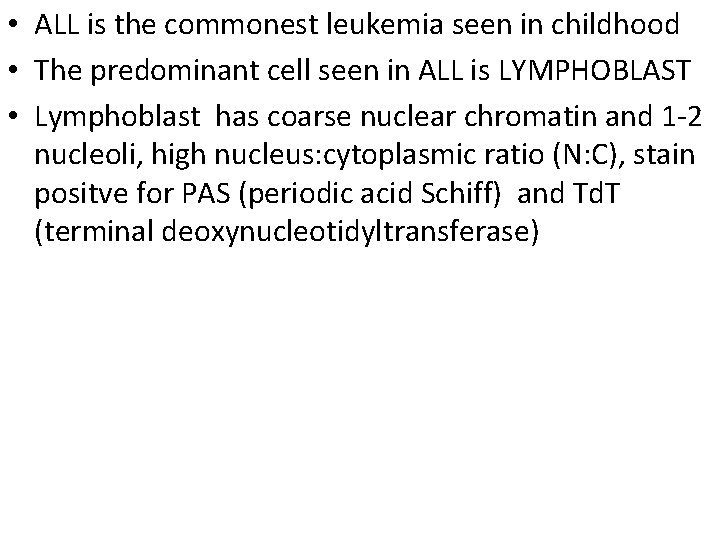
• ALL is the commonest leukemia seen in childhood • The predominant cell seen in ALL is LYMPHOBLAST • Lymphoblast has coarse nuclear chromatin and 1 -2 nucleoli, high nucleus: cytoplasmic ratio (N: C), stain positve for PAS (periodic acid Schiff) and Td. T (terminal deoxynucleotidyltransferase)
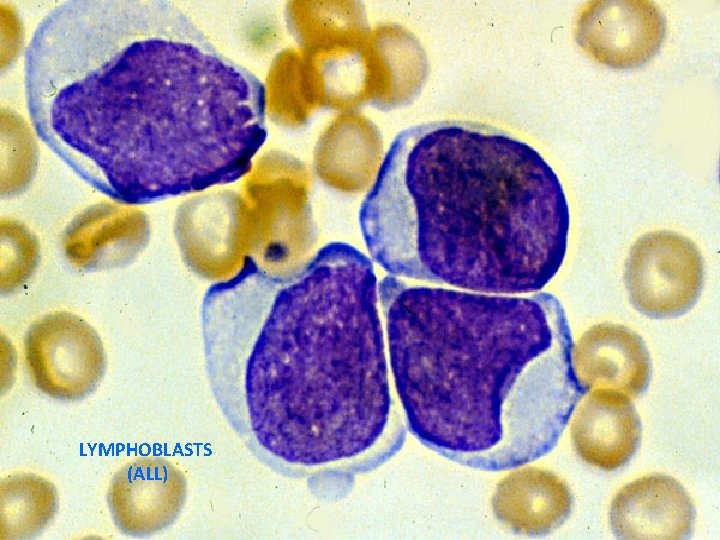
LYMPHOBLASTS (ALL)
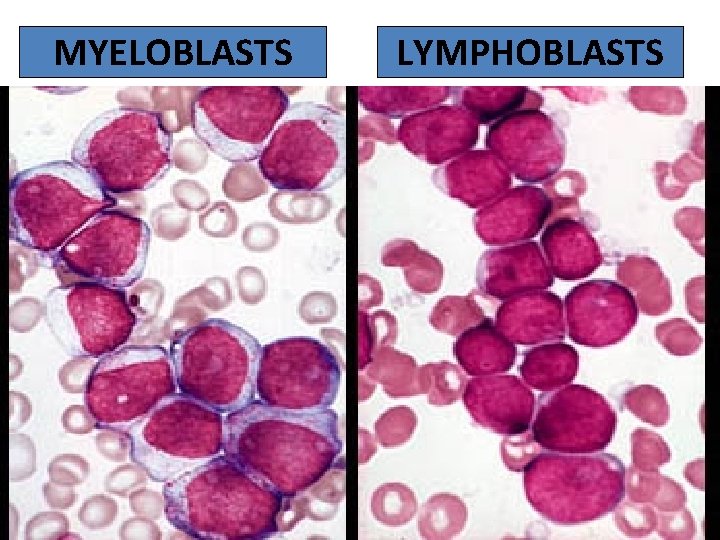
MYELOBLASTS LYMPHOBLASTS
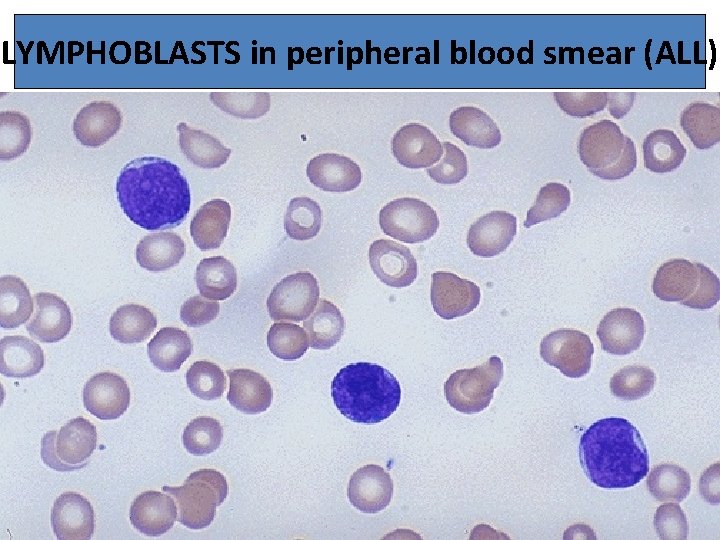
LYMPHOBLASTS in peripheral blood smear (ALL)
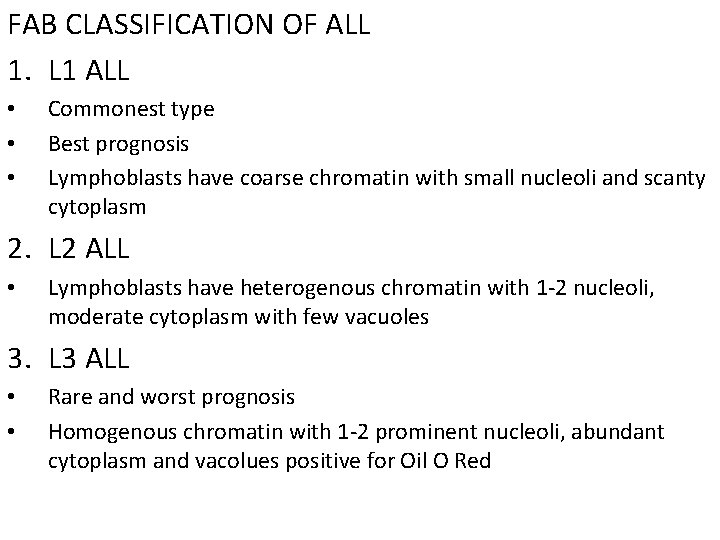
FAB CLASSIFICATION OF ALL 1. L 1 ALL • • • Commonest type Best prognosis Lymphoblasts have coarse chromatin with small nucleoli and scanty cytoplasm 2. L 2 ALL • Lymphoblasts have heterogenous chromatin with 1 -2 nucleoli, moderate cytoplasm with few vacuoles 3. L 3 ALL • • Rare and worst prognosis Homogenous chromatin with 1 -2 prominent nucleoli, abundant cytoplasm and vacolues positive for Oil O Red
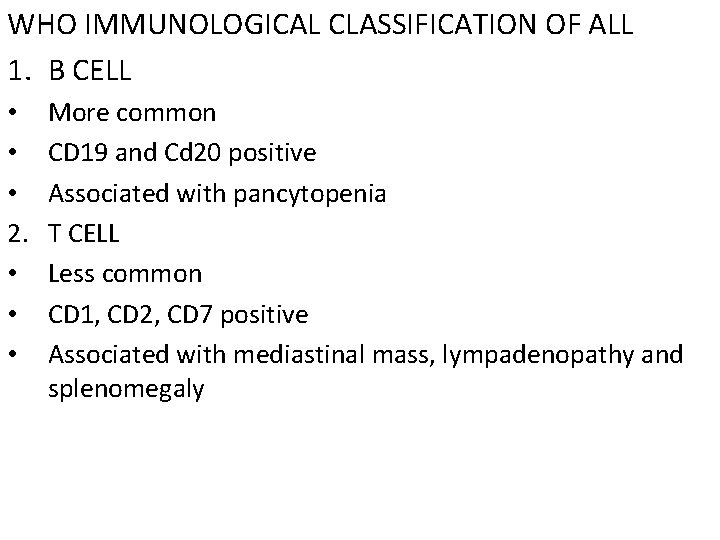
WHO IMMUNOLOGICAL CLASSIFICATION OF ALL 1. B CELL • • • 2. • • • More common CD 19 and Cd 20 positive Associated with pancytopenia T CELL Less common CD 1, CD 2, CD 7 positive Associated with mediastinal mass, lympadenopathy and splenomegaly
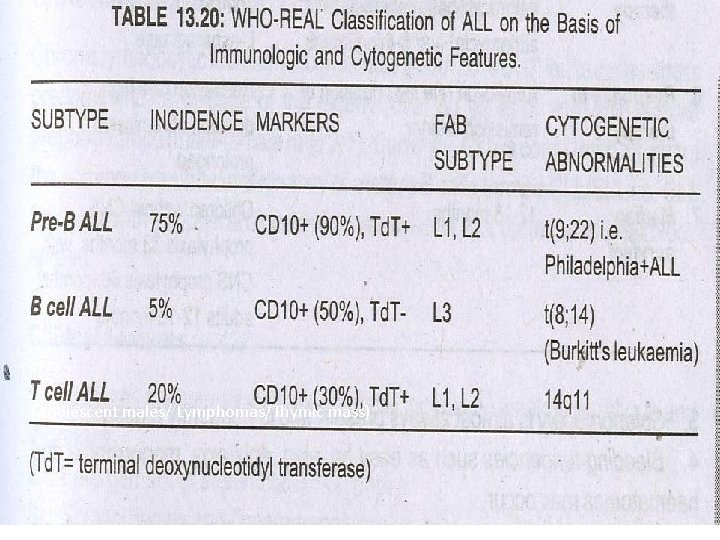
(Adolescent males/ Lymphomas/Thymic mass)
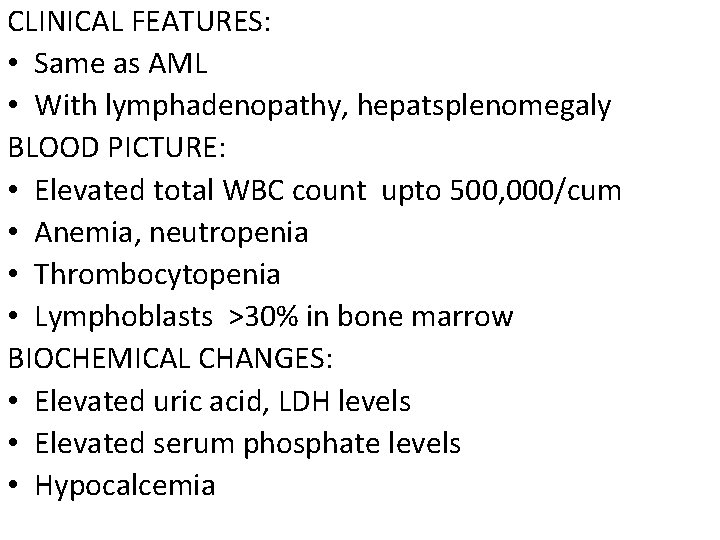
CLINICAL FEATURES: • Same as AML • With lymphadenopathy, hepatsplenomegaly BLOOD PICTURE: • Elevated total WBC count upto 500, 000/cum • Anemia, neutropenia • Thrombocytopenia • Lymphoblasts >30% in bone marrow BIOCHEMICAL CHANGES: • Elevated uric acid, LDH levels • Elevated serum phosphate levels • Hypocalcemia
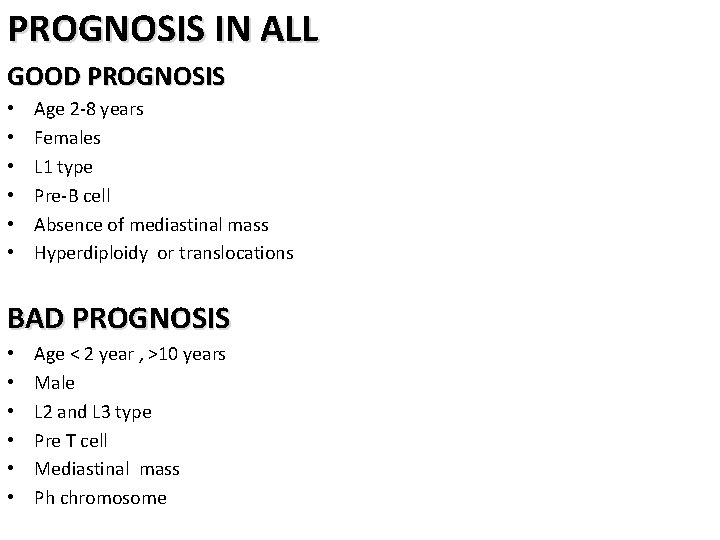
PROGNOSIS IN ALL GOOD PROGNOSIS • • • Age 2 -8 years Females L 1 type Pre-B cell Absence of mediastinal mass Hyperdiploidy or translocations BAD PROGNOSIS • • • Age < 2 year , >10 years Male L 2 and L 3 type Pre T cell Mediastinal mass Ph chromosome
- Slides: 30