
Lets Talk Torts Attorney Lucy Michaud UConn Center


- Slides: 14
Let’s Talk Torts Attorney Lucy Michaud UConn Center for Real Estate
And you may be thinking: What do Torts have to do with real estate law? A Lot ! A Tort is a Civil wrong, not arising from a breach of contract, serving as the basis for a lawsuit.
What’s the difference between a Civil wrong and a Criminal wrong? A Civil wrong is punishable by compensating, or paying damages to, the injured party. A Criminal wrong is punishable by paying a fine or being imprisoned.
In Civil actions the Plaintiff is suing the Defendant for money damages, or equitable relief. If money damages are inadequate and the subject matter of a contract is unique, the court may order Specific Performance of the contract (forcing a sale of real property).
Three Types of Torts: 1. Intentional Torts against Persons b. Torts against Property 2. Unintentional (Negligence) 3. Strict Liability
Intentional Torts against PERSONS: Assault – apprehension of imminent harm Battery – offensive touching without consent Defamation – false statement harms reputation False Imprisonment – unlawful confinement Fraud – false statement; give up something of value
Intentional Torts against PROPERTY: Conversion – taking personal property of another and having to pay its full value Nuisance – unreasonable and substantial interference with use and enjoyment of land Trespass to Chattel – intentional interference with right of possession to personal property Trespass to Land – unauthorized entry to land
Negligence: 1. 2. 3. 4. breach duty of reasonable care causing (legal and actual) damages
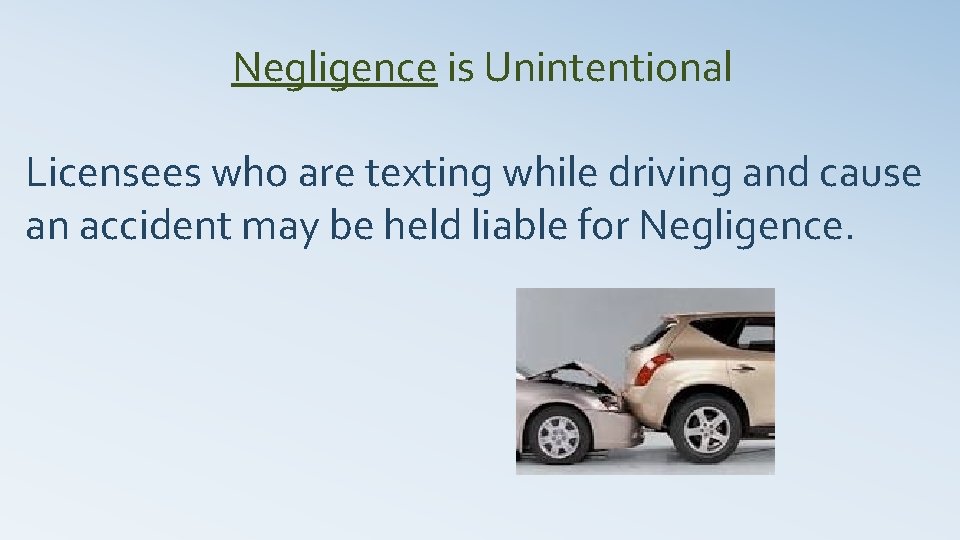
Negligence is Unintentional Licensees who are texting while driving and cause an accident may be held liable for Negligence.
Three types of Strict Liability actions: • Products Liability • Abnormally Dangerous Activities • Keepers of Wild Animals
In Strict Liability actions Defendants are held liable regardless of fault simply because they: (1) manufactured a defective product; (2) engaged in an ultra-hazardous or abnormally dangerous activity; or (3) owned a wild animal.
In Strict Liability actions all the plaintiff has to prove is: (1) tort occurred, and (2) defendant’s responsible. The plaintiff does not have to prove intent. It’s a slam dunk!
What are the top legal claims against Licensees? 1. Real Estate Fraud 2. Breach of Fiduciary Duties 3. Breach of Contract 4. Negligence 5. Property Damage 6. Misrepresentation of Property 7. Disputes over Down Payments or Escrows
Any comments or questions? Email: lucy. michaud@business. uconn. edu