
Lets Review What are some characteristics that all


- Slides: 30
Lets Review • What are some characteristics that all living things must have?
Lets Review • All Living things have DNA and are made of cells. – What is DNA? – What is a Cell?
Lets Review • All cells have a cell membrane. – WHY must all living things have a cell membrane? – How is the structure of the cell membrane important?
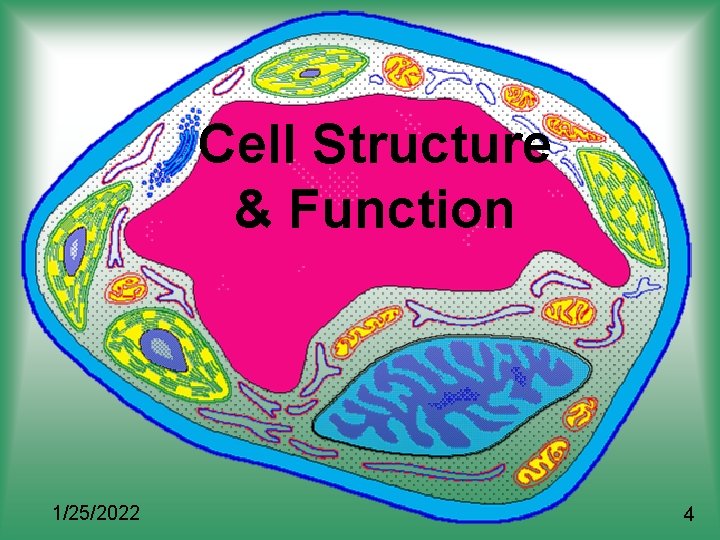
Cell Structure & Function 1/25/2022 4
• If you took all living things in the entire world…you could divide them into 2 groups based on the type of cells they have
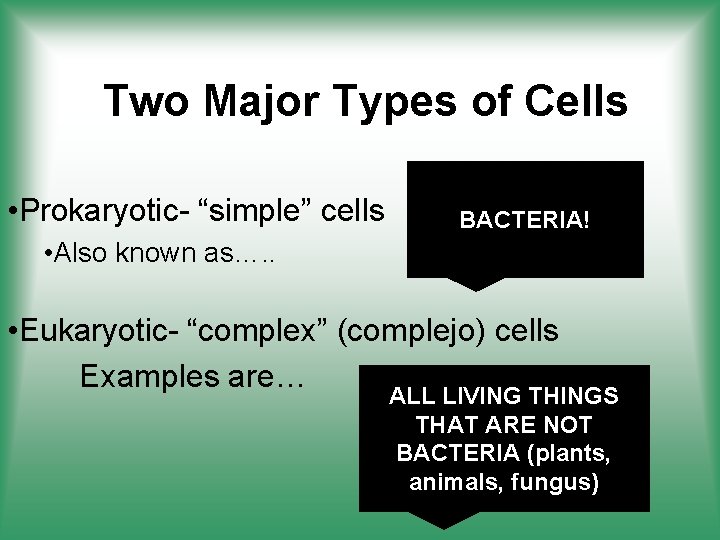
Two Major Types of Cells • Prokaryotic- “simple” cells BACTERIA! • Also known as…. . • Eukaryotic- “complex” (complejo) cells Examples are… ALL LIVING THINGS THAT ARE NOT BACTERIA (plants, animals, fungus)
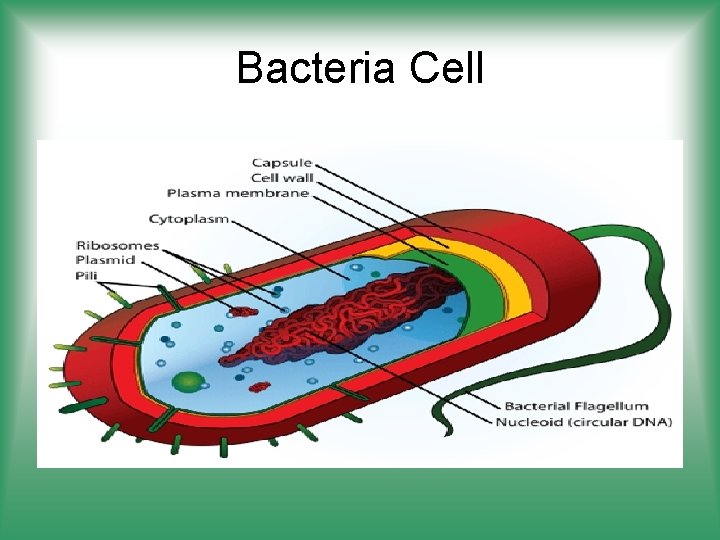
Bacteria Cell
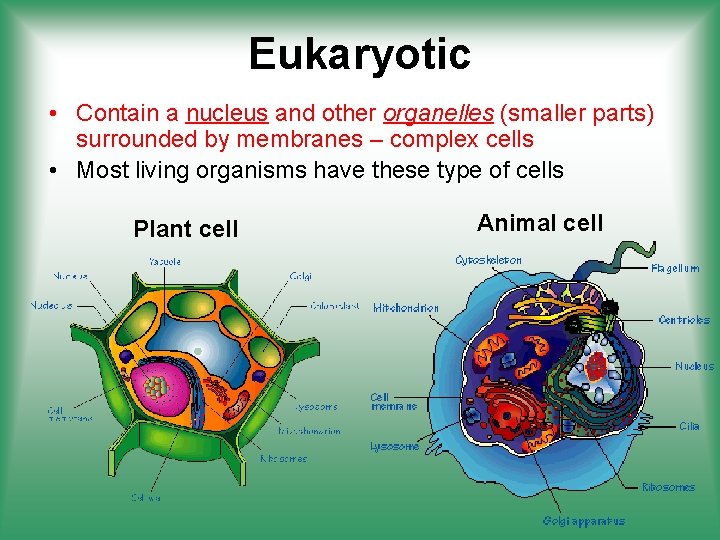
Eukaryotic • Contain a nucleus and other organelles (smaller parts) surrounded by membranes – complex cells • Most living organisms have these type of cells Plant cell Animal cell
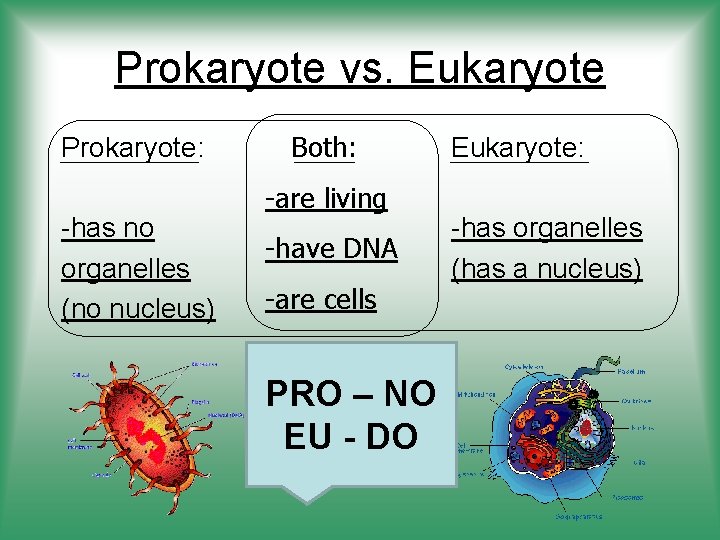
Prokaryote vs. Eukaryote Prokaryote: -has no organelles (no nucleus) Both: -are living -have DNA -are cells PRO – NO EU - DO Eukaryote: -has organelles (has a nucleus)
Cell Parts Organelles: “little organs” Think of a cell as a factory- lots of separate people, departments, and machines that each have their own task, but they work together to get a job done.
Animal Cell
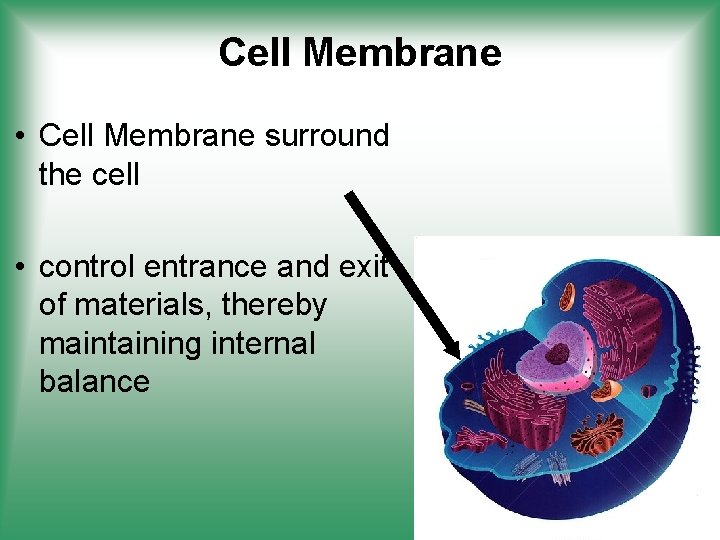
Cell Membrane • Cell Membrane surround the cell • control entrance and exit of materials, thereby maintaining internal balance
Inside the Cell
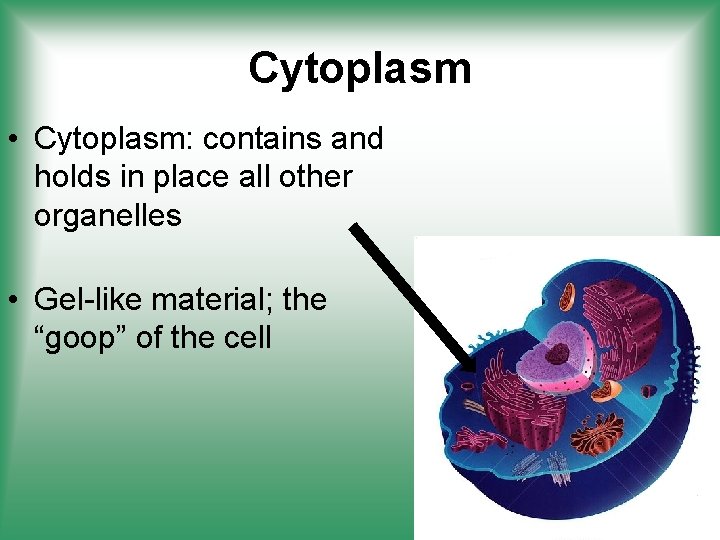
Cytoplasm • Cytoplasm: contains and holds in place all other organelles • Gel-like material; the “goop” of the cell
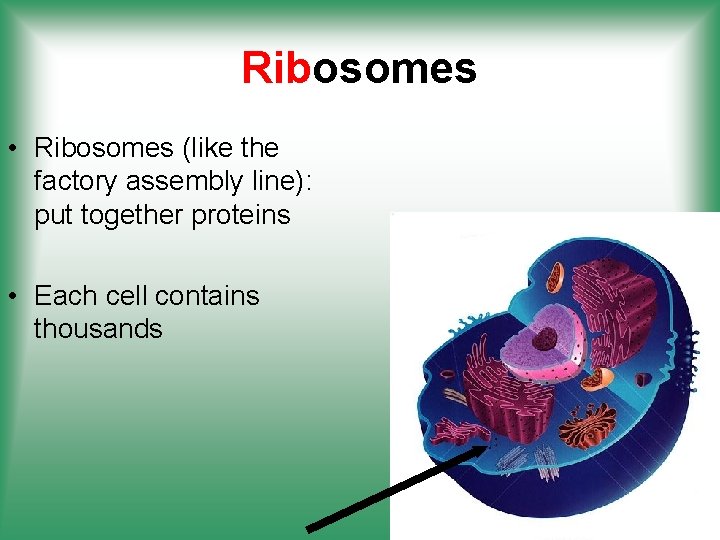
Ribosomes • Ribosomes (like the factory assembly line): put together proteins • Each cell contains thousands
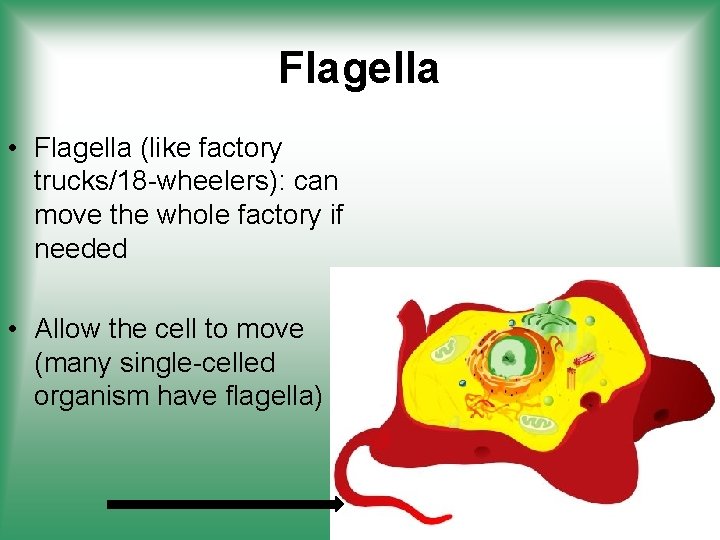
Flagella • Flagella (like factory trucks/18 -wheelers): can move the whole factory if needed • Allow the cell to move (many single-celled organism have flagella)
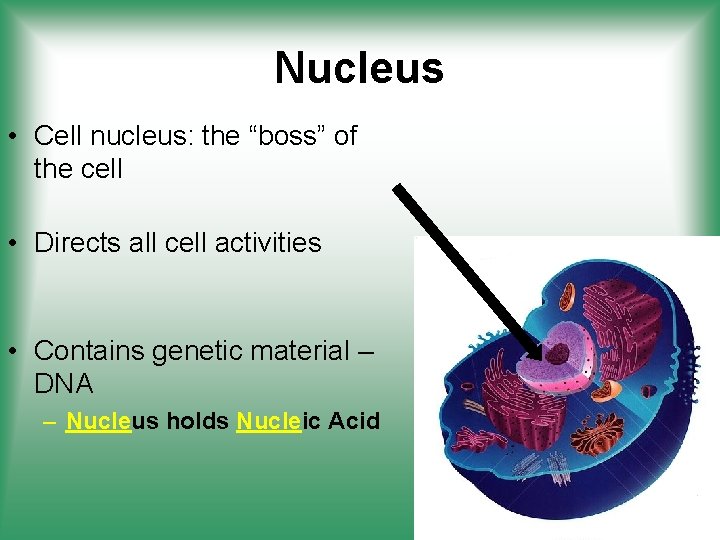
Nucleus • Cell nucleus: the “boss” of the cell • Directs all cell activities • Contains genetic material – DNA – Nucleus holds Nucleic Acid
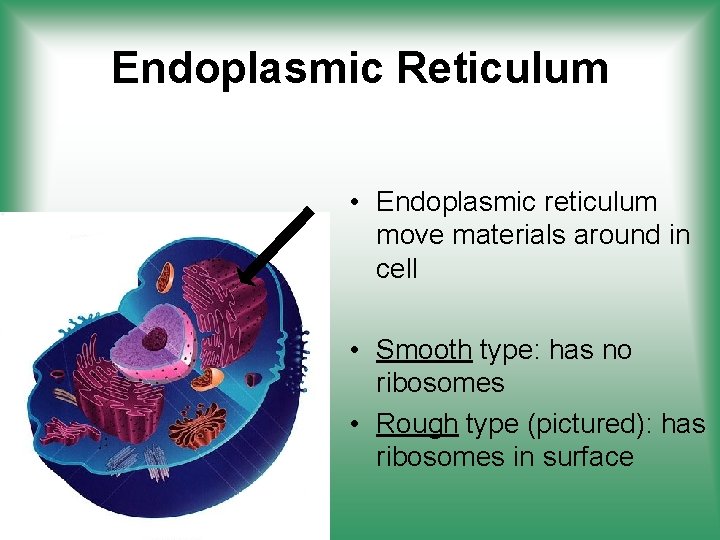
Endoplasmic Reticulum • Endoplasmic reticulum move materials around in cell • Smooth type: has no ribosomes • Rough type (pictured): has ribosomes in surface
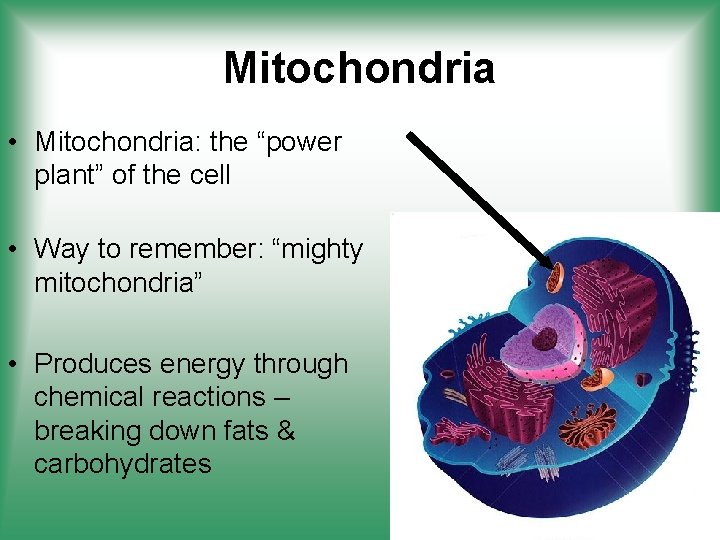
Mitochondria • Mitochondria: the “power plant” of the cell • Way to remember: “mighty mitochondria” • Produces energy through chemical reactions – breaking down fats & carbohydrates
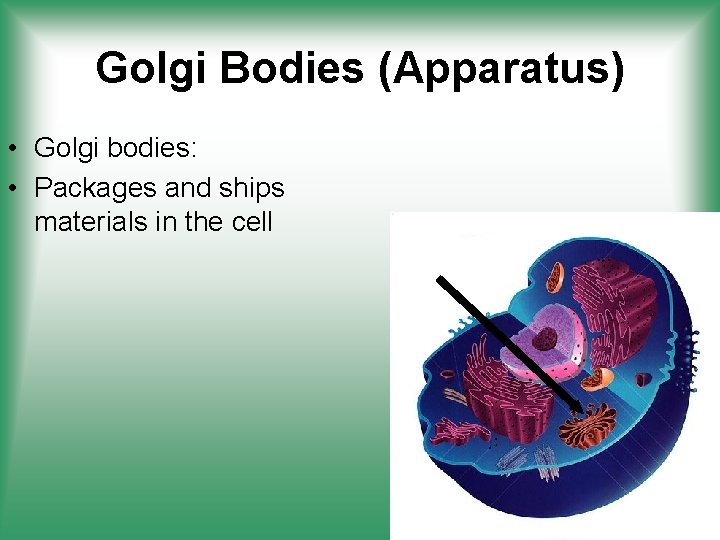
Golgi Bodies (Apparatus) • Golgi bodies: • Packages and ships materials in the cell
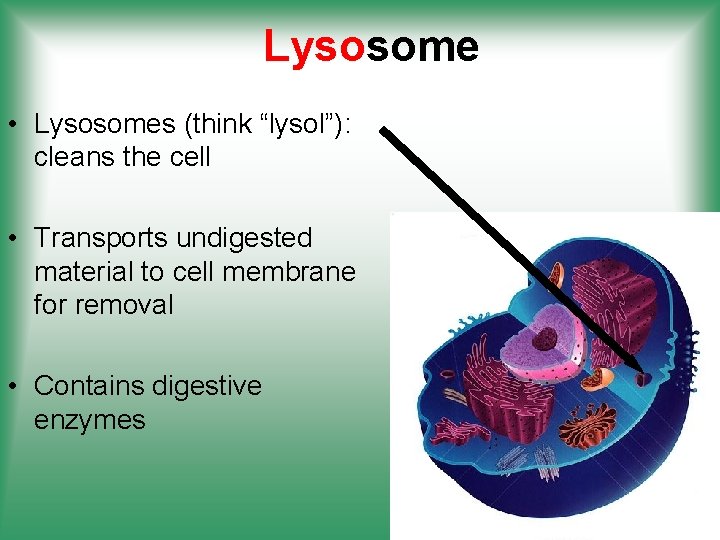
Lysosome • Lysosomes (think “lysol”): cleans the cell • Transports undigested material to cell membrane for removal • Contains digestive enzymes
Plant cells on Monday • MAKE SURE YOUR ANIMAL CELL DIAGRAM IS COMPLETELY LABELED • On back of first page list all parts in animal cells that are also found in prokaryotic cells • FINISH ANALOGIES for animal cells • If something still doesn’t make sense watch the eukaryote video under pbl instructions Last 10 minutes of class you will have the prokaryote quiz
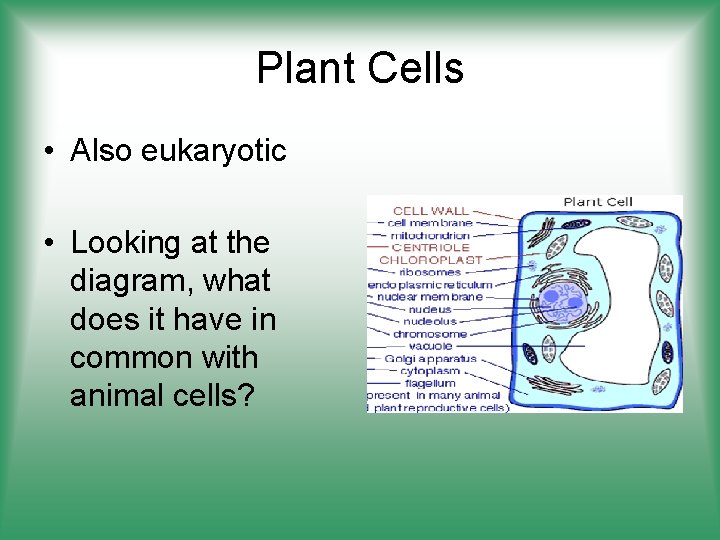
Plant Cells • Also eukaryotic • Looking at the diagram, what does it have in common with animal cells?
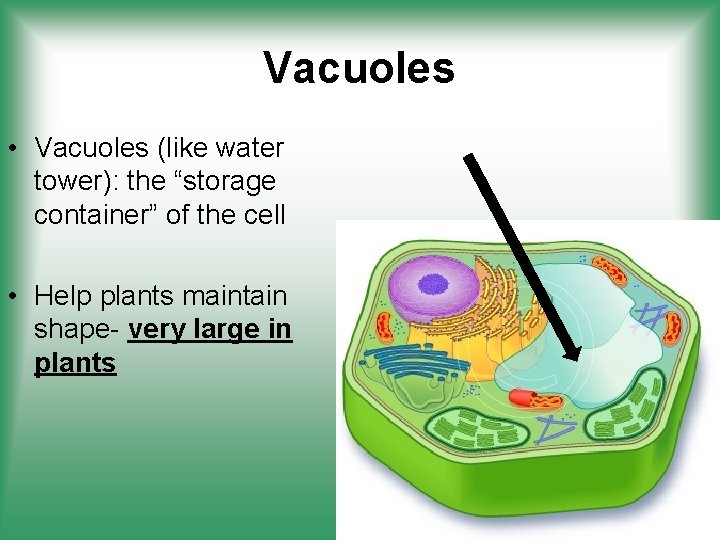
Vacuoles • Vacuoles (like water tower): the “storage container” of the cell • Help plants maintain shape- very large in plants
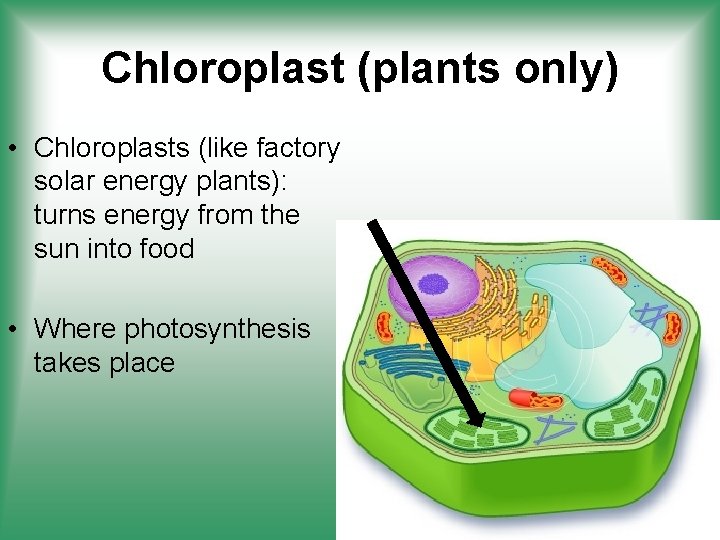
Chloroplast (plants only) • Chloroplasts (like factory solar energy plants): turns energy from the sun into food • Where photosynthesis takes place
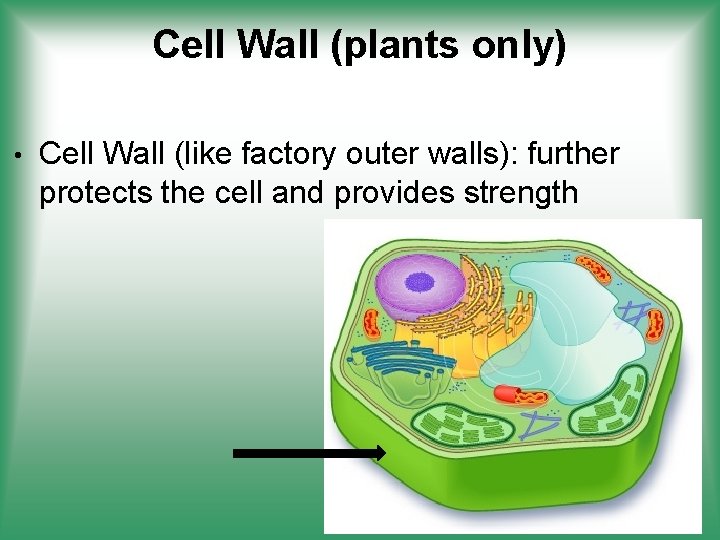
Cell Wall (plants only) • Cell Wall (like factory outer walls): further protects the cell and provides strength
Go ahead and finish the worksheet
LETS REVIEW YESTERDAY WHAT IS PASSIVE TRANSPORT?
WHEN THINGS PASS THROUGH THE CELL HAS TO BE SMALL TAKES NO ENERGY
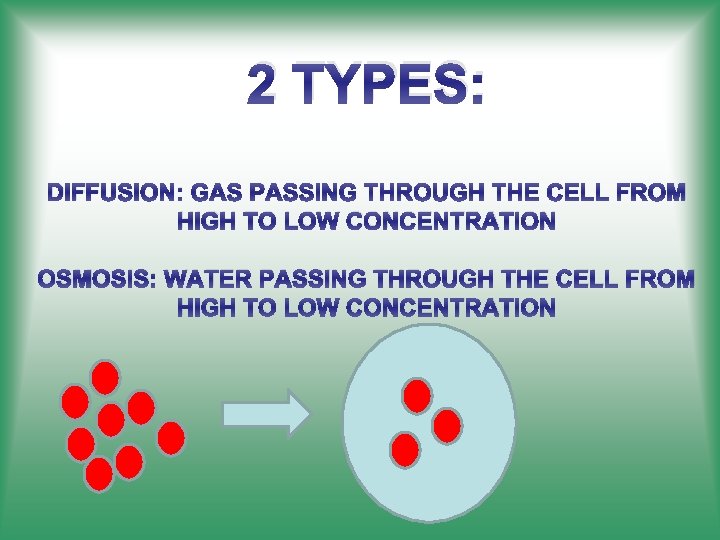
2 TYPES: DIFFUSION: GAS PASSING THROUGH THE CELL FROM HIGH TO LOW CONCENTRATION OSMOSIS: WATER PASSING THROUGH THE CELL FROM HIGH TO LOW CONCENTRATION