
Lets remember that the original primary objective of
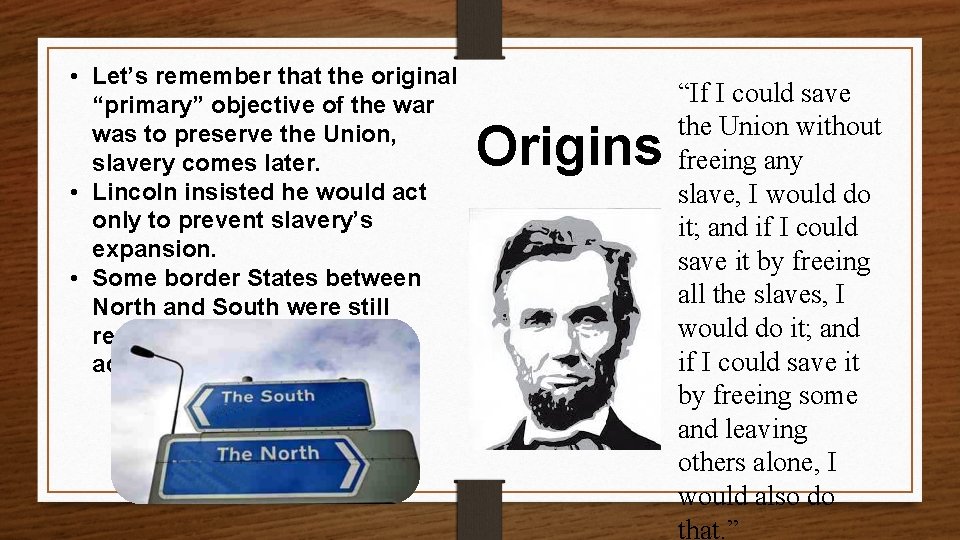
• Let’s remember that the original “primary” objective of the war was to preserve the Union, slavery comes later. • Lincoln insisted he would act only to prevent slavery’s expansion. • Some border States between North and South were still responsive to and accommodated slavery. Origins “If I could save the Union without freeing any slave, I would do it; and if I could save it by freeing all the slaves, I would do it; and if I could save it by freeing some and leaving others alone, I would also do that. ”
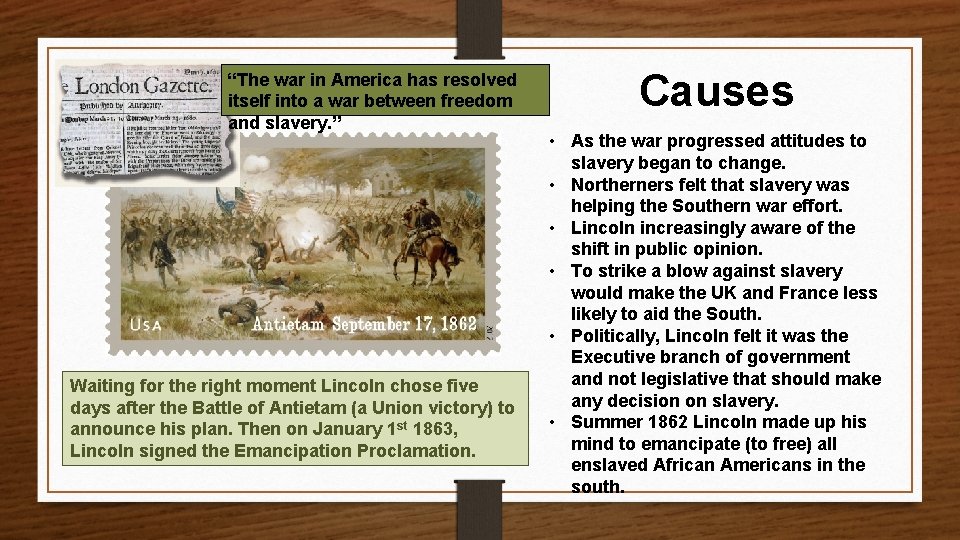
“The war in America has resolved itself into a war between freedom and slavery. ” Waiting for the right moment Lincoln chose five days after the Battle of Antietam (a Union victory) to announce his plan. Then on January 1 st 1863, Lincoln signed the Emancipation Proclamation. Causes • As the war progressed attitudes to slavery began to change. • Northerners felt that slavery was helping the Southern war effort. • Lincoln increasingly aware of the shift in public opinion. • To strike a blow against slavery would make the UK and France less likely to aid the South. • Politically, Lincoln felt it was the Executive branch of government and not legislative that should make any decision on slavery. • Summer 1862 Lincoln made up his mind to emancipate (to free) all enslaved African Americans in the south.
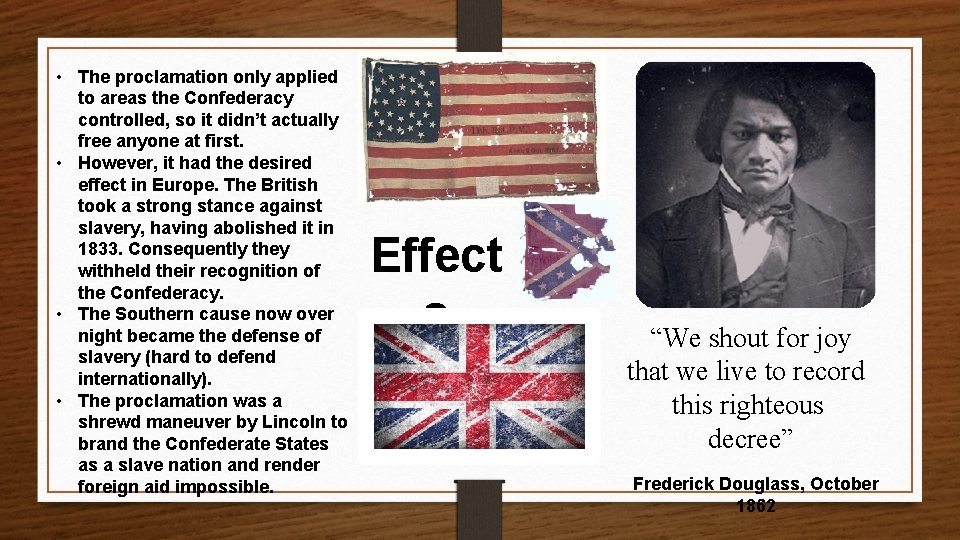
• The proclamation only applied to areas the Confederacy controlled, so it didn’t actually free anyone at first. • However, it had the desired effect in Europe. The British took a strong stance against slavery, having abolished it in 1833. Consequently they withheld their recognition of the Confederacy. • The Southern cause now over night became the defense of slavery (hard to defend internationally). • The proclamation was a shrewd maneuver by Lincoln to brand the Confederate States as a slave nation and render foreign aid impossible. Effect s “We shout for joy that we live to record this righteous decree” Frederick Douglass, October 1862
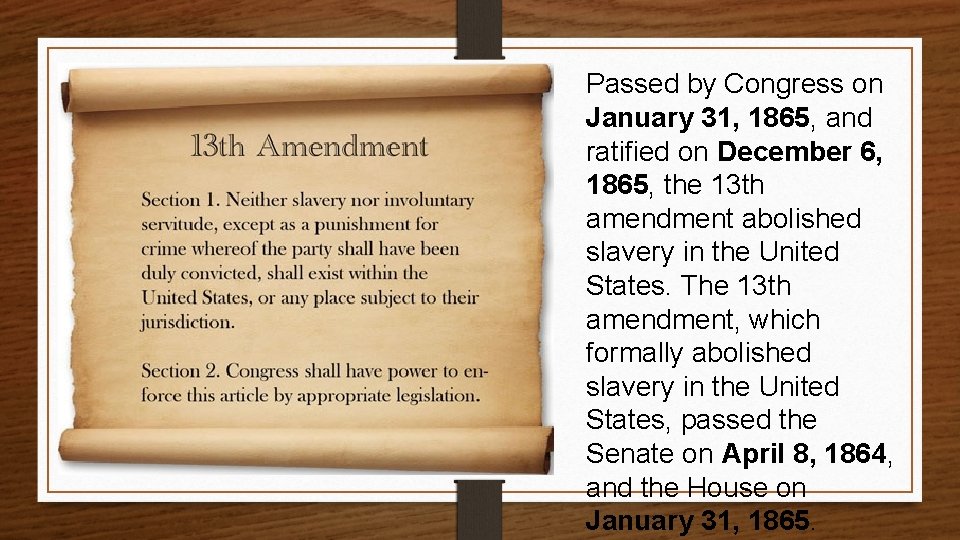
Passed by Congress on January 31, 1865, and ratified on December 6, 1865, the 13 th amendment abolished slavery in the United States. The 13 th amendment, which formally abolished slavery in the United States, passed the Senate on April 8, 1864, and the House on January 31, 1865.
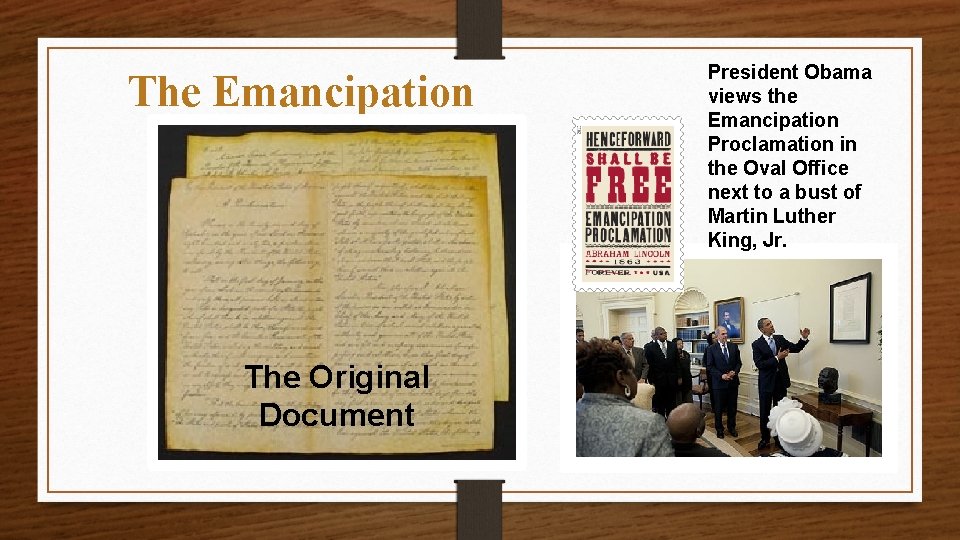
The Emancipation Proclamation The Original Document President Obama views the Emancipation Proclamation in the Oval Office next to a bust of Martin Luther King, Jr.
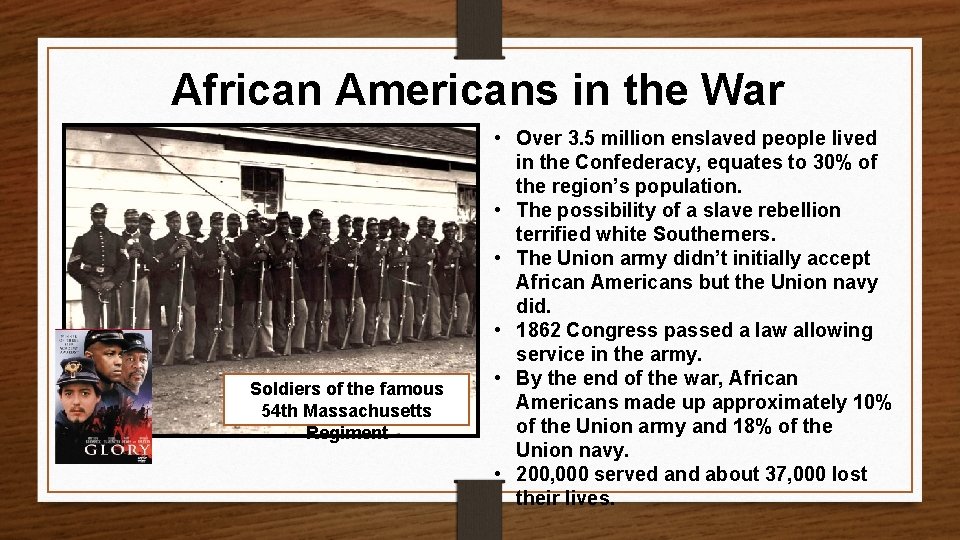
African Americans in the War Soldiers of the famous 54 th Massachusetts Regiment • Over 3. 5 million enslaved people lived in the Confederacy, equates to 30% of the region’s population. • The possibility of a slave rebellion terrified white Southerners. • The Union army didn’t initially accept African Americans but the Union navy did. • 1862 Congress passed a law allowing service in the army. • By the end of the war, African Americans made up approximately 10% of the Union army and 18% of the Union navy. • 200, 000 served and about 37, 000 lost their lives.
- Slides: 6