
Lets do the wave EQ What does energy
- Slides: 10
Let’s do the wave! EQ: What does energy have to do with waves?
I. NATURE OF WAVES
II. Two types of waves • A. Transverse waves 1. A wave in which the particles of the medium move perpendicularly to the direction the wave is traveling. 2. A ripple on a pond a wave on a string are easily visualized transverse waves.
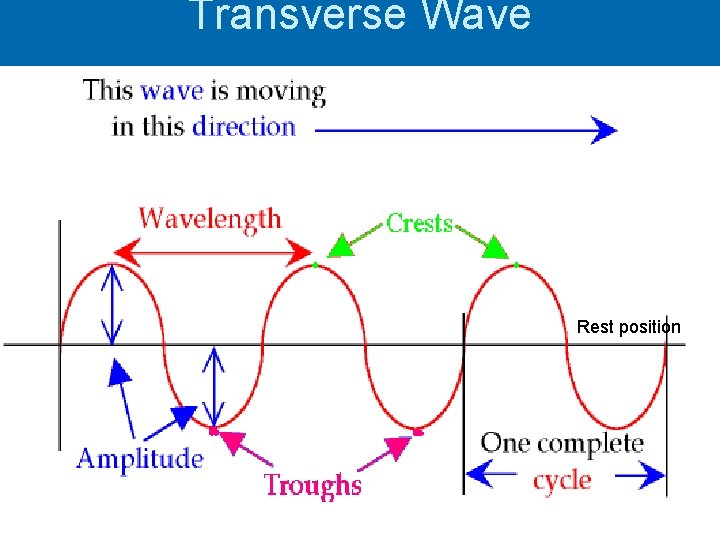
Transverse Wave Rest position
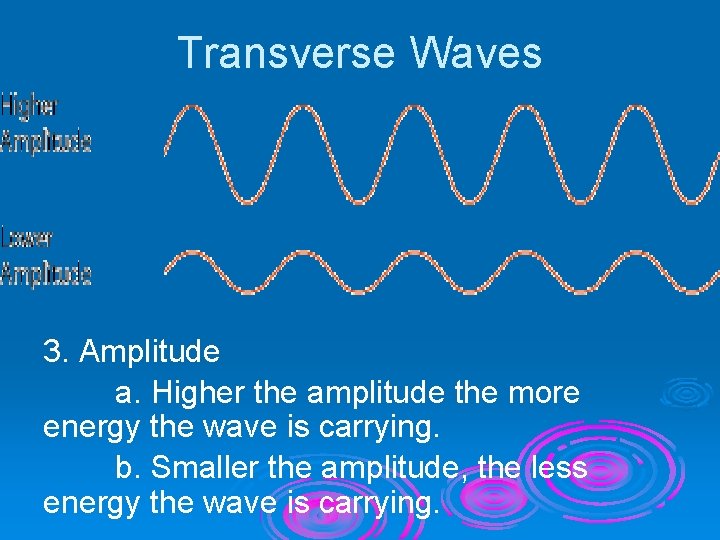
Transverse Waves 3. Amplitude a. Higher the amplitude the more energy the wave is carrying. b. Smaller the amplitude, the less energy the wave is carrying.
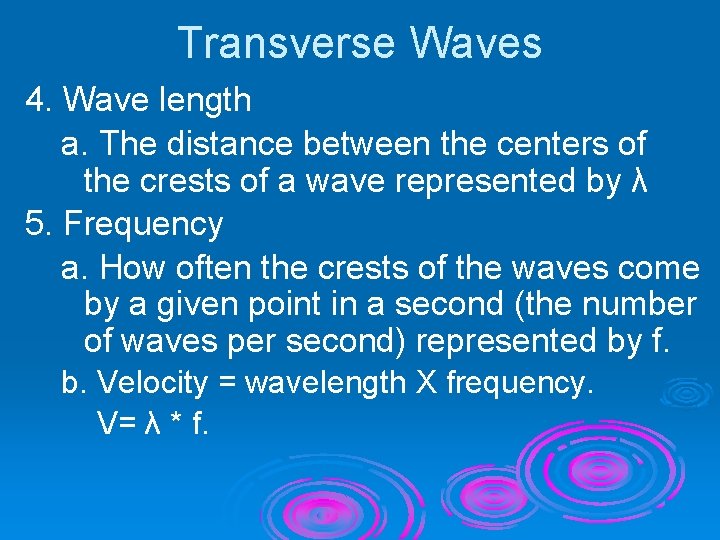
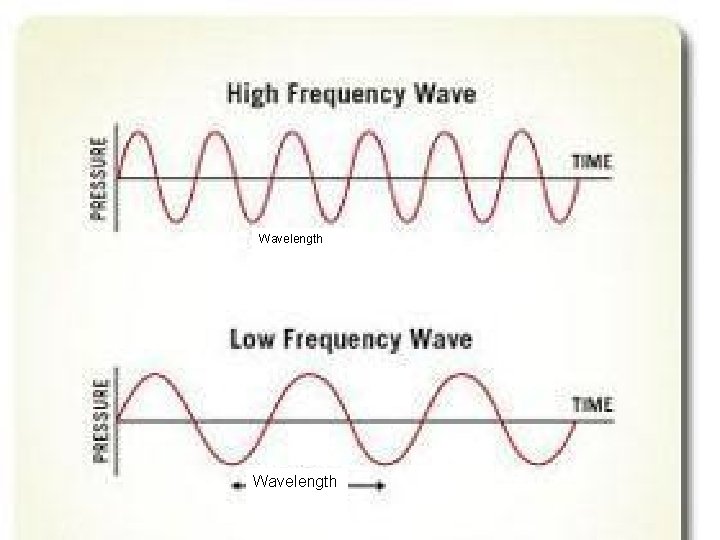
Transverse Waves 4. Wave length a. The distance between the centers of the crests of a wave represented by λ 5. Frequency a. How often the crests of the waves come by a given point in a second (the number of waves per second) represented by f. b. Velocity = wavelength X frequency. V= λ * f.
Wavelength
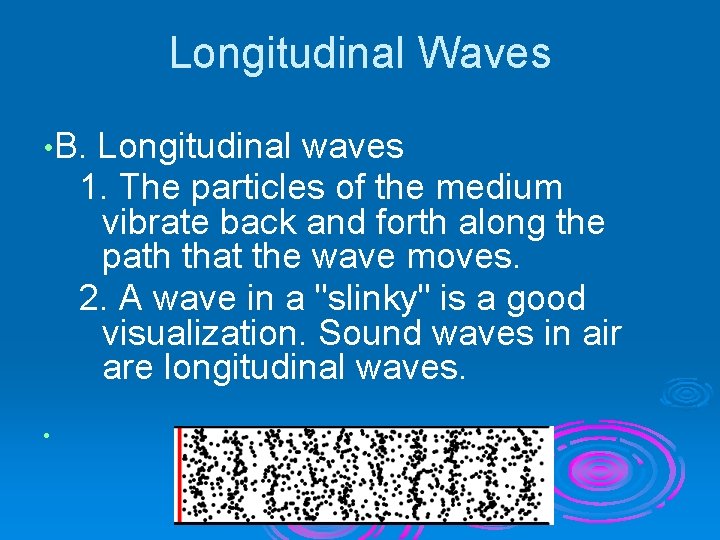
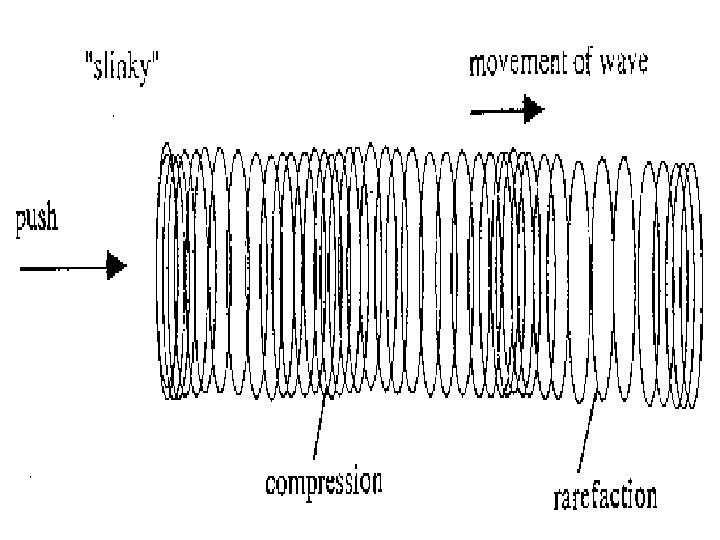
Longitudinal Waves • B. Longitudinal waves 1. The particles of the medium vibrate back and forth along the path that the wave moves. 2. A wave in a "slinky" is a good visualization. Sound waves in air are longitudinal waves. •
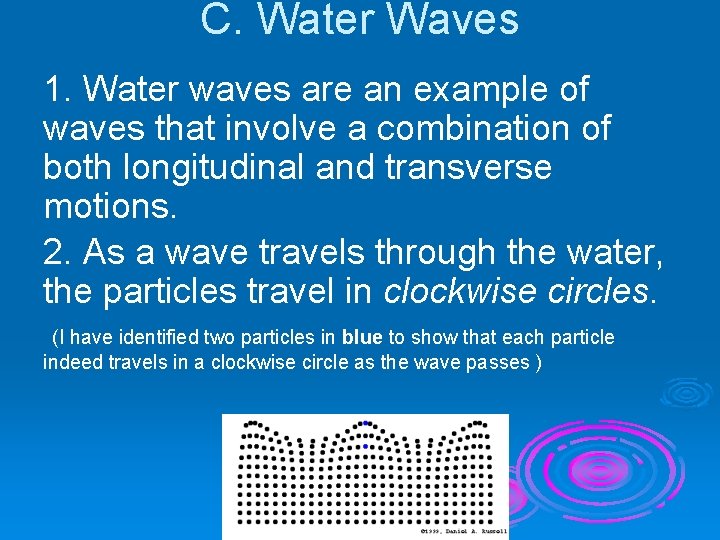
C. Water Waves 1. Water waves are an example of waves that involve a combination of both longitudinal and transverse motions. 2. As a wave travels through the water, the particles travel in clockwise circles. (I have identified two particles in blue to show that each particle indeed travels in a clockwise circle as the wave passes )