
Lets continue our journey through Brazil BRAZILS CULTURE
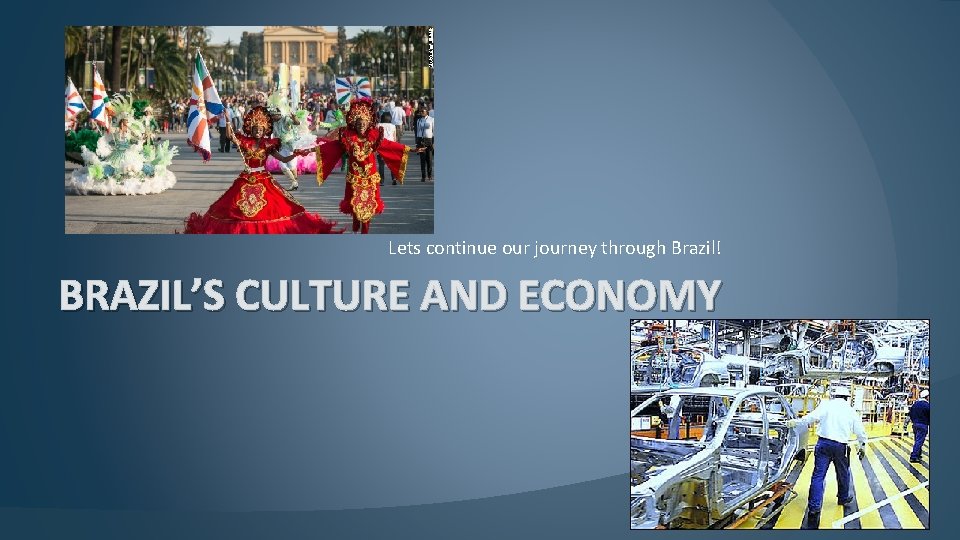
Lets continue our journey through Brazil! BRAZIL’S CULTURE AND ECONOMY
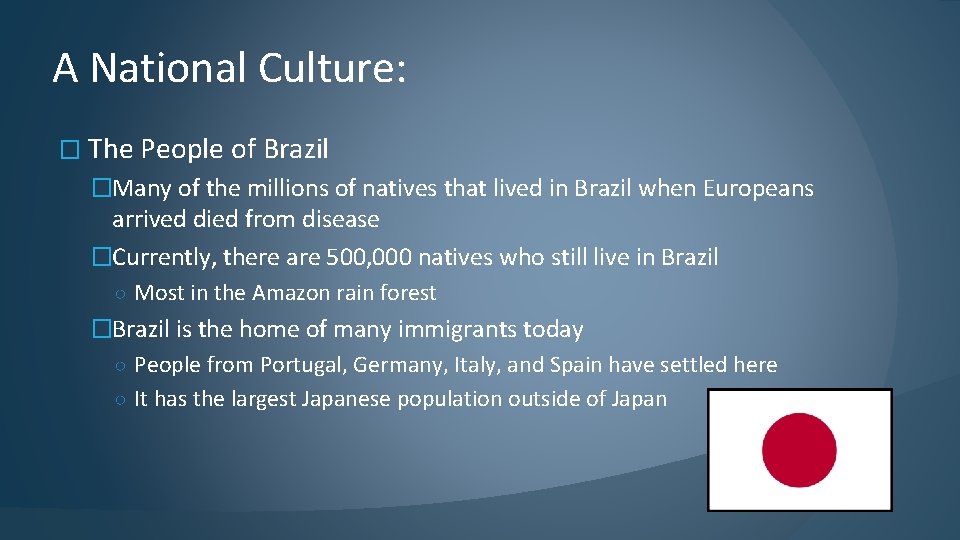
A National Culture: � The People of Brazil �Many of the millions of natives that lived in Brazil when Europeans arrived died from disease �Currently, there are 500, 000 natives who still live in Brazil ○ Most in the Amazon rain forest �Brazil is the home of many immigrants today ○ People from Portugal, Germany, Italy, and Spain have settled here ○ It has the largest Japanese population outside of Japan

A National Culture � Language and Religion �Speak Portuguese �Today, Brazil has the largest Catholic population in the world � Architecture of Brasilia �Brasilia is the capital of Brazil �It was created in 1957 �It is located in the interior of Brazil ○ Why? �Draw people into the interior
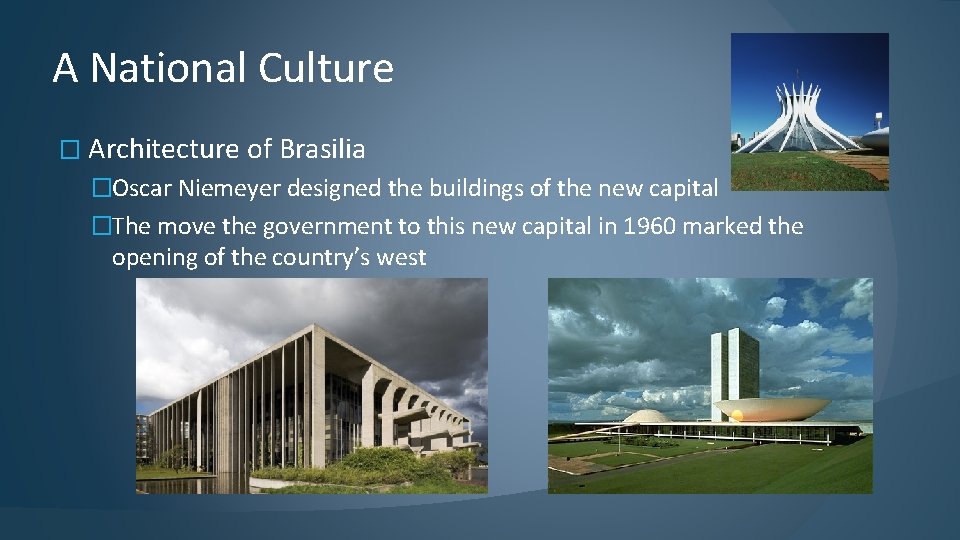
A National Culture � Architecture of Brasilia �Oscar Niemeyer designed the buildings of the new capital �The move the government to this new capital in 1960 marked the opening of the country’s west

BRAZIL HAS THE LARGEST AMOUNT OF WHAT PEOPLE OUTSIDE OF THEIR HOME NATION?
JAPANESE

https: //www. youtube. com/watch? v=OJd. U_tbsc. LE OSCAR NIEMEYER AND BRASILIA VIDEO

An Economic Giant Awakens: � An Industrial Power �It is a growing economic power, because of abundance of natural resources and people �Raw materials include iron, gold, silver, titanium, oil, and natural gas �It is a leading maker of automobiles �More than 90 percent of new cars use ethanol ○ A fuel that comes from sugar cane and is less expensive than imported oil
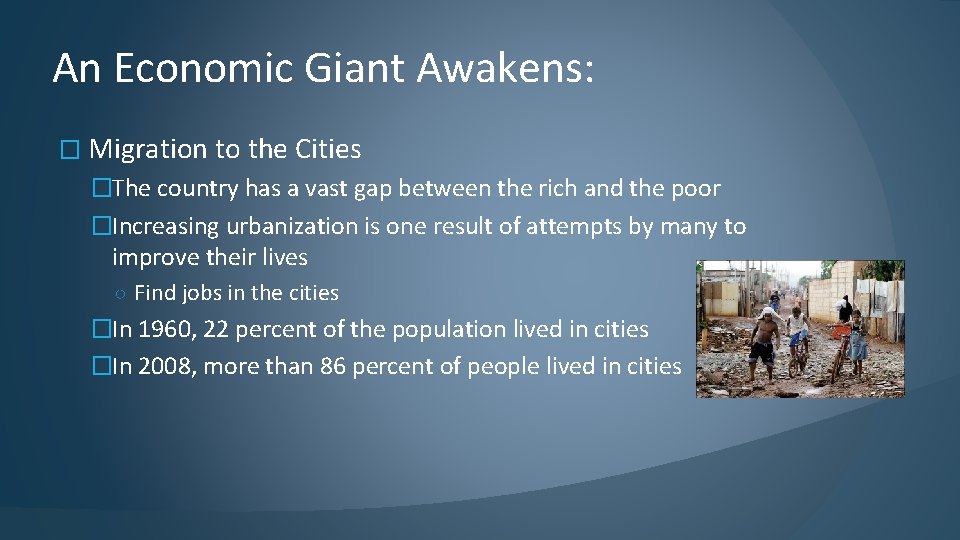
An Economic Giant Awakens: � Migration to the Cities �The country has a vast gap between the rich and the poor �Increasing urbanization is one result of attempts by many to improve their lives ○ Find jobs in the cities �In 1960, 22 percent of the population lived in cities �In 2008, more than 86 percent of people lived in cities
An Economic Giant Awakens: � Migration to the Interior �About 80 percent of the people live within 200 miles of the sea �The government, though, is encouraging settlement of the interior ○ Why? �To develop its many resources �Open your textbooks to page 238 to see where Brazil’s natural resources are located �An important part of the economy in the western interior is commercial agriculture �Many Brazilians are willing to move to the interior to improve their economic situation
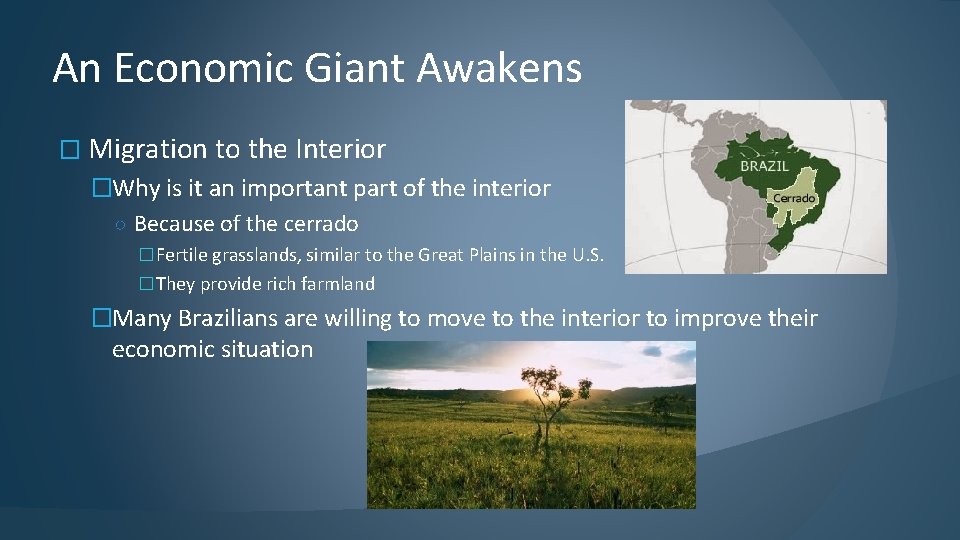
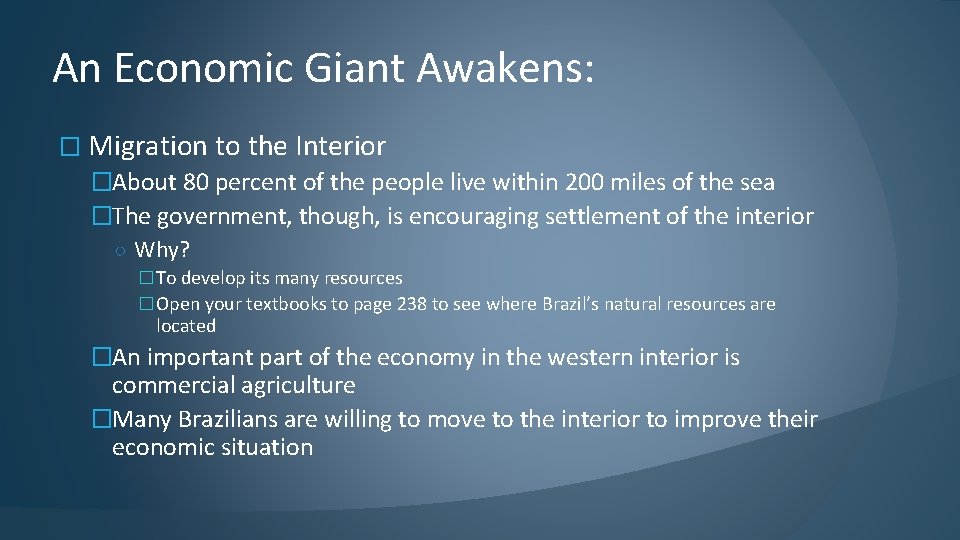
An Economic Giant Awakens � Migration to the Interior �Why is it an important part of the interior ○ Because of the cerrado �Fertile grasslands, similar to the Great Plains in the U. S. �They provide rich farmland �Many Brazilians are willing to move to the interior to improve their economic situation

WHY HAS THE GOVERNMENT OF BRAZIL ATTEMPTED TO GET PEOPLE TO MOVE TO THE INTERIOR?

SO THEY CAN DEVELOP THE MANY NATURAL RESOURCES THAT CAN BE FOUND THERE
Independently, complete this reading and questions BRAZIL LIFE TODAY READING AND QUESTIONS

From what we have discussed, has Latin American governments represented the people? Explain. GIVING CITIZENS A VOICE
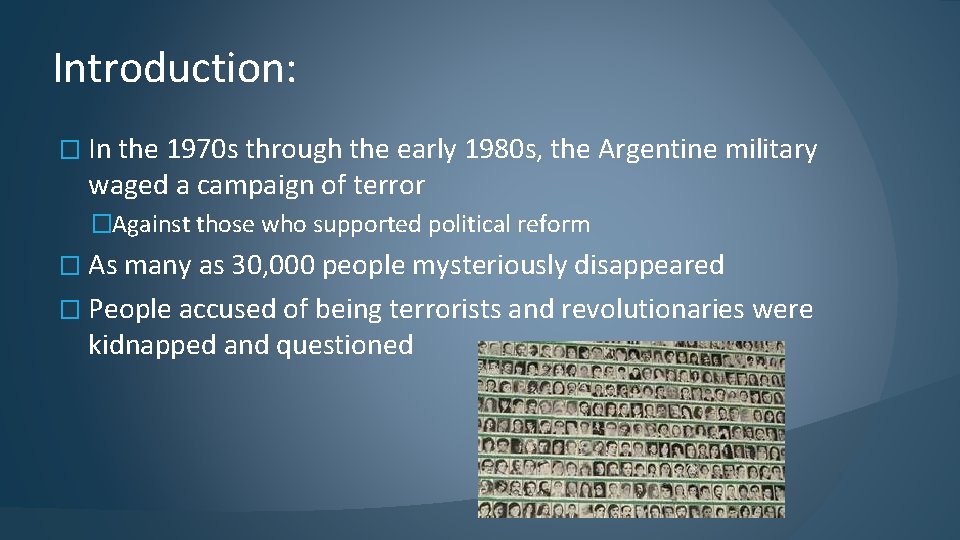
Introduction: � In the 1970 s through the early 1980 s, the Argentine military waged a campaign of terror �Against those who supported political reform � As many as 30, 000 people mysteriously disappeared � People accused of being terrorists and revolutionaries were kidnapped and questioned
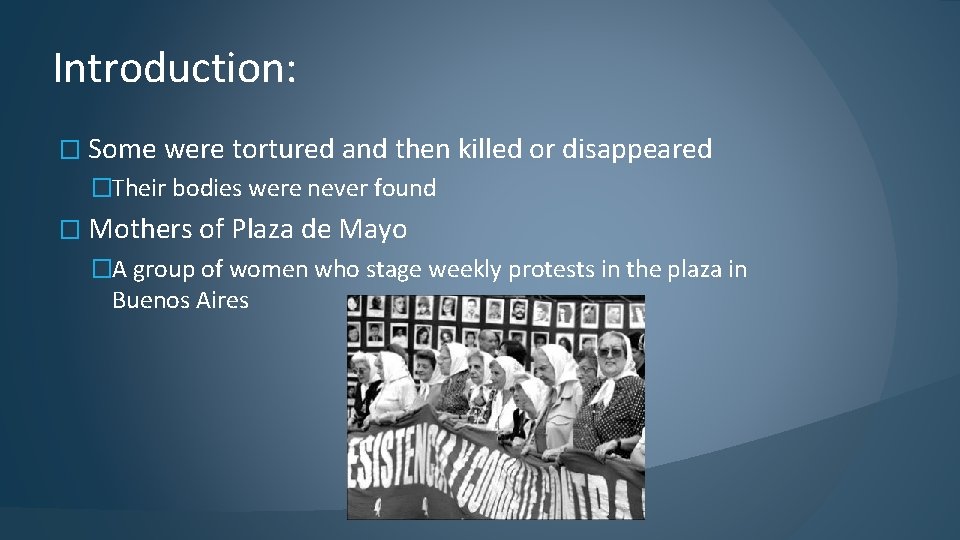
Introduction: � Some were tortured and then killed or disappeared �Their bodies were never found � Mothers of Plaza de Mayo �A group of women who stage weekly protests in the plaza in Buenos Aires

http: //www. ahctv. com/battles-history/videos/argentinas-dirty-war/ http: //www. cbsnews. com/videos/argentinas-dirty-war/ ARGENTINA’S DIRTY WAR
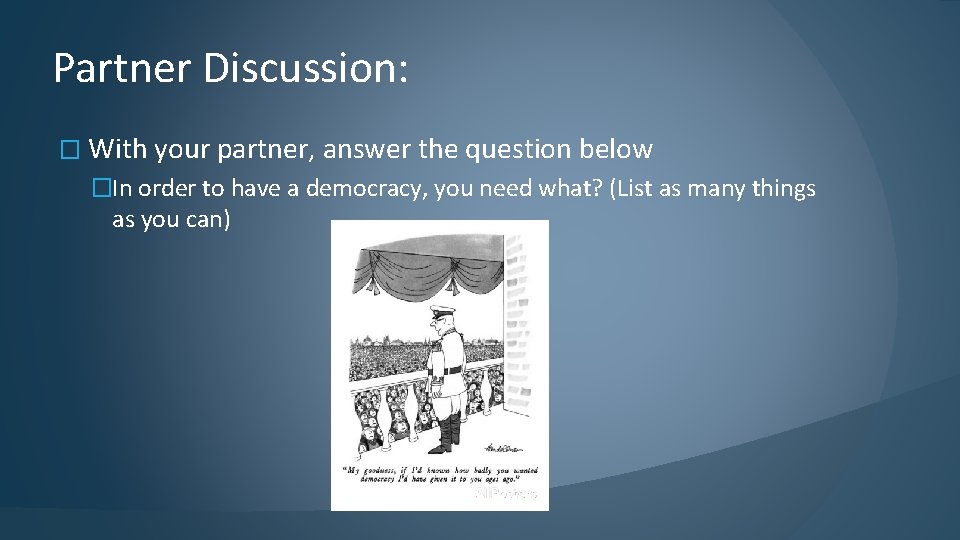
Partner Discussion: � With your partner, answer the question below �In order to have a democracy, you need what? (List as many things as you can)
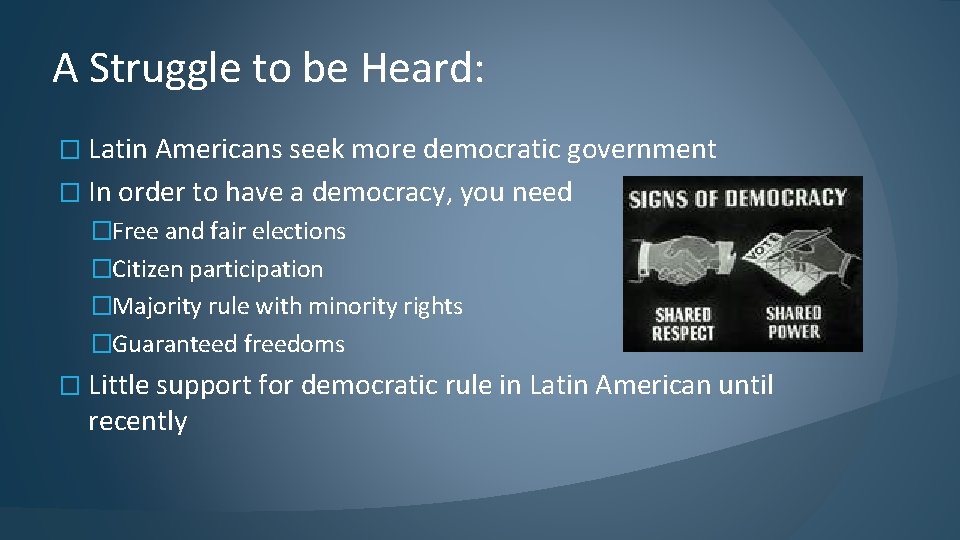
A Struggle to be Heard: � Latin Americans seek more democratic government � In order to have a democracy, you need �Free and fair elections �Citizen participation �Majority rule with minority rights �Guaranteed freedoms � Little support for democratic rule in Latin American until recently
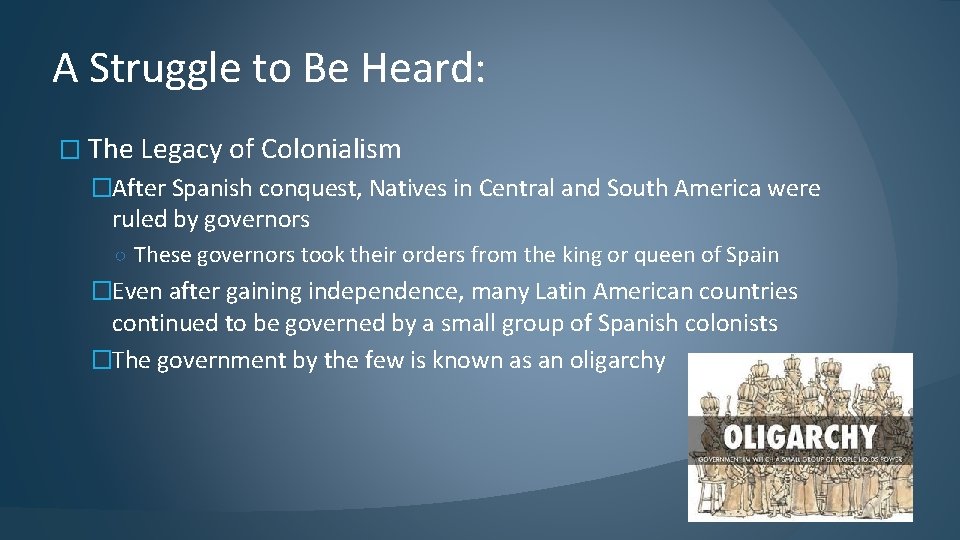
A Struggle to Be Heard: � The Legacy of Colonialism �After Spanish conquest, Natives in Central and South America were ruled by governors ○ These governors took their orders from the king or queen of Spain �Even after gaining independence, many Latin American countries continued to be governed by a small group of Spanish colonists �The government by the few is known as an oligarchy
A Struggle to Be Heard: � The Legacy of Colonialism �An oligarchy ○ Censored the press ○ Limited free speech ○ Punished dissent ○ Discriminated against all those who were not part of the Spanish ruling class
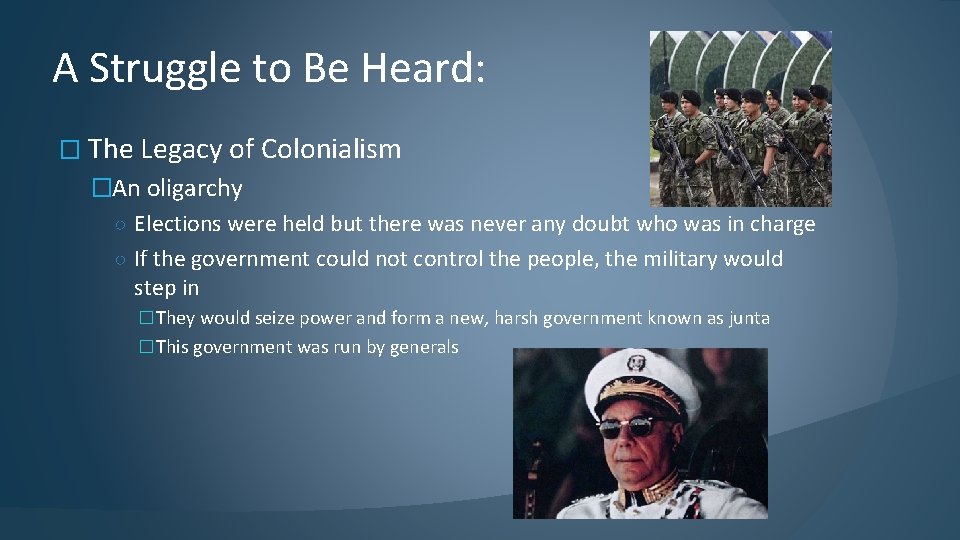
A Struggle to Be Heard: � The Legacy of Colonialism �An oligarchy ○ Elections were held but there was never any doubt who was in charge ○ If the government could not control the people, the military would step in �They would seize power and form a new, harsh government known as junta �This government was run by generals
A Struggle to Be Heard: � The Rule of the Caudillo �Many Latin American countries were ruled by caudillo ○ A military dictator or political boss �They gained support from the military or the wealthy ○ Sometimes elected by the people �An example of caudillos can be found in Mexico, when the PRI ruled from the 1920 to the end of the 20 th century

WHAT ARE SOME THINGS AN OLIGARCHY DOES?

CENSORS THE PRESS LIMITS FREE SPEECH PUNISHES DISSENTERS DISCRIMINATES
- Slides: 26