
LET ME ASK YOU Would you rather have



- Slides: 24
LET ME ASK YOU… Would you rather have fifty $1 bills or one $50 bill?
SO THAT MEANS… Energy in organisms is packaged in small, useful units. These “energy packets” will be introduced in this chapter.
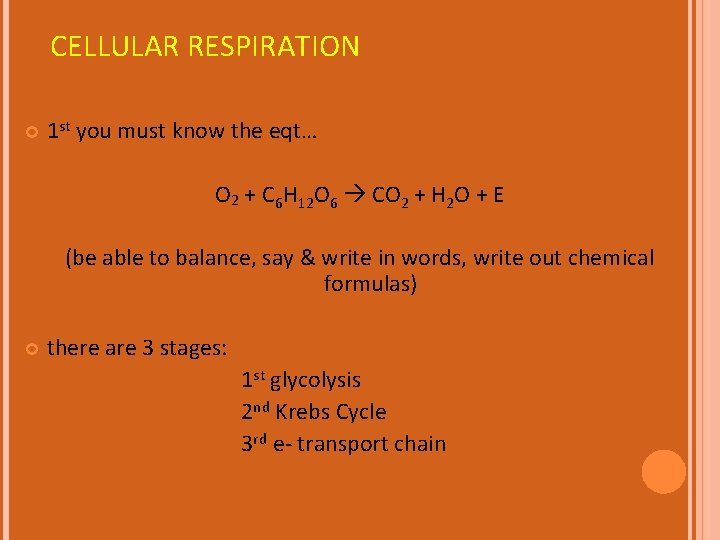
CELLULAR RESPIRATION 1 st you must know the eqt… O 2 + C 6 H 12 O 6 CO 2 + H 2 O + E (be able to balance, say & write in words, write out chemical formulas) there are 3 stages: 1 st glycolysis 2 nd Krebs Cycle 3 rd e- transport chain
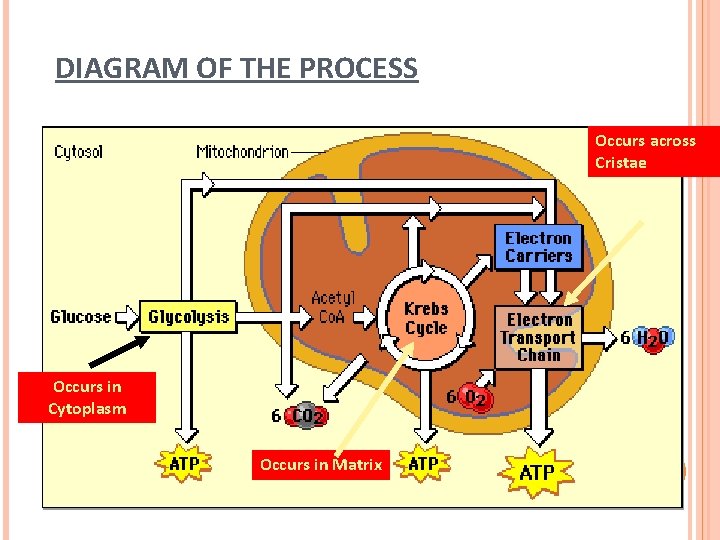
WHERE DOES CELL RESP TAKE PLACE? it glycolysis occurs in the Cytoplasm Krebs Cycle & ETC take place in the mitochondria Copyright Cmassengale actually takes place in 2 parts of the cell:
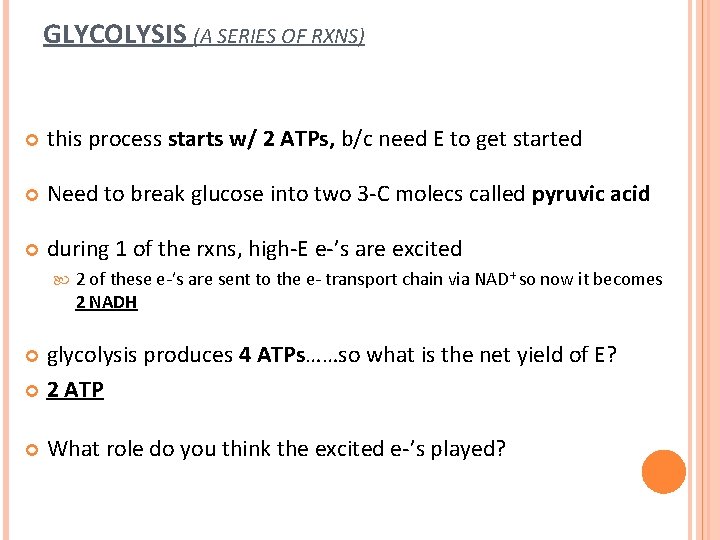
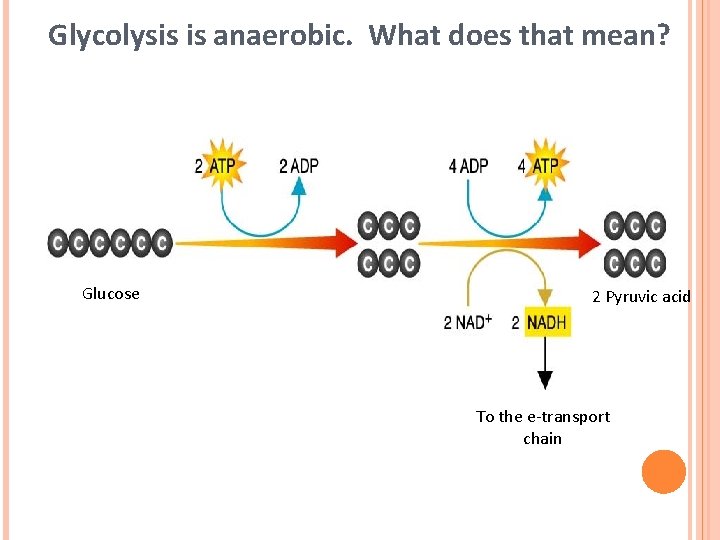
GLYCOLYSIS (A SERIES OF RXNS) this process starts w/ 2 ATPs, b/c need E to get started Need to break glucose into two 3 -C molecs called pyruvic acid during 1 of the rxns, high-E e-’s are excited 2 of these e-’s are sent to the e- transport chain via NAD+ so now it becomes 2 NADH glycolysis produces 4 ATPs……so what is the net yield of E? 2 ATP What role do you think the excited e-’s played?
Glycolysis is anaerobic. What does that mean? Glucose 2 Pyruvic acid To the e-transport chain
Glycolysis is fast! So a lot of ATP can be produced…but that could present a problem… If too much ATP is produced during glycolysis then in a few seconds all of the available NAD+ molecs will be filled w/ e-’s, thus none are available to go back and continue the process. So what happens?
WHAT HAPPENS TO PYRUVIC ACID? It depends on whether or not O 2 is present. If O 2 isn’t present 1 of the following 2 processes takes place: alcoholic fermentation (used by yeast & other microorgs) pyruvic acid + NADH alcohol + CO 2 + NAD+ The CO 2 here causes bread dough to rise, this would also be the method for making some alcoholic drinks Some unicellular orgs use this process to create foods we eat like butter, yogurt, buttermilk, kimchi, pickles, saurkraut. or lactic acid fermentation pyruvic acid + NADH lactic acid + NAD+ This happens during vigorous exercise when you are not breathing properly (hence absence of O 2), but your body still needs ATP so it creates some by this process. Lactic acid builds up in your muscles and causes a painful, burning sensation.
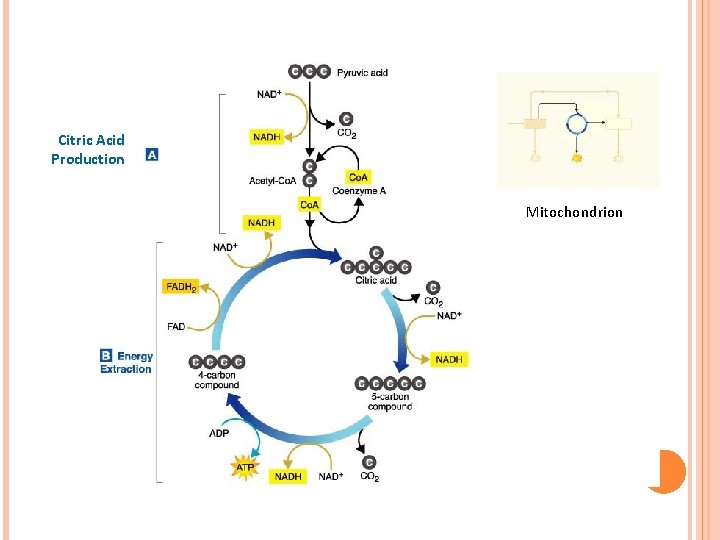
BUT IF THERE IS O 2 AVAILABLE THEN… in the presence of O 2, pyruvic acid goes on to the Krebs Cycle (or Citric Acid Cycle) takes place in the matrix 1 st pyruvic acid enters the mitochondria & goes thru a series of rxns where: it is broken into acetyl Co-A during the process CO 2 is released acetyl Co-A is further broken into citric acid as the cycle continues ATP is produced for more cell activities, & FADH 2 & NADH are produced remember there are 2 pyruvic acids, so cycle turns twice to produce 1 ATPs, 4 NADHs, 1 FADH 2, & 1 CO 2 each turn Hold on, where will that FADH 2 & NADH go? What did we do w/ those kinds of molecs in other processes?
Citric Acid Production Mitochondrion
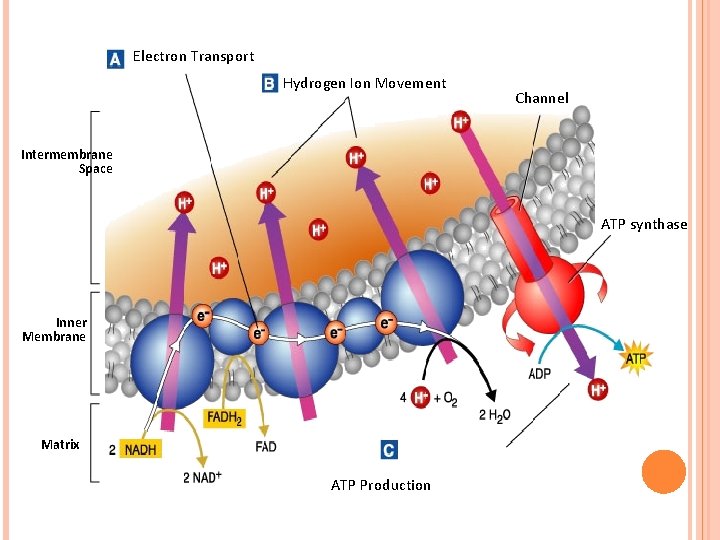
THE ELECTRON TRANSPORT CHAIN NADH chain & FADH 2 bring the high-E e-’s to the e- transport in the inner mitochondrial memb (cristae) the e-’s are passed from 1 carrier to the next Hot potato! @ the end of the chain is an enzyme that combos these e-’s with H+ and O 2 atoms to form H 2 O Thus O 2 is essential for getting rid of low-E e-’s & H+. The waste of cell resp is H 2 O.
MORE E- TRANSPORT CHAIN each time e-’s move down the chain their E is used to create the potential difference inside the memb so just as in photosyn, E & ATP synthase create ATP every time an e- moves down the chain H+ moves across the memb which causes ATP synthase to spin & generate lots of ATP in fact each e- generates 32 ATPs
Electron Transport Hydrogen Ion Movement Channel Intermembrane Space ATP synthase Inner Membrane Matrix ATP Production
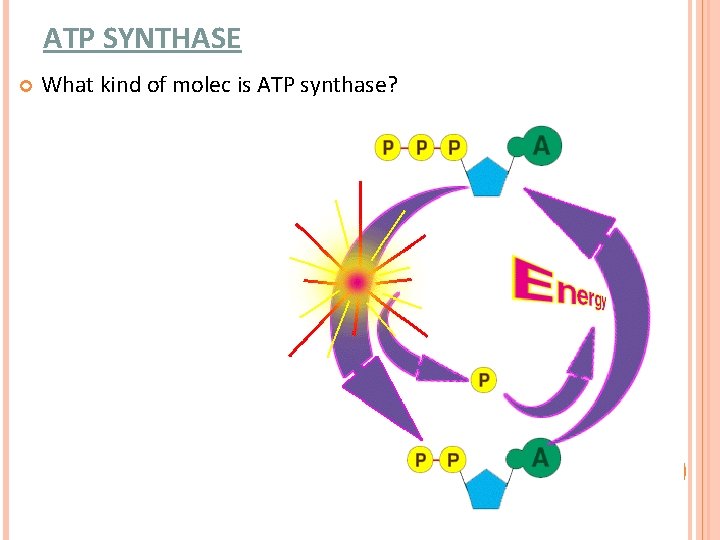
ATP SYNTHASE What kind of molec is ATP synthase?
DIAGRAM OF THE PROCESS Occurs across Cristae Copyright Cmassengale Occurs in Cytoplasm Occurs in Matrix
DON’T MISS THIS! • Where in cellular respiration are e-’s released? • What is the significance of all the e-’s that are released?
HOW MANY TOTAL ATPS ARE PRODUCED? remember 2 the 2 ATPs from glycolysis more ATPs from Krebs cycle 32 more ATPs are produced in e- transport chain TOTAL = 36 ATPs the breakdown of 1 glucose molec nets 36– 38 ATPs This is quite different than fermentation. What makes the difference?
WHAT TYPE OF RXN IS CELL RESP? remember the choices are: endergonic anabolic or exergonic or catabolic
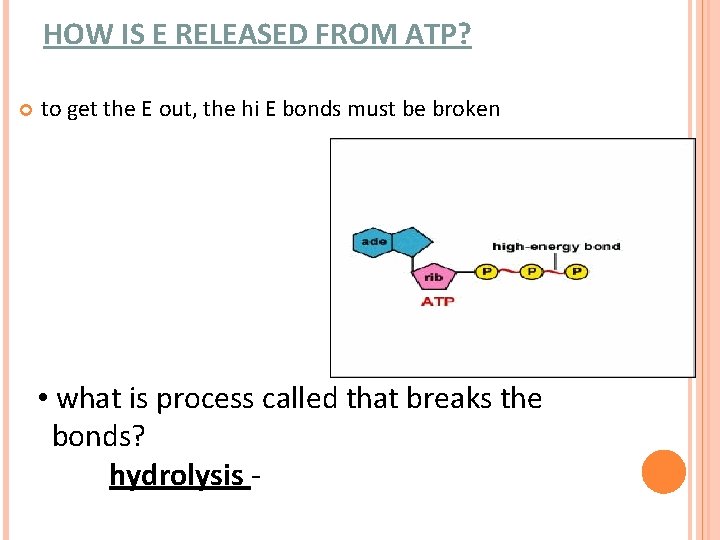
REMIND ME AGAIN WHY THE CELL USES ATP… As far as known, all orgs from the simplest bacteria to humans use ATP as their 1° E currency. the E level ATP carries is just the right amt for most bio rxns nutrients contain E in low-E covalent bonds which aren’t v. useful to do most of kinds of work in the cells these low E bonds must be translated to hi E bonds, & this is a role of ATP
HOW IS E RELEASED FROM ATP? to get the E out, the hi E bonds must be broken • what is process called that breaks the bonds? hydrolysis -
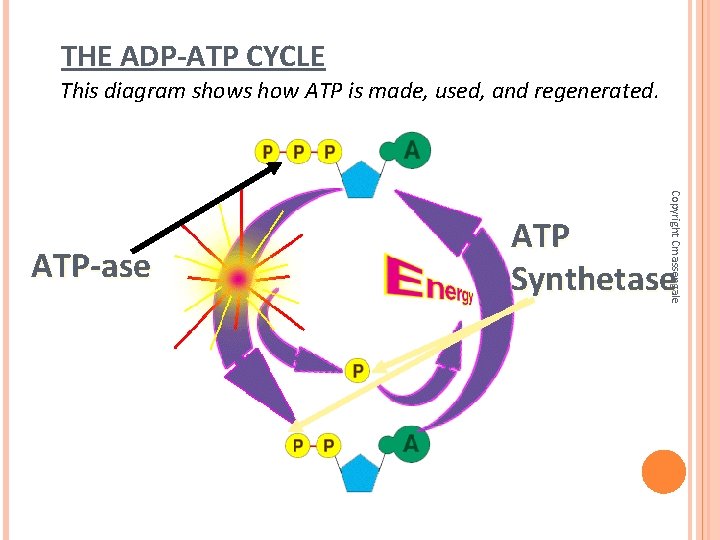
THE ADP-ATP CYCLE This diagram shows how ATP is made, used, and regenerated. Copyright Cmassengale ATP-ase ATP Synthetase
PHOTOSYNTHESIS VS. CELLULAR RESPIRATION • What are the differences between photosyn & cell resp? • What would you say are the similarities between photosyn & cell resp?
VIDEO SEGMENTS First Stages of Digestion (3: 32) Last Stages of Digestion (3: 38) Fiber in the American Diet (5: 07) From Food to ATP (1: 56) Glycolysis & Cellular Respiration (1: 53)
CITRIC ACID…. Citric acid is a very useful and effective preservative, obtained from naturally occurring organic acids. It exists in many different fruits and vegetables, but is especially concentrated in lemons and limes. Citric acid is used for many different reasons, including (but not limited to): Citric acid is used as a flavoring in many preparations of Vitamin C, and has a wide variety of other uses. In industry, citric acid can be used to make good “natural” cleaners, though some may still contain chemicals that are not exactly natural. The ability of citric acid to bond with other minerals can make it helpful in softening water. Soaps and laundry detergents can be more effective when they contain citric acid. It can work well in shampoos because it tends to remove excess minerals from the water. Yet, sometimes a high concentration of citric acid can damage hair, since it opens hair cuticles. It can strip the hair of needed minerals and bleach it. As a food additive, citric acid is in common use. It can be added to flavor certain drinks, especially soft drinks. It works well as a meat tenderizer because it tends to break down the meat proteins. However, it is bitter — one of its main uses in food is to make certain candy sour. When you buy sour candies, you may note many of them are covered with a fine white powder. This is citric acid, which adds an exterior coating to the candies and provides quite a bit of sour taste. It can make the mouth pucker or feel dry, and higher quantities will produce very sour candies. You’ll note citric acid in a variety of cleaning products and especially now in beauty products. With sodium bicarbonate, citric acid may be added to produce bath fizzes or bath tablets. The combination of the two produces carbon dioxide and makes for pleasantly effervescent water. Citric acid is a common ingredient in skin masks and some lotions. Vitamin C in general is thought an antioxidant that can help refresh skin and reduce the look of aging by promoting new skin growth and destroying free radicals. Too much exposure to citric acid can cause mild skin irritation, and it may be a good idea not to use skin products containing it if you have sensitive skin. One of the best benefits of citric acid in all its applications is that it is natural and poses little to no risk to the environment. Very few people are allergic to citric acid, but some people may have stomach sensitivity to it, and might better avoid foods containing it. Read labels carefully, since citric acid may be used as a preservative in many more foods than you might expect. It’s also now commonly used in preparing photographs.