
Let every n be series with nonnegative terms
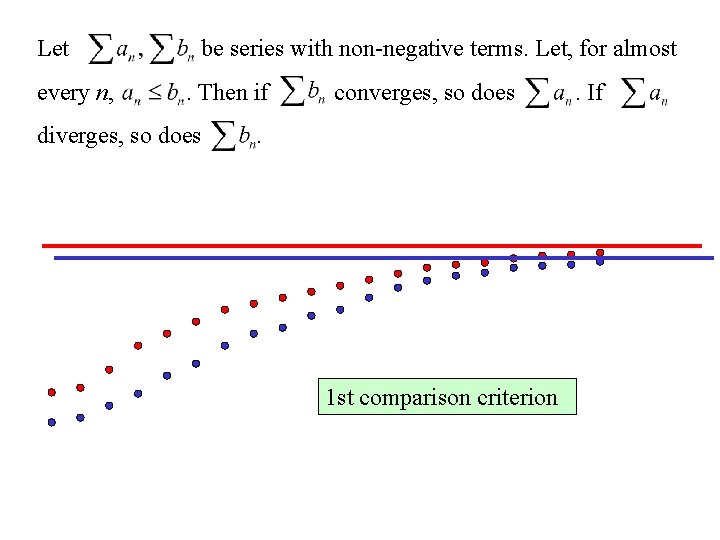
Let every n, be series with non-negative terms. Let, for almost. Then if diverges, so does converges, so does . 1 st comparison criterion . If
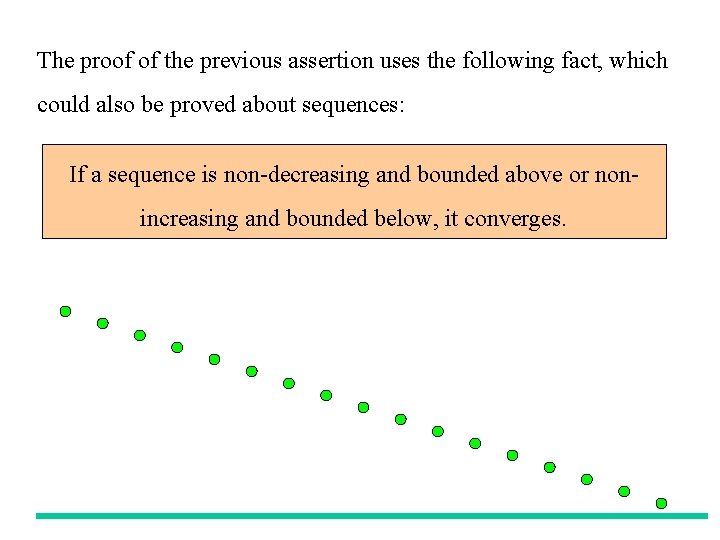
The proof of the previous assertion uses the following fact, which could also be proved about sequences: If a sequence is non-decreasing and bounded above or nonincreasing and bounded below, it converges.
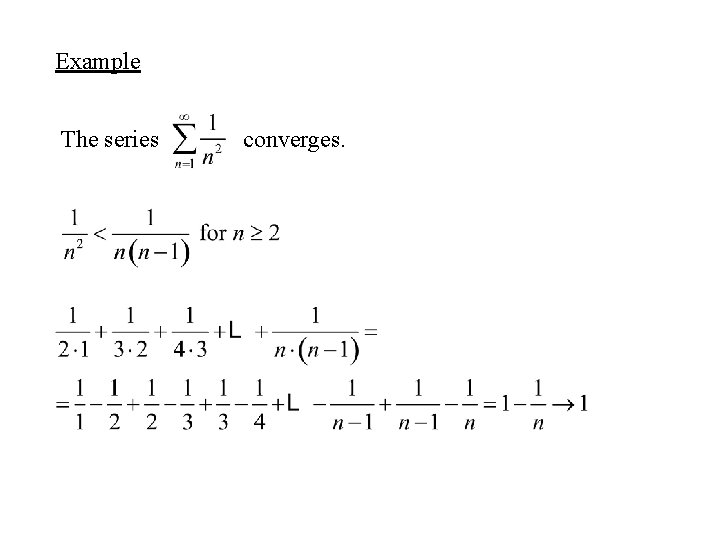
Example The series converges.
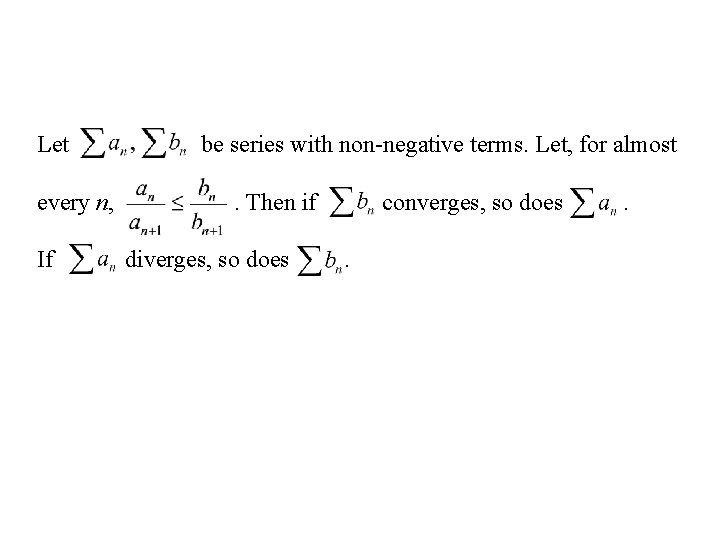
Let every n, If be series with non-negative terms. Let, for almost. Then if diverges, so does converges, so does. .
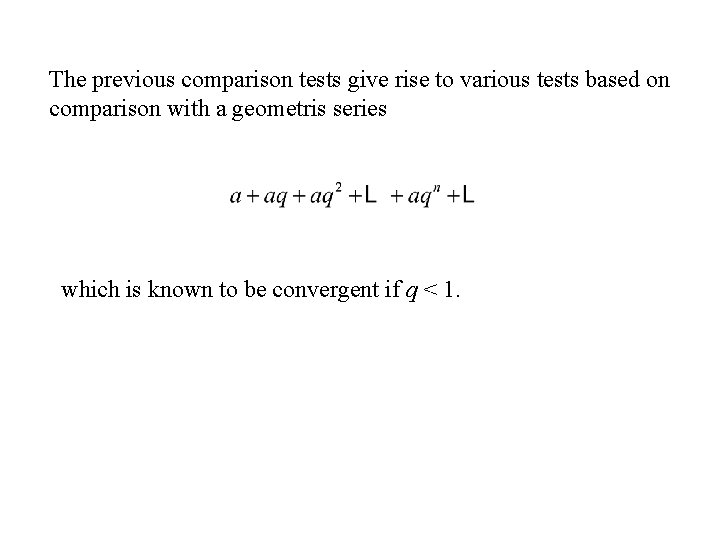
The previous comparison tests give rise to various tests based on comparison with a geometris series which is known to be convergent if q < 1.
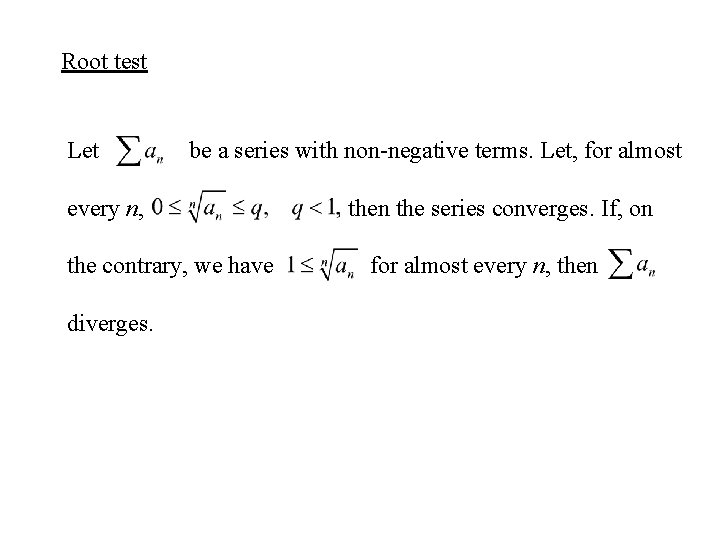
Root test Let be a series with non-negative terms. Let, for almost every n, the contrary, we have diverges. then the series converges. If, on for almost every n, then
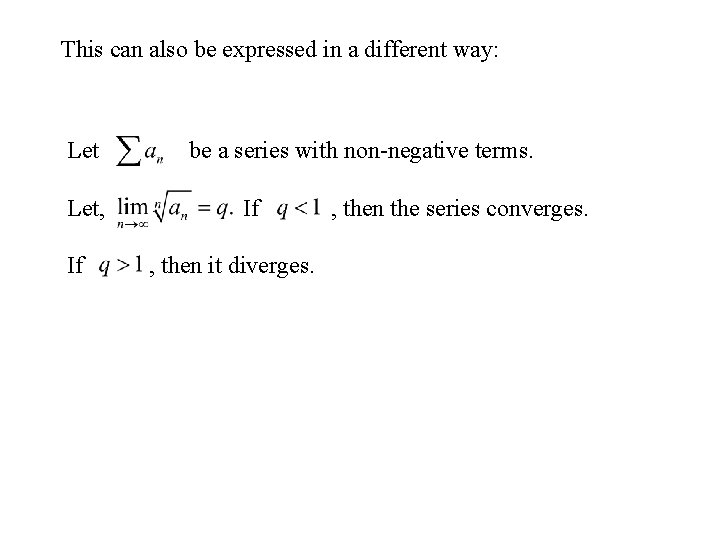
This can also be expressed in a different way: Let, If be a series with non-negative terms. If , then it diverges. , then the series converges.
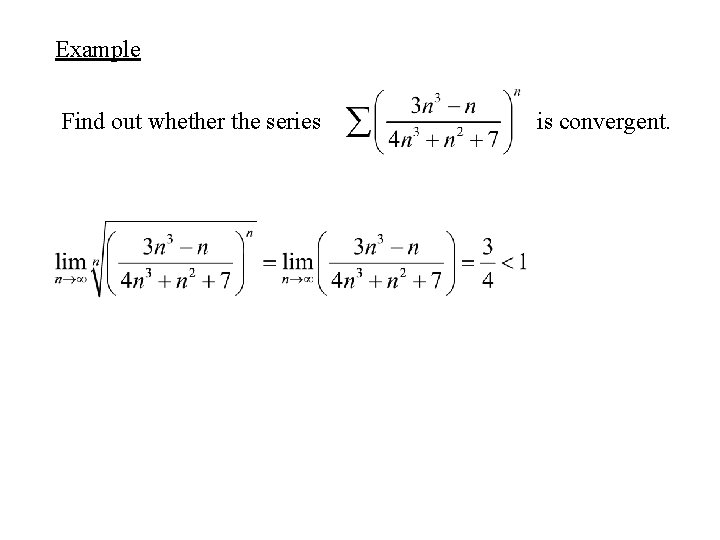
Example Find out whether the series is convergent.
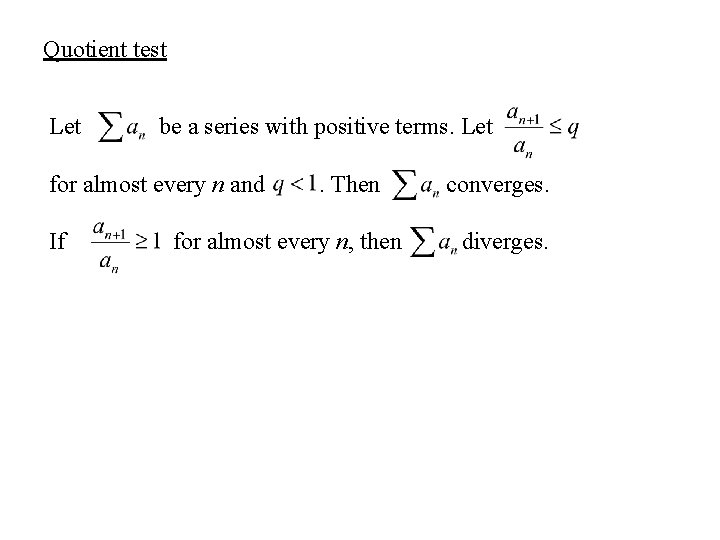
Quotient test Let be a series with positive terms. Let for almost every n and If . Then for almost every n, then converges. diverges.
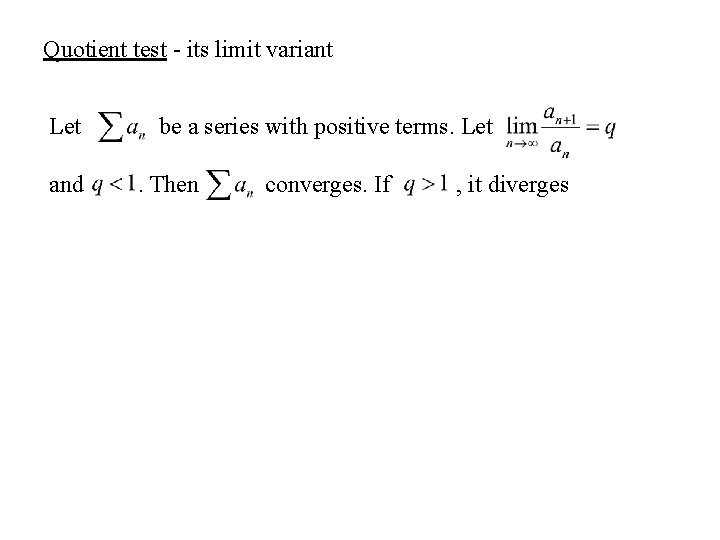
Quotient test - its limit variant Let and be a series with positive terms. Let. Then converges. If , it diverges
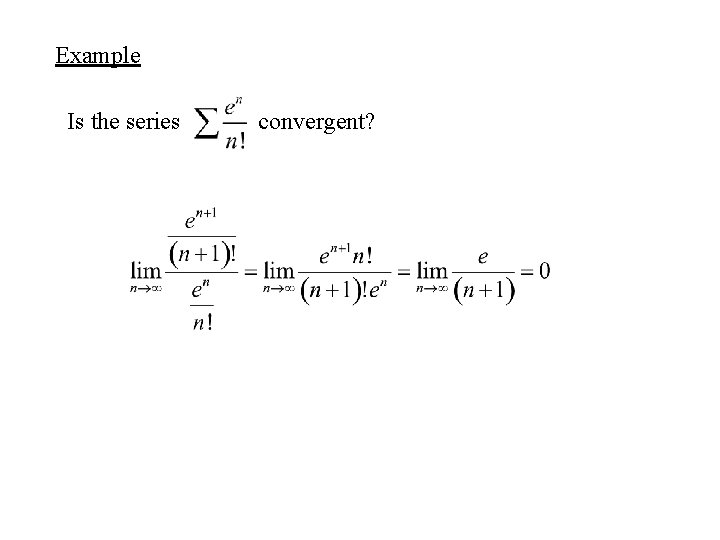
Example Is the series convergent?
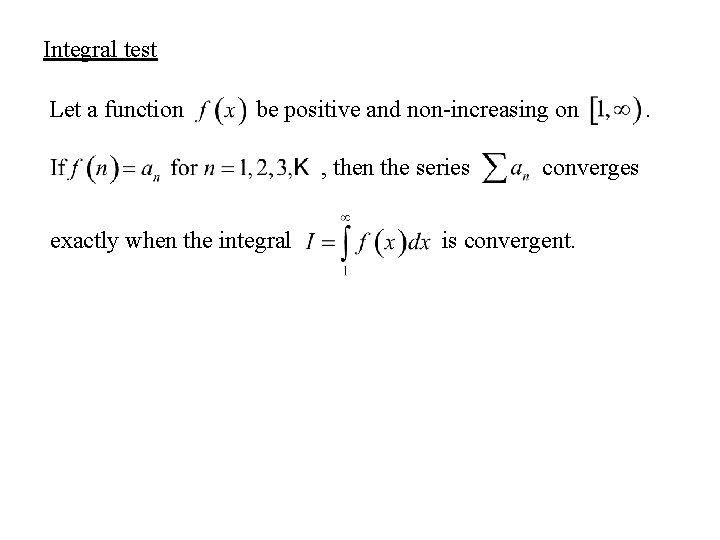
Integral test Let a function be positive and non-increasing on , then the series exactly when the integral converges is convergent. .
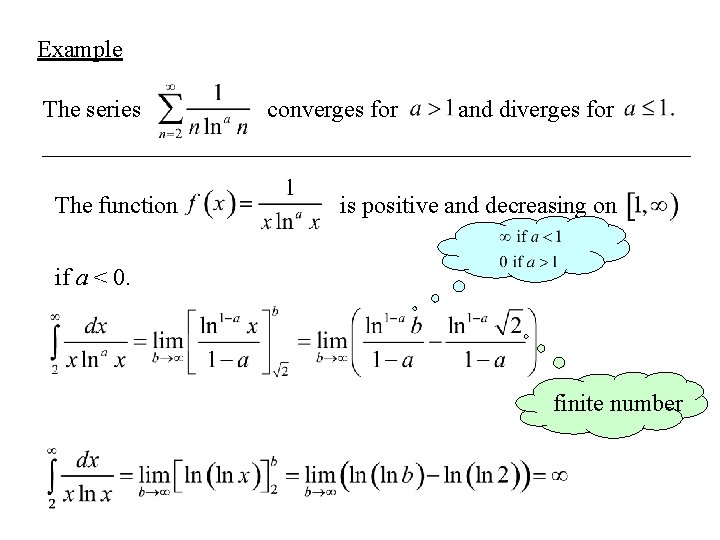
Example The series The function converges for and diverges for is positive and decreasing on if a < 0. finite number
- Slides: 13