
Lessons learnt from 13 years of FLR practice

- Slides: 10
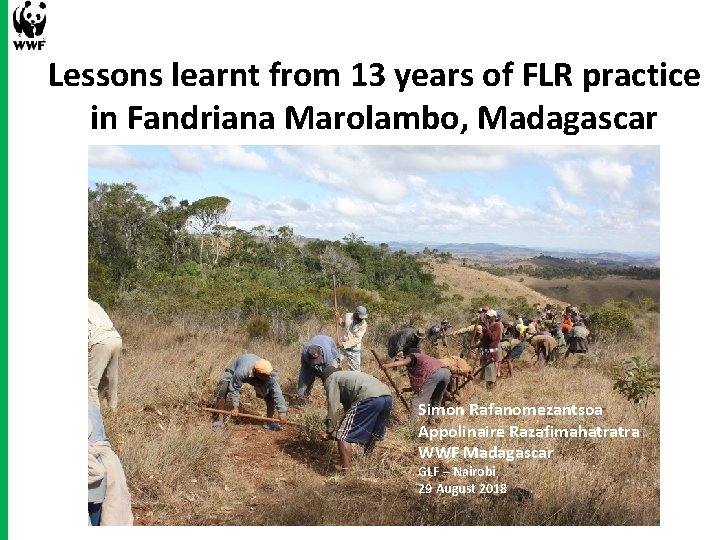
Lessons learnt from 13 years of FLR practice in Fandriana Marolambo, Madagascar Simon Rafanomezantsoa Appolinaire Razafimahatratra WWF Madagascar GLF – Nairobi 29 August 2018
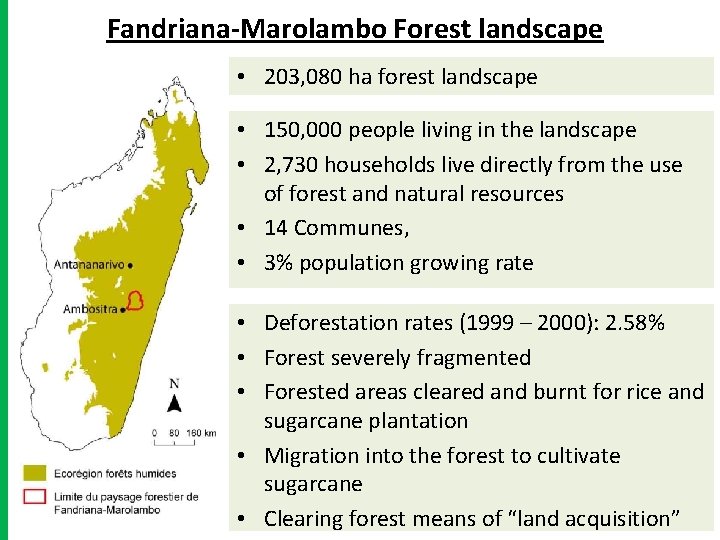
Fandriana-Marolambo Forest landscape • 203, 080 ha forest landscape • 150, 000 people living in the landscape • 2, 730 households live directly from the use of forest and natural resources • 14 Communes, • 3% population growing rate • Deforestation rates (1999 – 2000): 2. 58% • Forest severely fragmented • Forested areas cleared and burnt for rice and sugarcane plantation • Migration into the forest to cultivate sugarcane • Clearing forest means of “land acquisition”
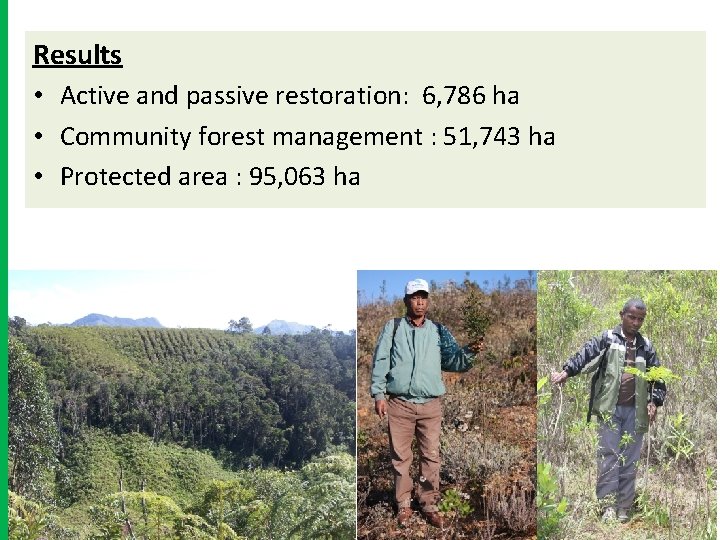
Results • Active and passive restoration: 6, 786 ha • Community forest management : 51, 743 ha • Protected area : 95, 063 ha
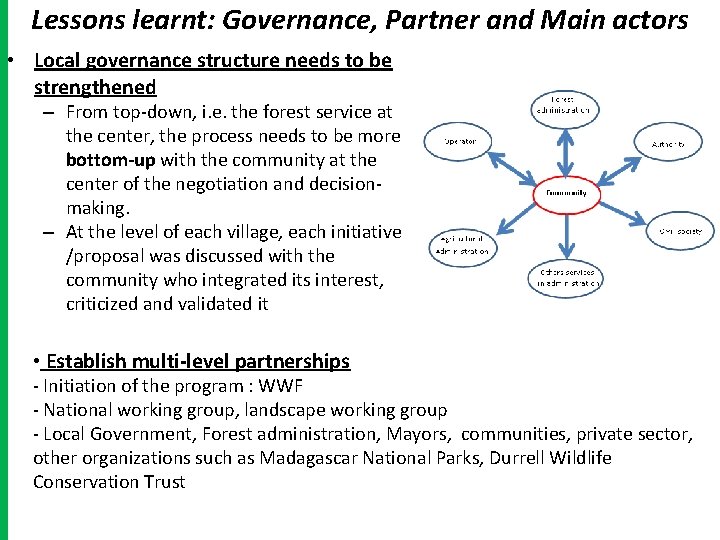
Lessons learnt: Governance, Partner and Main actors • Local governance structure needs to be strengthened – From top-down, i. e. the forest service at the center, the process needs to be more bottom-up with the community at the center of the negotiation and decisionmaking. – At the level of each village, each initiative /proposal was discussed with the community who integrated its interest, criticized and validated it • Establish multi-level partnerships - Initiation of the program : WWF - National working group, landscape working group - Local Government, Forest administration, Mayors, communities, private sector, other organizations such as Madagascar National Parks, Durrell Wildlife Conservation Trust
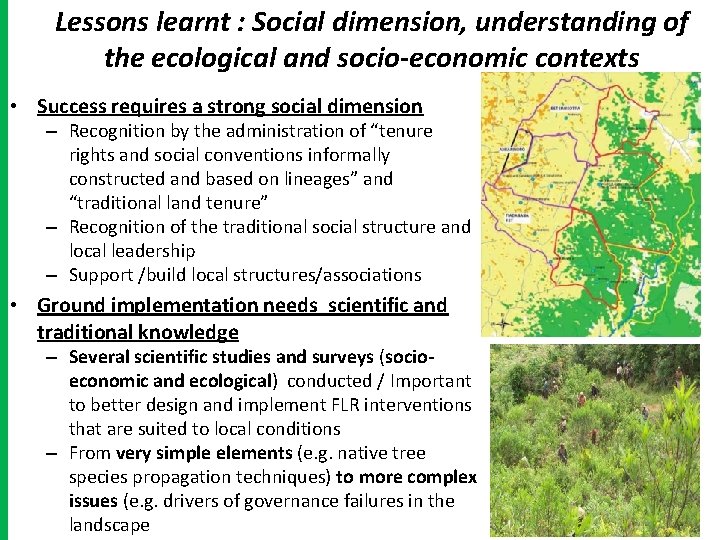
Lessons learnt : Social dimension, understanding of the ecological and socio-economic contexts • Success requires a strong social dimension – Recognition by the administration of “tenure rights and social conventions informally constructed and based on lineages” and “traditional land tenure” – Recognition of the traditional social structure and local leadership – Support /build local structures/associations • Ground implementation needs scientific and traditional knowledge – Several scientific studies and surveys (socioeconomic and ecological) conducted / Important to better design and implement FLR interventions that are suited to local conditions – From very simple elements (e. g. native tree species propagation techniques) to more complex issues (e. g. drivers of governance failures in the landscape
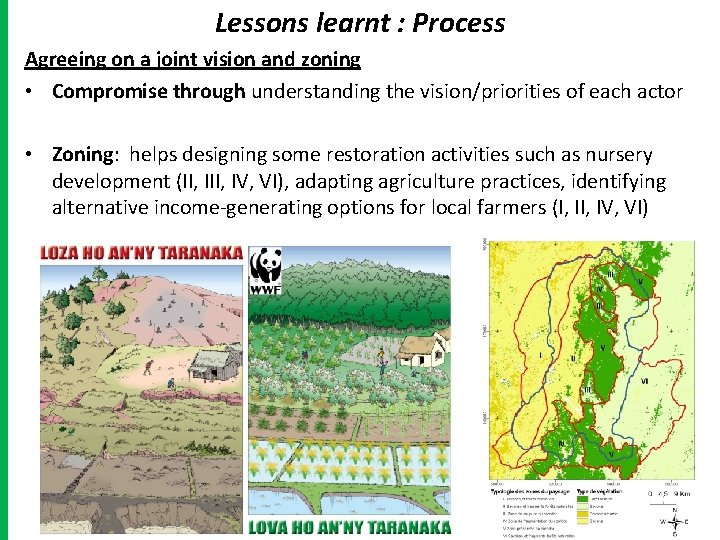
Lessons learnt : Process Agreeing on a joint vision and zoning • Compromise through understanding the vision/priorities of each actor • Zoning: helps designing some restoration activities such as nursery development (II, IV, VI), adapting agriculture practices, identifying alternative income-generating options for local farmers (I, IV, VI)
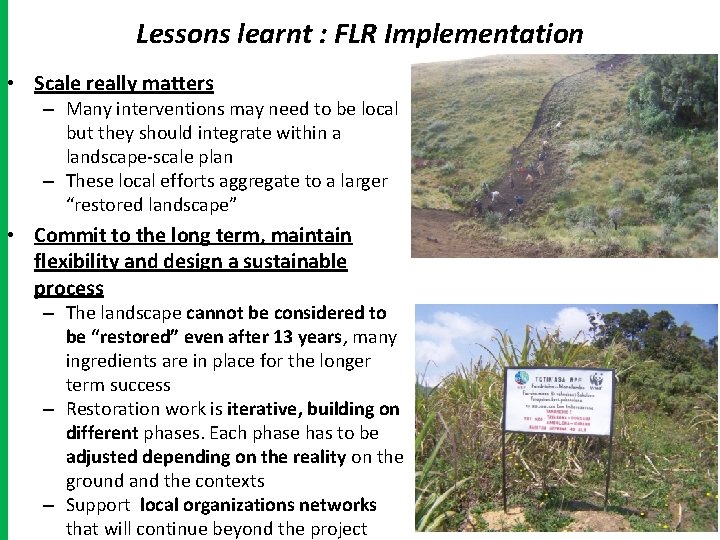
Lessons learnt : FLR Implementation • Scale really matters – Many interventions may need to be local but they should integrate within a landscape-scale plan – These local efforts aggregate to a larger “restored landscape” • Commit to the long term, maintain flexibility and design a sustainable process – The landscape cannot be considered to be “restored” even after 13 years, many ingredients are in place for the longer term success – Restoration work is iterative, building on different phases. Each phase has to be adjusted depending on the reality on the ground and the contexts – Support local organizations networks that will continue beyond the project
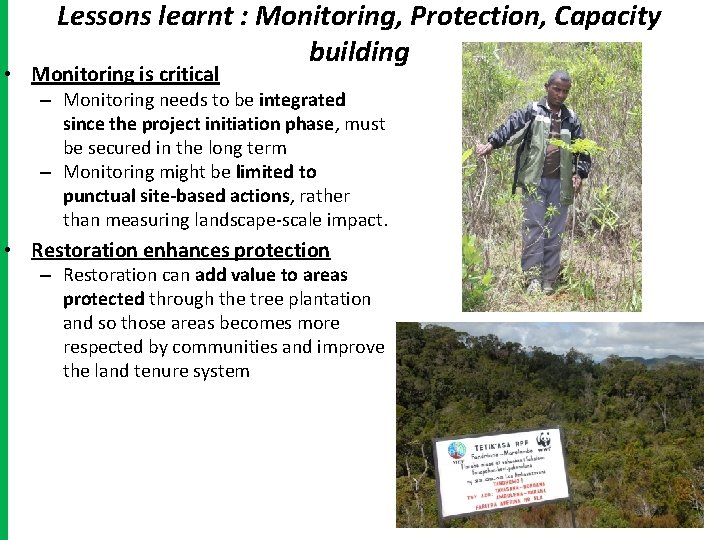
Lessons learnt : Monitoring, Protection, Capacity building • Monitoring is critical – Monitoring needs to be integrated since the project initiation phase, must be secured in the long term – Monitoring might be limited to punctual site-based actions, rather than measuring landscape-scale impact. • Restoration enhances protection – Restoration can add value to areas protected through the tree plantation and so those areas becomes more respected by communities and improve the land tenure system
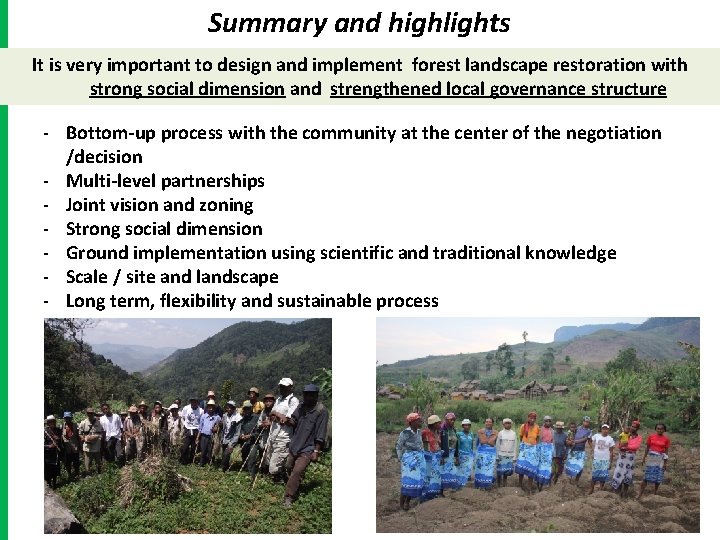
Summary and highlights It is very important to design and implement forest landscape restoration with strong social dimension and strengthened local governance structure - Bottom-up process with the community at the center of the negotiation /decision - Multi-level partnerships - Joint vision and zoning - Strong social dimension - Ground implementation using scientific and traditional knowledge - Scale / site and landscape - Long term, flexibility and sustainable process
THANK YOU