
LESSONS LEARNED SHAPING STRUCTURES FOR SCIENCE The Project
- Slides: 28
LESSONS LEARNED: SHAPING STRUCTURES FOR SCIENCE The Project Kaleidoscope Experience 1992 – 2009 Jeanne L. Narum, PKAL Director Maryland Community College Facilities Planners Council Meeting Howard Community College June 1, 2009 1
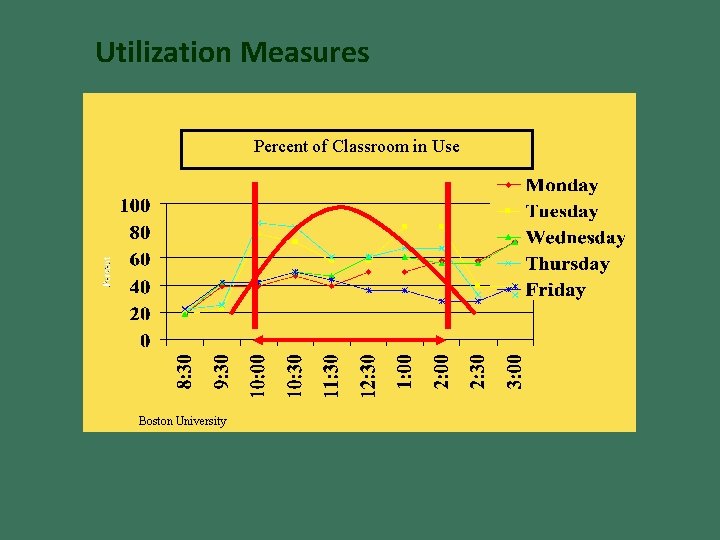
Utilization Measures Percent of Classroom in Use Boston University
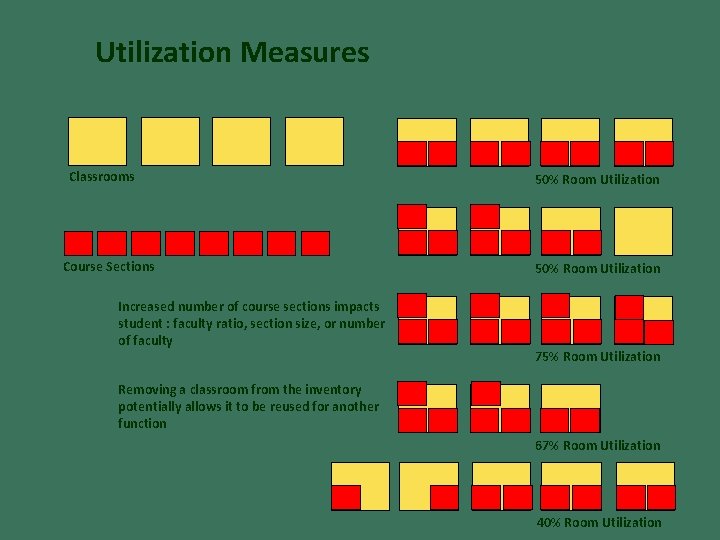
Utilization Measures Classrooms Course Sections Increased number of course sections impacts student : faculty ratio, section size, or number of faculty 50% Room Utilization 75% Room Utilization Removing a classroom from the inventory potentially allows it to be reused for another function 67% Room Utilization 40% Room Utilization
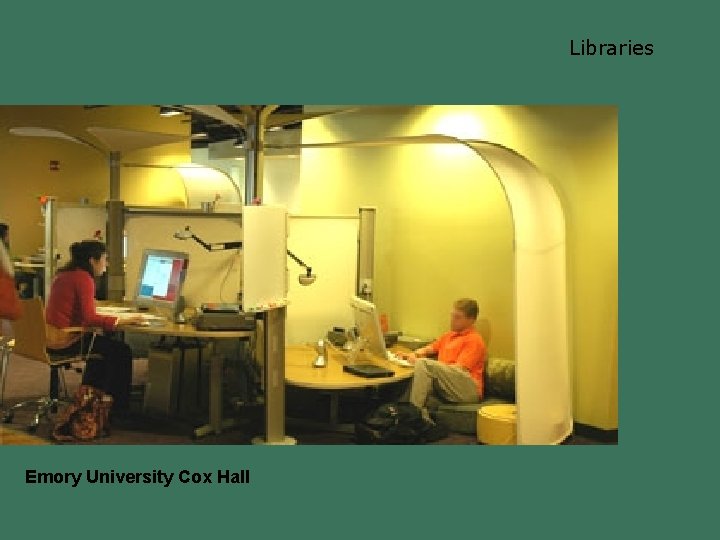
Libraries Emory University Cox Hall
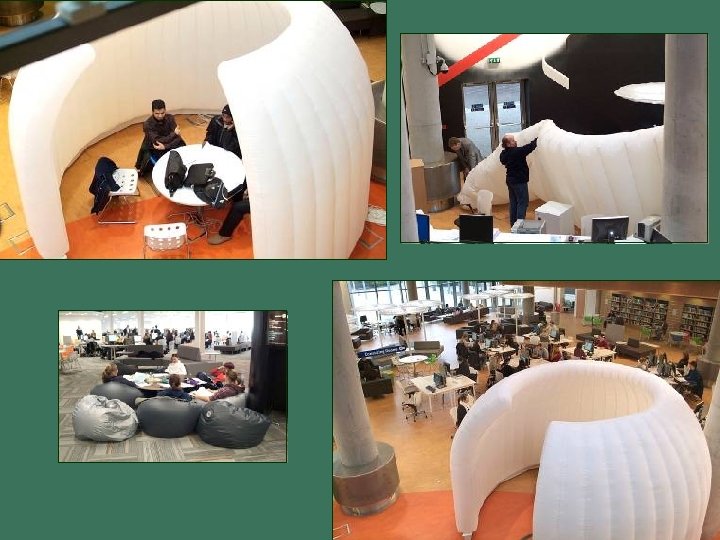
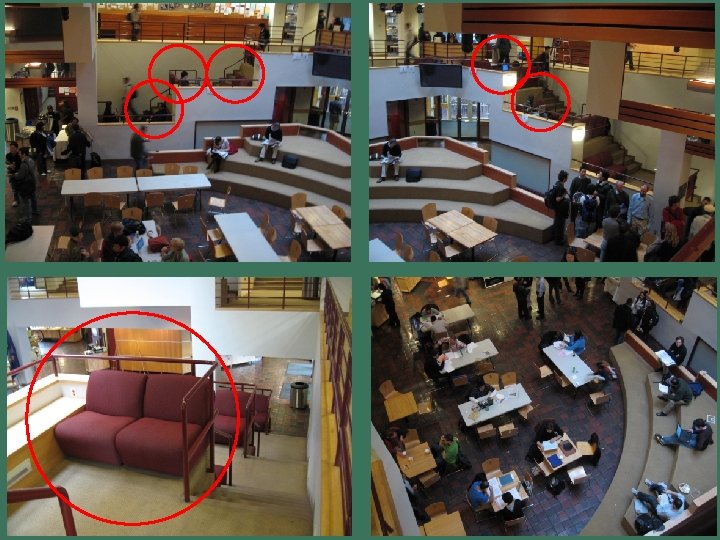
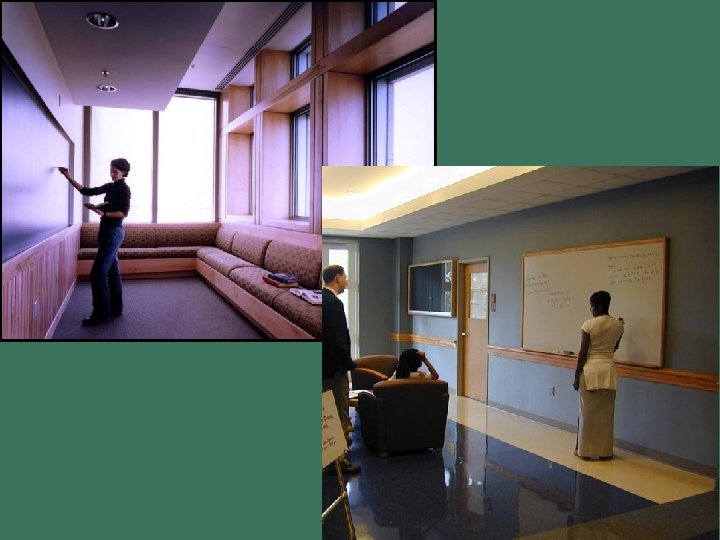
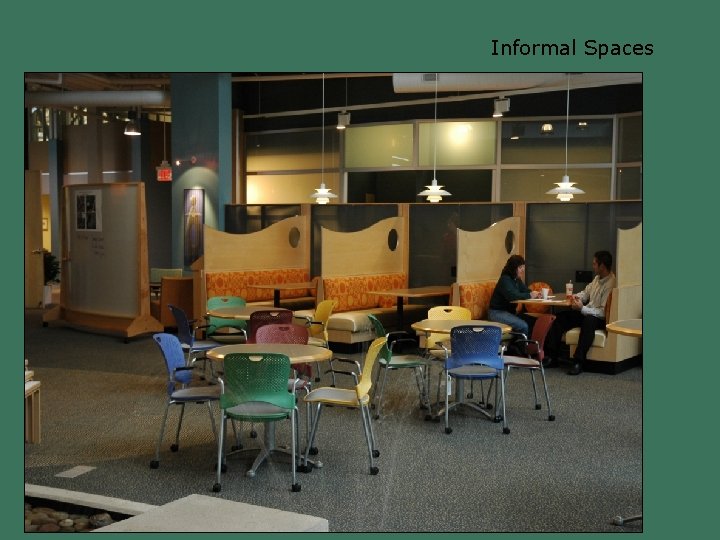
Informal Spaces
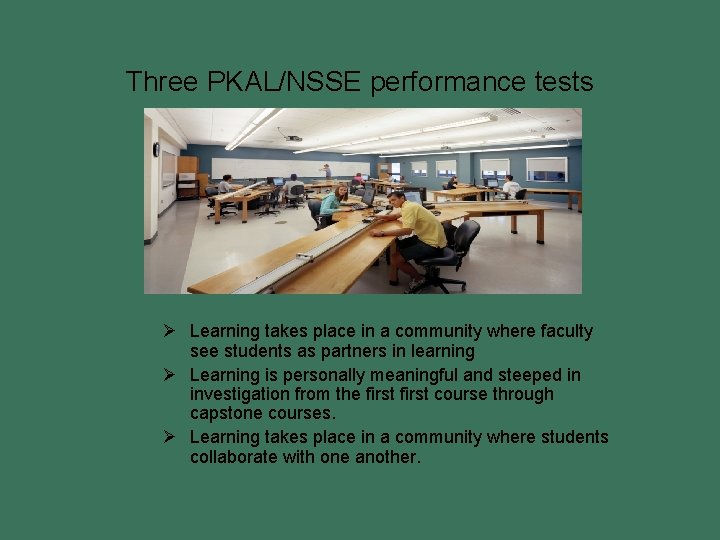
Three PKAL/NSSE performance tests Ø Learning takes place in a community where faculty see students as partners in learning Ø Learning is personally meaningful and steeped in investigation from the first course through capstone courses. Ø Learning takes place in a community where students collaborate with one another.
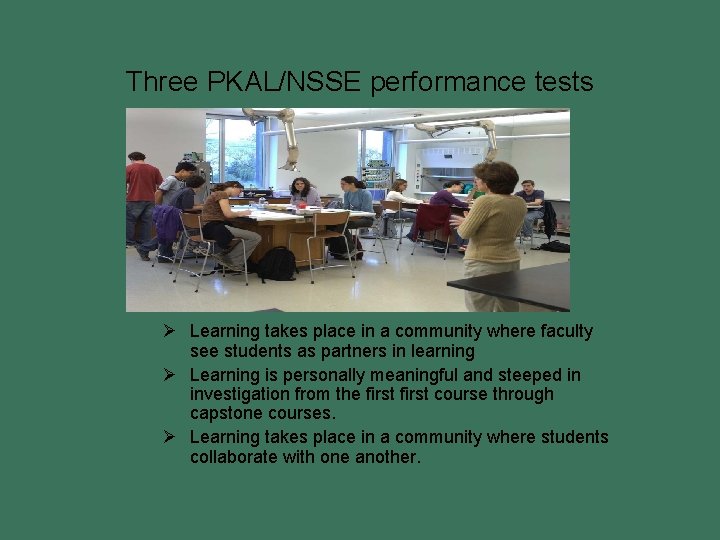
Three PKAL/NSSE performance tests Ø Learning takes place in a community where faculty see students as partners in learning Ø Learning is personally meaningful and steeped in investigation from the first course through capstone courses. Ø Learning takes place in a community where students collaborate with one another.
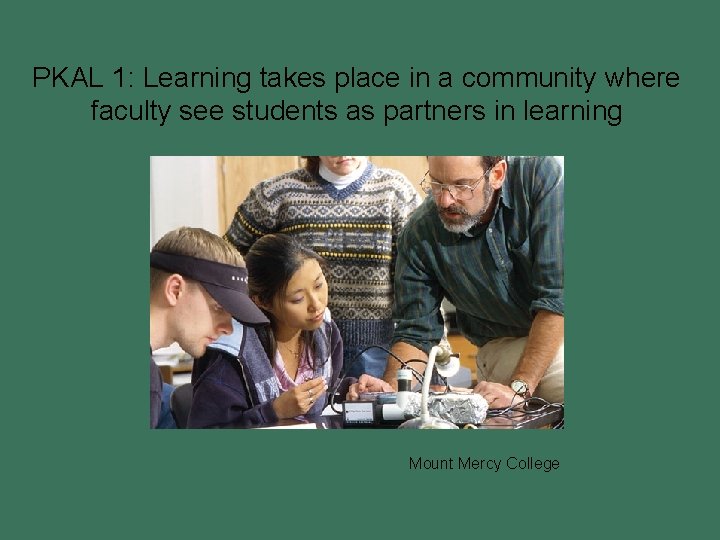
PKAL 1: Learning takes place in a community where faculty see students as partners in learning Mount Mercy College
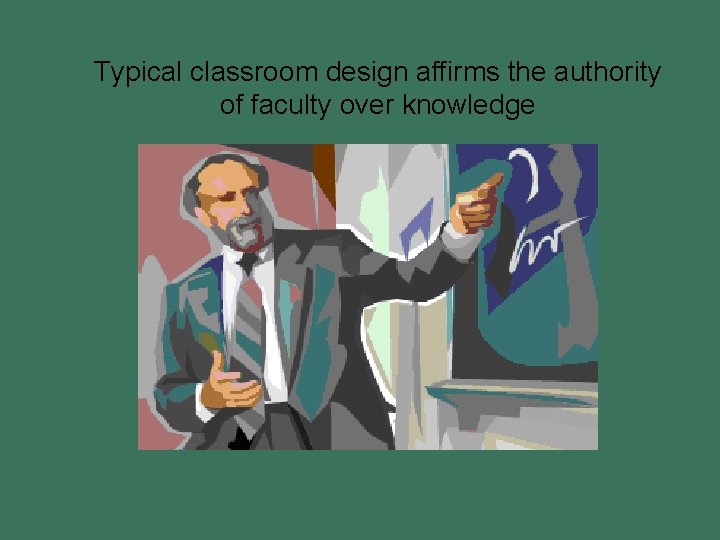
Typical classroom design affirms the authority of faculty over knowledge
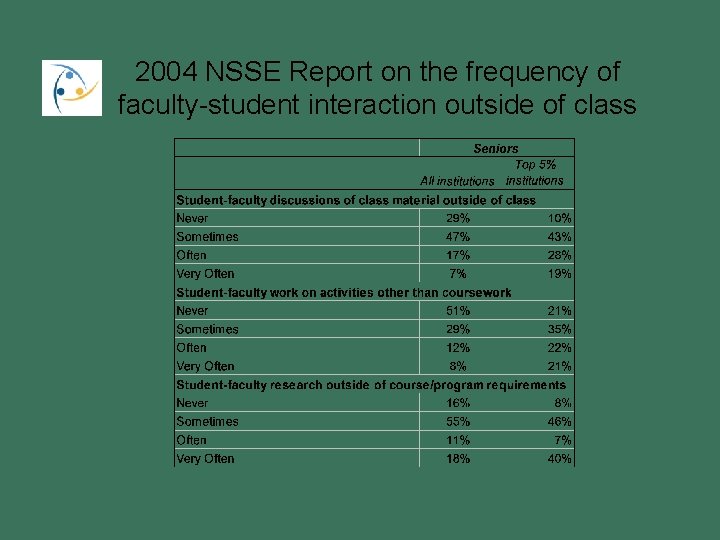
2004 NSSE Report on the frequency of faculty-student interaction outside of class
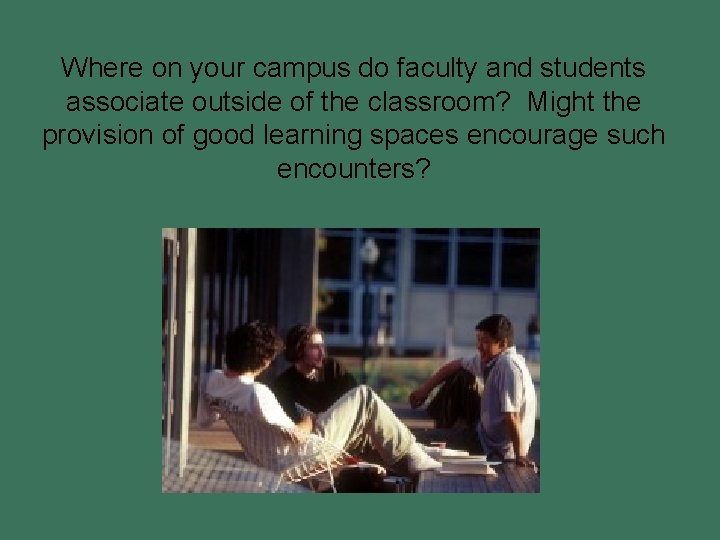
Where on your campus do faculty and students associate outside of the classroom? Might the provision of good learning spaces encourage such encounters?
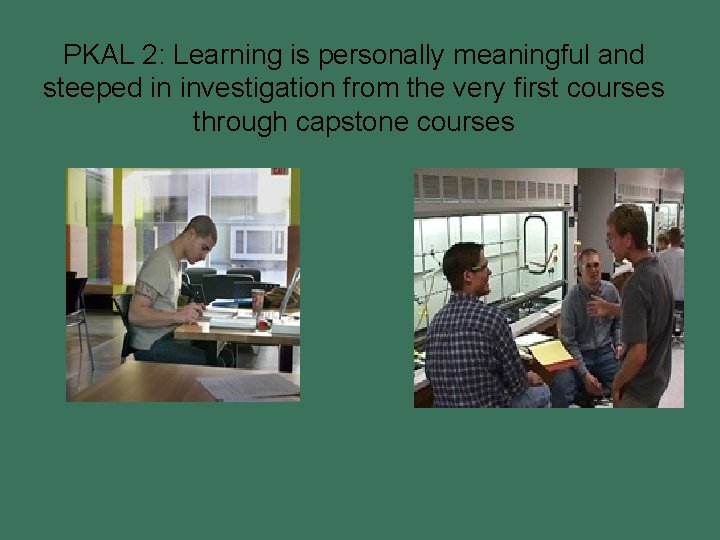
PKAL 2: Learning is personally meaningful and steeped in investigation from the very first courses through capstone courses
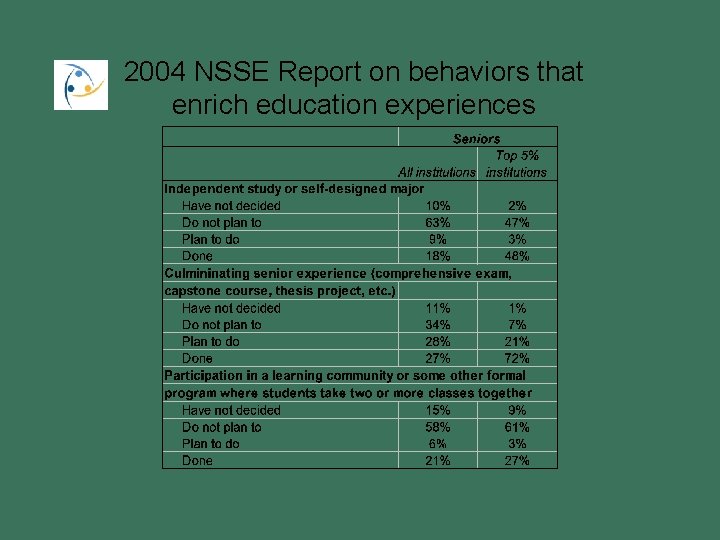
2004 NSSE Report on behaviors that enrich education experiences
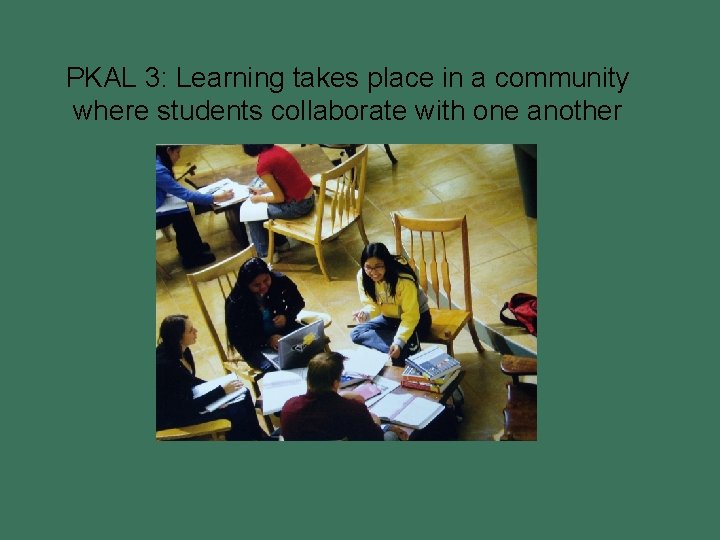
PKAL 3: Learning takes place in a community where students collaborate with one another
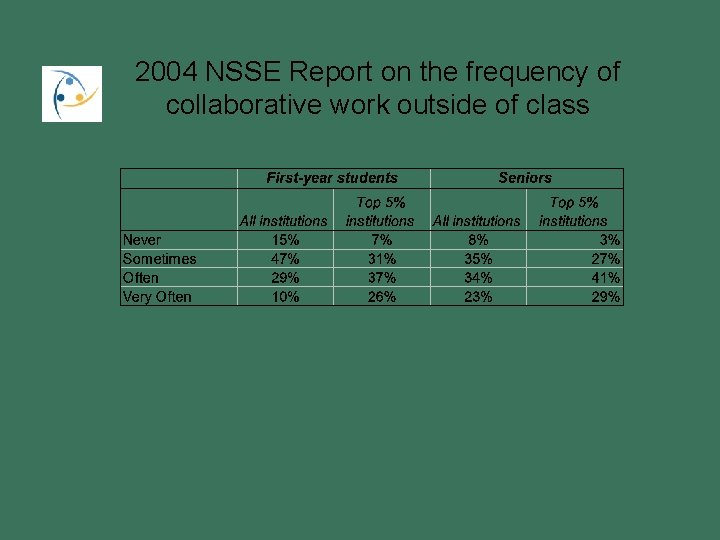
2004 NSSE Report on the frequency of collaborative work outside of class
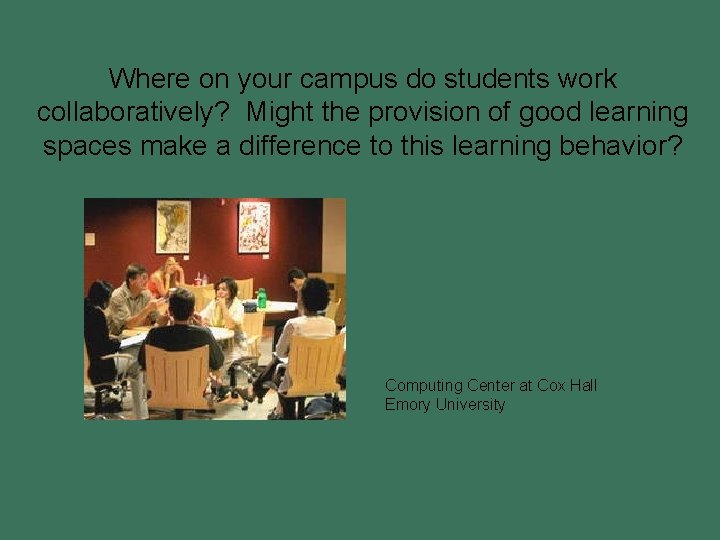
Where on your campus do students work collaboratively? Might the provision of good learning spaces make a difference to this learning behavior? Computing Center at Cox Hall Emory University
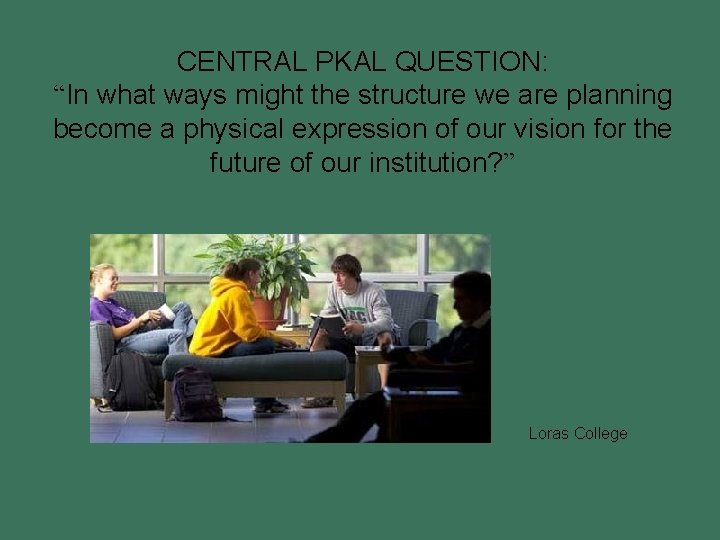
CENTRAL PKAL QUESTION: “In what ways might the structure we are planning become a physical expression of our vision for the future of our institution? ” Loras College
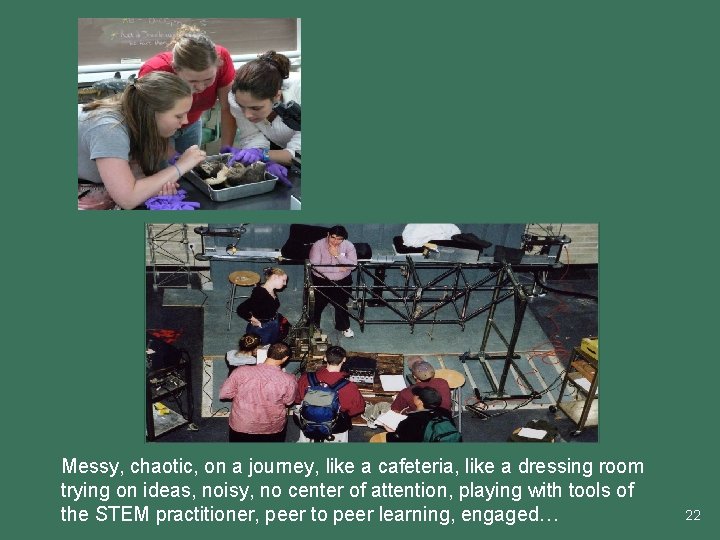
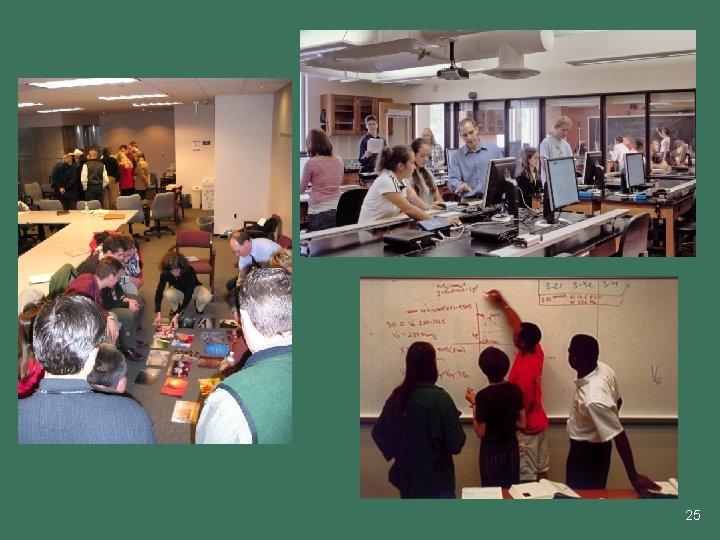
Messy, chaotic, on a journey, like a cafeteria, like a dressing room trying on ideas, noisy, no center of attention, playing with tools of the STEM practitioner, peer to peer learning, engaged… 22
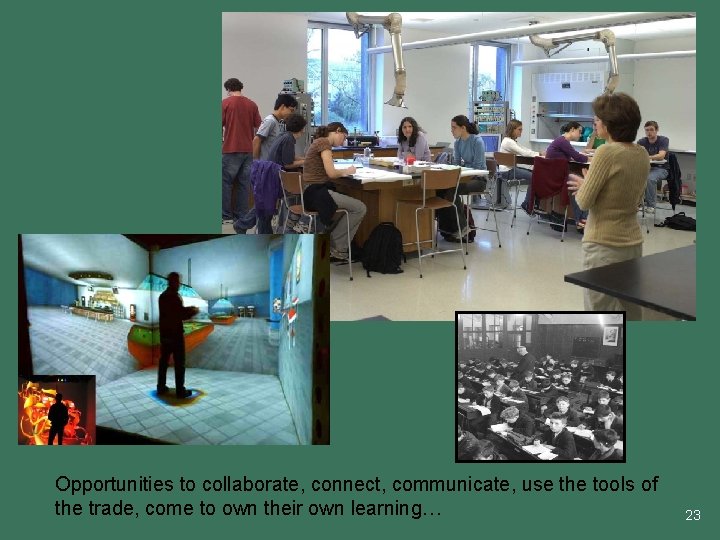
Opportunities to collaborate, connect, communicate, use the tools of the trade, come to own their own learning… 23
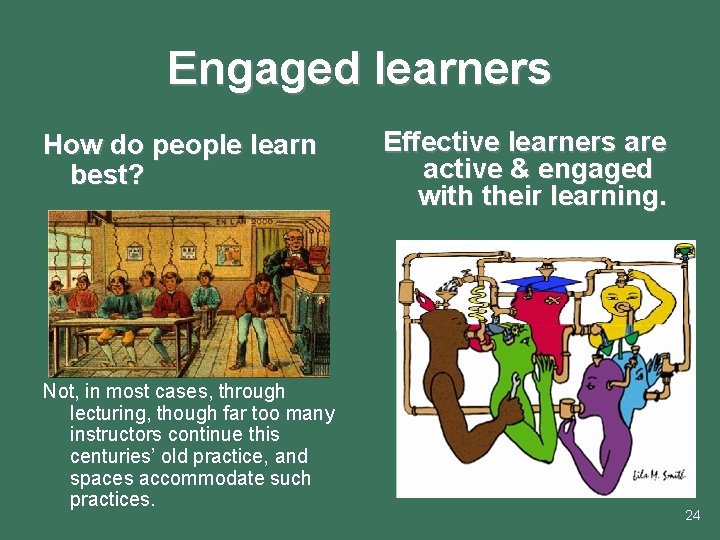
Engaged learners How do people learn best? Not, in most cases, through lecturing, though far too many instructors continue this centuries’ old practice, and spaces accommodate such practices. Effective learners are active & engaged with their learning. 24
25
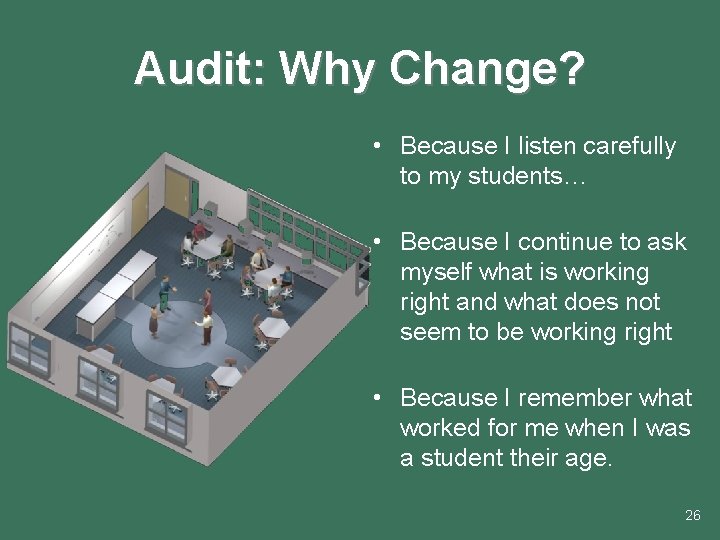
Audit: Why Change? • Because I listen carefully to my students… • Because I continue to ask myself what is working right and what does not seem to be working right • Because I remember what worked for me when I was a student their age. 26
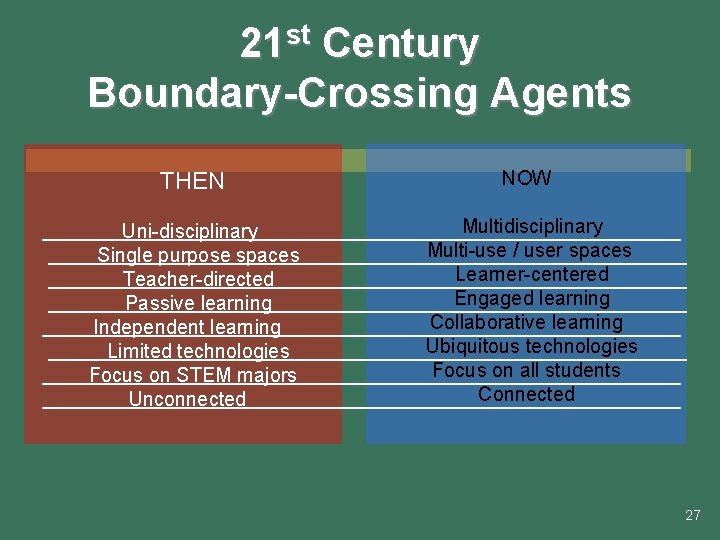
21 st Century Boundary-Crossing Agents THEN NOW Uni-disciplinary Single purpose spaces Teacher-directed Passive learning Independent learning Limited technologies Focus on STEM majors Unconnected Multidisciplinary Multi-use / user spaces Learner-centered Engaged learning Collaborative learning Ubiquitous technologies Focus on all students Connected 27
PKAL’S Vision …have access to robust learning experiences that motivate them to persist and succeed in the study of STEM fields so they are motivated to enter into careers in STEM fields, prepared for contemporary careers that require depth of understanding/literacy in regard to scientific, quantitative, and technological worlds, and equipped with the breadth of skills and capacities that empower them to be contributing members to our nation’s 21 st century economy and democracy. 28