
Lessons Learned in the Decade Since the San
- Slides: 29
Lessons Learned in the Decade Since the San Pedro Capture Map Stan Leake U. S. Geological Survey, Retired Stanley A. Leake Hydrology Sierra Vista sub-Basin TAC August 15, 2018
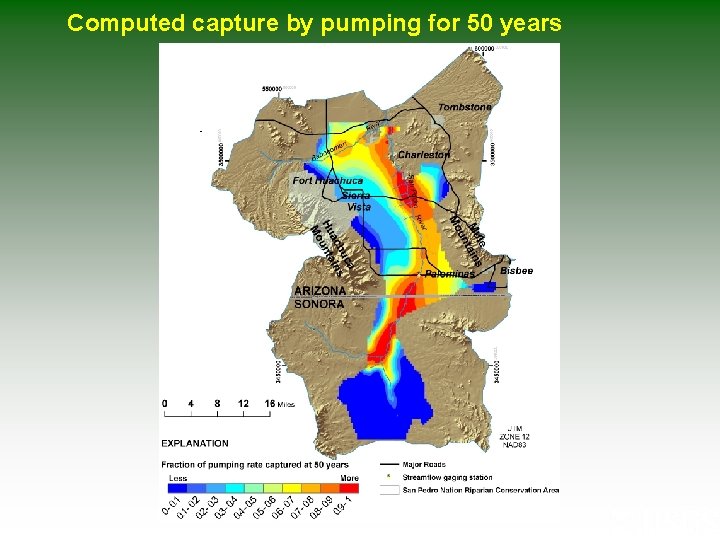
Computed capture by pumping for 50 years
Constructing the Capture Map • To preserve linearity, the starting point for capture simulations was predevelopment conditions (1902). The river was simulated as through-flowing at that time. • A computer program ran the model repeatedly, each time with a low-rate pumping well in a different location in the lower basin-fill aquifer. • Capture values were contoured at specific times– 10, 50, and 100 years, to make capture maps for those times.
Impact • The local water community in the Upper San Pedro Basin embraced the capture map as a way to understand the timing of effects of pumping on the river. • Several dozen scientific papers have referenced the Capture Map, with some of them recreating it with different methodologies. … but what are the best uses of the Capture Map for today’s upper San Pedro River?
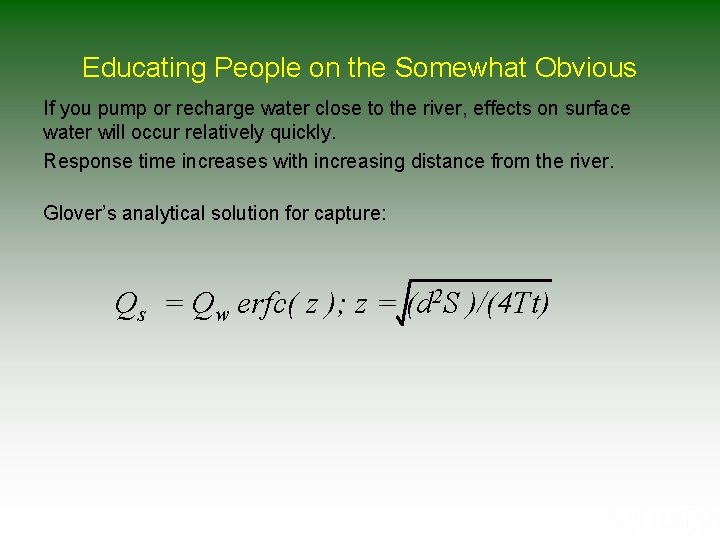
Educating People on the Somewhat Obvious If you pump or recharge water close to the river, effects on surface water will occur relatively quickly. Response time increases with increasing distance from the river. Glover’s analytical solution for capture: Qs = Qw erfc( z ); z = (d 2 S )/(4 Tt)
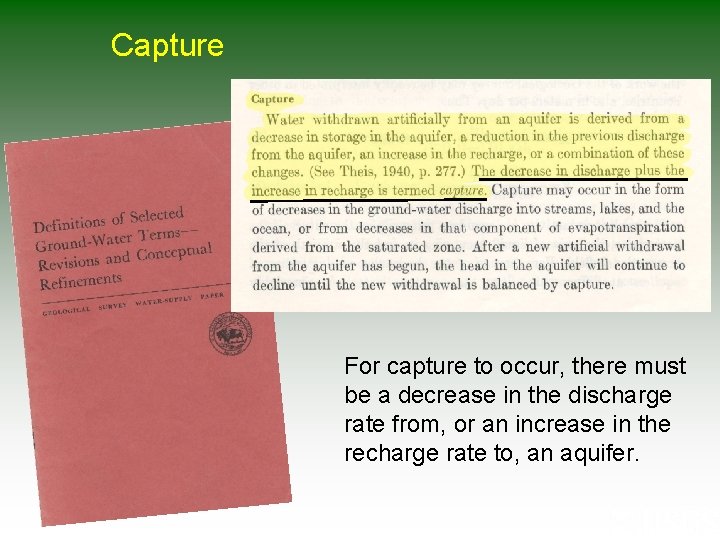
Capture For capture to occur, there must be a decrease in the discharge rate from, or an increase in the recharge rate to, an aquifer.
Streamflow Depletion A reduction in streamflow caused by groundwater pumping.
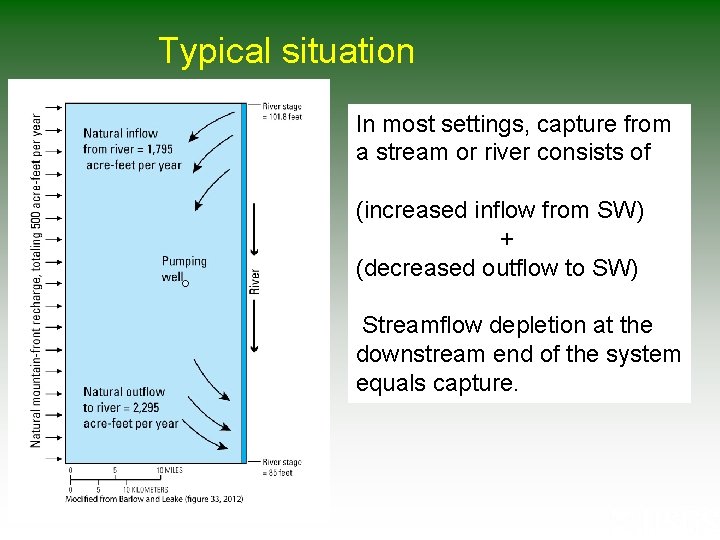
Typical situation In most settings, capture from a stream or river consists of (increased inflow from SW) + (decreased outflow to SW) Streamflow depletion at the downstream end of the system equals capture.
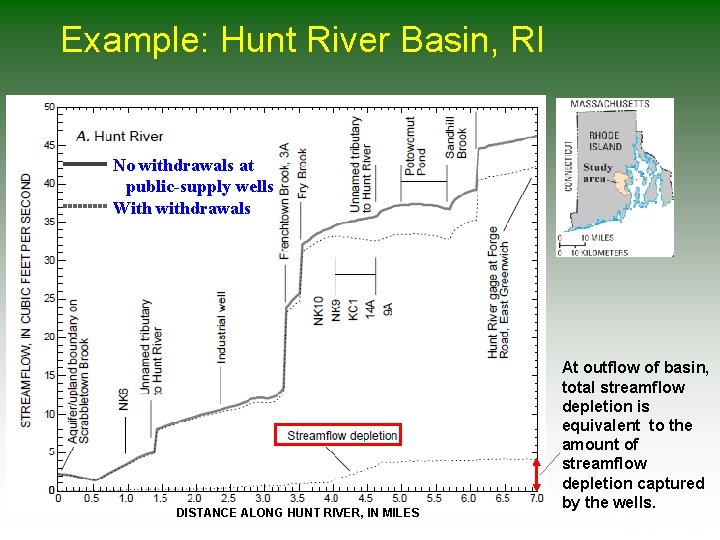
Example: Hunt River Basin, RI No withdrawals at Nopublic-supply withdrawals wells at public-supply wells With withdrawals DISTANCE ALONG HUNT RIVER, IN MILES At outflow of basin, total streamflow depletion is equivalent to the amount of streamflow depletion captured by the wells.
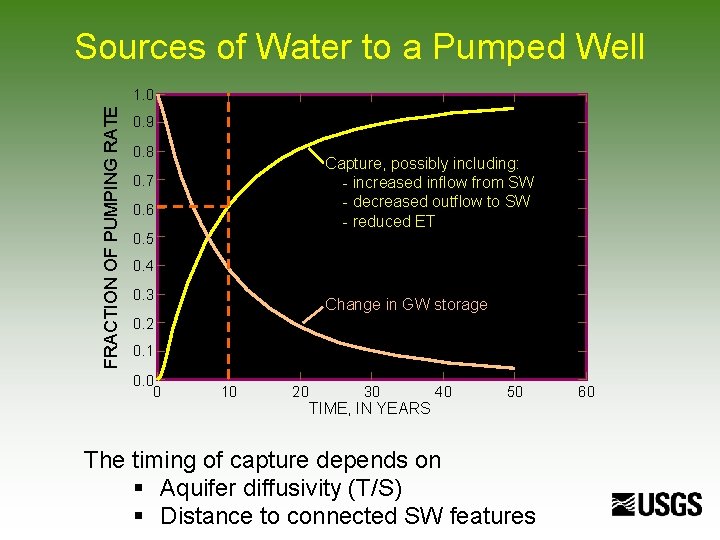
Sources of Water to a Pumped Well FRACTION OF PUMPING RATE 1. 0 0. 9 0. 8 Capture, possibly including: - increased inflow from SW - decreased outflow to SW - reduced ET 0. 7 0. 6 0. 5 0. 4 0. 3 Change in GW storage 0. 2 0. 1 0. 0 0 10 20 30 TIME, IN YEARS 40 50 The timing of capture depends on § Aquifer diffusivity (T/S) § Distance to connected SW features 60
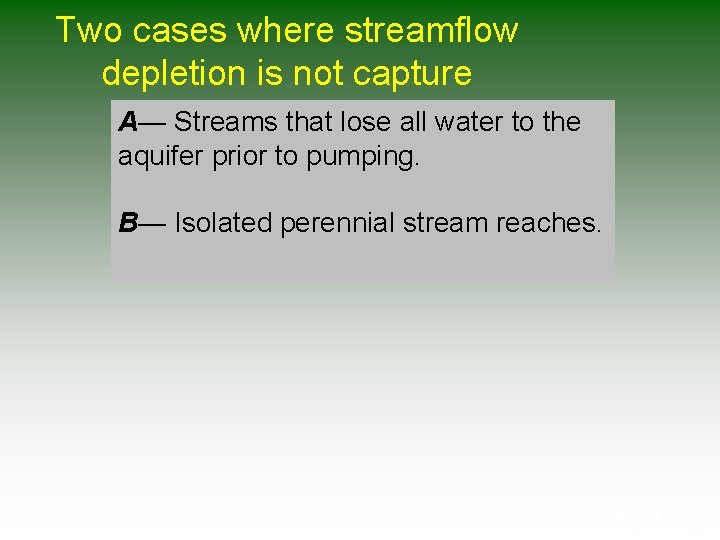
Two cases where streamflow depletion is not capture A— Streams that lose all water to the aquifer prior to pumping. B— Isolated perennial stream reaches.
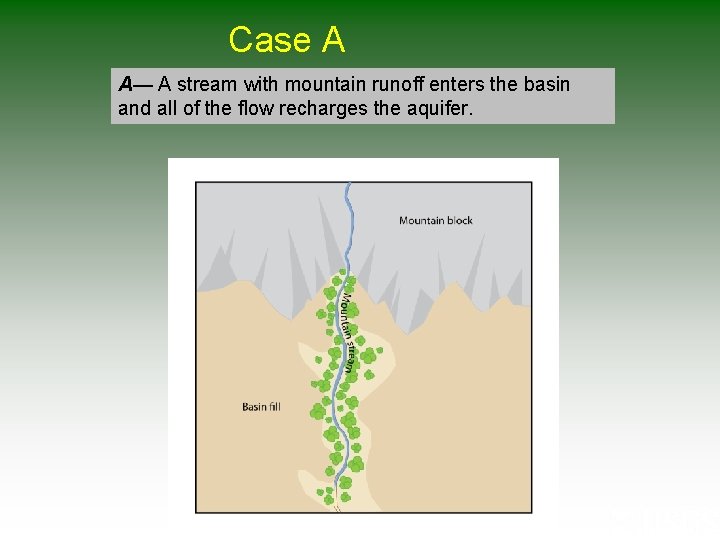
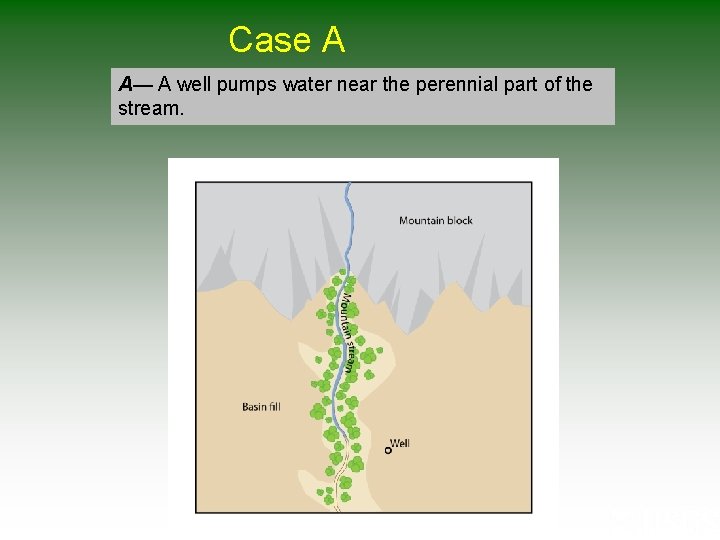
Case A A— A stream with mountain runoff enters the basin and all of the flow recharges the aquifer.
Case A A— A well pumps water near the perennial part of the stream.
Case A • Pumping reduces the flow in the stream; therefore, streamflow depletion occurs from groundwater pumping. • If the entire amount of water from the stream infiltrates without groundwater pumping, that same amount of water will infiltrate with groundwater pumping. No additional inflow from surface water is possible; therefore, capture of streamflow does not occur. There may be other sources of capture for this feature: • Reduced evapotranspiration along the stream reach. • Infiltration of runoff that was rejected when the water table was at the stream channel prior to pumping.
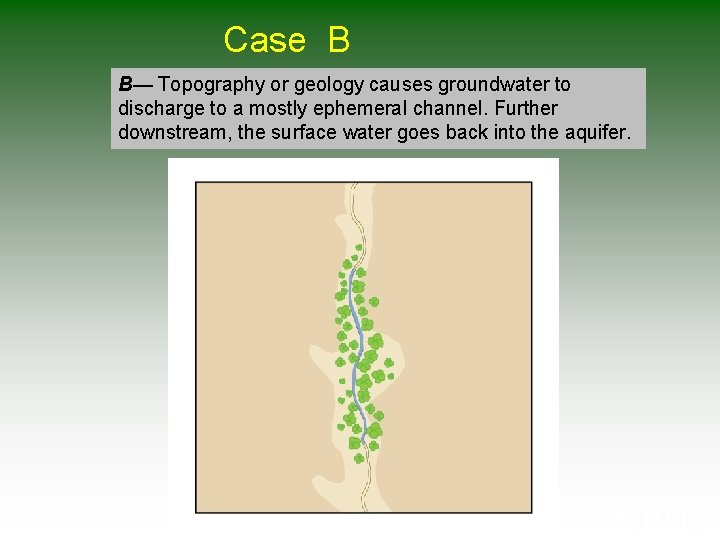
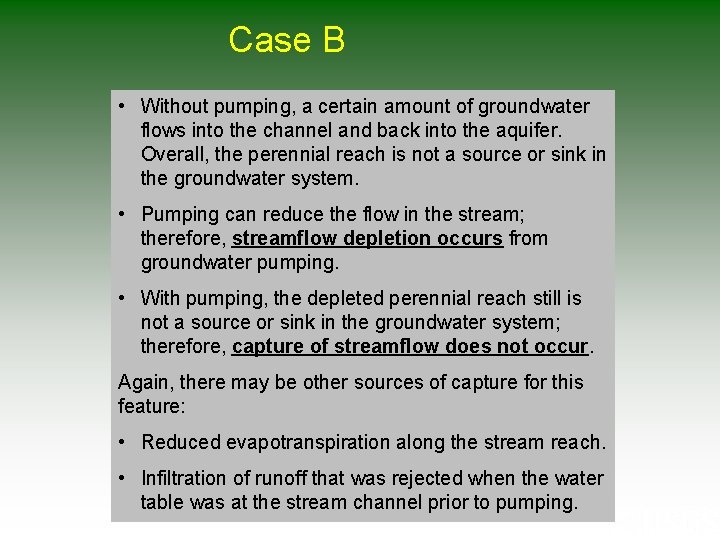
Case B B— Topography or geology causes groundwater to discharge to a mostly ephemeral channel. Further downstream, the surface water goes back into the aquifer.
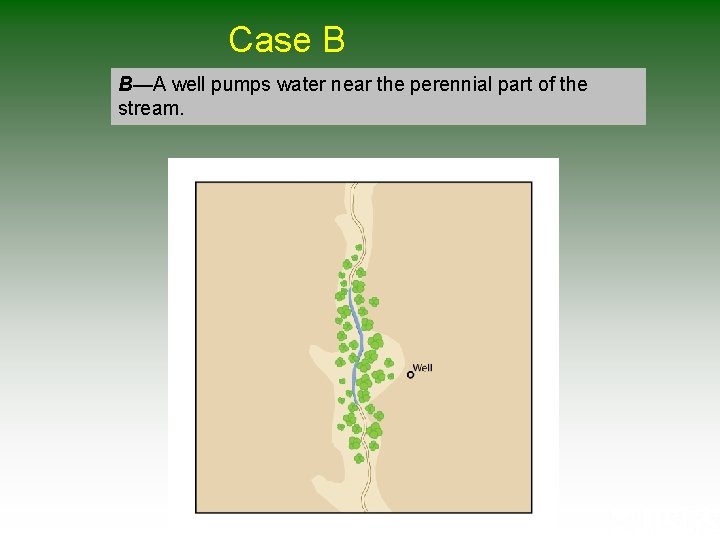
Case B B—A well pumps water near the perennial part of the stream.
Case B • Without pumping, a certain amount of groundwater flows into the channel and back into the aquifer. Overall, the perennial reach is not a source or sink in the groundwater system. • Pumping can reduce the flow in the stream; therefore, streamflow depletion occurs from groundwater pumping. • With pumping, the depleted perennial reach still is not a source or sink in the groundwater system; therefore, capture of streamflow does not occur. Again, there may be other sources of capture for this feature: • Reduced evapotranspiration along the stream reach. • Infiltration of runoff that was rejected when the water table was at the stream channel prior to pumping.
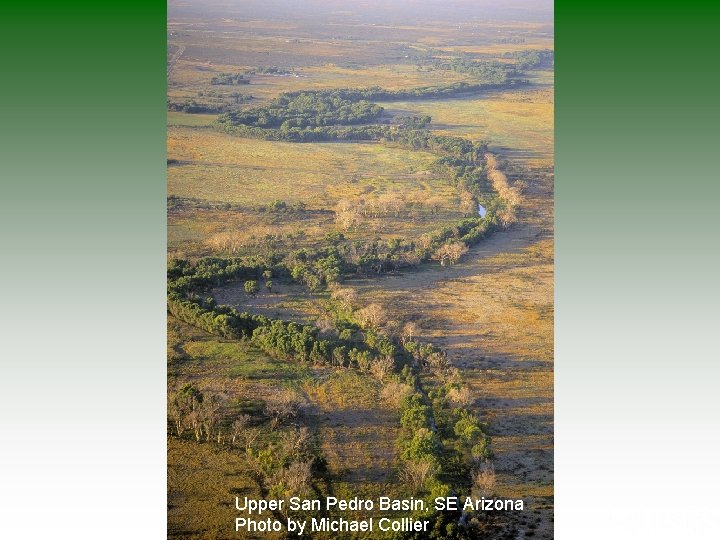
Upper San Pedro Basin, SE Arizona Photo by Michael Collier
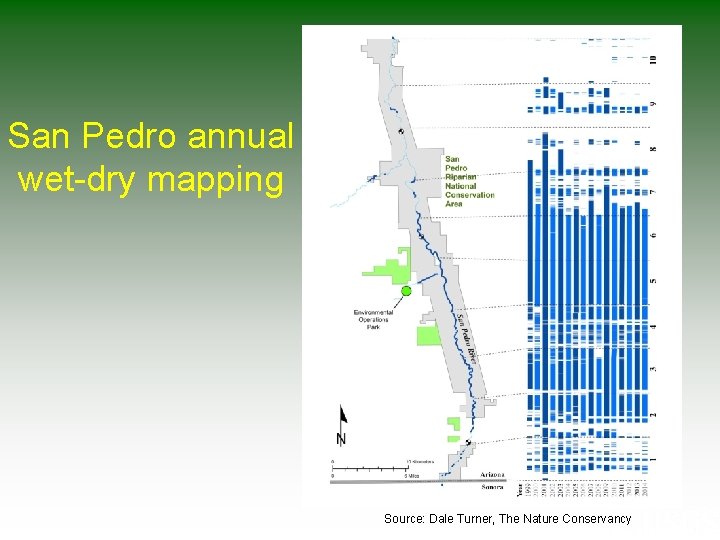
San Pedro annual wet-dry mapping Source: Dale Turner, The Nature Conservancy
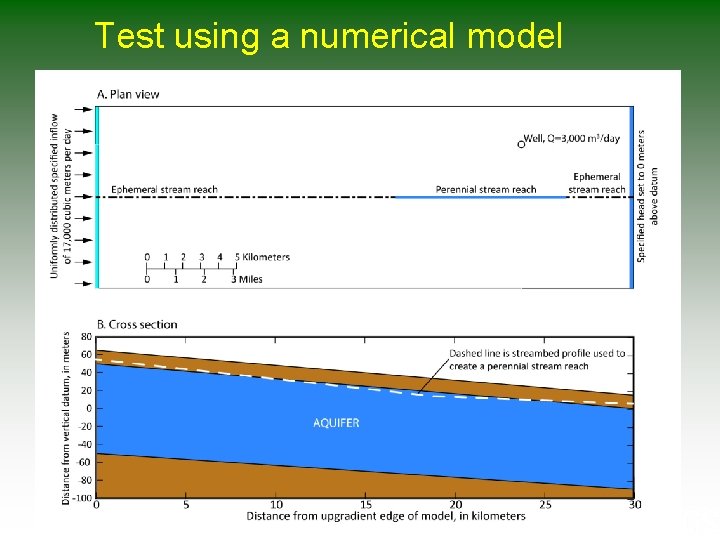
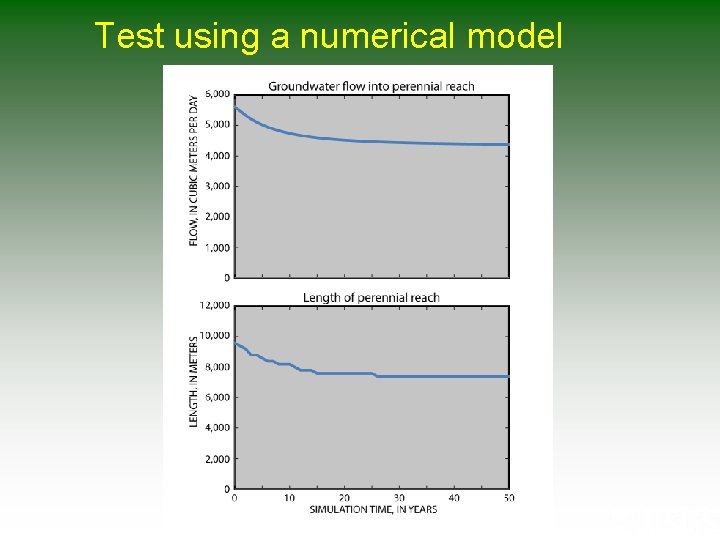
Test using a numerical model
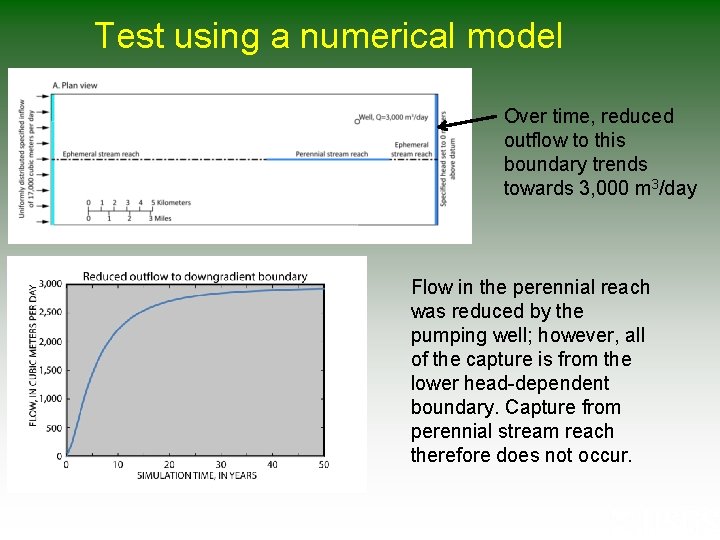
Test using a numerical model
Test using a numerical model Over time, reduced outflow to this boundary trends towards 3, 000 m 3/day Flow in the perennial reach was reduced by the pumping well; however, all of the capture is from the lower head-dependent boundary. Capture from perennial stream reach therefore does not occur.
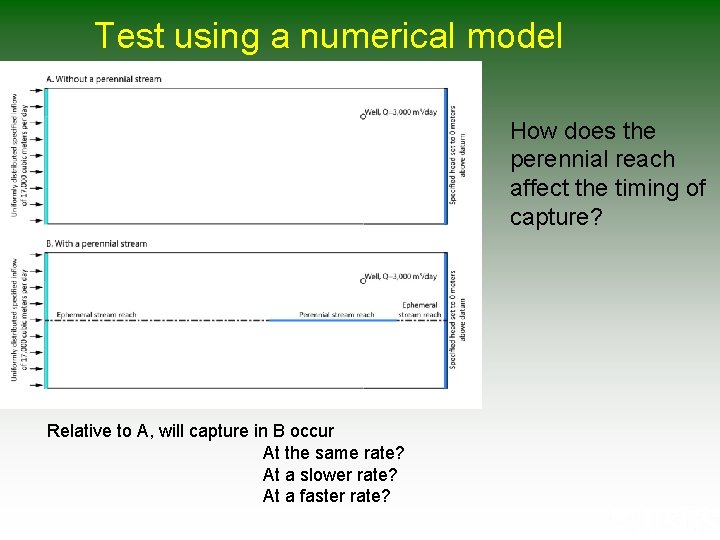
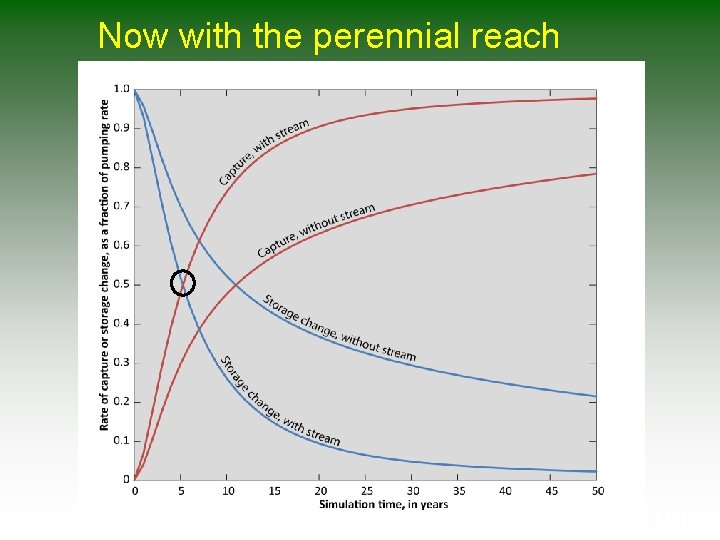
Test using a numerical model How does the perennial reach affect the timing of capture? Relative to A, will capture in B occur At the same rate? At a slower rate? At a faster rate?
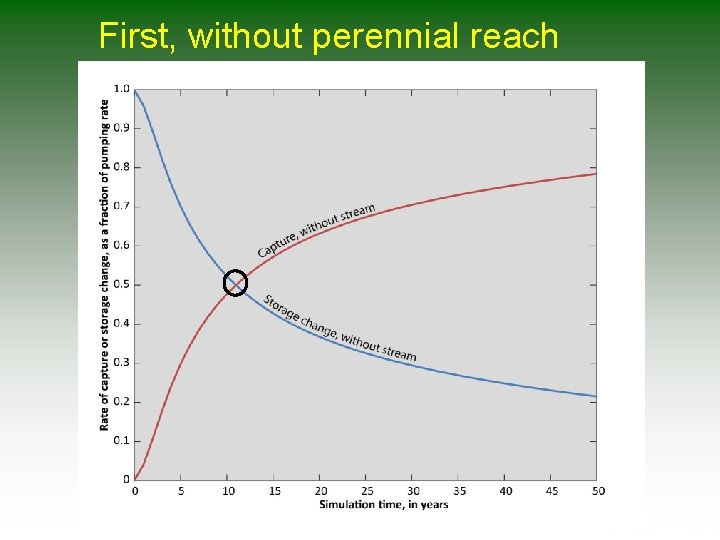
First, without perennial reach
Now with the perennial reach
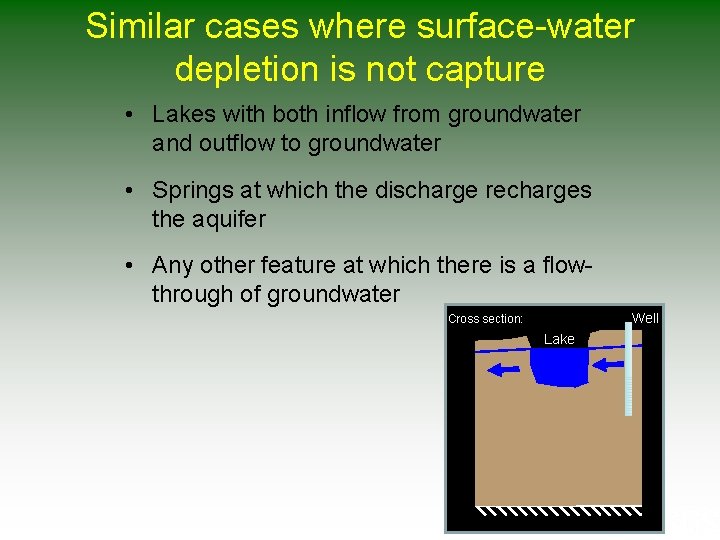
Similar cases where surface-water depletion is not capture • Lakes with both inflow from groundwater and outflow to groundwater • Springs at which the discharge recharges the aquifer • Any other feature at which there is a flowthrough of groundwater Well Cross section: Lake
Summary and Considerations for GW Models Summary: • Capture of streamflow does not occur from streams that lose all water to the aquifer or from isolated perennial stream reaches. • Nearby groundwater pumping will cause streamflow depletion in these reaches. • Furthermore, these features can have effects on the timing of capture. • It is important to simulate these features using MODFLOW STR, SFR, LAK, or similar packages.
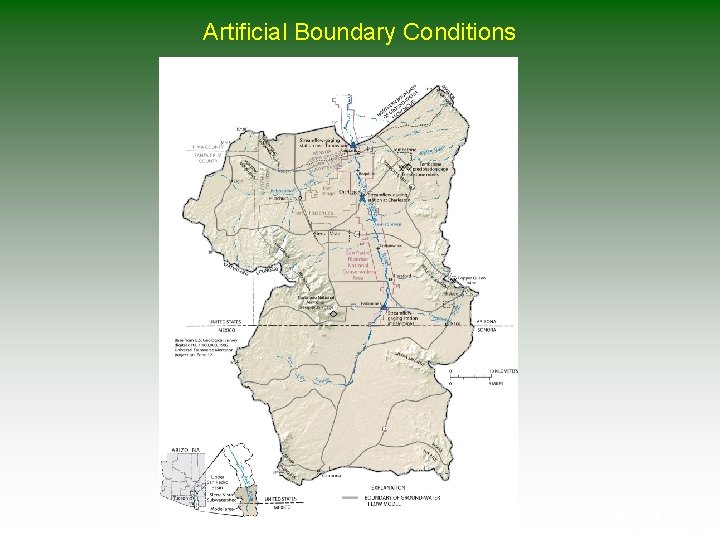
Artificial Boundary Conditions
Implications for the Upper San Pedro Basin • The river now is a series of perennial and ephemeral reaches– groundwater pumping can deplete streamflow but cannot capture surface-water flow. • All capture in the upper San Pedro Basin will be in the form of reduced evapotranspiration. • Timing of capture shown on the capture map should be thought of as applying to a well affecting the predevelopment system. • To better understand effects of pumping on the river, the model by Pool and Dickinson (2007) should be updated and expanded to the north to minimize effects of artificial boundaries.