
Lessons learned from phase 1 Reports from 4
- Slides: 14
Lessons learned from phase 1 Reports from 4 working groups 1
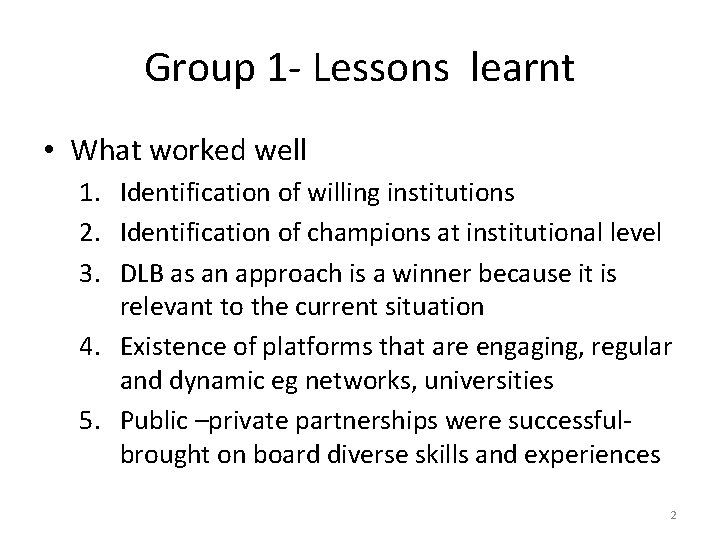
Group 1 - Lessons learnt • What worked well 1. Identification of willing institutions 2. Identification of champions at institutional level 3. DLB as an approach is a winner because it is relevant to the current situation 4. Existence of platforms that are engaging, regular and dynamic eg networks, universities 5. Public –private partnerships were successfulbrought on board diverse skills and experiences 2
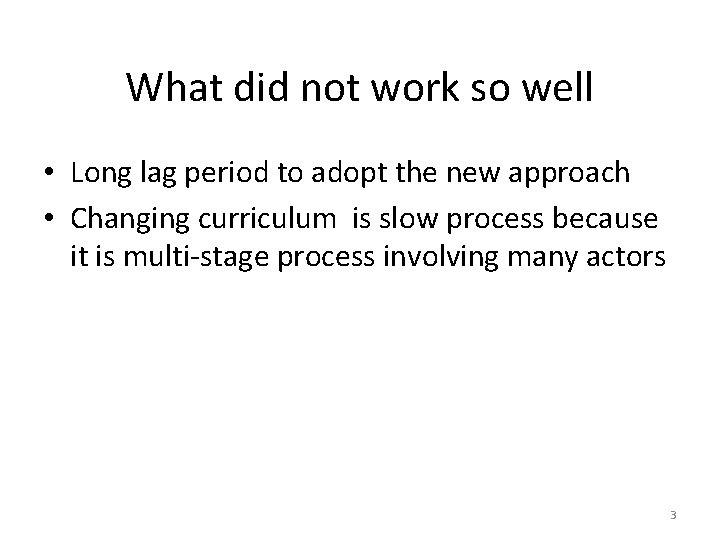
What did not work so well • Long lag period to adopt the new approach • Changing curriculum is slow process because it is multi-stage process involving many actors 3
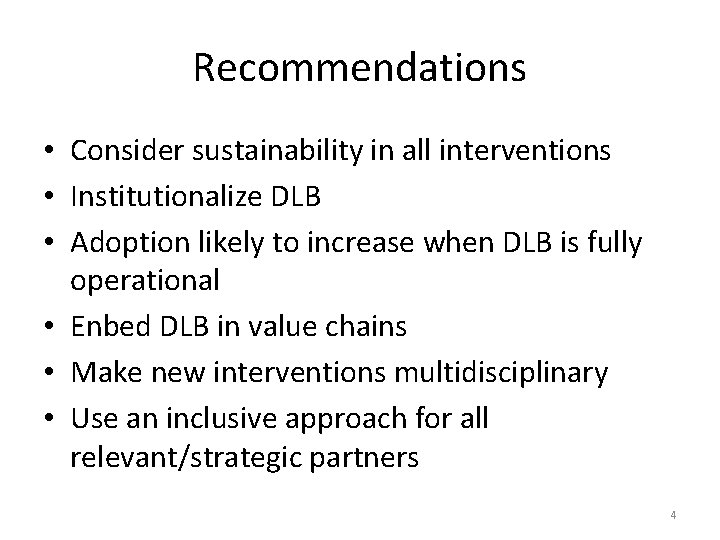
Recommendations • Consider sustainability in all interventions • Institutionalize DLB • Adoption likely to increase when DLB is fully operational • Enbed DLB in value chains • Make new interventions multidisciplinary • Use an inclusive approach for all relevant/strategic partners 4
Areas for improvement • • Gender inclusiveness Multi-disciplinary Reduce lag period Other areas under recommendations (previous slide) 5
Group 2 Clare, Stanley, Steven, Jean-Claude, Siddique 6
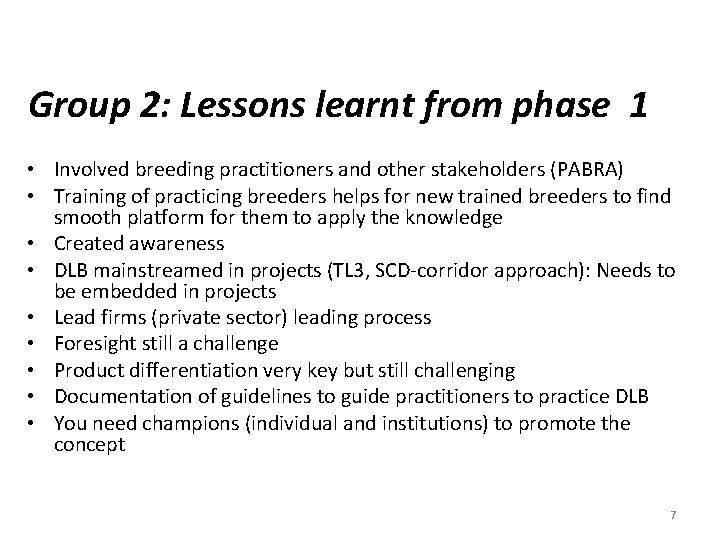
Group 2: Lessons learnt from phase 1 • Involved breeding practitioners and other stakeholders (PABRA) • Training of practicing breeders helps for new trained breeders to find smooth platform for them to apply the knowledge • Created awareness • DLB mainstreamed in projects (TL 3, SCD-corridor approach): Needs to be embedded in projects • Lead firms (private sector) leading process • Foresight still a challenge • Product differentiation very key but still challenging • Documentation of guidelines to guide practitioners to practice DLB • You need champions (individual and institutions) to promote the concept 7
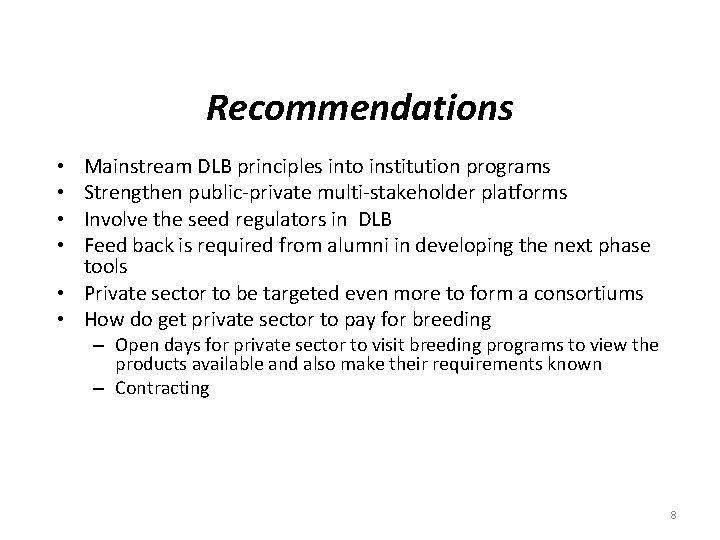
Recommendations Mainstream DLB principles into institution programs Strengthen public-private multi-stakeholder platforms Involve the seed regulators in DLB Feed back is required from alumni in developing the next phase tools • Private sector to be targeted even more to form a consortiums • How do get private sector to pay for breeding • • – Open days for private sector to visit breeding programs to view the products available and also make their requirements known – Contracting 8
Aspects for Phase 2 • Opportunity to link with big continental initiatives e. g. ECAAT 9
Group 3 1. Lessons/learning from phase 1 v Importance of mainstreaming DLB in to breeders curriculum v Several version of DLB presentations and also manuals should be developed based on the target bodies, e. g. Graduate students, policymakers v. There is a need to reach and give more awareness/training for more breeders in several crops , particular focus to senior breeders and breeding program coordinators 10
2. Checking list of recommendations/criteria to ensure success in phase 2 Ø Principles: § Ensure to have a core and dedicated DLB § To have African champion to lead education and institutionalization of DLB § It needs to be participatory and involving the value chain actors § It should be focus on practical, success stories, failure in the past § It should be also evidence-based 11
Ø Behaviors § Commitment § Encourage stakeholders Ø Process Multiple avenues for dissemination of information Performance measures § Develop exhaustive data base management system, § Recording all the agreed data based on the guideline § Pretraining surveys, immediate after training assessments, post training surveys to determine any changes to breeding approaches 12
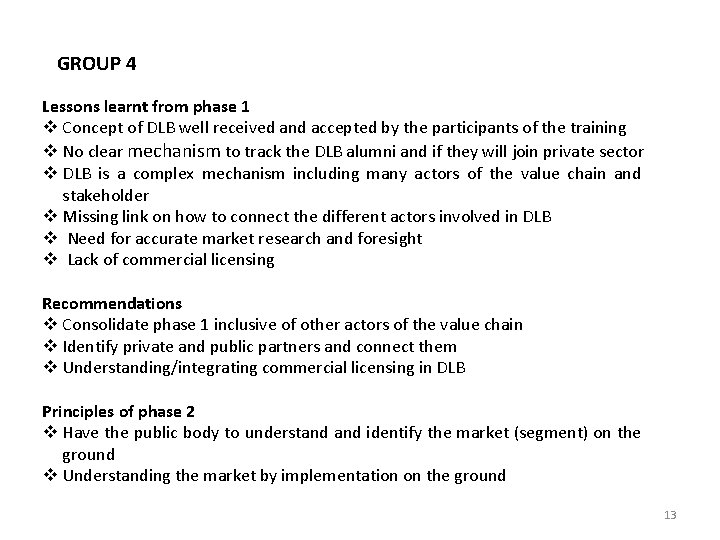
GROUP 4 Lessons learnt from phase 1 v Concept of DLB well received and accepted by the participants of the training v No clear mechanism to track the DLB alumni and if they will join private sector v DLB is a complex mechanism including many actors of the value chain and stakeholder v Missing link on how to connect the different actors involved in DLB v Need for accurate market research and foresight v Lack of commercial licensing Recommendations v Consolidate phase 1 inclusive of other actors of the value chain v Identify private and public partners and connect them v Understanding/integrating commercial licensing in DLB Principles of phase 2 v Have the public body to understand identify the market (segment) on the ground v Understanding the market by implementation on the ground 13
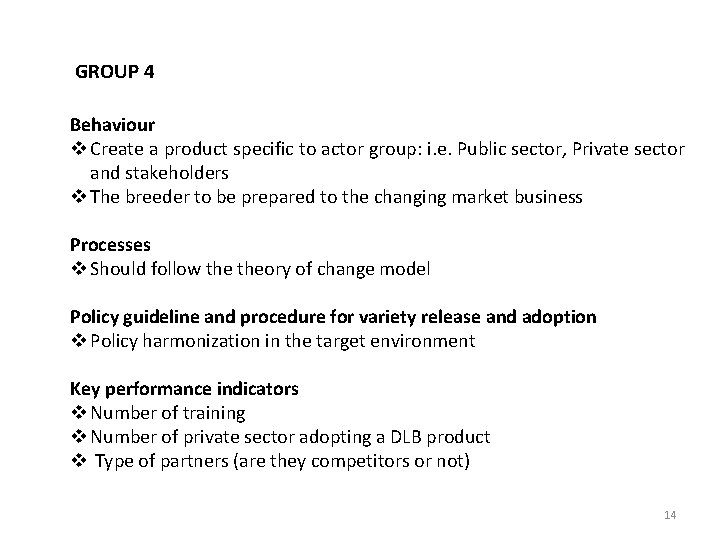
GROUP 4 Behaviour v Create a product specific to actor group: i. e. Public sector, Private sector and stakeholders v The breeder to be prepared to the changing market business Processes v Should follow theory of change model Policy guideline and procedure for variety release and adoption v Policy harmonization in the target environment Key performance indicators v Number of training v Number of private sector adopting a DLB product v Type of partners (are they competitors or not) 14