
LESSONS LEARNED EFFECTIVE COMMUNICATION Videsha Proothveerajh Country Manager

- Slides: 16
LESSONS LEARNED: EFFECTIVE COMMUNICATION Videsha Proothveerajh Country Manager Intel Corporation South Africa
AGENDA �The Whole continuum �The Communication Process �Communication Styles �Non Verbal Communication �Active Listening
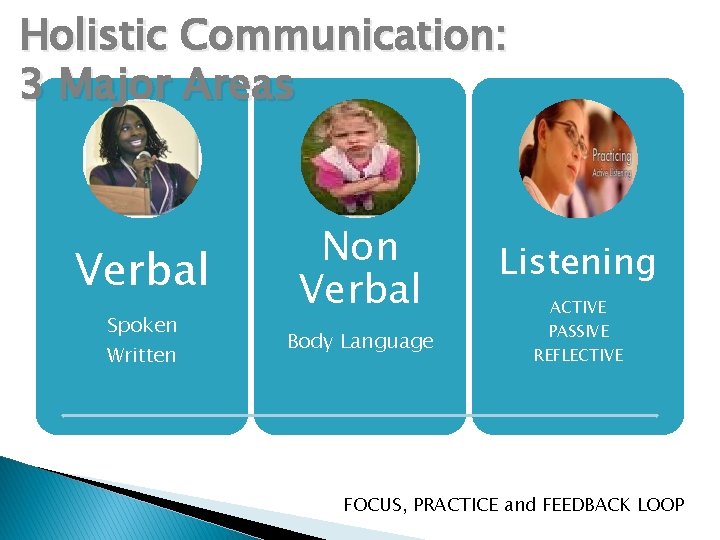
Holistic Communication: 3 Major Areas Verbal Spoken Written Non Verbal Body Language Listening ACTIVE PASSIVE REFLECTIVE FOCUS, PRACTICE and FEEDBACK LOOP
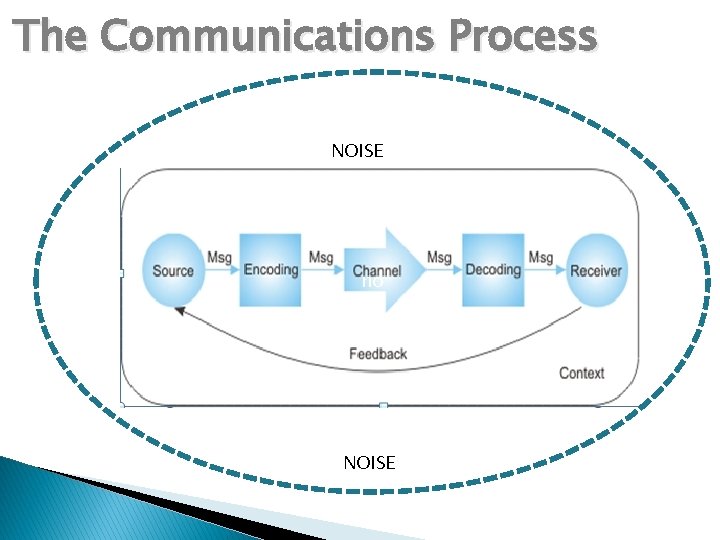
The Communications Process NOISE no NOISE
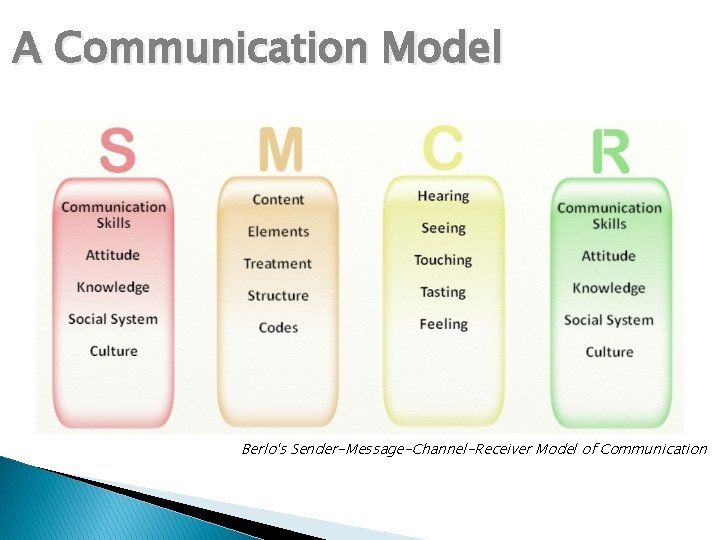
A Communication Model Berlo's Sender-Message-Channel-Receiver Model of Communication
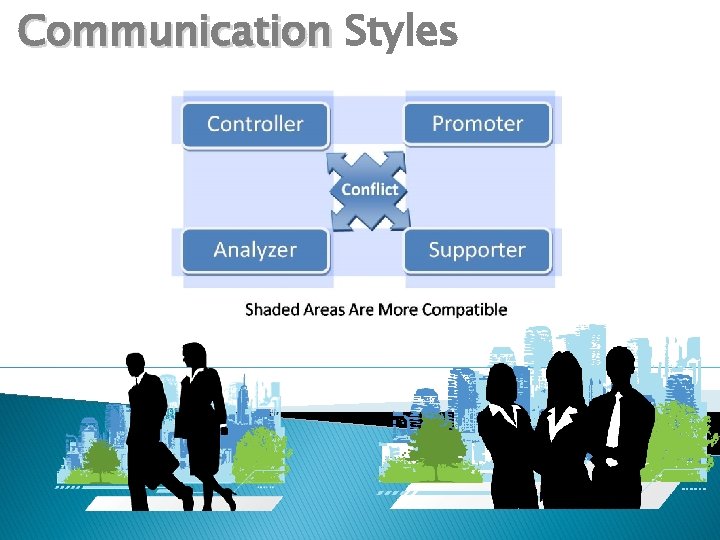
Communication Styles
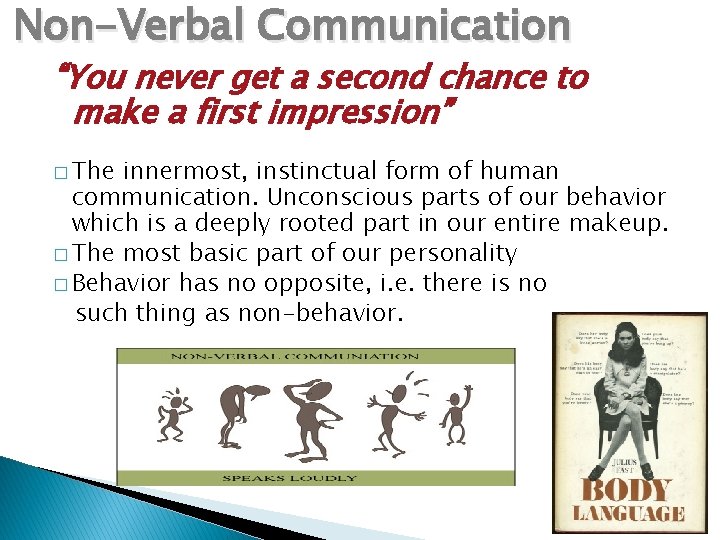
Non-Verbal Communication “You never get a second chance to make a first impression” � The innermost, instinctual form of human communication. Unconscious parts of our behavior which is a deeply rooted part in our entire makeup. � The most basic part of our personality � Behavior has no opposite, i. e. there is no such thing as non-behavior.
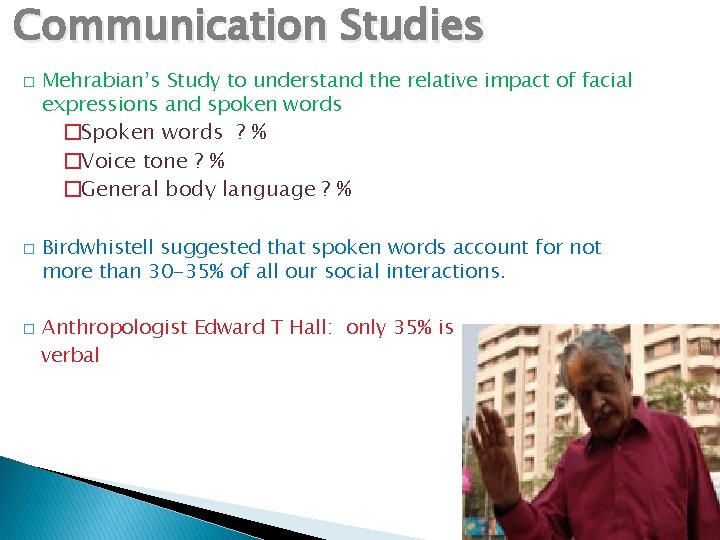
Communication Studies � Mehrabian’s Study to understand the relative impact of facial expressions and spoken words �Spoken words ? % �Voice tone ? % �General body language ? % � � Birdwhistell suggested that spoken words account for not more than 30 -35% of all our social interactions. Anthropologist Edward T Hall: only 35% is verbal
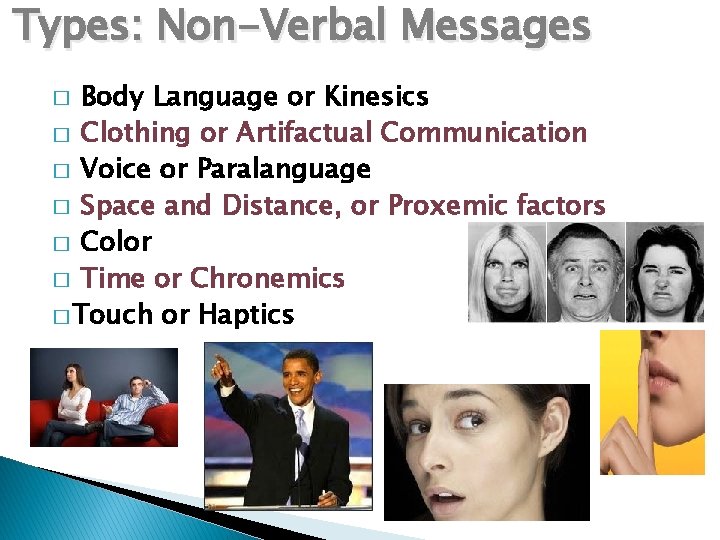
Types: Non-Verbal Messages Body Language or Kinesics � Clothing or Artifactual Communication � Voice or Paralanguage � Space and Distance, or Proxemic factors � Color � Time or Chronemics � Touch or Haptics �
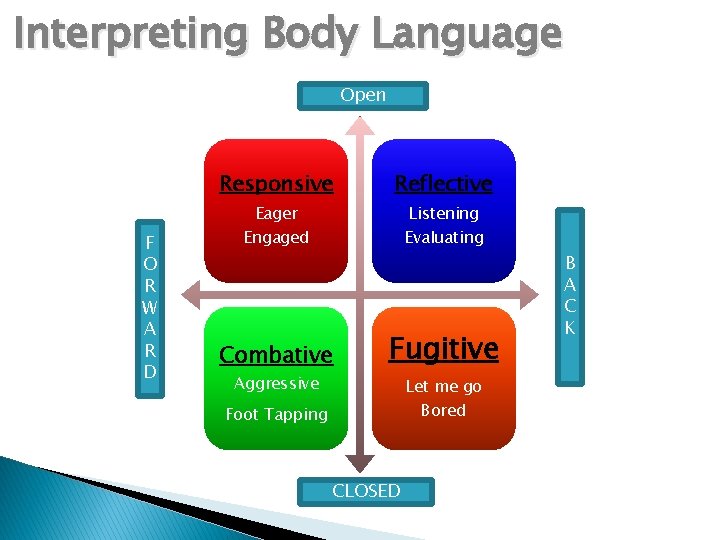
Interpreting Body Language Open F O R W A R D Responsive Reflective Eager Listening Engaged Evaluating Combative Fugitive Foot Tapping Let me go Bored Aggressive CLOSED B A C K
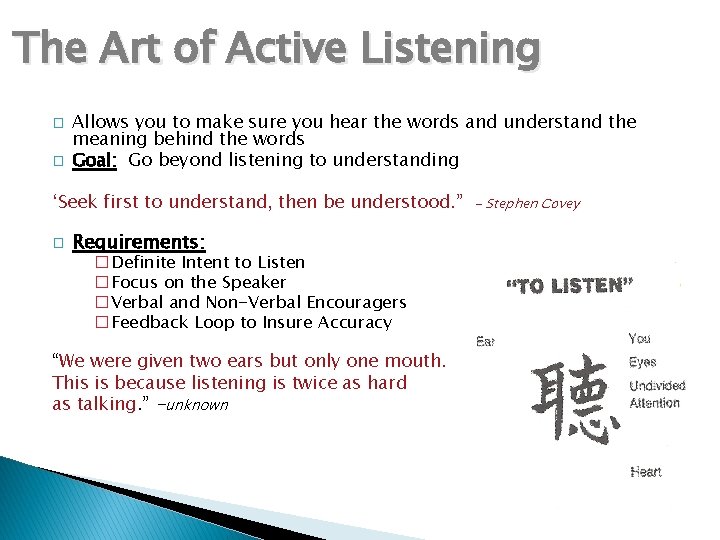
The Art of Active Listening � � Allows you to make sure you hear the words and understand the meaning behind the words Goal: Go beyond listening to understanding ‘Seek first to understand, then be understood. ” � Requirements: �Definite Intent to Listen �Focus on the Speaker �Verbal and Non-Verbal Encouragers �Feedback Loop to Insure Accuracy “We were given two ears but only one mouth. This is because listening is twice as hard as talking. ” -unknown - Stephen Covey
Fast Facts � We listen at 125 -250 wpm, think at 1000 -3000 wpm � 75% of the time we are distracted, preoccupied or forgetful � 20% of the time, we remember what we hear � More than 35% of businesses think listening is a top skill for success � Less than 2% of people have had formal education with listening
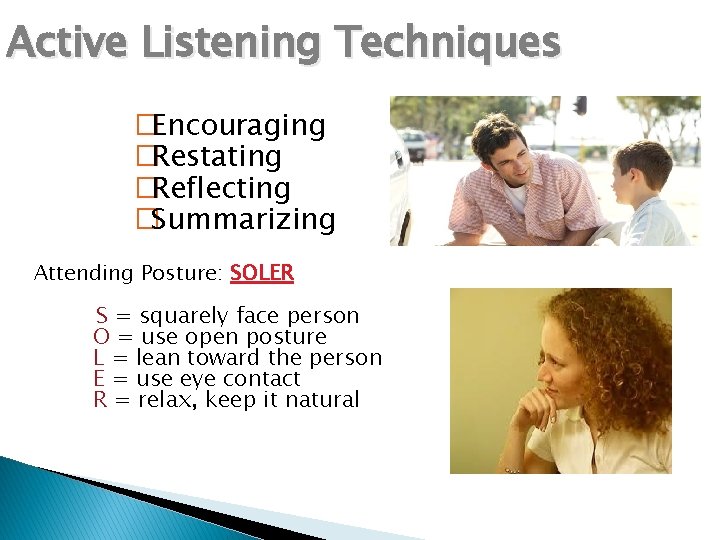
Active Listening Techniques �Encouraging �Restating �Reflecting �Summarizing Attending Posture: SOLER S = squarely face person O = use open posture L = lean toward the person E = use eye contact R = relax, keep it natural
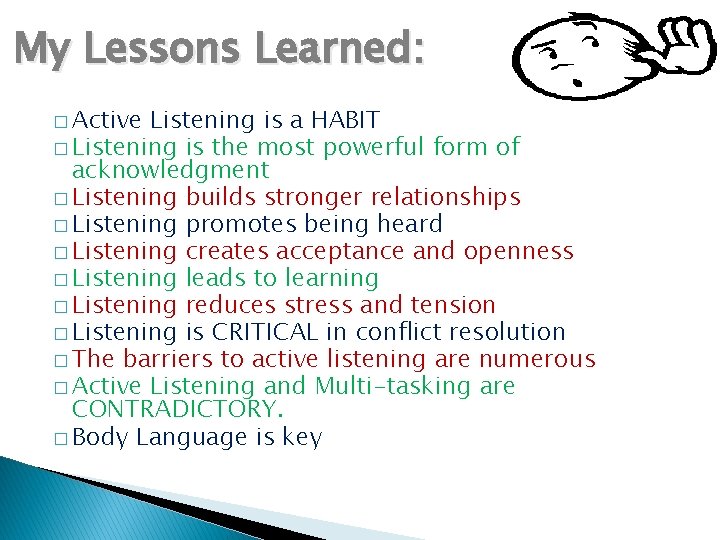
My Lessons Learned: � Active Listening is a HABIT � Listening is the most powerful form of acknowledgment � Listening builds stronger relationships � Listening promotes being heard � Listening creates acceptance and openness � Listening leads to learning � Listening reduces stress and tension � Listening is CRITICAL in conflict resolution � The barriers to active listening are numerous � Active Listening and Multi-tasking are CONTRADICTORY. � Body Language is key
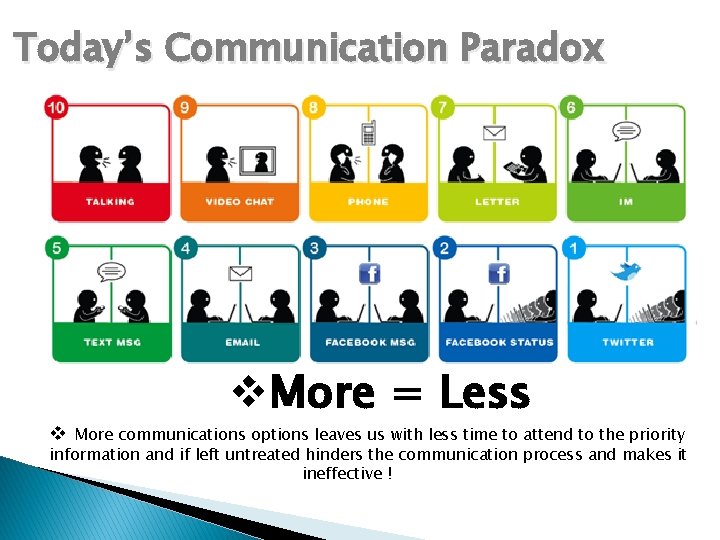
Today’s Communication Paradox v v. More = Less More communications options leaves us with less time to attend to the priority information and if left untreated hinders the communication process and makes it ineffective !