
Lessons from EFA goals for setting and monitoring
- Slides: 12
Lessons from EFA goals for setting and monitoring goals post-2015 Pauline Rose Global Education Meeting Oman, 12 May 2014
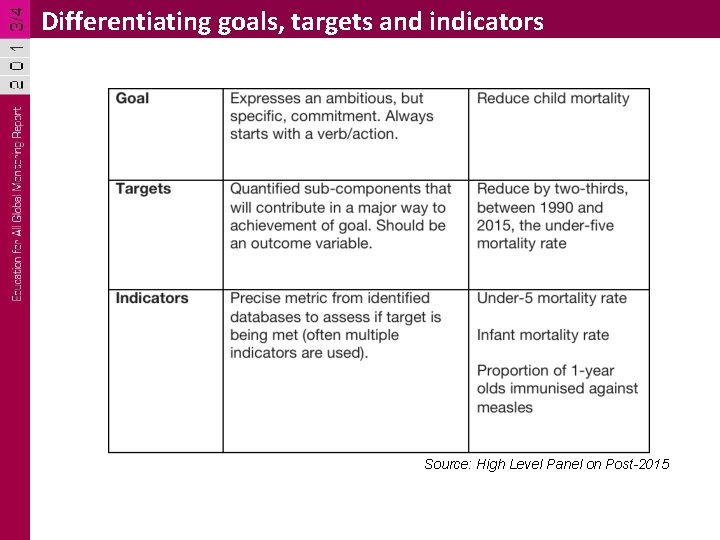
Differentiating goals, targets and indicators Source: High Level Panel on Post-2015
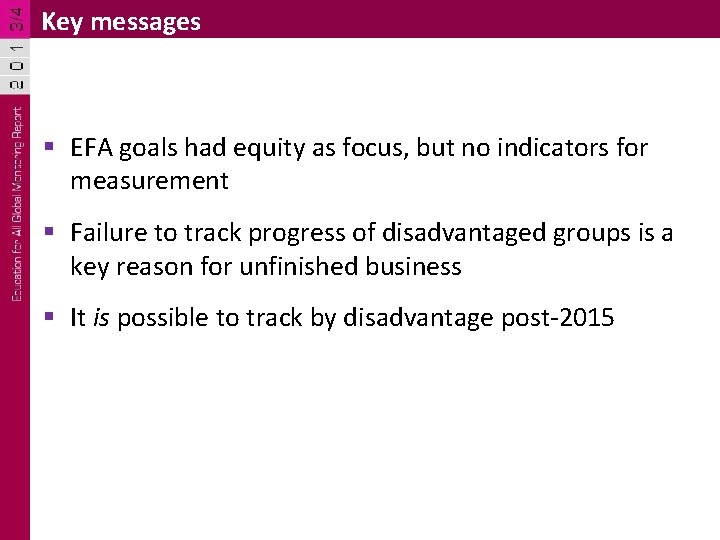
Key messages § EFA goals had equity as focus, but no indicators for measurement § Failure to track progress of disadvantaged groups is a key reason for unfinished business § It is possible to track by disadvantage post-2015
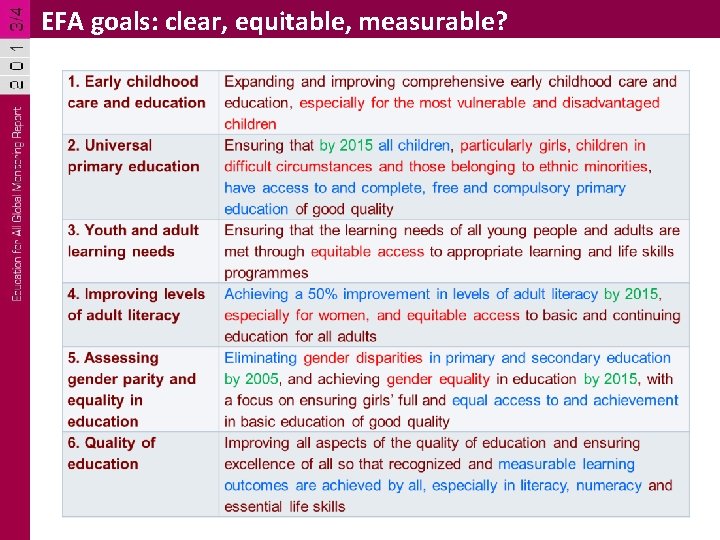
EFA goals: clear, equitable, measurable?
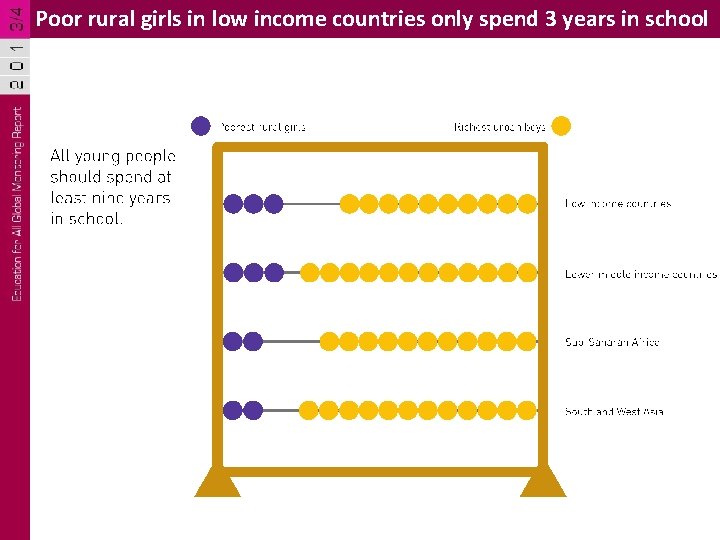
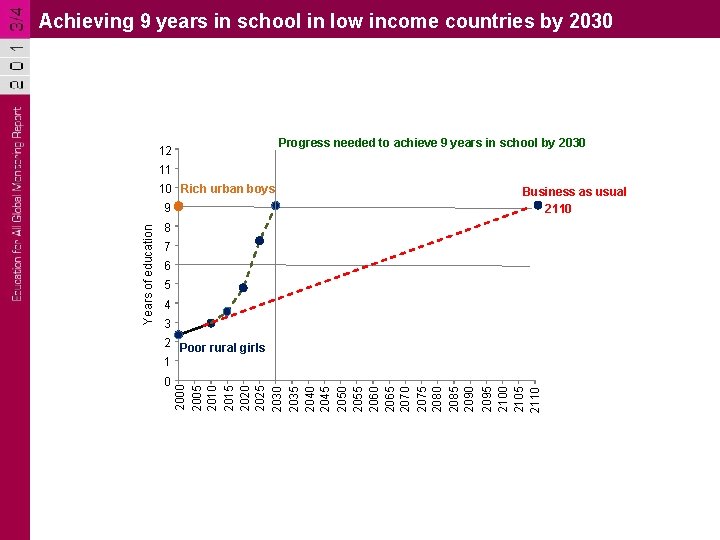
Poor rural girls in low income countries only spend 3 years in school
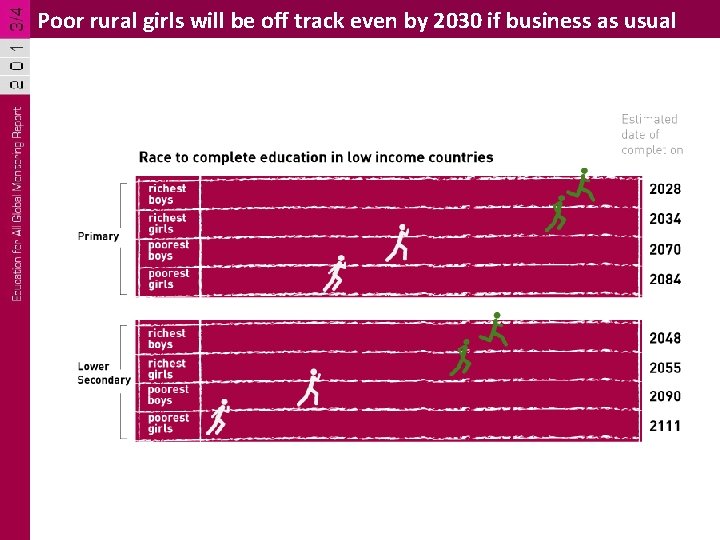
Poor rural girls will be off track even by 2030 if business as usual
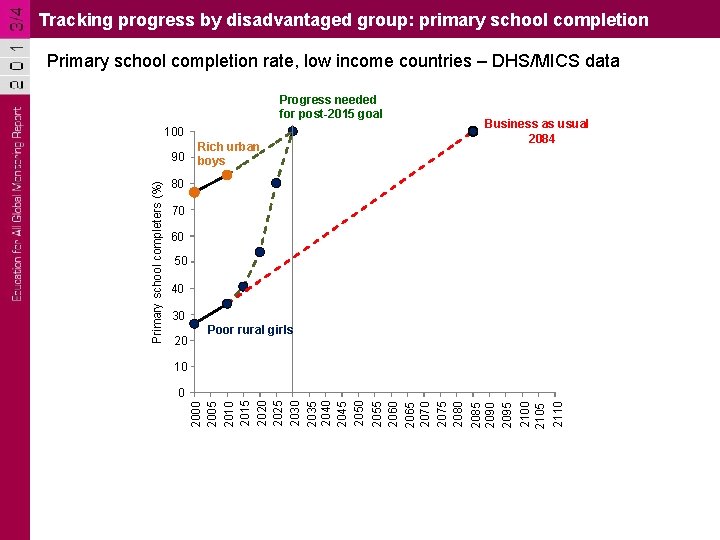
Tracking progress by disadvantaged group: primary school completion Primary school completion rate, low income countries – DHS/MICS data Progress needed for post-2015 goal 100 Rich urban boys 80 70 60 50 40 30 20 Poor rural girls 0 2085 2090 2095 2100 2105 2110 10 2005 2010 2015 2020 2025 2030 2035 2040 2045 2050 2055 2060 2065 2070 2075 2080 Primary school completers (%) 90 Business as usual 2084
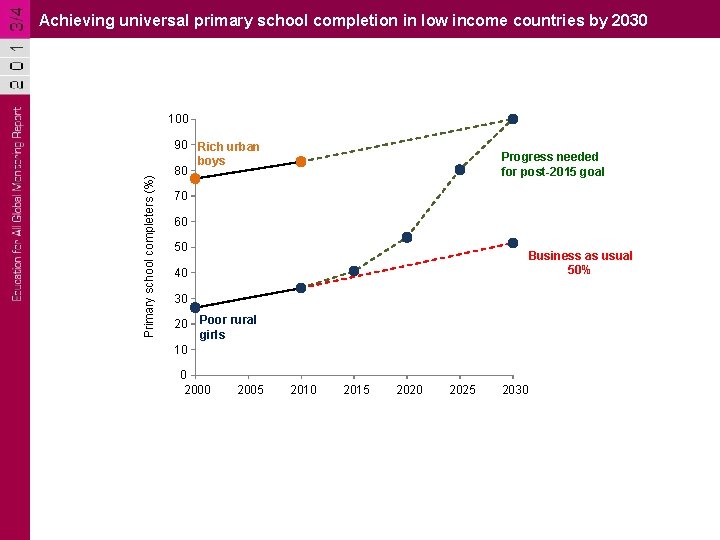
Achieving universal primary school completion in low income countries by 2030 Primary school completers (%) 100 90 Rich urban boys 80 Progress needed for post-2015 goal 70 60 50 Business as usual 50% 40 30 20 Poor rural girls 10 0 2005 2010 2015 2020 2025 2030
Achieving 9 years in school in low income countries by 2030 Progress needed to achieve 9 years in school by 2030 12 11 10 Rich urban boys 8 7 6 5 4 3 2 Poor rural girls 1 0 2005 2010 2015 2020 2025 2030 2035 2040 2045 2050 2055 2060 2065 2070 2075 2080 2085 2090 2095 2100 2105 2110 Years of education 9 Business as usual 2110
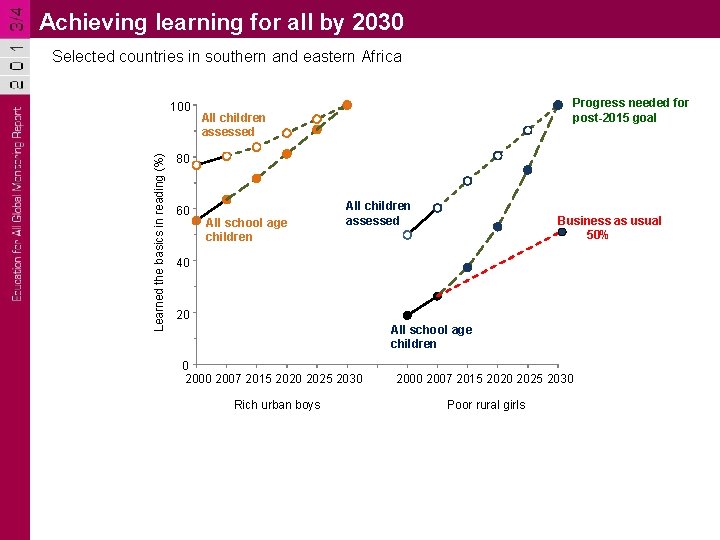
Achieving learning for all by 2030 Selected countries in southern and eastern Africa Learned the basics in reading (%) 100 Progress needed for post-2015 goal All children assessed 80 60 All school age children All children assessed Business as usual 50% 40 20 All school age children 0 2007 2015 2020 2025 2030 Rich urban boys 2000 2007 2015 2020 2025 2030 Poor rural girls
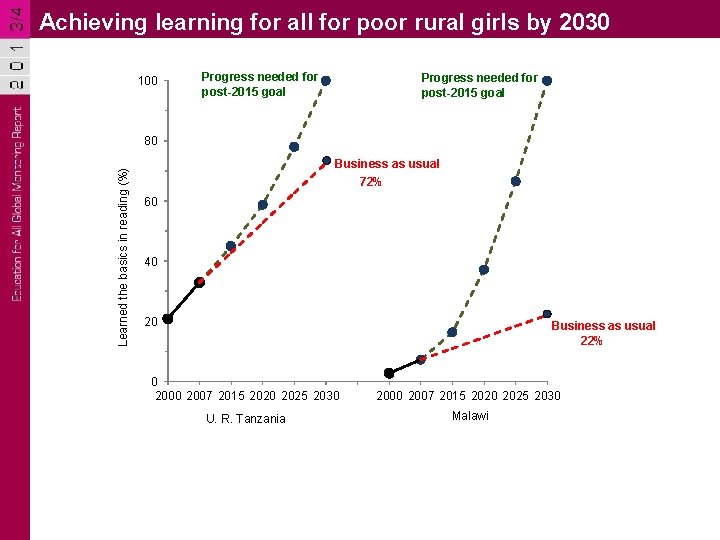
Achieving learning for all for poor rural girls by 2030 100 Progress needed for post-2015 goal Learned the basics in reading (%) 80 Business as usual 72% 60 40 20 Business as usual 22% 0 2000 2007 2015 2020 2025 2030 U. R. Tanzania Malawi
www. efareport. unesco. org Blog: efareport. wordpress. com #teachlearn / #edupost 2015 @efareport