
Lessons From a COMMEX HF Applications in Emergency


- Slides: 29
Lessons From a COMMEX HF Applications in Emergency Communications Paul Cowley W 0 YR
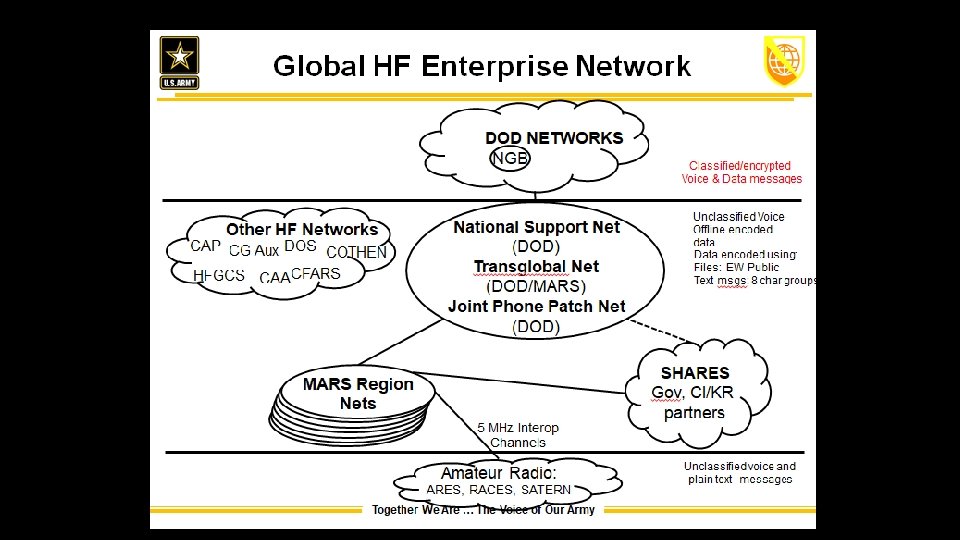
• Portions of this presentation are courtesy of Paul English – Chief US Army MARS • His presentation was given during Iowa’s Interoperability Exercise on 07 Sep 2017
Operation Stable Mercury 2017 • Statewide communications interoperability exercise • Hosted by Iowa National Guard • ARRL Midwest Division newsletter: http: //www. arrlmidwest. org/pdfs/arlmwdoct 2017 news. pdf • Field Radio Podcast (Episode 8): http: //hamradio 360. com/index. php/2017/10/19/ham-radio-360 -frp-8 -operationmercury-rising-with-paul-cowley-kb 7 vml/ • Included HF training from NORAD-USNORTHCOM and US Army MARS
Logging Your Activities • Used to track significant events; use as a shift change briefing • Keep track of maintenance or equipment issues and resolution • Pass on outstanding issues, concerns, and upcoming events to the next shift • Track what personnel are on duty in case activities need to be researched • Becomes the official record of support provided during an incident • Numbers of personnel providing support • How you supported the incident = $$$$ • If your support is not logged, IT DIDN’T HAPPEN!!
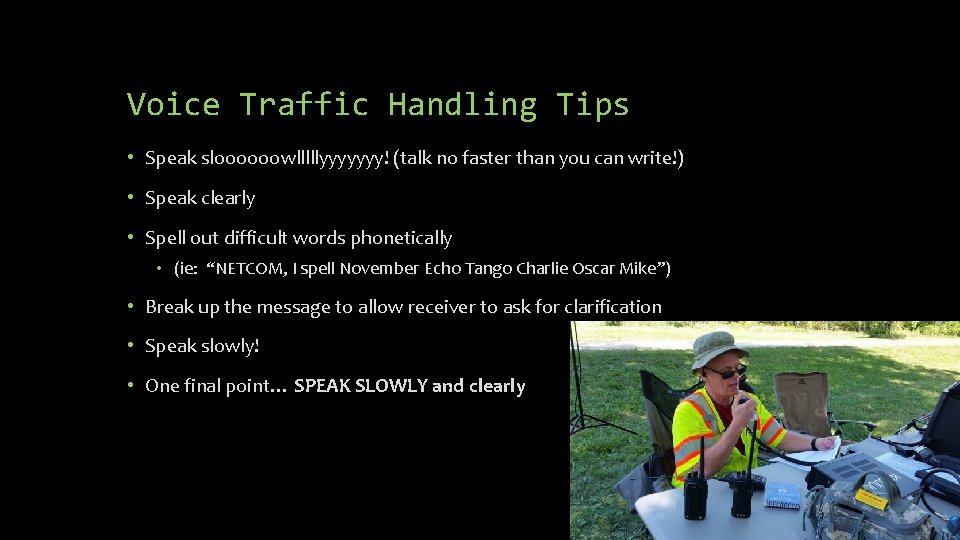
Voice Traffic Handling Tips • Speak sloooooowlllllyyyyyyy! (talk no faster than you can write!) • Speak clearly • Spell out difficult words phonetically • (ie: “NETCOM, I spell November Echo Tango Charlie Oscar Mike”) • Break up the message to allow receiver to ask for clarification • Speak slowly! • One final point… SPEAK SLOWLY and clearly
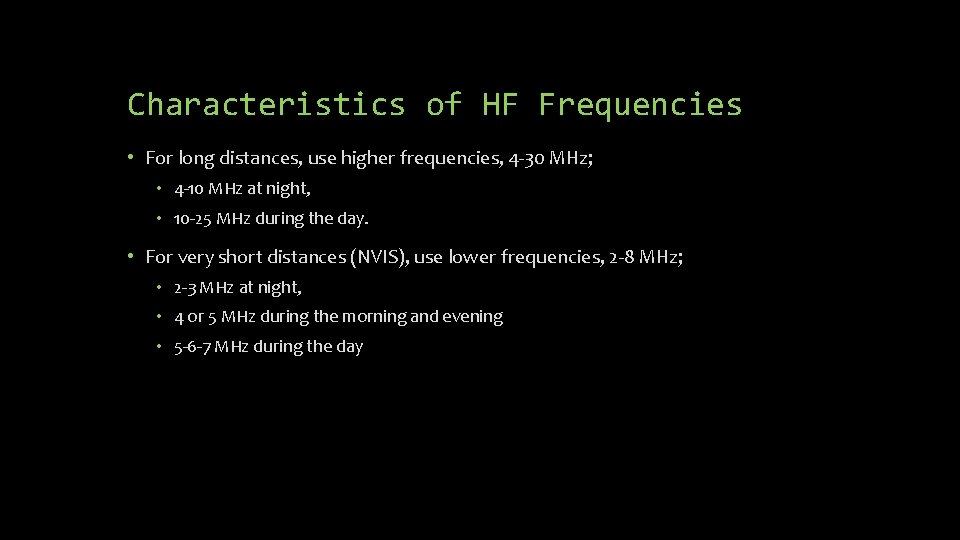
Characteristics of HF Frequencies • For long distances, use higher frequencies, 4 -30 MHz; • 4 -10 MHz at night, • 10 -25 MHz during the day. • For very short distances (NVIS), use lower frequencies, 2 -8 MHz; • 2 -3 MHz at night, • 4 or 5 MHz during the morning and evening • 5 -6 -7 MHz during the day
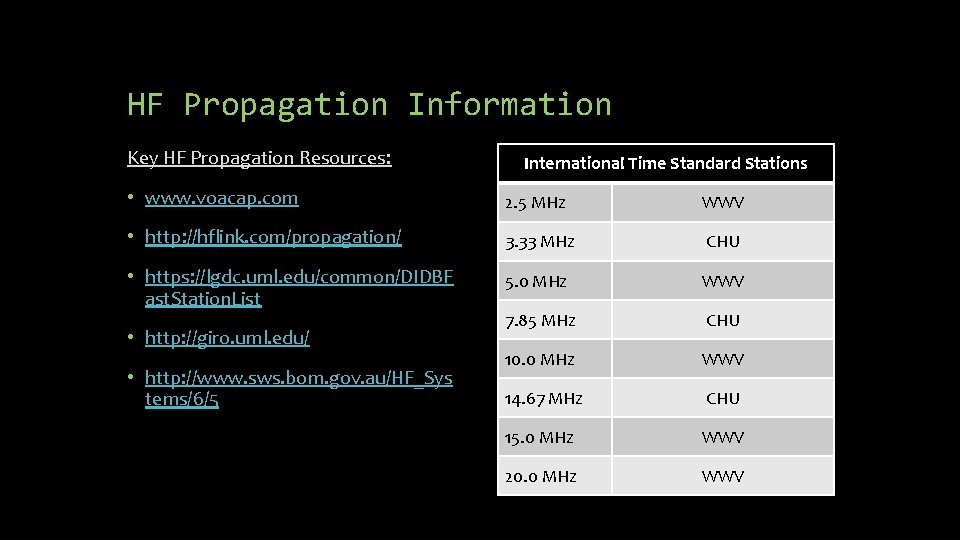
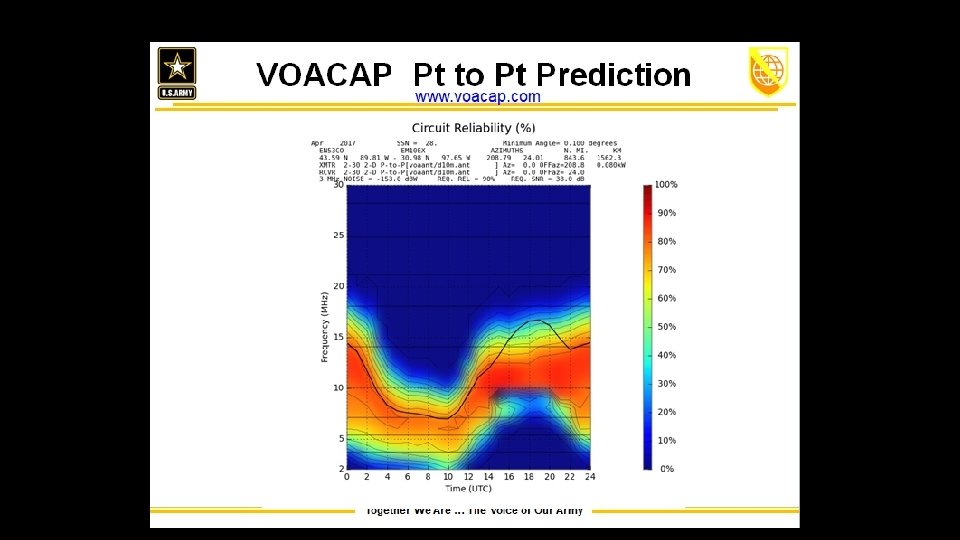
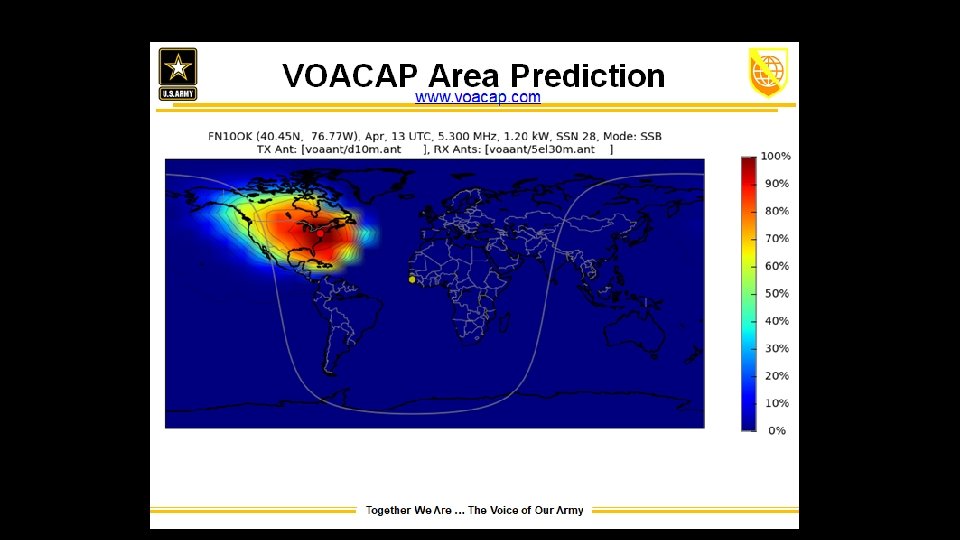
HF Propagation Information Key HF Propagation Resources: International Time Standard Stations • www. voacap. com 2. 5 MHz WWV • http: //hflink. com/propagation/ 3. 33 MHz CHU • https: //lgdc. uml. edu/common/DIDBF ast. Station. List 5. 0 MHz WWV 7. 85 MHz CHU 10. 0 MHz WWV 14. 67 MHz CHU 15. 0 MHz WWV 20. 0 MHz WWV • http: //giro. uml. edu/ • http: //www. sws. bom. gov. au/HF_Sys tems/6/5
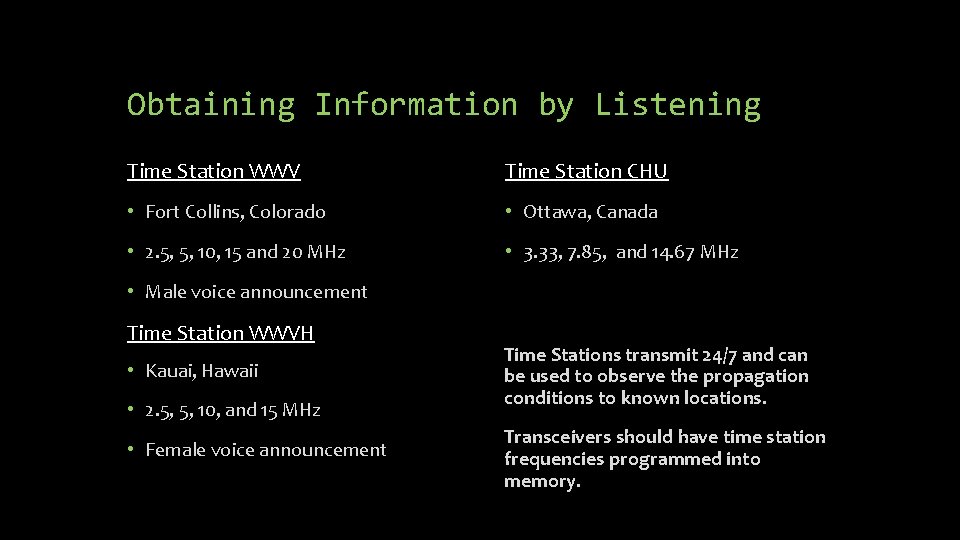
Obtaining Information by Listening Time Station WWV Time Station CHU • Fort Collins, Colorado • Ottawa, Canada • 2. 5, 5, 10, 15 and 20 MHz • 3. 33, 7. 85, and 14. 67 MHz • Male voice announcement Time Station WWVH • Kauai, Hawaii • 2. 5, 5, 10, and 15 MHz • Female voice announcement Time Stations transmit 24/7 and can be used to observe the propagation conditions to known locations. Transceivers should have time station frequencies programmed into memory.
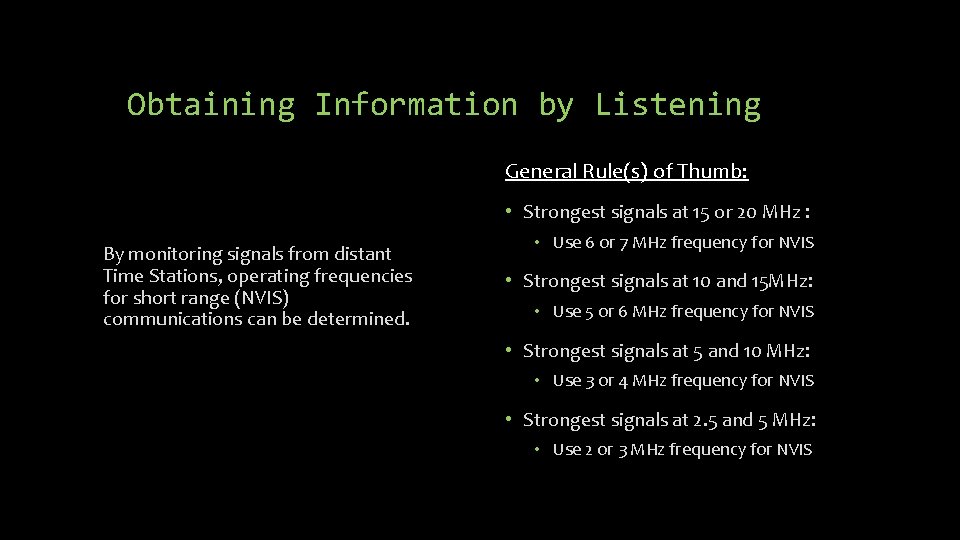
Obtaining Information by Listening General Rule(s) of Thumb: • Strongest signals at 15 or 20 MHz : By monitoring signals from distant Time Stations, operating frequencies for short range (NVIS) communications can be determined. • Use 6 or 7 MHz frequency for NVIS • Strongest signals at 10 and 15 MHz: • Use 5 or 6 MHz frequency for NVIS • Strongest signals at 5 and 10 MHz: • Use 3 or 4 MHz frequency for NVIS • Strongest signals at 2. 5 and 5 MHz: • Use 2 or 3 MHz frequency for NVIS
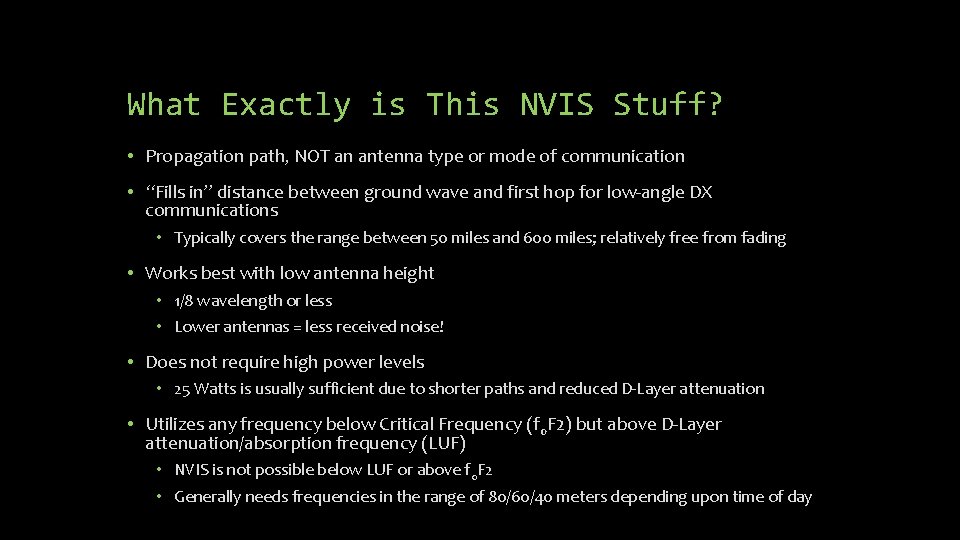
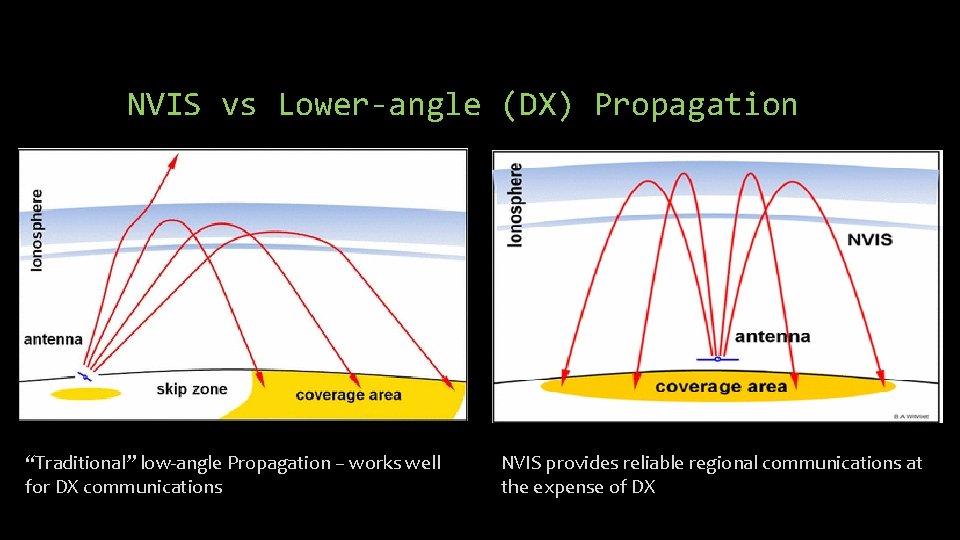
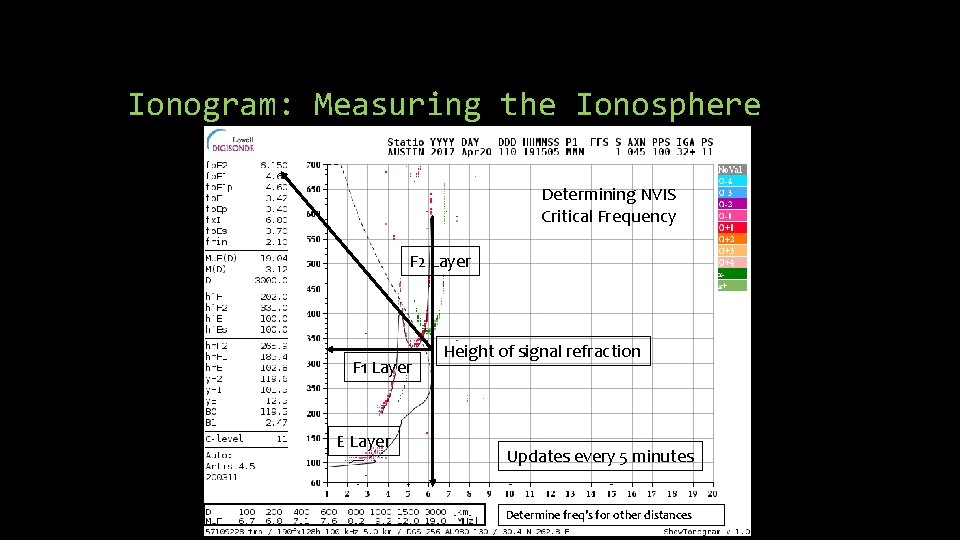
What Exactly is This NVIS Stuff? • Propagation path, NOT an antenna type or mode of communication • “Fills in” distance between ground wave and first hop for low-angle DX communications • Typically covers the range between 50 miles and 600 miles; relatively free from fading • Works best with low antenna height • 1/8 wavelength or less • Lower antennas = less received noise! • Does not require high power levels • 25 Watts is usually sufficient due to shorter paths and reduced D-Layer attenuation • Utilizes any frequency below Critical Frequency (fo. F 2) but above D-Layer attenuation/absorption frequency (LUF) • NVIS is not possible below LUF or above fo. F 2 • Generally needs frequencies in the range of 80/60/40 meters depending upon time of day
NVIS vs Lower-angle (DX) Propagation “Traditional” low-angle Propagation – works well for DX communications NVIS provides reliable regional communications at the expense of DX
Further Study - NVIS • http: //www. idahoares. info/tutorial_hf_nvis_band_selection. shtml • http: //www. arrl. org/nvis • http: //www. qsl. net/wb 5 ude/nvis/
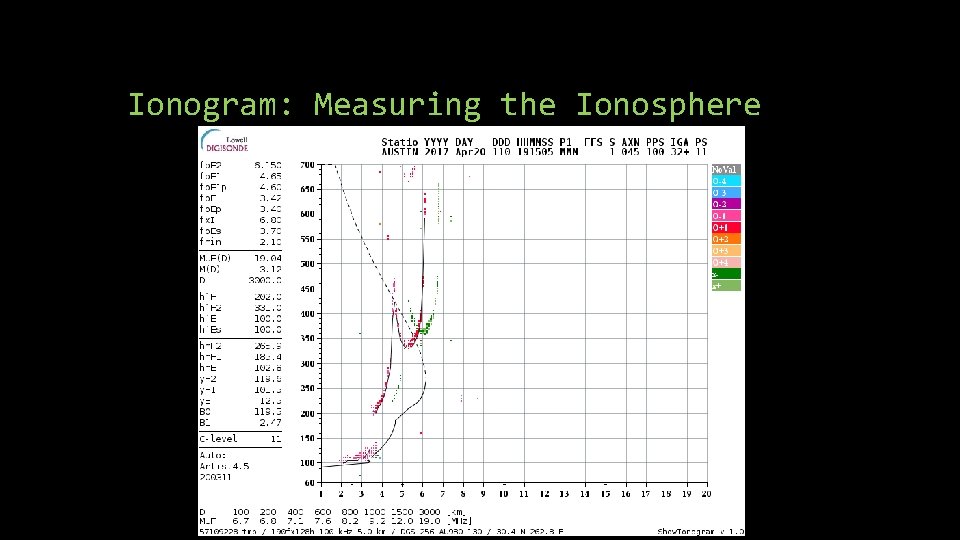
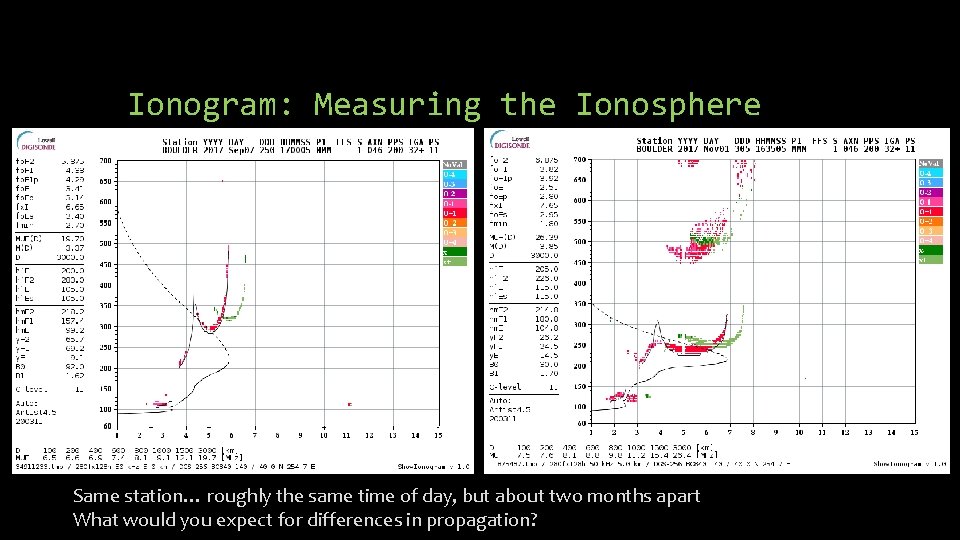
Ionogram: Measuring the Ionosphere
Ionogram: Measuring the Ionosphere Determining NVIS Critical Frequency F 2 Layer F 1 Layer E Layer Height of signal refraction Updates every 5 minutes Determine freq’s for other distances
Ionogram: Measuring the Ionosphere Same station… roughly the same time of day, but about two months apart What would you expect for differences in propagation?
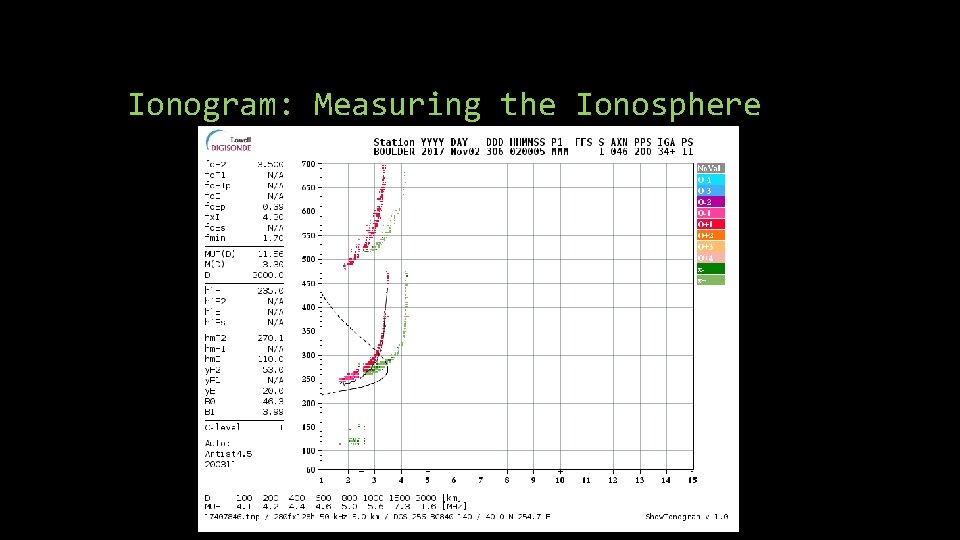
Ionogram: Measuring the Ionosphere
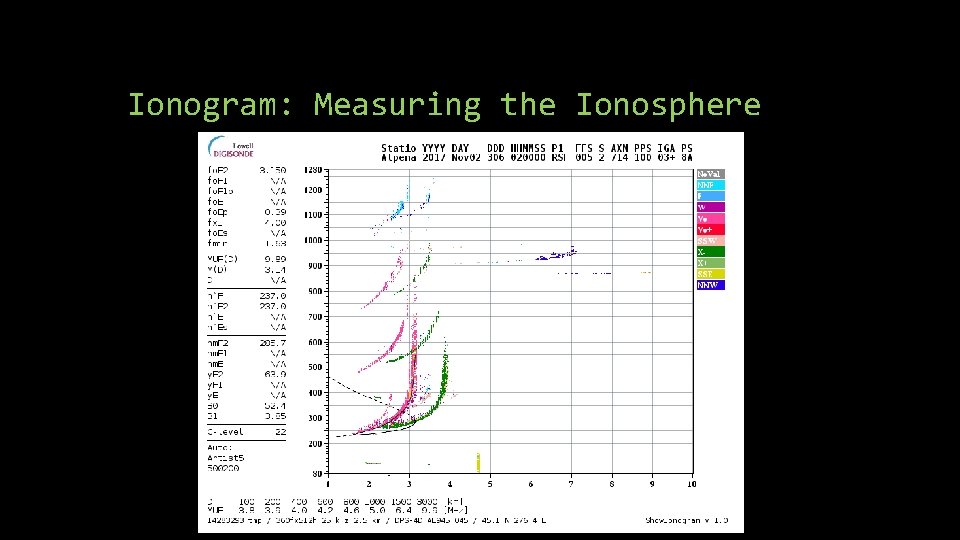
Ionogram: Measuring the Ionosphere
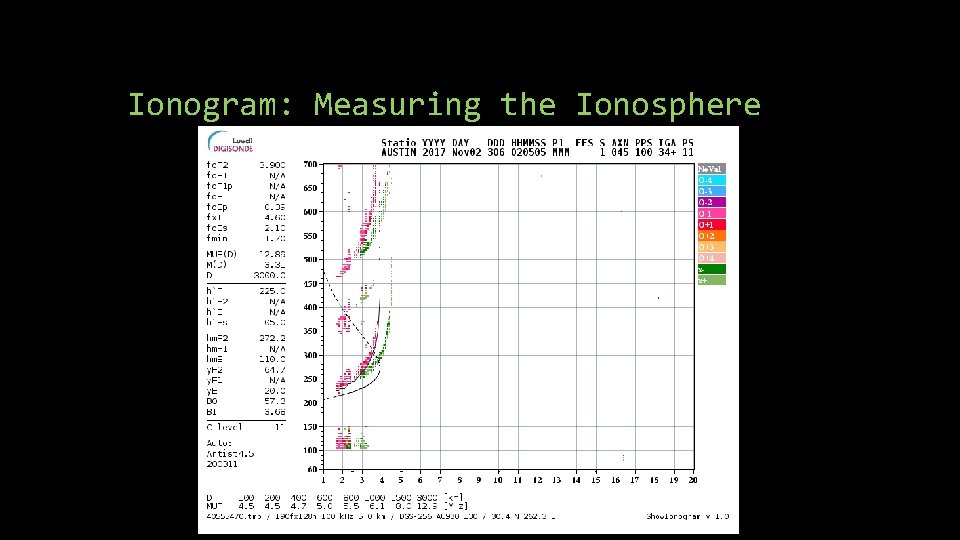
Ionogram: Measuring the Ionosphere
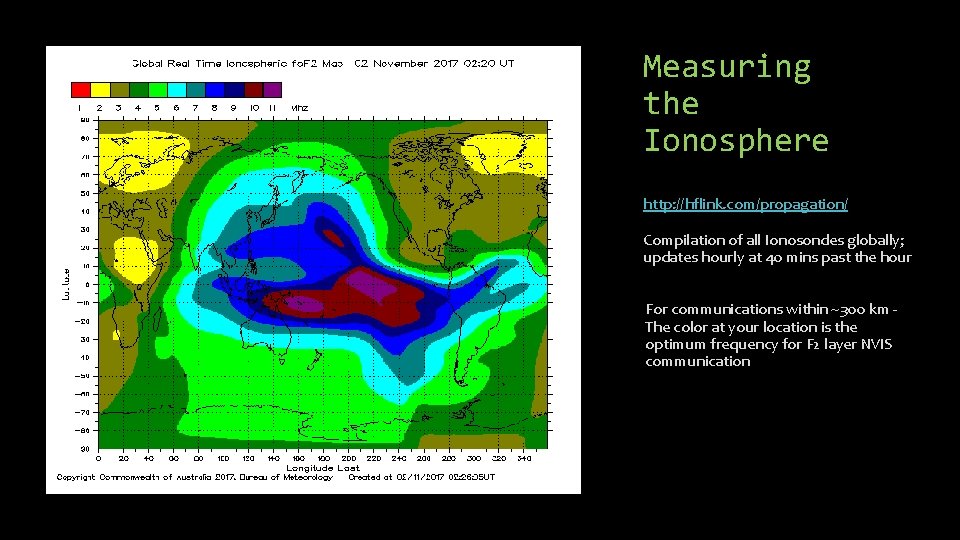
Measuring the Ionosphere http: //hflink. com/propagation/ Compilation of all Ionosondes globally; updates hourly at 40 mins past the hour For communications within ~300 km The color at your location is the optimum frequency for F 2 layer NVIS communication
Further Study - Ionograms • http: //www. sws. bom. gov. au/IPSHosted/INAG/uag. htm • http: //www. g 0 lfp. com/ionograms/index. php • http: //www. wirelesswaffle. com/index. php? entry=entry 110112 -212228
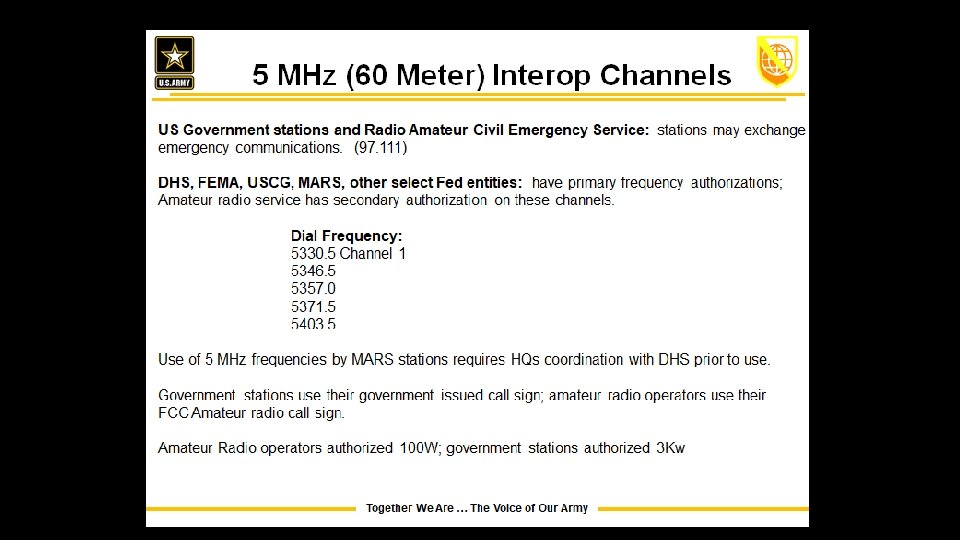
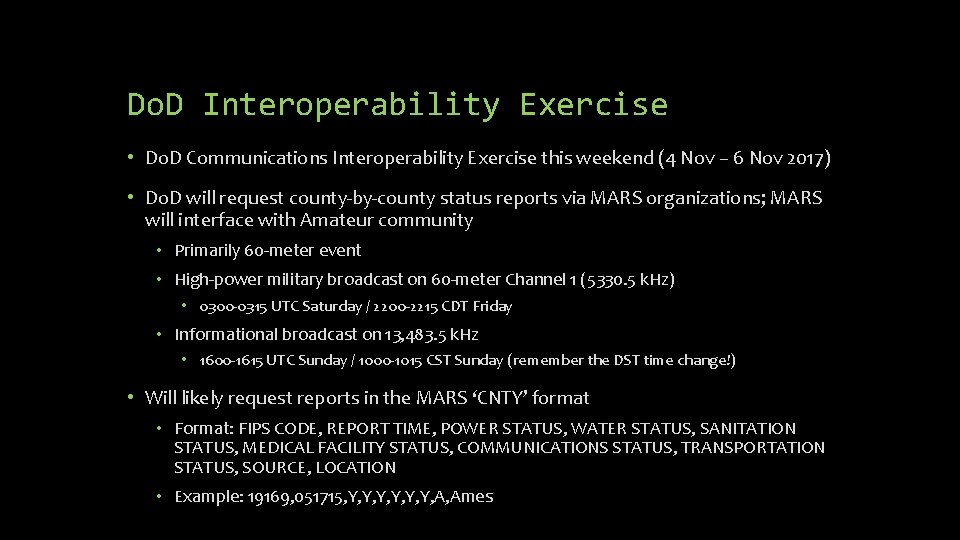
Do. D Interoperability Exercise • Do. D Communications Interoperability Exercise this weekend (4 Nov – 6 Nov 2017) • Do. D will request county-by-county status reports via MARS organizations; MARS will interface with Amateur community • Primarily 60 -meter event • High-power military broadcast on 60 -meter Channel 1 (5330. 5 k. Hz) • 0300 -0315 UTC Saturday / 2200 -2215 CDT Friday • Informational broadcast on 13, 483. 5 k. Hz • 1600 -1615 UTC Sunday / 1000 -1015 CST Sunday (remember the DST time change!) • Will likely request reports in the MARS ‘CNTY’ format • Format: FIPS CODE, REPORT TIME, POWER STATUS, WATER STATUS, SANITATION STATUS, MEDICAL FACILITY STATUS, COMMUNICATIONS STATUS, TRANSPORTATION STATUS, SOURCE, LOCATION • Example: 19169, 051715, Y, Y, Y, A, Ames
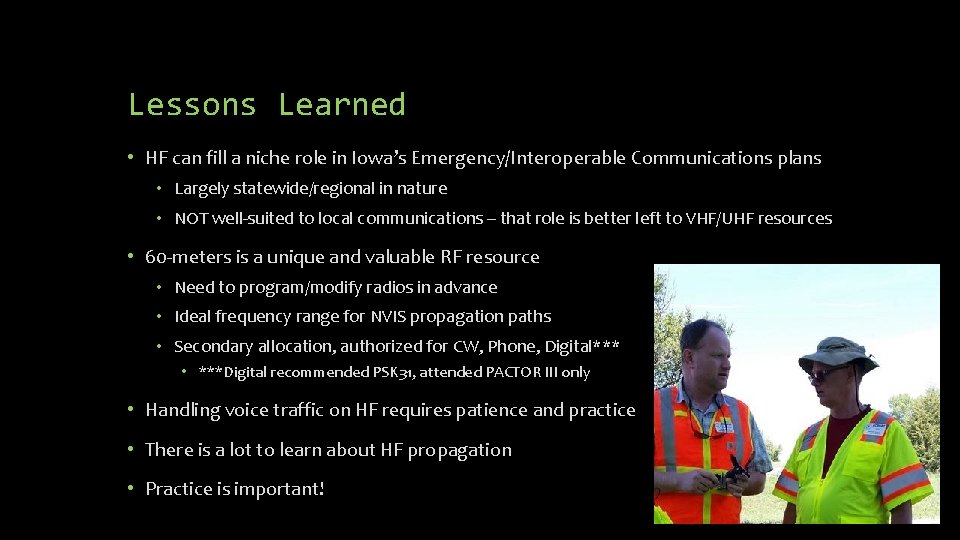
Lessons Learned • HF can fill a niche role in Iowa’s Emergency/Interoperable Communications plans • Largely statewide/regional in nature • NOT well-suited to local communications – that role is better left to VHF/UHF resources • 60 -meters is a unique and valuable RF resource • Need to program/modify radios in advance • Ideal frequency range for NVIS propagation paths • Secondary allocation, authorized for CW, Phone, Digital*** • ***Digital recommended PSK 31, attended PACTOR III only • Handling voice traffic on HF requires patience and practice • There is a lot to learn about HF propagation • Practice is important!
Questions?