
Lesson XXX Pluperfect Tense Future Perfect Tense Lesson

- Slides: 22
Lesson XXX Pluperfect Tense Future Perfect Tense + Lesson XXIX: Substantive Adjectives
Perfect System • The PERFECT SYSTEM of Latin verbs has 3 tenses: – Perfect – Pluperfect (aka “past perfect”) – Future perfect
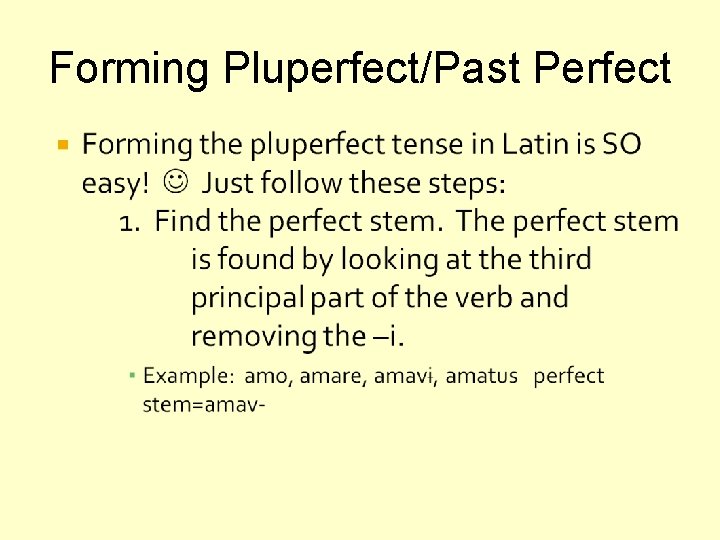
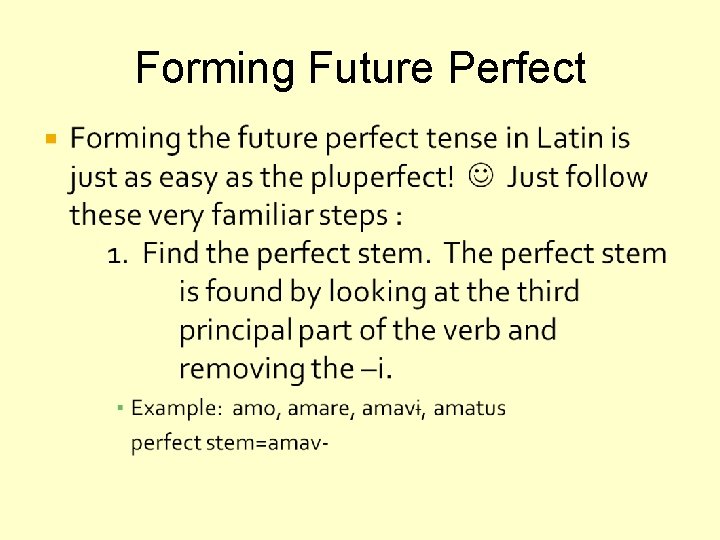
Perfect Tense System • The perfect system gets its name because all 3 tenses use the “perfect stem. ” • Perfect stem: 3 rd principal part of the verb minus –i. • Remember “i surgery!”
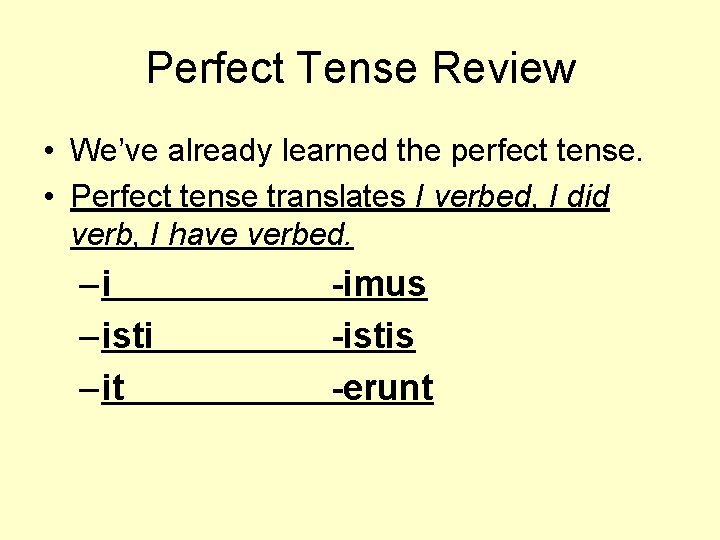
Perfect Tense Review • We’ve already learned the perfect tense. • Perfect tense translates I verbed, I did verb, I have verbed. –i – isti – it -imus -istis -erunt
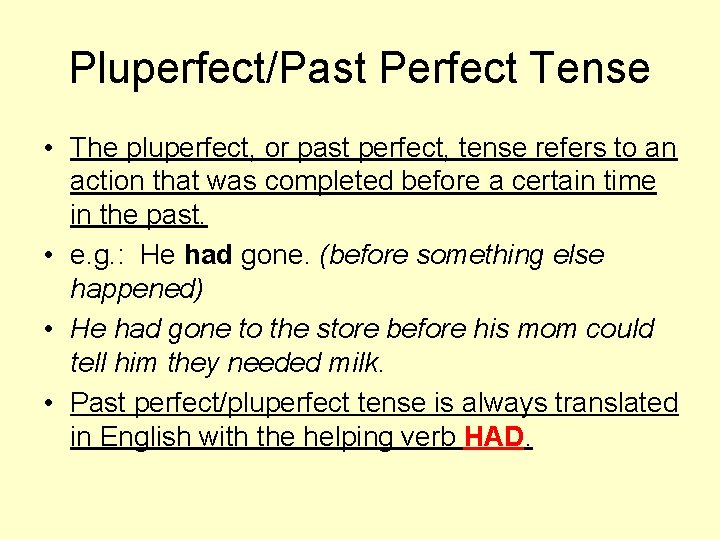
Pluperfect/Past Perfect Tense • The pluperfect, or past perfect, tense refers to an action that was completed before a certain time in the past. • e. g. : He had gone. (before something else happened) • He had gone to the store before his mom could tell him they needed milk. • Past perfect/pluperfect tense is always translated in English with the helping verb HAD.
Forming Pluperfect/Past Perfect
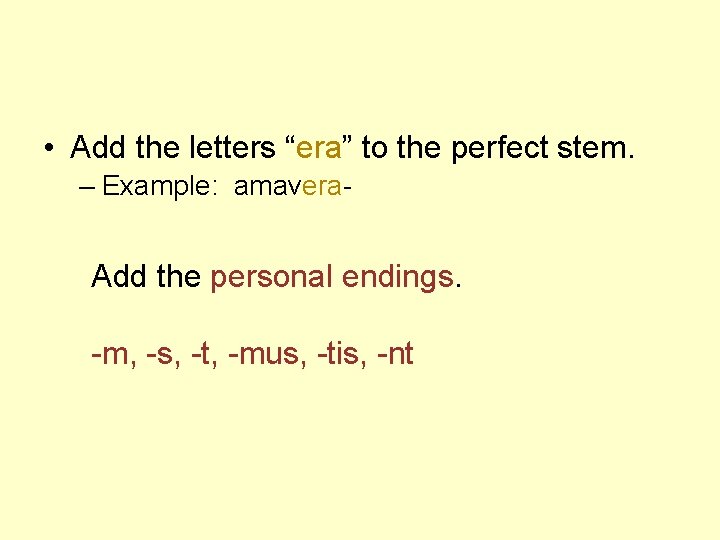
• Add the letters “era” to the perfect stem. – Example: amavera- Add the personal endings. -m, -s, -t, -mus, -tis, -nt
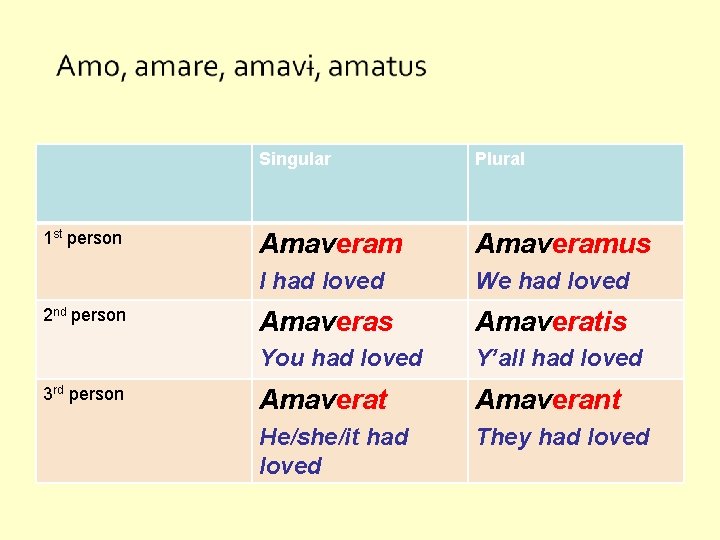
1 st person 2 nd person 3 rd person Singular Plural Amaveramus I had loved We had loved Amaveras Amaveratis You had loved Y’all had loved Amaverat Amaverant He/she/it had loved They had loved
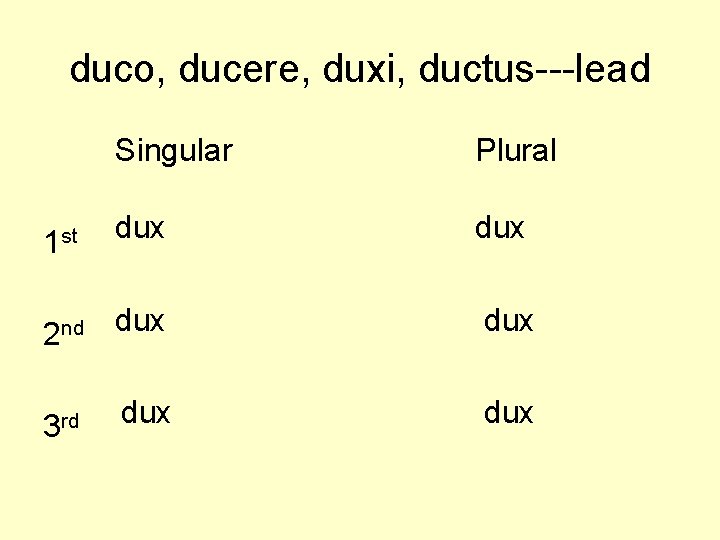
duco, ducere, duxi, ductus---lead Singular Plural 1 st dux 2 nd dux 3 rd dux
Future Perfect Tense • The future perfect tense refers to an action completed before a certain time in the future. • e. g. : He will have gone. (before something else will happen) • He already will have gone to the store before his mom can tell him they’re out of milk. • Future perfect tense is always translated in English with the helping verbs WILL HAVE.
Forming Future Perfect
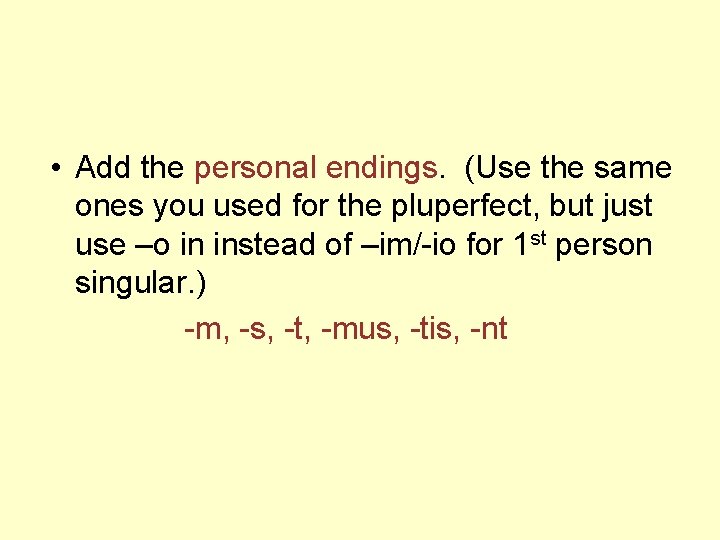
• Add the personal endings. (Use the same ones you used for the pluperfect, but just use –o in instead of –im/-io for 1 st person singular. ) -m, -s, -t, -mus, -tis, -nt
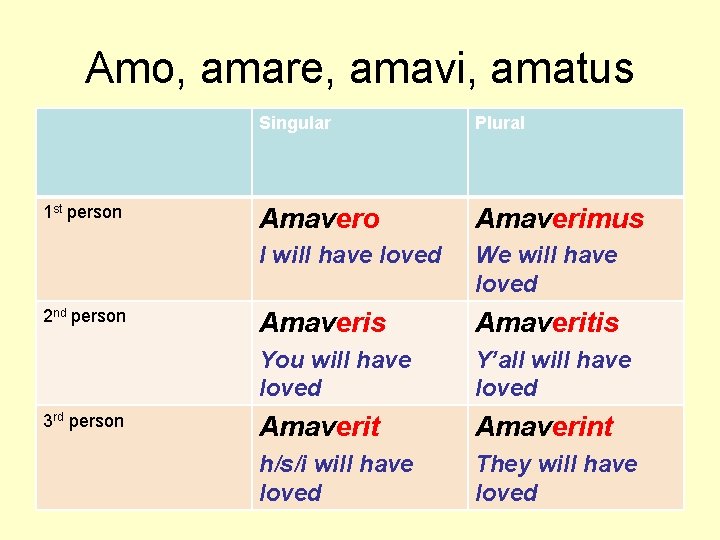
Amo, amare, amavi, amatus 1 st person 2 nd person 3 rd person Singular Plural Amavero Amaverimus I will have loved We will have loved Amaveris Amaveritis You will have loved Y’all will have loved Amaverit Amaverint h/s/i will have loved They will have loved
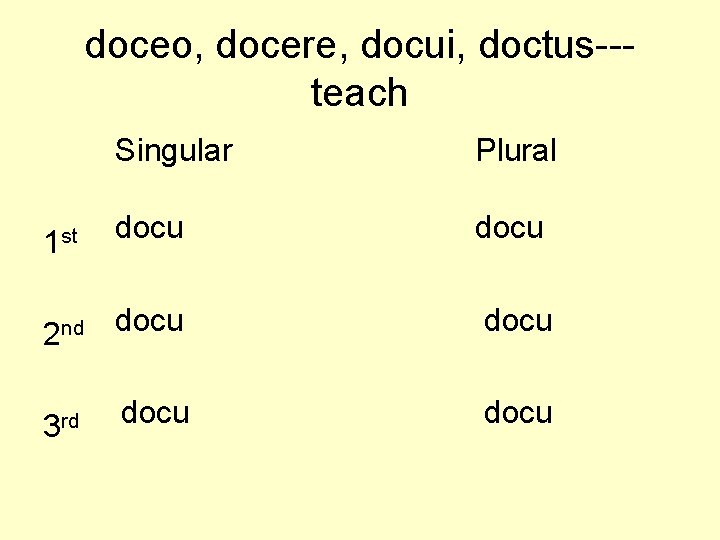
doceo, docere, docui, doctus--teach Singular Plural 1 st docu 2 nd docu 3 rd docu
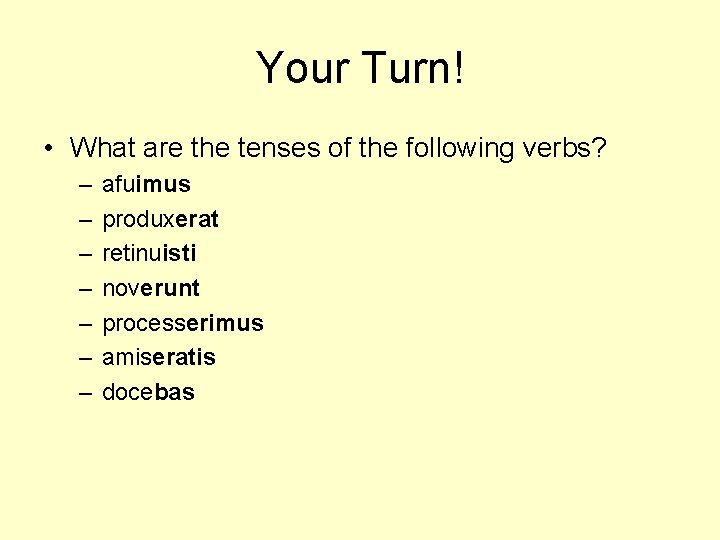
Your Turn! • What are the tenses of the following verbs? – – – – afuimus produxerat retinuisti noverunt processerimus amiseratis docebas
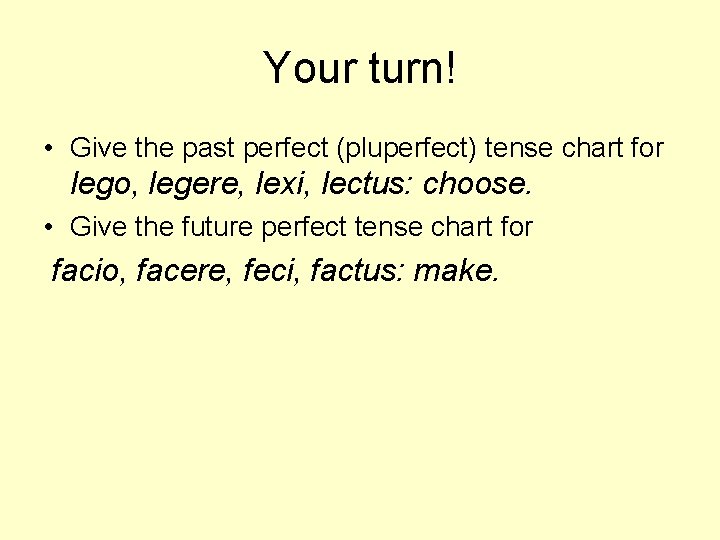
Your turn! • Give the past perfect (pluperfect) tense chart for lego, legere, lexi, lectus: choose. • Give the future perfect tense chart for facio, facere, feci, factus: make.
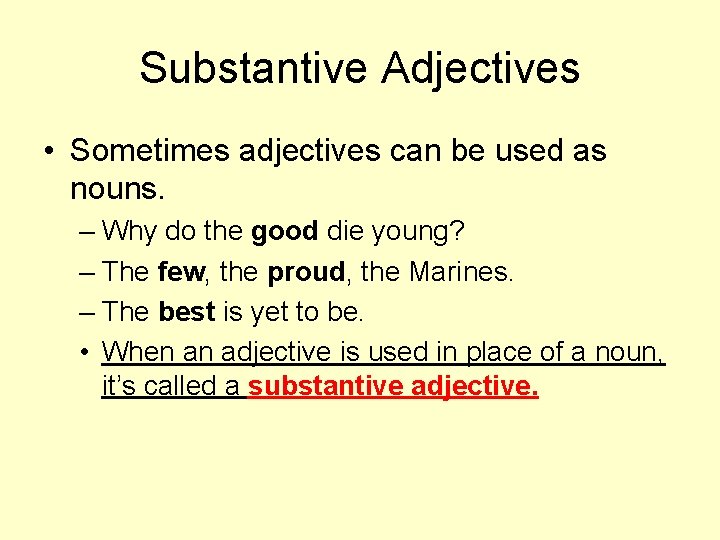
Substantive Adjectives • Sometimes adjectives can be used as nouns. – Why do the good die young? – The few, the proud, the Marines. – The best is yet to be. • When an adjective is used in place of a noun, it’s called a substantive adjective.
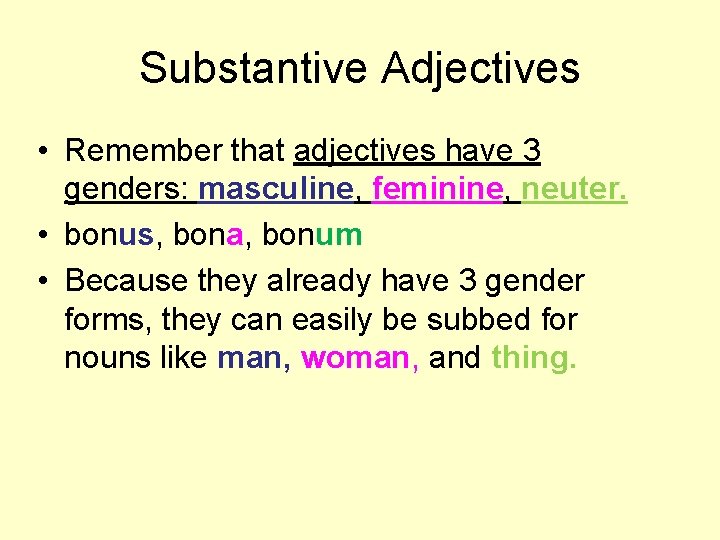
Substantive Adjectives • Remember that adjectives have 3 genders: masculine, feminine, neuter. • bonus, bona, bonum • Because they already have 3 gender forms, they can easily be subbed for nouns like man, woman, and thing.
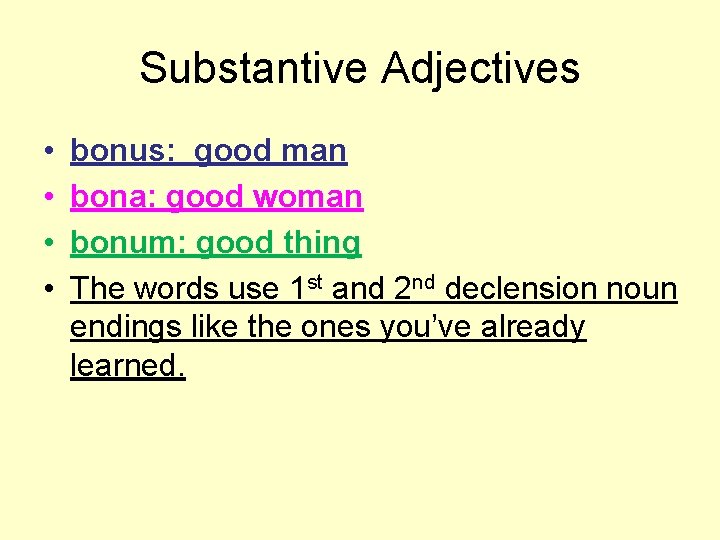
Substantive Adjectives • • bonus: good man bona: good woman bonum: good thing The words use 1 st and 2 nd declension noun endings like the ones you’ve already learned.
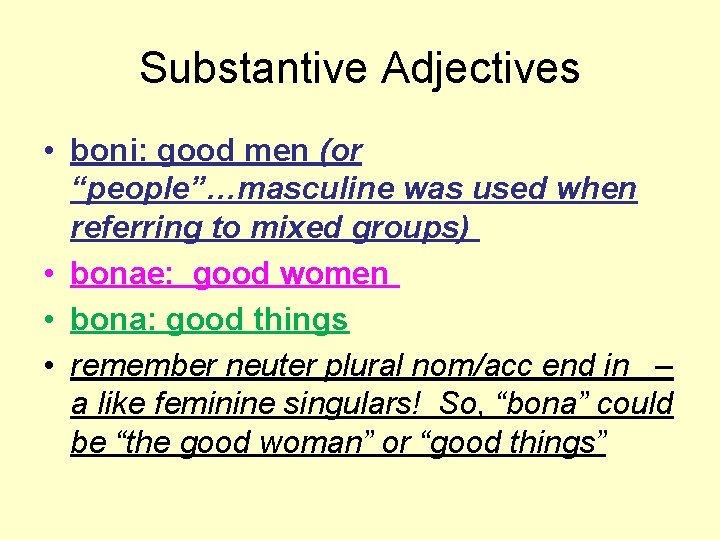
Substantive Adjectives • boni: good men (or “people”…masculine was used when referring to mixed groups) • bonae: good women • bona: good things • remember neuter plural nom/acc end in – a like feminine singulars! So, “bona” could be “the good woman” or “good things”
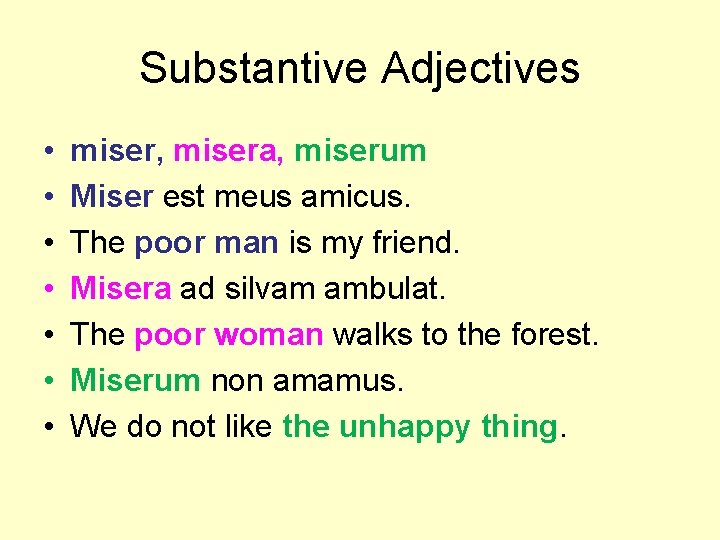
Substantive Adjectives • • miser, misera, miserum Miser est meus amicus. The poor man is my friend. Misera ad silvam ambulat. The poor woman walks to the forest. Miserum non amamus. We do not like the unhappy thing.
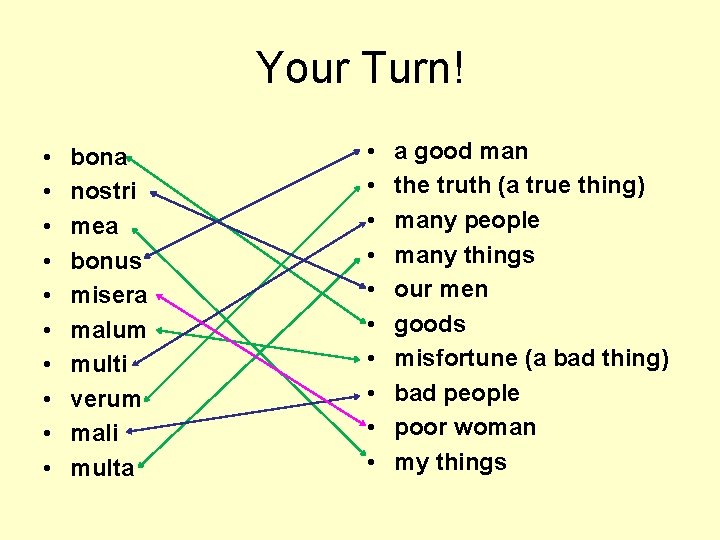
Your Turn! • • • bona nostri mea bonus misera malum multi verum mali multa • • • a good man the truth (a true thing) many people many things our men goods misfortune (a bad thing) bad people poor woman my things