
Lesson Planning Part 1 Courtney Clawson Department of
- Slides: 30
Lesson Planning: Part 1 Courtney Clawson Department of Agricultural Education and Studies
Lesson Planning • What do you know about lesson planning? • What do you think you understand about lesson planning? • What don’t you understand about lesson planning?
Outline • Lesson Planning Overview • Microteaching Activity Overview • Developing Learning Objectives
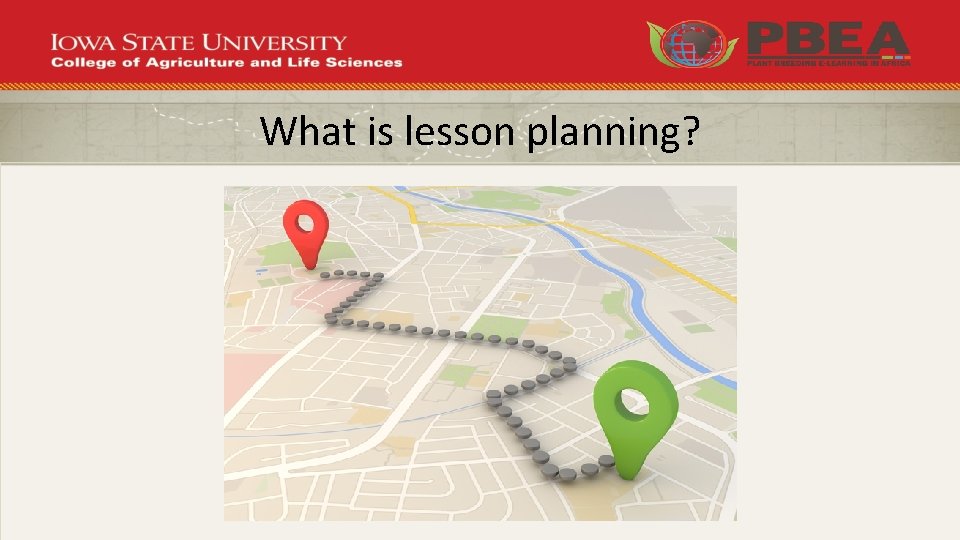
What is lesson planning?
Why is lesson planning important? • • Provides evidence Organization and focus Aligns to outcomes Improved instruction If you fail to plan you plan to fail.
Components of a Lesson Plan • • • Objectives Teaching/Learning Activities Evidence Interest approach Supporting materials/information What are the steps to forming a lesson plan?
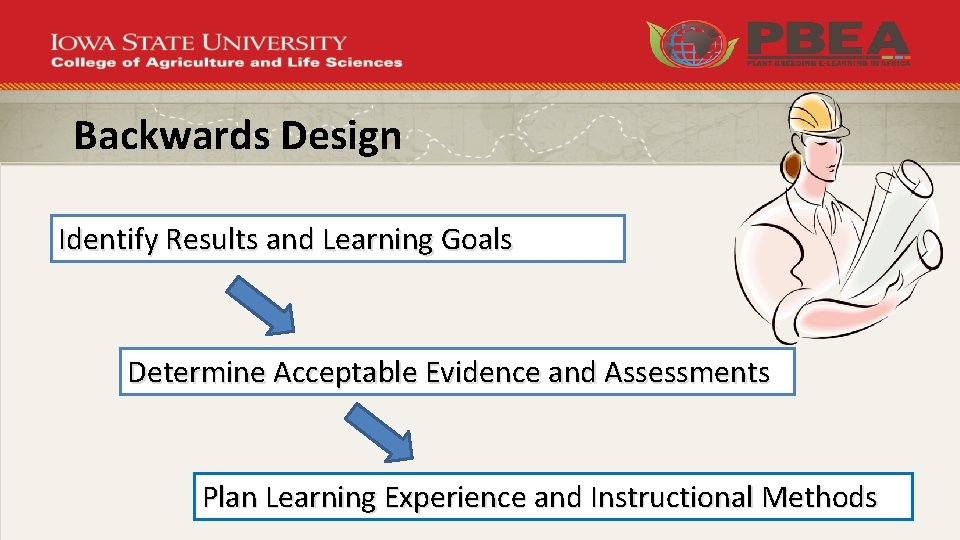
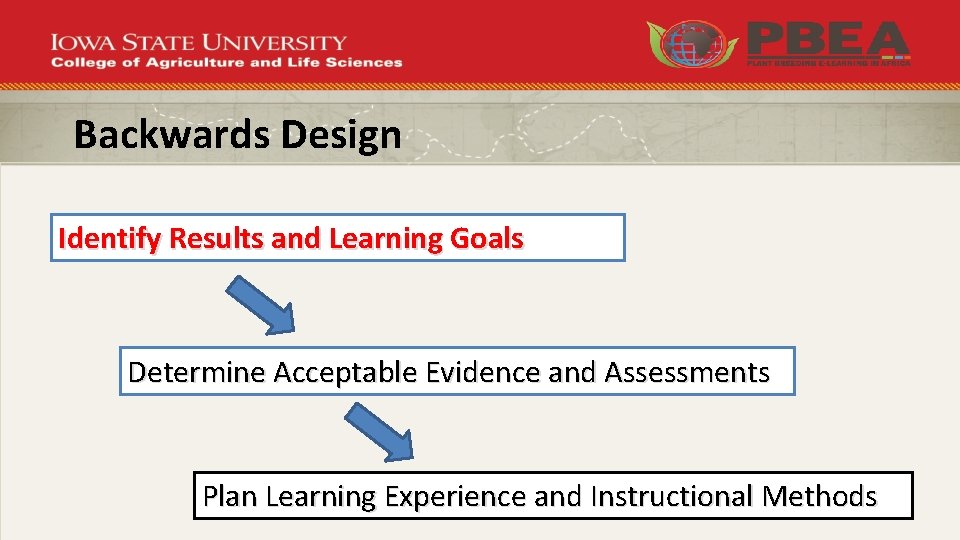
Backwards Design Identify Results and Learning Goals Determine Acceptable Evidence and Assessments Plan Learning Experience and Instructional Methods
PRACTICE!
Microteaching • Planning – 3 lesson planning sessions • Observation • Conference • Group Discussion
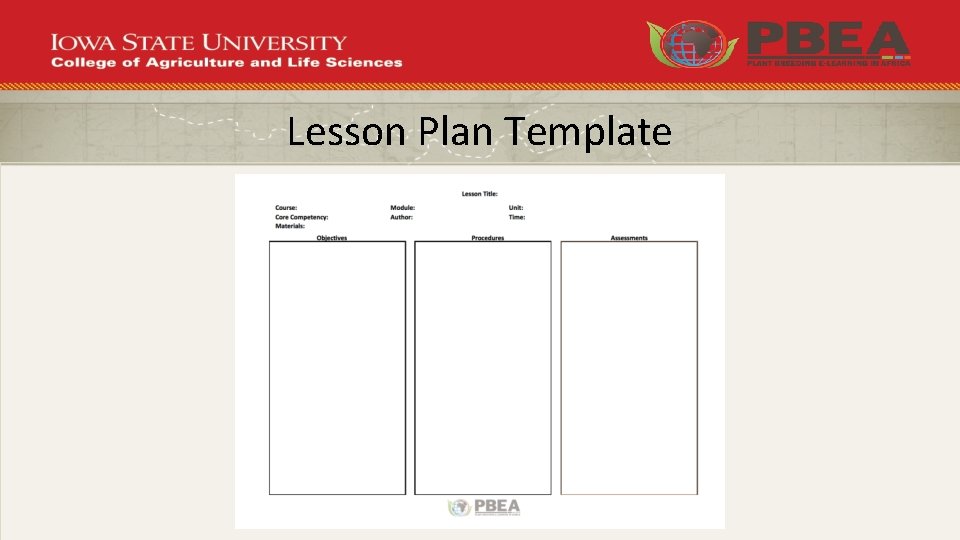
Lesson Plan Template
Microteaching • Planning – 3 lesson planning sessions • Observation • Conference • Group Discussion
Microteaching Roles • Teacher • Observer • Students
Backwards Design Identify Results and Learning Goals Determine Acceptable Evidence and Assessments Plan Learning Experience and Instructional Methods
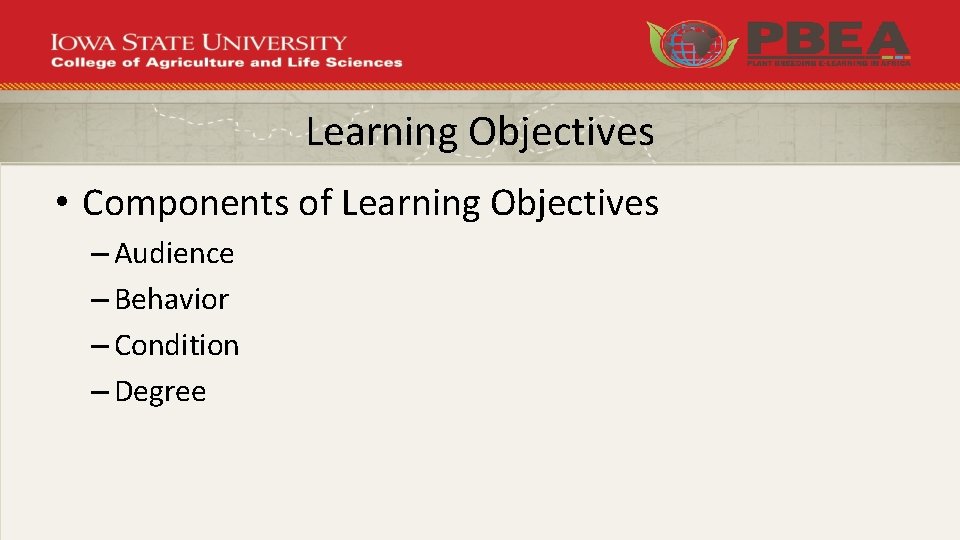
Learning Objectives • Components of Learning Objectives – Audience – Behavior – Condition – Degree
Learning Objectives • Audience – Intended learner – Example: • PBEA-PLC Symposium Participants • MSc Plant Breeding Students
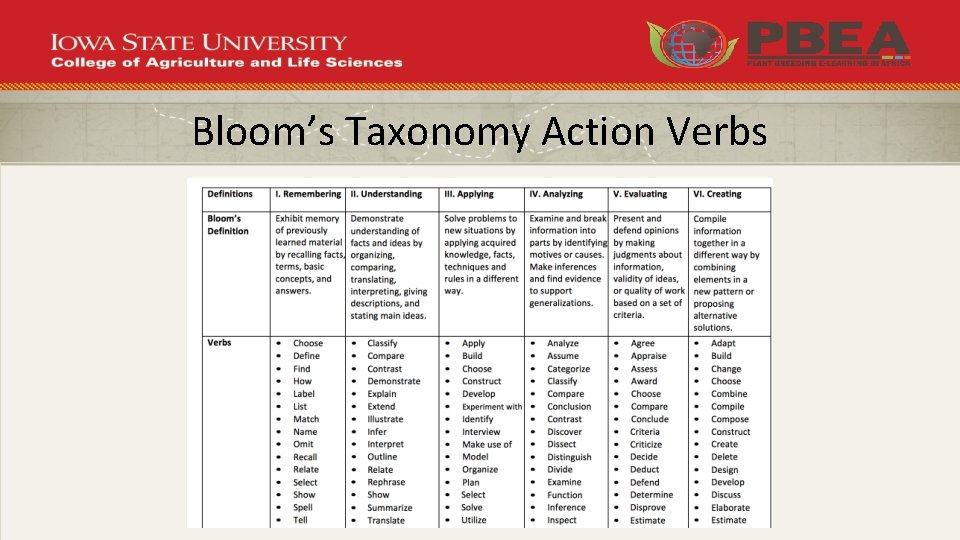
Learning Objectives • Behavior – Observable and Measurable – What will the student be able to do at the end of the lesson? – Bloom’s Taxonomy describes and classifies behaviors – Examples: • Label lesson plan components • Write a report • Develop a breeding plan
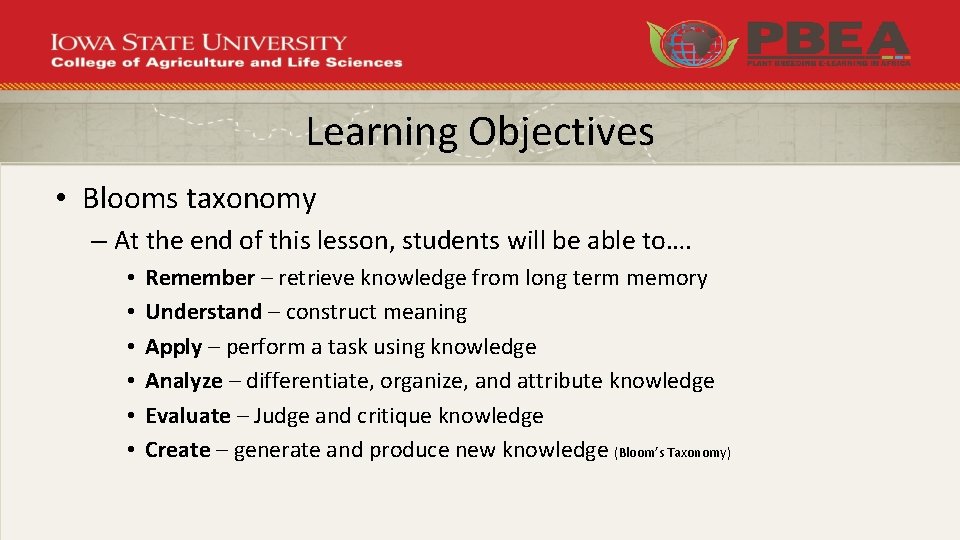
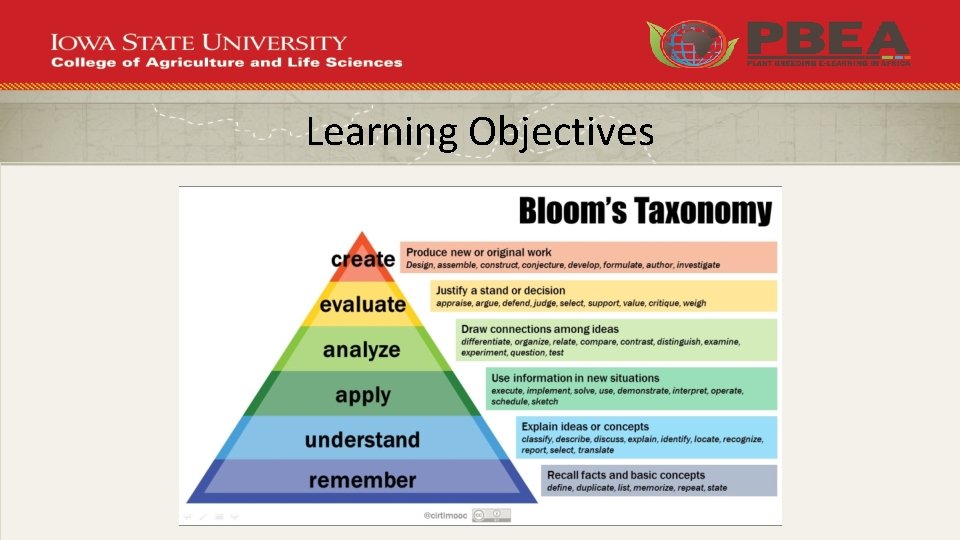
Learning Objectives • Blooms taxonomy – At the end of this lesson, students will be able to…. • • • Remember – retrieve knowledge from long term memory Understand – construct meaning Apply – perform a task using knowledge Analyze – differentiate, organize, and attribute knowledge Evaluate – Judge and critique knowledge Create – generate and produce new knowledge (Bloom’s Taxonomy)
Learning Objectives
Bloom’s Taxonomy Action Verbs
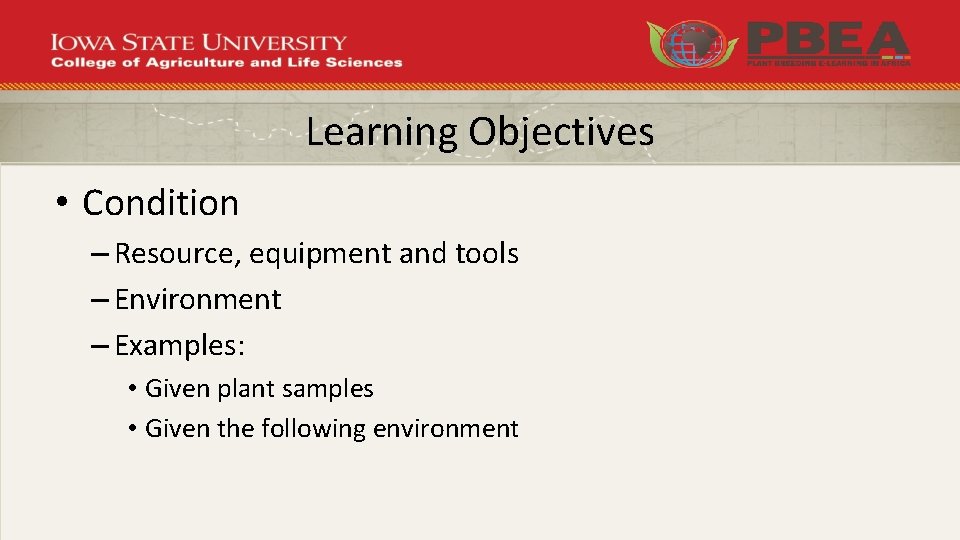
Learning Objectives • Condition – Resource, equipment and tools – Environment – Examples: • Given plant samples • Given the following environment
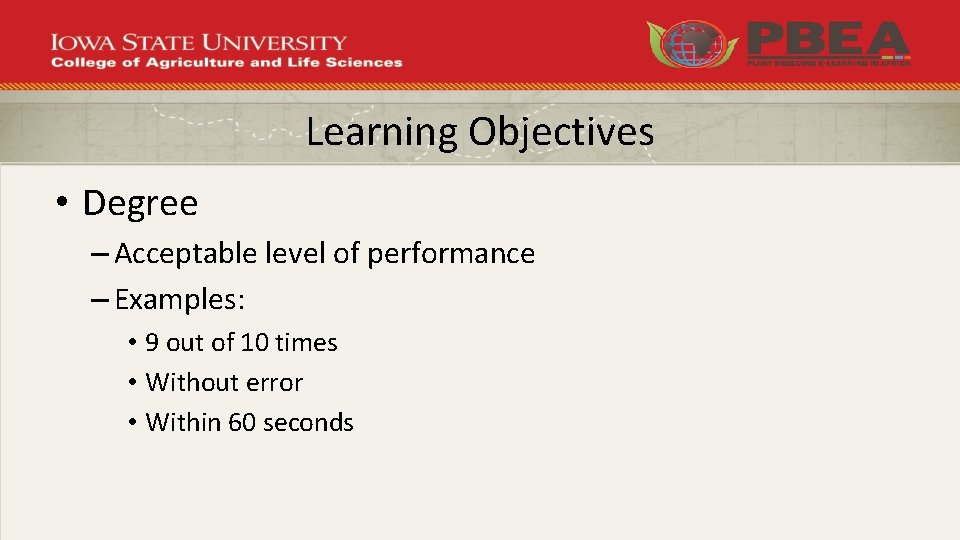
Learning Objectives • Degree – Acceptable level of performance – Examples: • 9 out of 10 times • Without error • Within 60 seconds
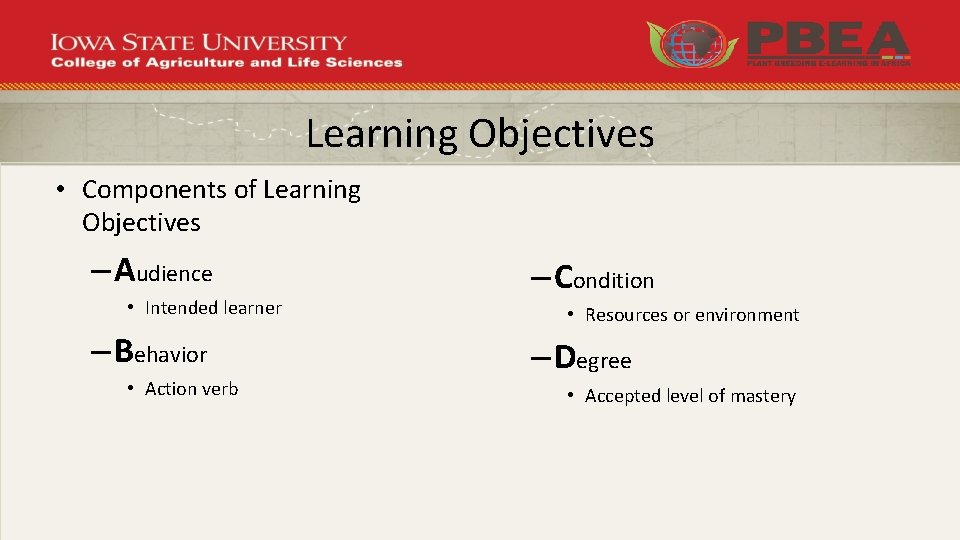
Learning Objectives • Components of Learning Objectives – Audience • Intended learner – Behavior • Action verb – Condition • Resources or environment – Degree • Accepted level of mastery
Learning Objectives • Given a learning objective, PBEA-PLC Symposium participants will identify learning objective components without error.
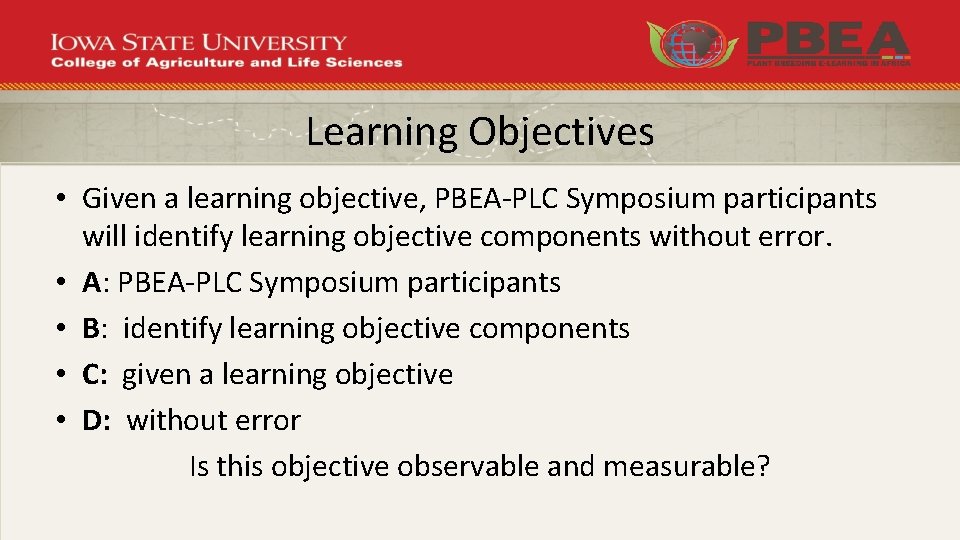
Learning Objectives • Given a learning objective, PBEA-PLC Symposium participants will identify learning objective components without error. • A: PBEA-PLC Symposium participants • B: identify learning objective components • C: given a learning objective • D: without error Is this objective observable and measurable?
Learning Objectives • Crop Improvement students will demonstrate pedigree writing with 100% accuracy when given the Pedigree Naming Systems and Symbols PBEA Module.
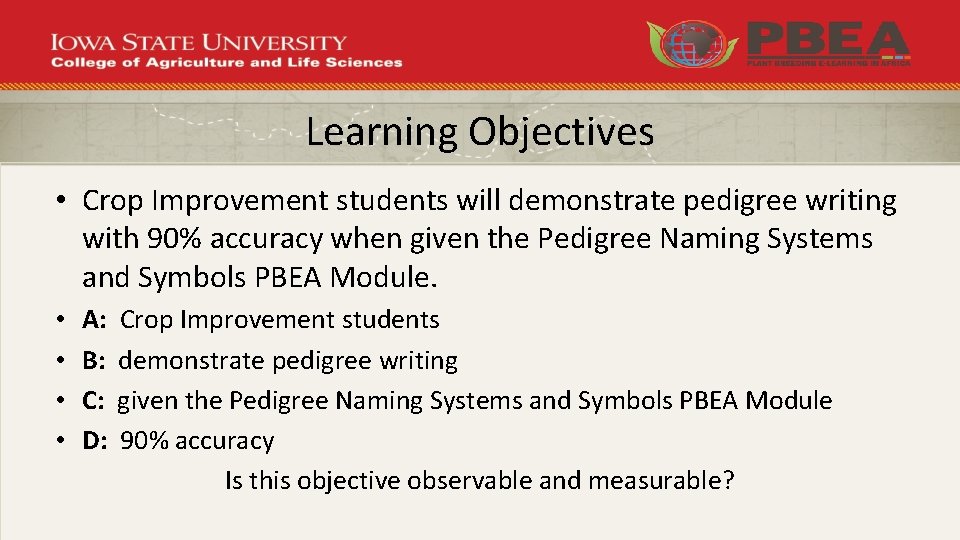
Learning Objectives • Crop Improvement students will demonstrate pedigree writing with 90% accuracy when given the Pedigree Naming Systems and Symbols PBEA Module. • • A: B: C: D: Crop Improvement students demonstrate pedigree writing given the Pedigree Naming Systems and Symbols PBEA Module 90% accuracy Is this objective observable and measurable?
Learning Objectives • Let’s Practice – Write learning objectives for your lesson – Include the ABCD components • Share with members at your table • Identify 1 -2 objectives to be reported to the group
Moving Forward • Lesson Planning Part 2 – Evidence & Assessment • Lesson Planning Part 2 – Procedures & finalizing • Microteaching – Practice!
QUESTIONS?
References • www. mdfaconline. org/presentations/ABCDmodel. doc • http: //crlt. umich. edu/gsis/p 2_5 • http: //www. celt. iastate. edu/teaching/effective-teachingpractices/revised-blooms-taxonomy