
Lesson Planning Early Childhood Education Georgia CTAE Resource
- Slides: 21
Lesson Planning Early Childhood Education Georgia CTAE Resource Network Instructional Resources Office July 2009
Theme • Is your lesson going to focus on the main theme or the sub-theme of the week? Who’s interest led decision for theme – teacher or children? • What curriculum area are you responsible for teaching?
Team Planning • Sit together and discuss each teacher’s role • Complete Flow Chart together • Brain storm major concepts related to a theme
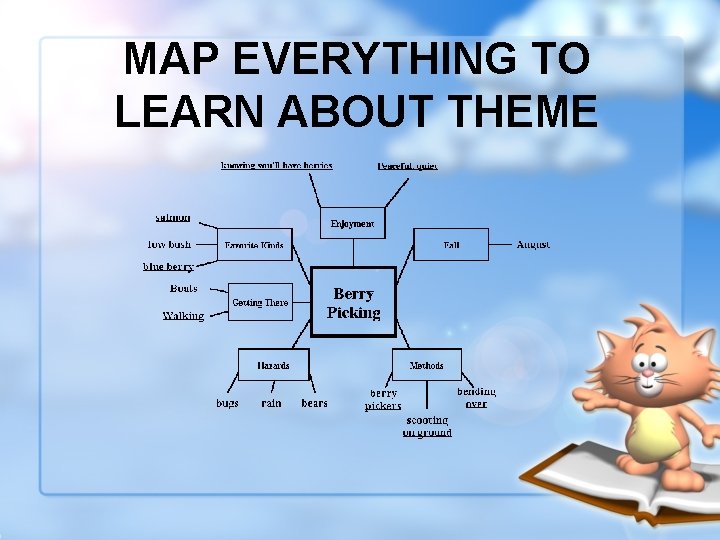
MAP EVERYTHING TO LEARN ABOUT THEME
Lesson Plan Title Give your activity a name
Standards & Learning Objectives http: //www. decal. state. ga. us/ www. brightfromthestart. com
Objectives These identify exactly what you expect the student to be able to do after the lesson is taught. Objectives typically begin with the phrase “The student will…” 1. Conditions of Performance 2. Behavior 3. Level of Performance Ask yourself “What do I hope the students will learn from this lesson? ”
An objective IS… • The learning outcome • Measurable • Provable An objective IS NOT… • The activity that will be used during the lesson
Condition • Lists what materials, equipment, or tools the child will use • Can also include what the child will be denied
Behavior • Bloom’s Taxonomy • Cognitive skills Do NOT use words such as… know, learn, understand
Level of Performance • States the minimum level of performance • Should state how well you want the child to do • Many times is understood rather than stated in the objective
Developmental Goals Why is this activity important? • Cognitive • Social • Emotional • Physical (fine/large motor) • Language • Moral
Understanding by Design • Enduring Understandings • Essential Questions • Evidence of Learning?
Anticipated Time ü Remember your time frame includes introduction, your teaching about the topic, main activity, closure and time for questions, and clean up ü Another reason to practice and make examples in advance
Materials Needed • What materials will you need in teaching this lesson? • What ingredients, art supplies, tools, etc? • Don’t forget things like protective clothing, table coverings, or extra wipes or wet cloths… • What do you need to prepare in advance?
Focus Object • • Concrete Use the senses Something manipulative is best Use this to introduce a concept and bring interest to the lesson/activity
Introduction • • Capture attention Be accurate in factual knowledge Telling a “story” can be effective When using questions – should be open ended! • Allow children to answer fully and be receptive to what they have to say
Procedures • Outline the steps to follow in teaching the lesson • Relevant actions • Simple step-by-step directions • List in order • Clear enough for another teacher to follow if the need arises for a substitute
Activity • • Pick a partner You need paper and pencil Sit back to back One person gives instructions. The other follows and completes assignment The Importance of giving specific, careful, simple Instructions!
Closure • How will you draw the ideas together for students at the end of the lesson? • Cement the lesson • Include an assessment/evaluation – How will you know if the students have learned what was intended? • Have students been given the opportunity to practice what you are assessing? • May be included in the transition to the next activity
Giving Credit… • Resource? • State Standard?