
Lesson Plan Taxonomy and Classification Summary This lesson
- Slides: 16
Lesson Plan – Taxonomy and Classification Summary This lesson will introduce students to the classification of living things, how animals are grouped and why all living things have a scientific name. Content Area Life Science, Biology Grade Level K-2 Key Concept(s) • Livings things are given a universal scientific name used for classification worldwide. • Living things are put into groups according to shared body features and characteristics.
Objectives Students will be able to: • Understand why all living things have a universal scientific name used worldwide. • How scientists sort and group living things. • Identify features of animals and how features are used to group organisms. • Understand that each animal has different structures that serve different functions. Resources Biology for Kids - Taxonomy http: //www. biology 4 kids. com/files/studies_taxonomy. html
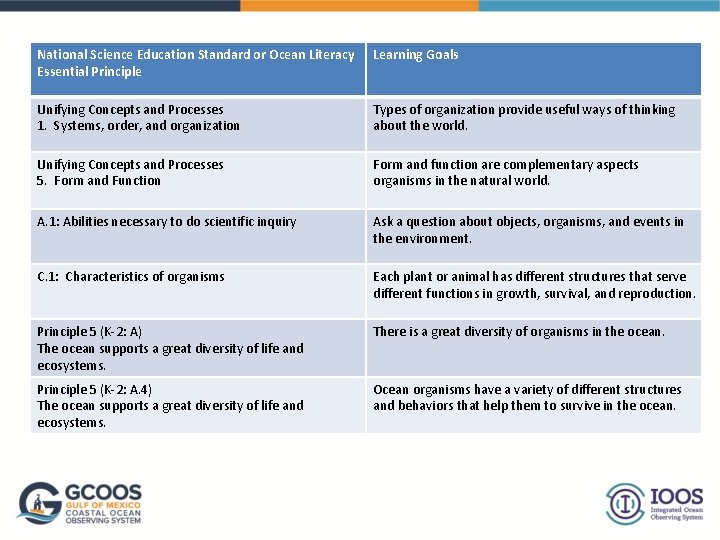
National Science Education Standard or Ocean Literacy Essential Principle Learning Goals Unifying Concepts and Processes 1. Systems, order, and organization Types of organization provide useful ways of thinking about the world. Unifying Concepts and Processes 5. Form and Function Form and function are complementary aspects organisms in the natural world. A. 1: Abilities necessary to do scientific inquiry Ask a question about objects, organisms, and events in the environment. C. 1: Characteristics of organisms Each plant or animal has different structures that serve different functions in growth, survival, and reproduction. Principle 5 (K-2: A) The ocean supports a great diversity of life and ecosystems. There is a great diversity of organisms in the ocean. Principle 5 (K-2: A. 4) The ocean supports a great diversity of life and ecosystems. Ocean organisms have a variety of different structures and behaviors that help them to survive in the ocean.
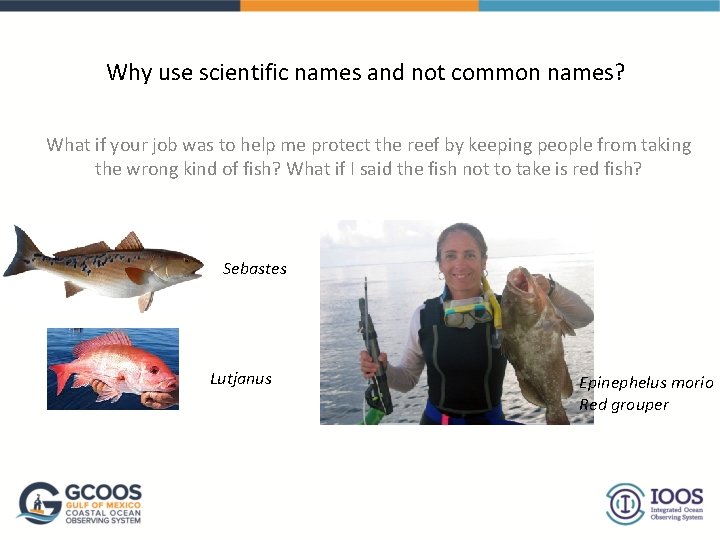
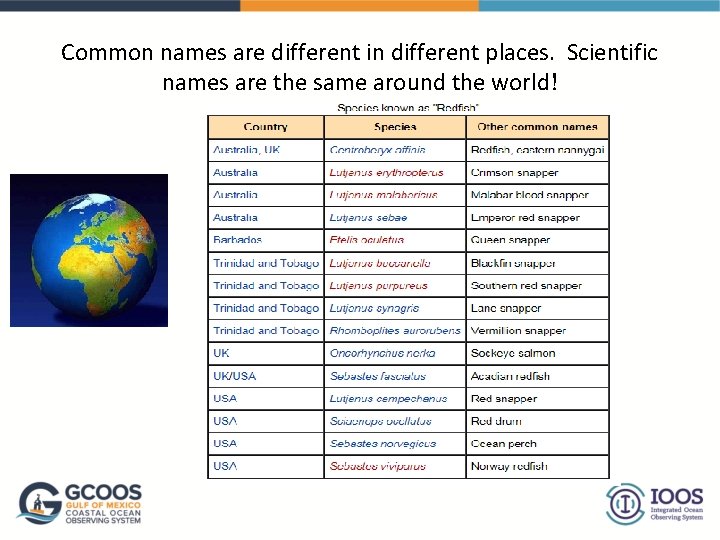
Why use scientific names and not common names? What if your job was to help me protect the reef by keeping people from taking the wrong kind of fish? What if I said the fish not to take is red fish? Sebastes Lutjanus Epinephelus morio Red grouper
Common names are different in different places. Scientific names are the same around the world!
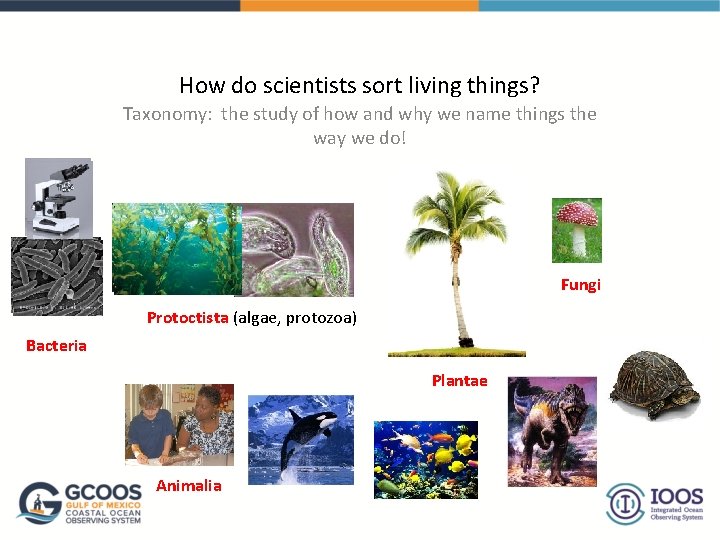
How do scientists sort living things? Taxonomy: the study of how and why we name things the way we do! Fungi Protoctista (algae, protozoa) Bacteria Plantae Animalia
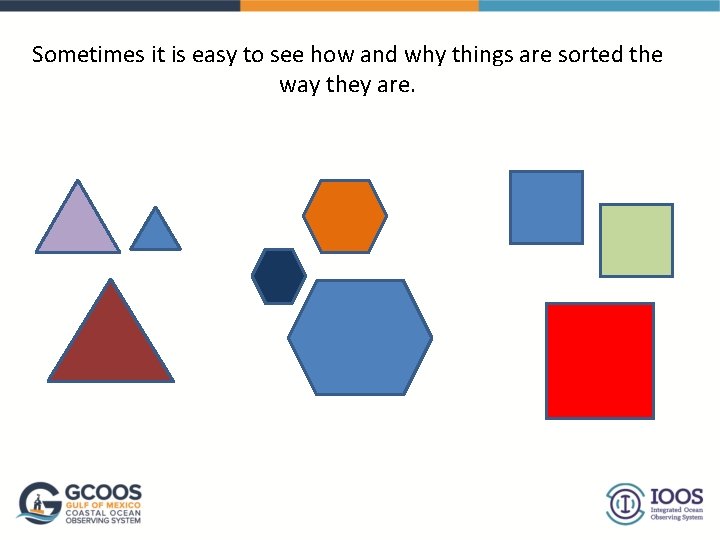
Sometimes it is easy to see how and why things are sorted the way they are.
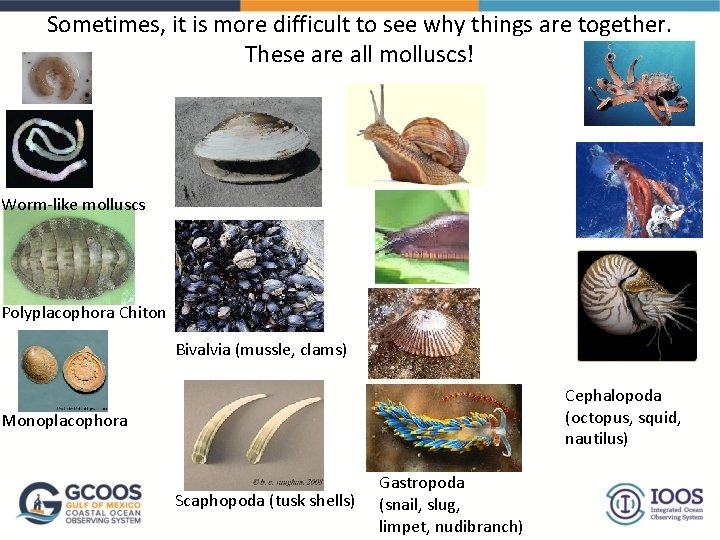
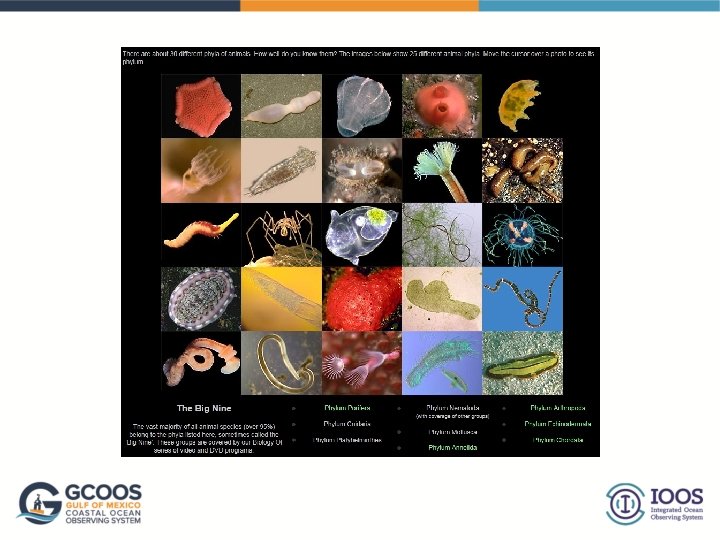
Sometimes, it is more difficult to see why things are together. These are all molluscs! Worm-like molluscs Polyplacophora Chiton Bivalvia (mussle, clams) Cephalopoda (octopus, squid, nautilus) Monoplacophora Scaphopoda (tusk shells) Gastropoda (snail, slug, limpet, nudibranch)
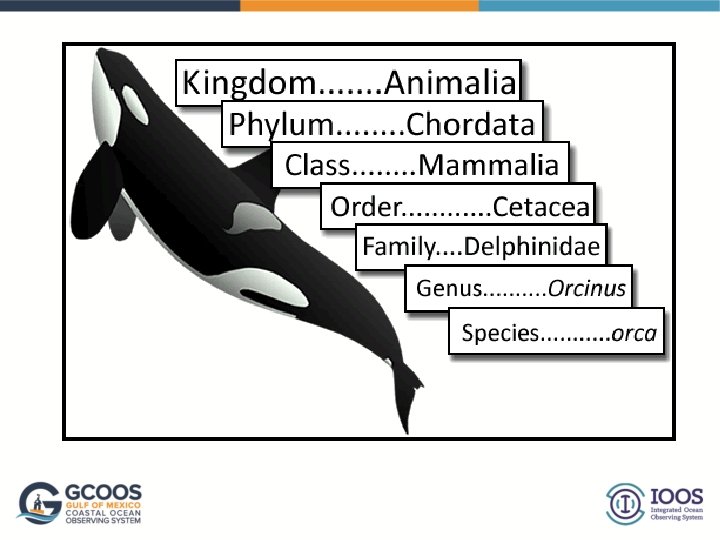
All living things are sorted into one of five Kingdoms • Kingdom – Within each Kingdom, living things are further sorted their according to their characteristics. • Phylum • Class • Order • Family • Genus • Species
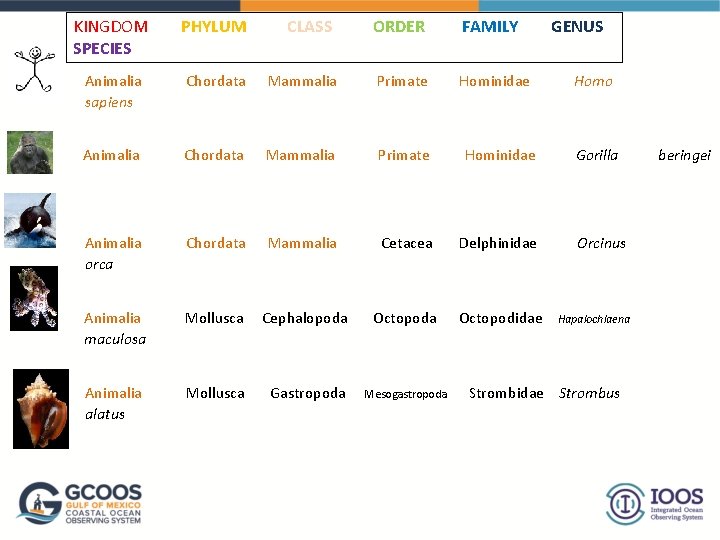
KINGDOM PHYLUM CLASS ORDER FAMILY GENUS SPECIES Animalia Chordata Mammalia Primate sapiens Hominidae Homo Animalia Chordata Mammalia Primate Hominidae Gorilla beringei Animalia Chordata Mammalia Cetacea Delphinidae Orcinus orca Animalia Mollusca Cephalopoda Octopoda Octopodidae Hapalochlaena maculosa Animalia Mollusca Gastropoda Mesogastropoda Strombidae Strombus alatus
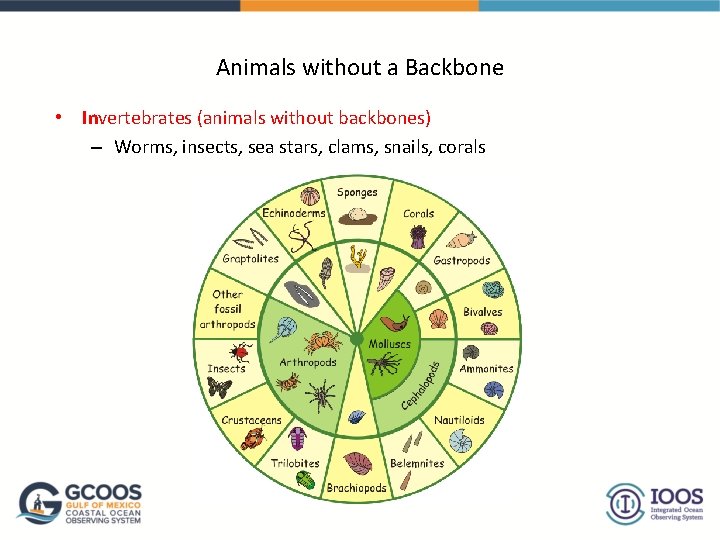
Animals without a Backbone • Invertebrates (animals without backbones) – Worms, insects, sea stars, clams, snails, corals
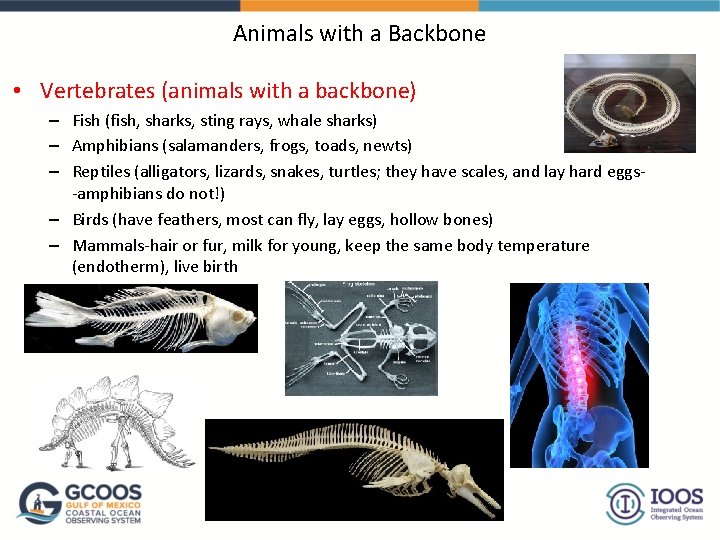
Animals with a Backbone • Vertebrates (animals with a backbone) – Fish (fish, sharks, sting rays, whale sharks) – Amphibians (salamanders, frogs, toads, newts) – Reptiles (alligators, lizards, snakes, turtles; they have scales, and lay hard eggs-amphibians do not!) – Birds (have feathers, most can fly, lay eggs, hollow bones) – Mammals-hair or fur, milk for young, keep the same body temperature (endotherm), live birth
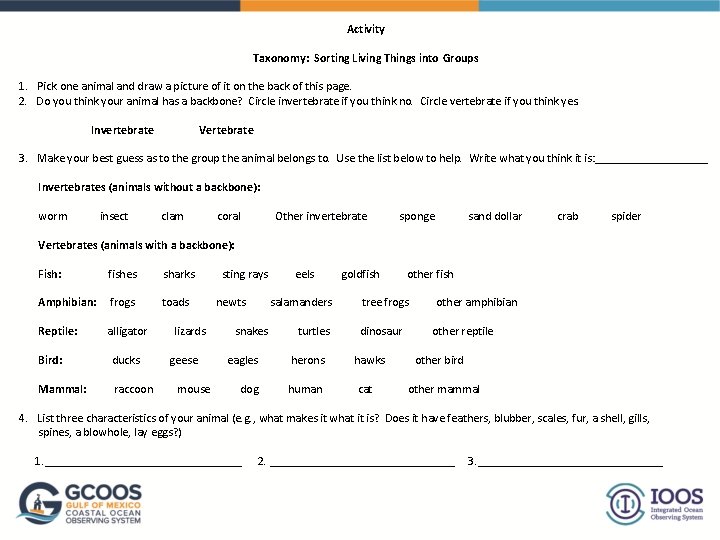
Activity Taxonomy: Sorting Living Things into Groups 1. Pick one animal and draw a picture of it on the back of this page. 2. Do you think your animal has a backbone? Circle invertebrate if you think no. Circle vertebrate if you think yes. Invertebrate Vertebrate 3. Make your best guess as to the group the animal belongs to. Use the list below to help. Write what you think it is: __________ Invertebrates (animals without a backbone): worm insect clam coral Other invertebrate sponge sand dollar crab spider Vertebrates (animals with a backbone): Fish: fishes sharks sting rays eels goldfish other fish Amphibian: frogs toads newts salamanders tree frogs other amphibian Reptile: alligator lizards snakes turtles dinosaur other reptile Bird: ducks geese eagles herons hawks other bird Mammal: raccoon mouse dog human cat other mammal 4. List three characteristics of your animal (e. g. , what makes it what it is? Does it have feathers, blubber, scales, fur, a shell, gills, spines, a blowhole, lay eggs? ) 1. _________________ 2. ________________ 3. ________________
Acknowledgements Lesson developed by Dr. Chris Simoniello for Bay Point Elementary 1 st Grade (adaptable for use with grades K-2). Standards-cross-referencing and formatting by Grant Craig.