
Lesson Overview Yaw Pitch and Roll Airplane Parts
- Slides: 28
Lesson Overview • • Yaw, Pitch, and Roll Airplane Parts Four Forces Bernoulli’s Principle
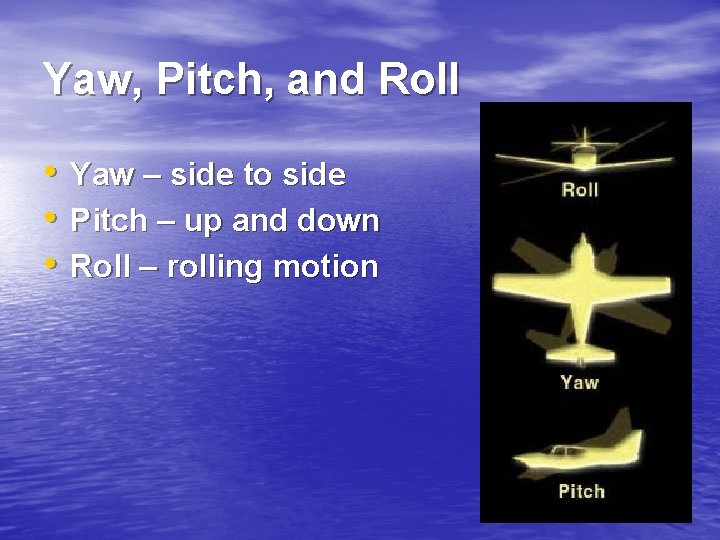
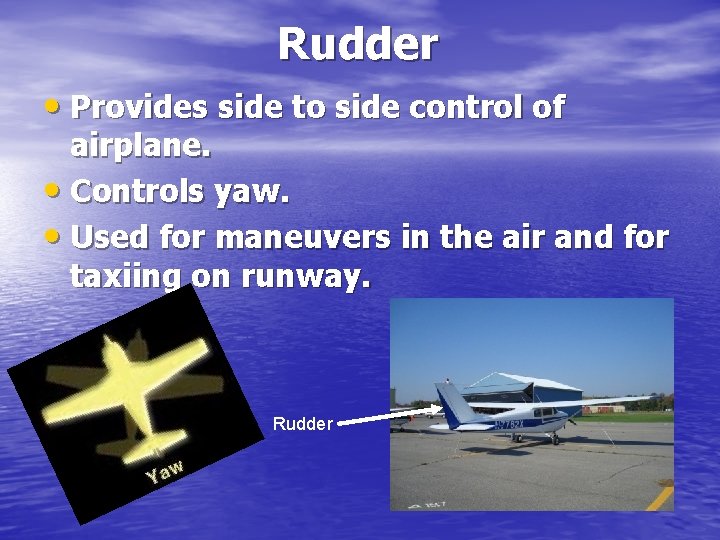
Yaw, Pitch, and Roll • • • Yaw – side to side Pitch – up and down Roll – rolling motion
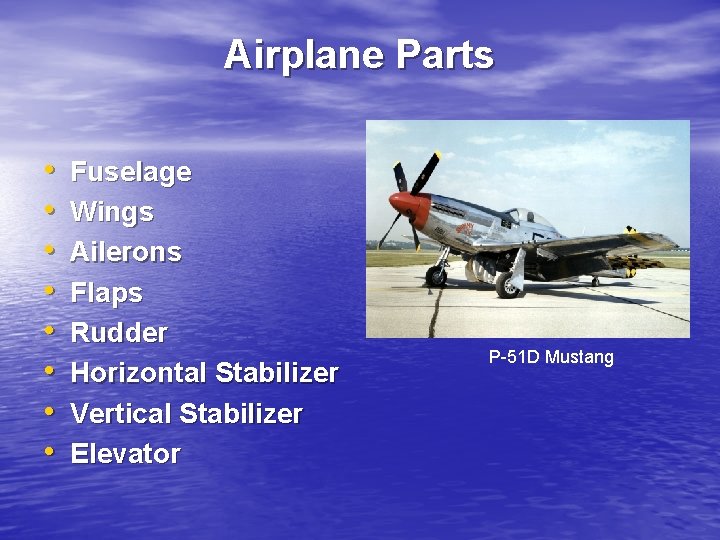
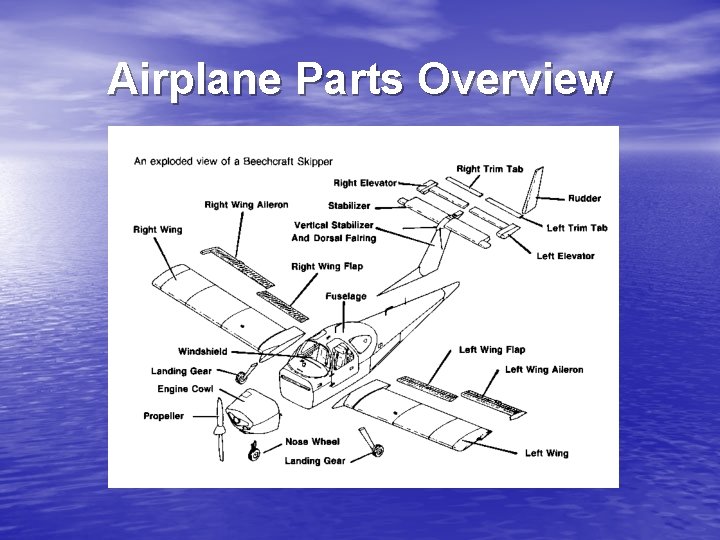
Airplane Parts • • Fuselage Wings Ailerons Flaps Rudder Horizontal Stabilizer Vertical Stabilizer Elevator P-51 D Mustang
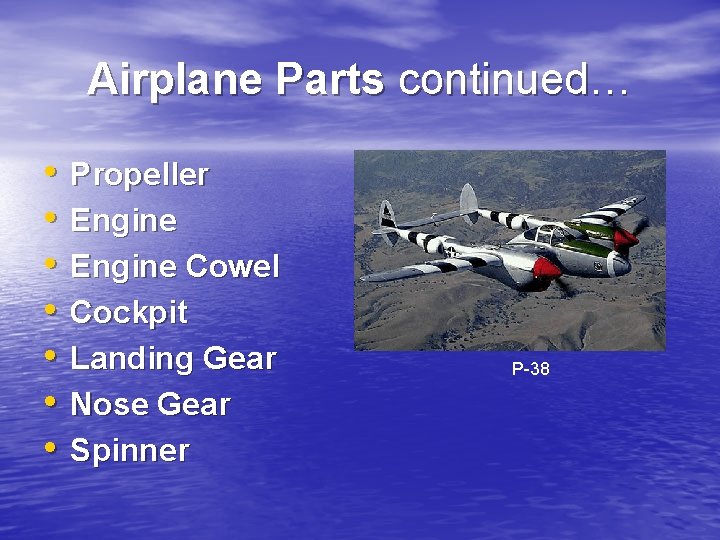
Airplane Parts continued… • • Propeller Engine Cowel Cockpit Landing Gear Nose Gear Spinner P-38
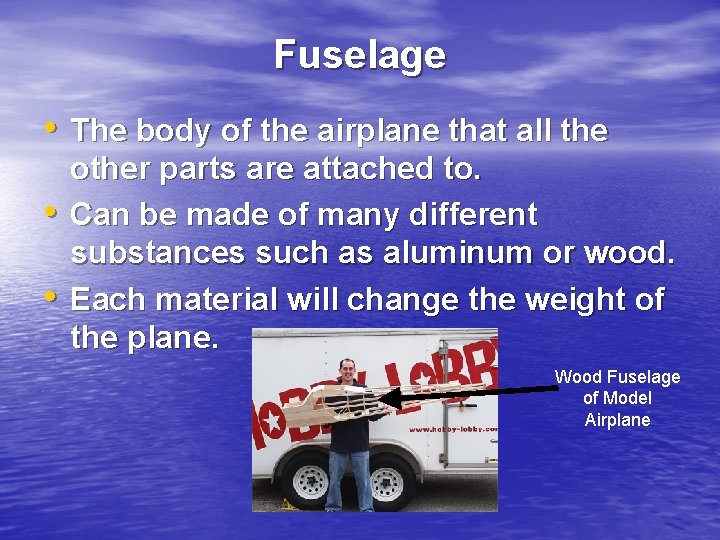
Fuselage • The body of the airplane that all the • • other parts are attached to. Can be made of many different substances such as aluminum or wood. Each material will change the weight of the plane. Wood Fuselage of Model Airplane
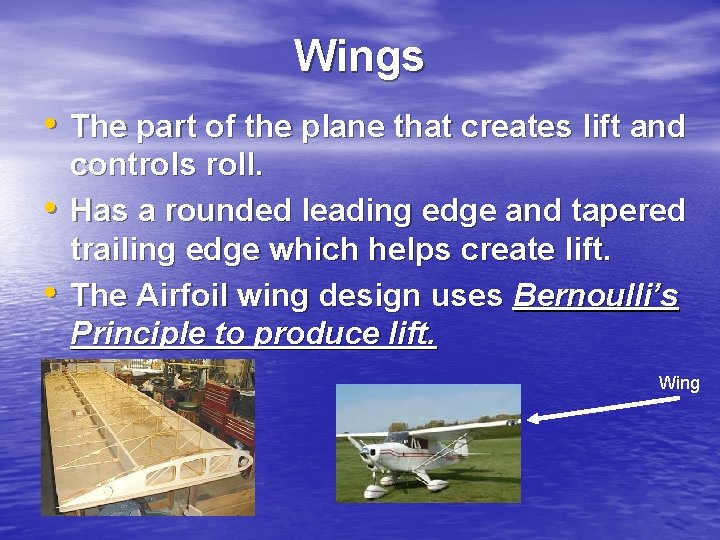
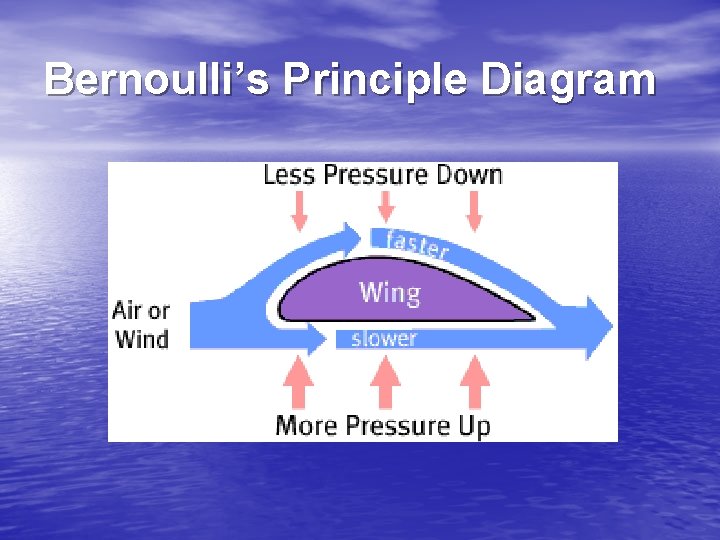
Wings • The part of the plane that creates lift and • • controls roll. Has a rounded leading edge and tapered trailing edge which helps create lift. The Airfoil wing design uses Bernoulli’s Principle to produce lift. Wing
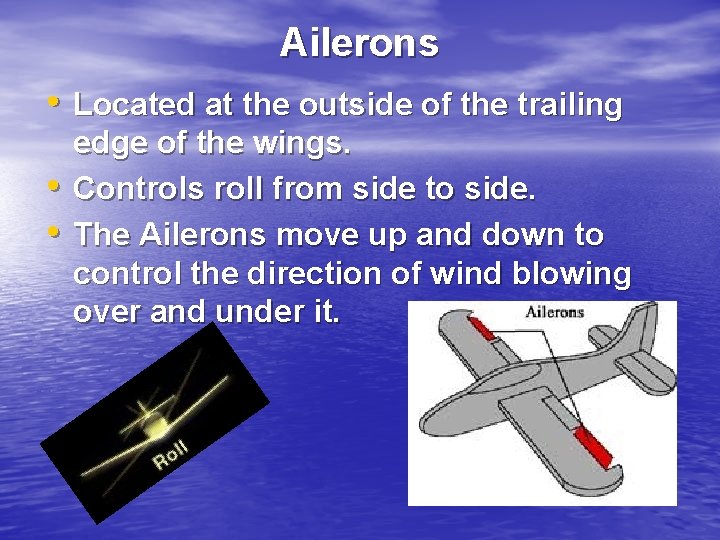
Ailerons • Located at the outside of the trailing • • edge of the wings. Controls roll from side to side. The Ailerons move up and down to control the direction of wind blowing over and under it.
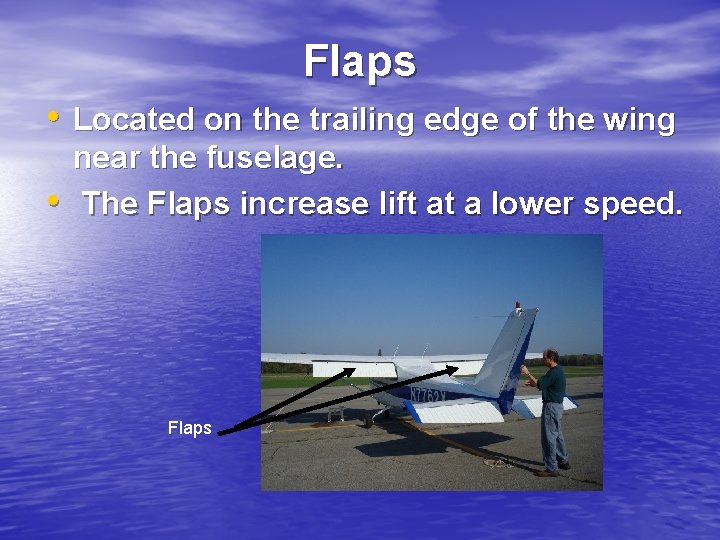
Flaps • Located on the trailing edge of the wing • near the fuselage. The Flaps increase lift at a lower speed. Flaps
Rudder • Provides side to side control of airplane. • Controls yaw. • Used for maneuvers in the air and for taxiing on runway. Rudder
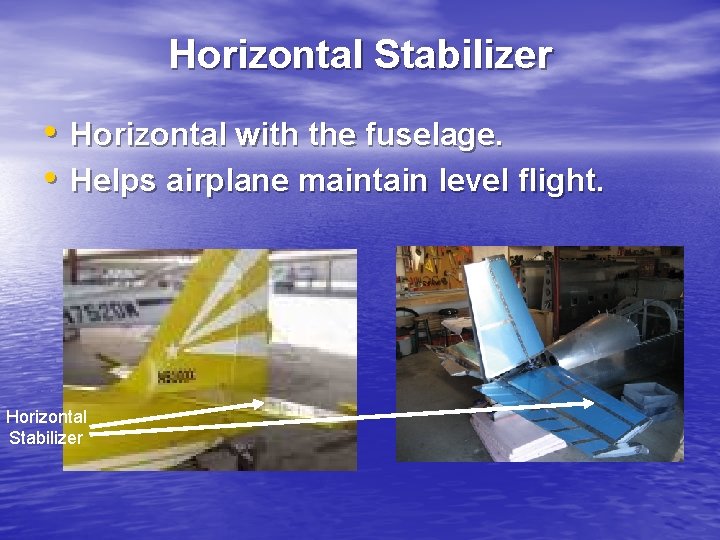
Horizontal Stabilizer • Horizontal with the fuselage. • Helps airplane maintain level flight. Horizontal Stabilizer
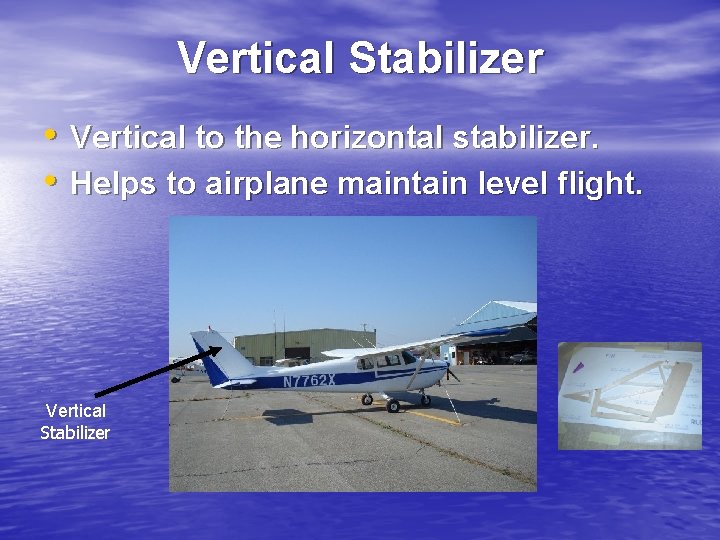
Vertical Stabilizer • Vertical to the horizontal stabilizer. • Helps to airplane maintain level flight. Vertical Stabilizer
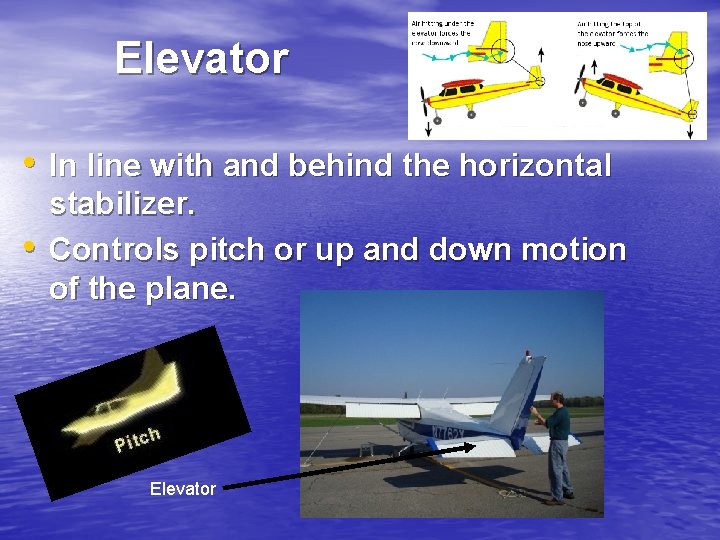
Elevator • In line with and behind the horizontal • stabilizer. Controls pitch or up and down motion of the plane. Elevator
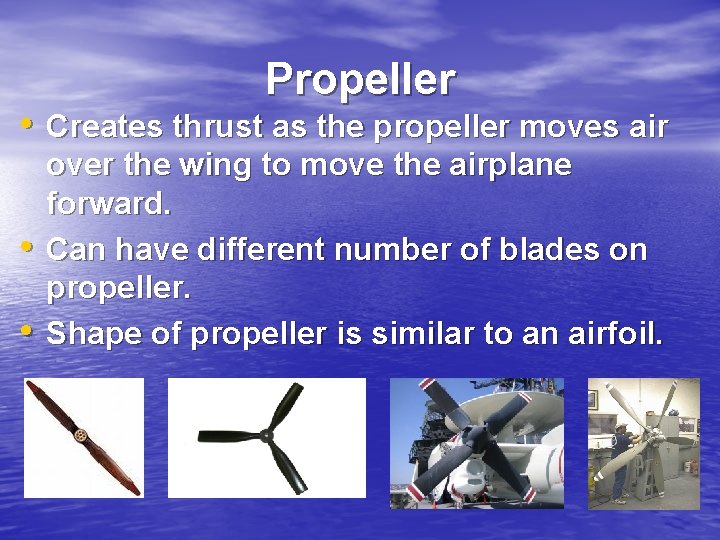
Propeller • Creates thrust as the propeller moves air • • over the wing to move the airplane forward. Can have different number of blades on propeller. Shape of propeller is similar to an airfoil.
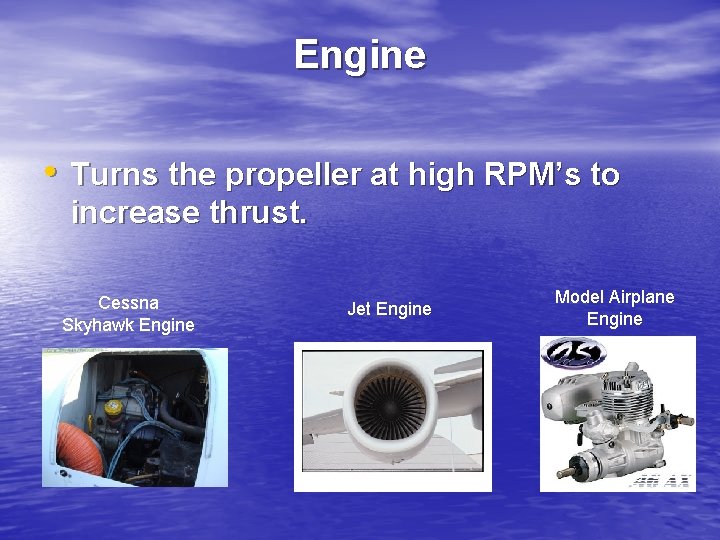
Engine • Turns the propeller at high RPM’s to increase thrust. Cessna Skyhawk Engine Jet Engine Model Airplane Engine
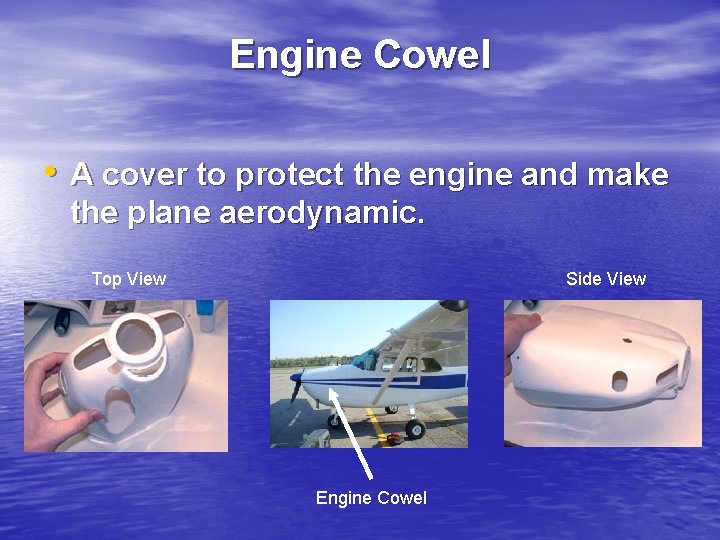
Engine Cowel • A cover to protect the engine and make the plane aerodynamic. Top View Side View Engine Cowel
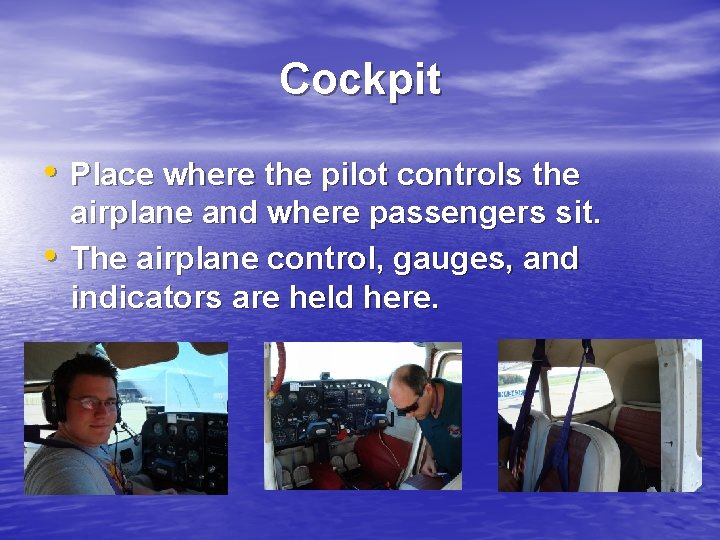
Cockpit • Place where the pilot controls the • airplane and where passengers sit. The airplane control, gauges, and indicators are held here.
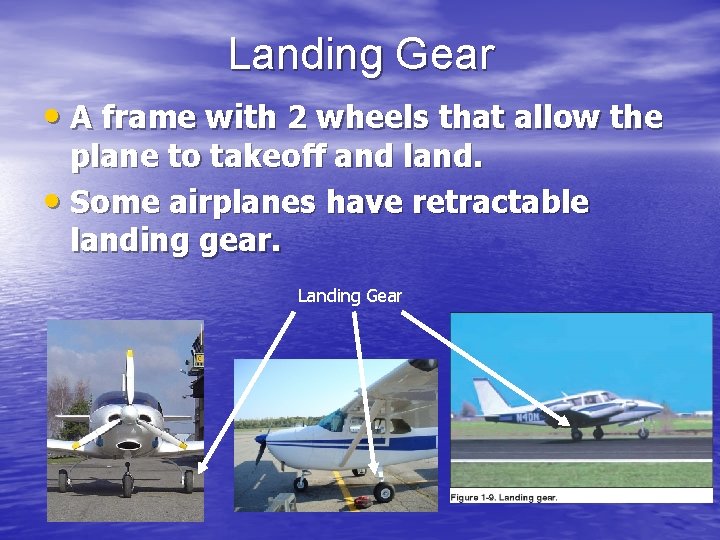
Landing Gear • A frame with 2 wheels that allow the plane to takeoff and land. • Some airplanes have retractable landing gear. Landing Gear
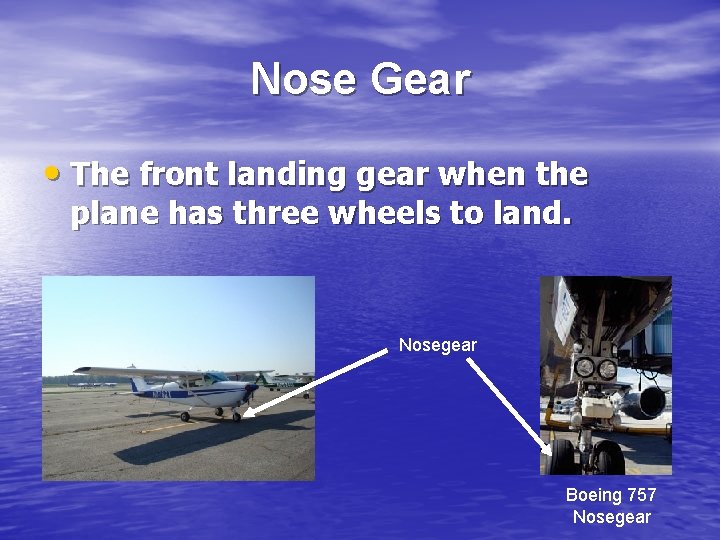
Nose Gear • The front landing gear when the plane has three wheels to land. Nosegear Boeing 757 Nosegear
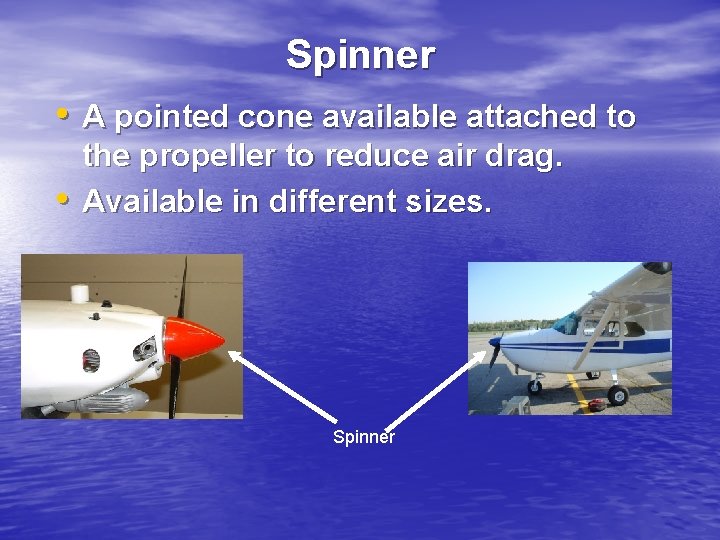
Spinner • A pointed cone available attached to • the propeller to reduce air drag. Available in different sizes. Spinner
Airplane Parts Overview
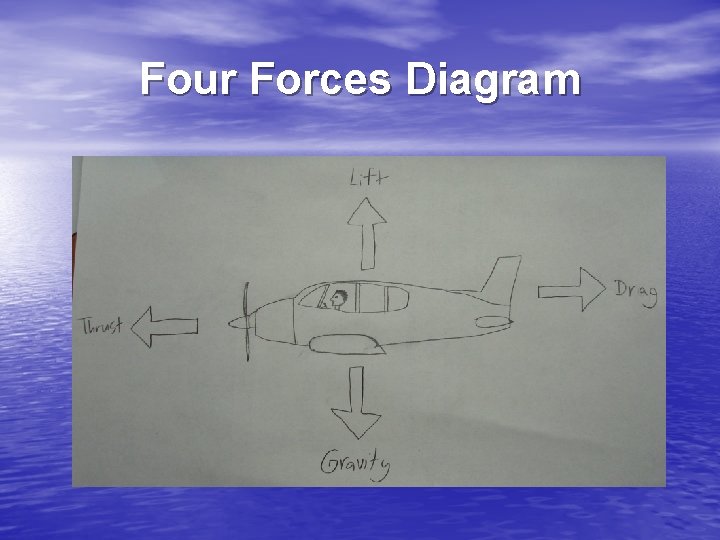
Four Forces • Lift - Provides the force to overcome gravity and raise the airplane. • Gravity - Invisible force from the Earth that pulls all things down. • Thrust – Force that moves the airplane forward; it overcomes drag. • Drag- Friction of air on all the planes outer surfaces to slow it down.
Four Forces Diagram
Bernoulli’s Principle • As the wing passes through the air, the • curved upper part makes the air speed up because it has further to go than air passing under the wing. As the air speeds up on top of the wing, low pressure is created. The higher pressure under the wing creates lift.
Bernoulli’s Principle Diagram
Lesson Review • • Yaw, Pitch, and Roll Airplane parts Four forces Bernoulli’s Principle
Lesson Review Questions • • What part of the airplane is most important? What are the ailerons job? Where are the flaps located? What does an engine cowel do? What is a spinner? What are the four forces? What is lift? What is Bernoulli’s principle?
References • Transportation 250 Class Notes • NASA website www. nasa. gov • Internet Explorer • www. aviation-history. com