
Lesson Overview The Excretory System Describe the structures
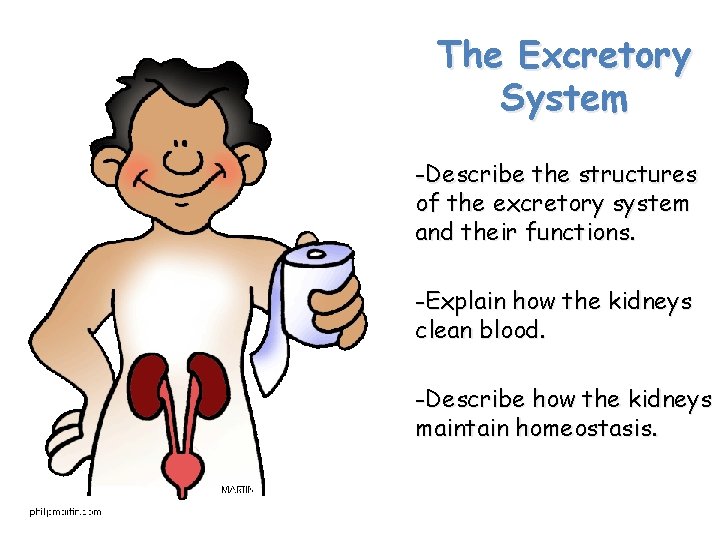
Lesson Overview The Excretory System -Describe the structures of the excretory system and their functions. -Explain how the kidneys clean blood. -Describe how the kidneys maintain homeostasis.
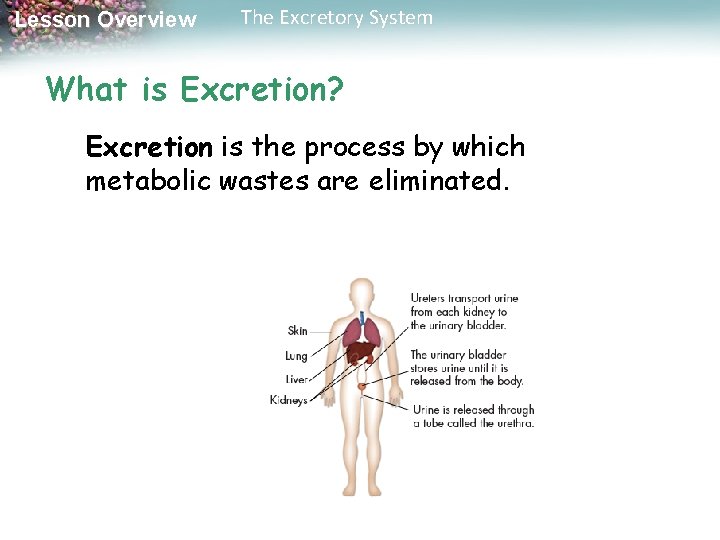
Lesson Overview The Excretory System What is Excretion? Excretion is the process by which metabolic wastes are eliminated.
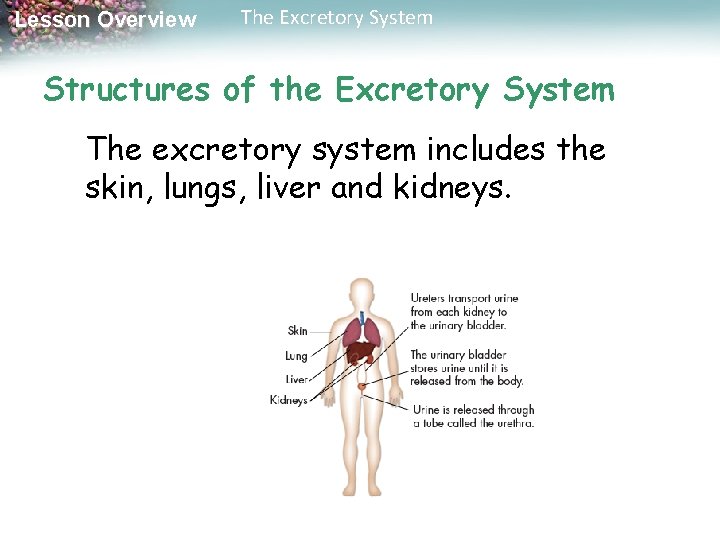
Lesson Overview The Excretory System Structures of the Excretory System The excretory system includes the skin, lungs, liver and kidneys.
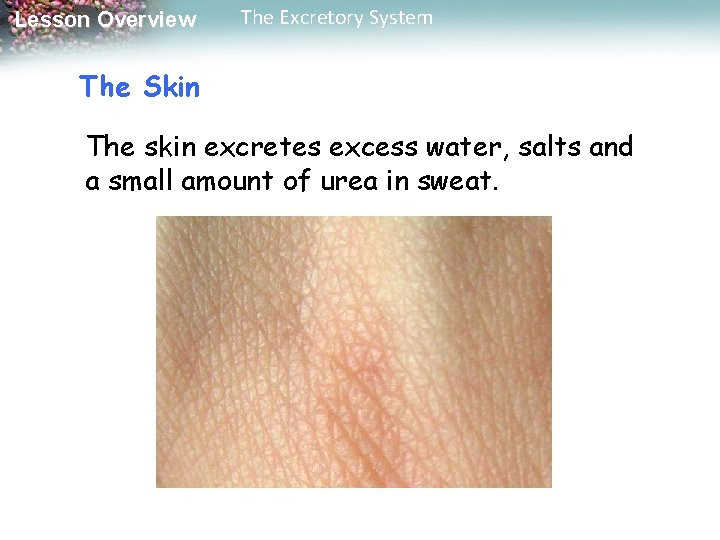
Lesson Overview The Excretory System The Skin The skin excretes excess water, salts and a small amount of urea in sweat.
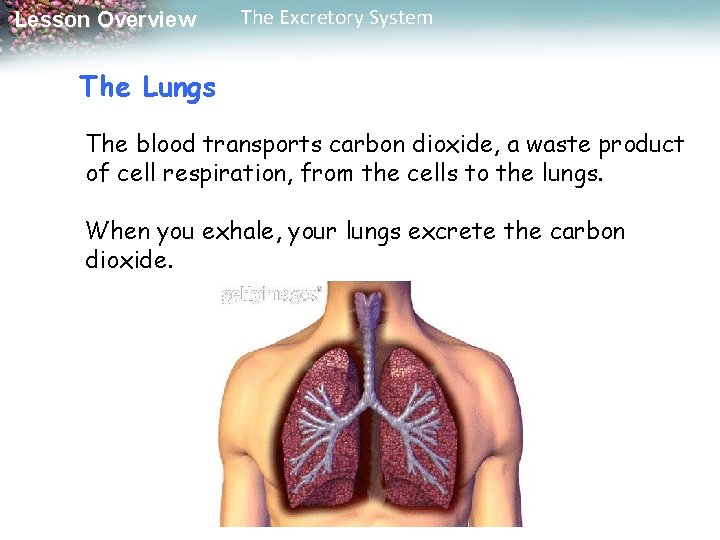
Lesson Overview The Excretory System The Lungs The blood transports carbon dioxide, a waste product of cell respiration, from the cells to the lungs. When you exhale, your lungs excrete the carbon dioxide.
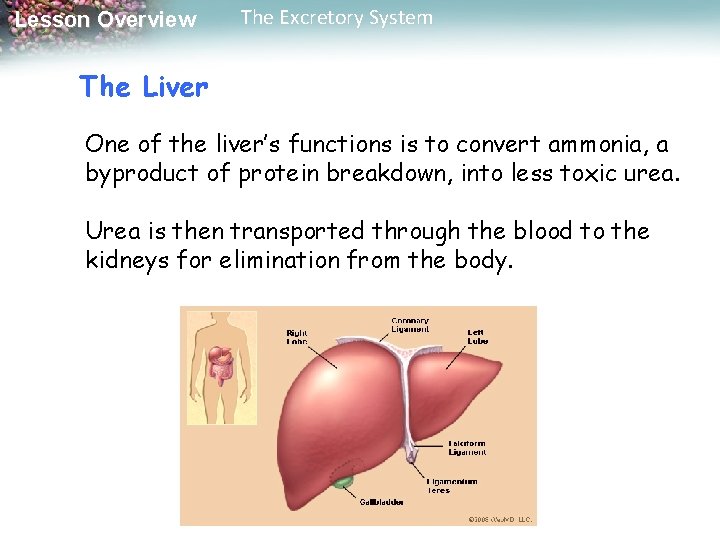
Lesson Overview The Excretory System The Liver One of the liver’s functions is to convert ammonia, a byproduct of protein breakdown, into less toxic urea. Urea is then transported through the blood to the kidneys for elimination from the body.
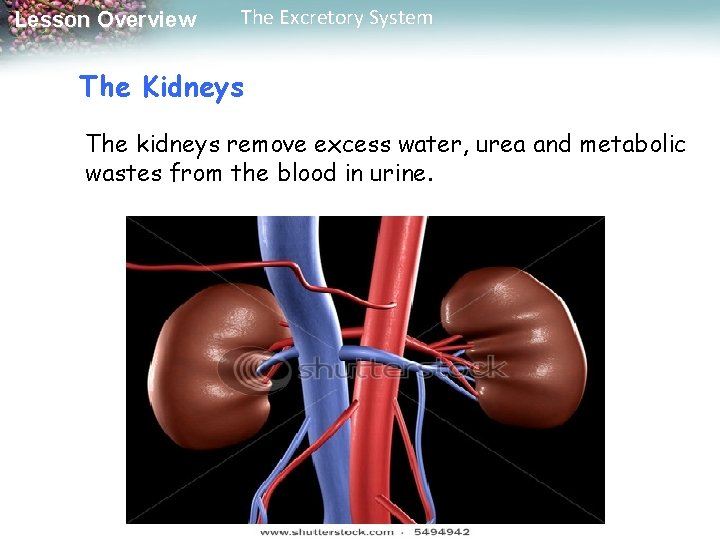
Lesson Overview The Excretory System The Kidneys The kidneys remove excess water, urea and metabolic wastes from the blood in urine.
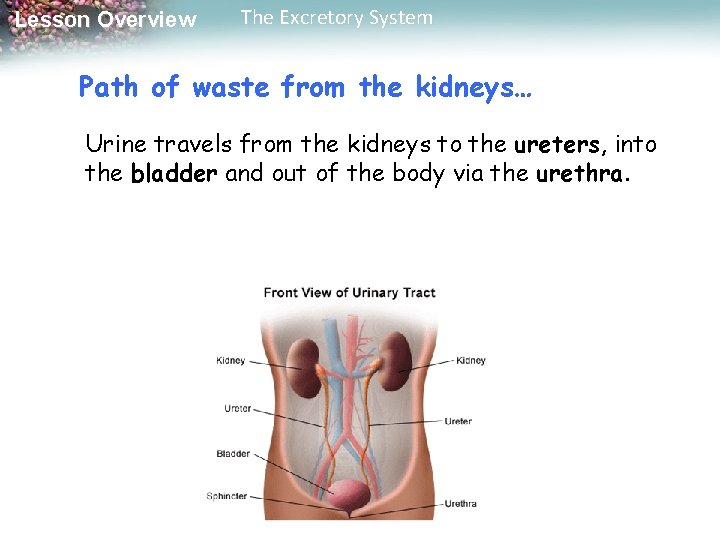
Lesson Overview The Excretory System Path of waste from the kidneys… Urine travels from the kidneys to the ureters, into the bladder and out of the body via the urethra.
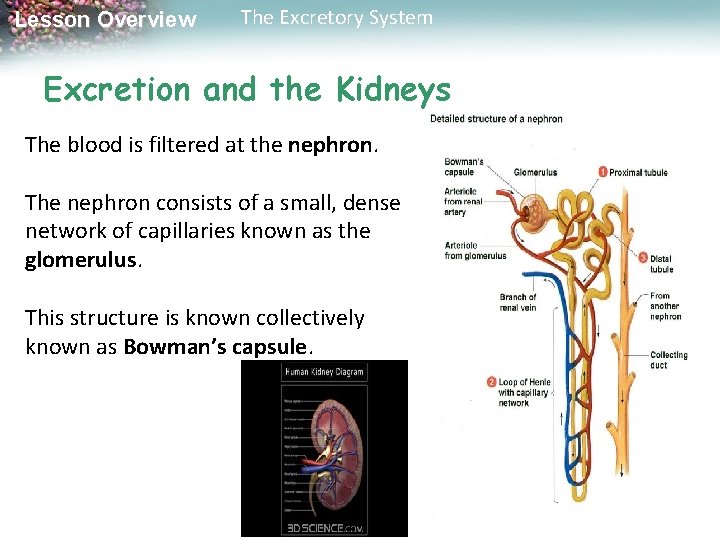
Lesson Overview The Excretory System Excretion and the Kidneys The blood is filtered at the nephron. The nephron consists of a small, dense network of capillaries known as the glomerulus. This structure is known collectively known as Bowman’s capsule.
Lesson Overview The Excretory System Control of Kidney Function Hormones influence kidney function. If you have not consumed enough fluids, your pituitary gland releases antidiuretic hormone (ADH) into your blood causing the kidneys to reabsorb more water. If the blood contains excess water, ADH secretion stops and more water is excreted.
Lesson Overview The Excretory System Kidney Disorders 1. Kidney Stones occur when substances such as calcium, magnesium, or salts in the urine can crystallize and form kidney stones. 2. Kidney Failure occurs when the kidneys can no longer cleanse the blood and maintain homeostasis. 3. Kidney Damage occurs when the kidneys are physically damaged by injury, disease or abuse.
- Slides: 11