
Lesson Overview Cycles of Matter Describe how matter
Lesson Overview Cycles of Matter -Describe how matter cycles among the living and nonliving parts of an ecosystem. -Describe how water cycles through the biosphere. -Explain why nutrients are important in living systems. -Describe how the availability of nutrients affects the productivity of ecosystems.
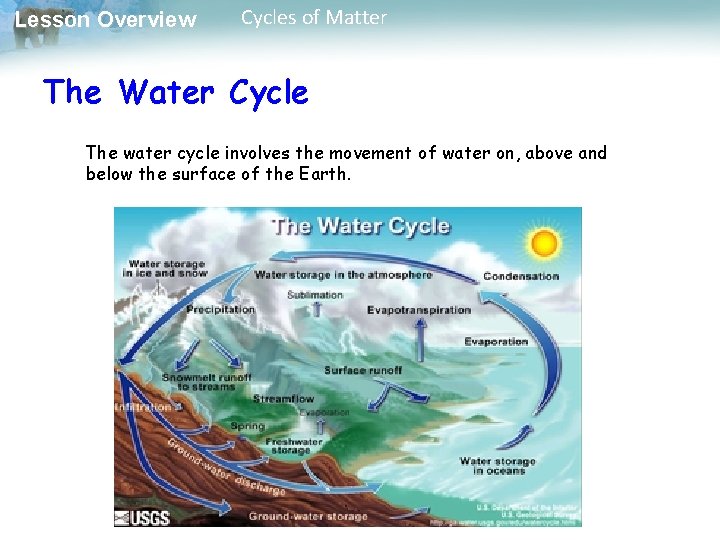
Lesson Overview Cycles of Matter The Water Cycle The water cycle involves the movement of water on, above and below the surface of the Earth.
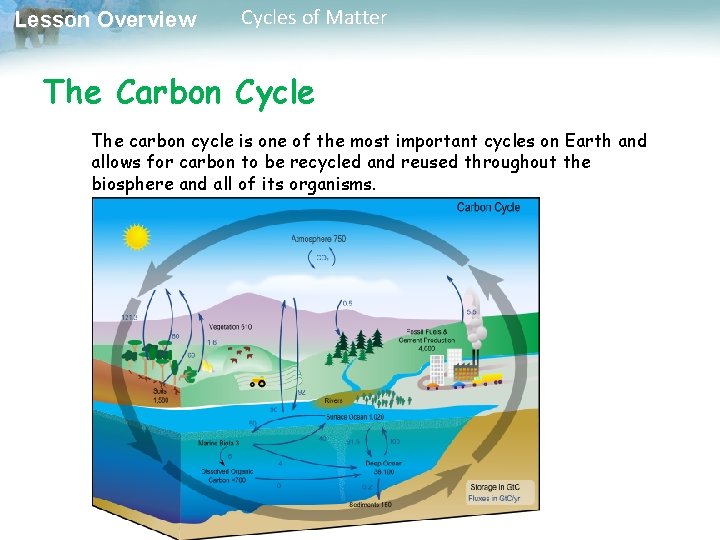
Lesson Overview Cycles of Matter The Carbon Cycle The carbon cycle is one of the most important cycles on Earth and allows for carbon to be recycled and reused throughout the biosphere and all of its organisms.
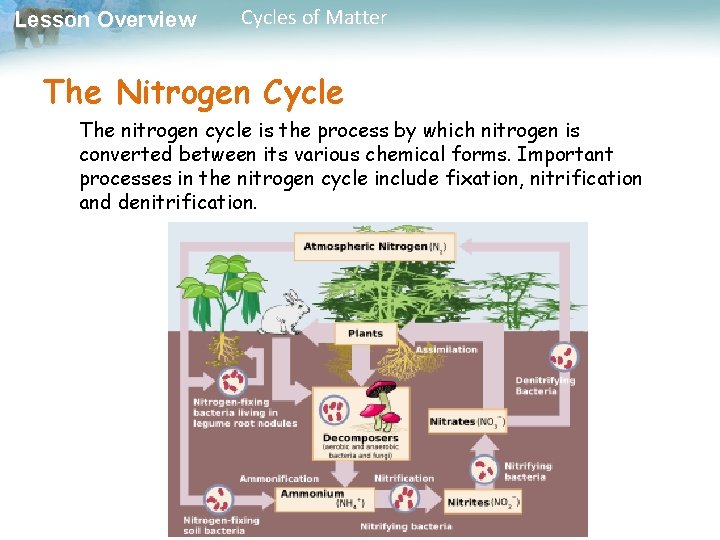
Lesson Overview Cycles of Matter The Nitrogen Cycle The nitrogen cycle is the process by which nitrogen is converted between its various chemical forms. Important processes in the nitrogen cycle include fixation, nitrification and denitrification.
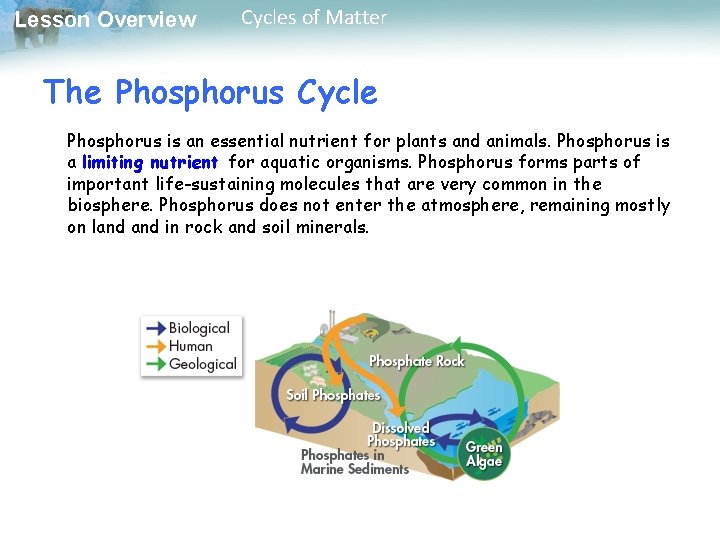
Lesson Overview Cycles of Matter The Phosphorus Cycle Phosphorus is an essential nutrient for plants and animals. Phosphorus is a limiting nutrient for aquatic organisms. Phosphorus forms parts of important life-sustaining molecules that are very common in the biosphere. Phosphorus does not enter the atmosphere, remaining mostly on land in rock and soil minerals.
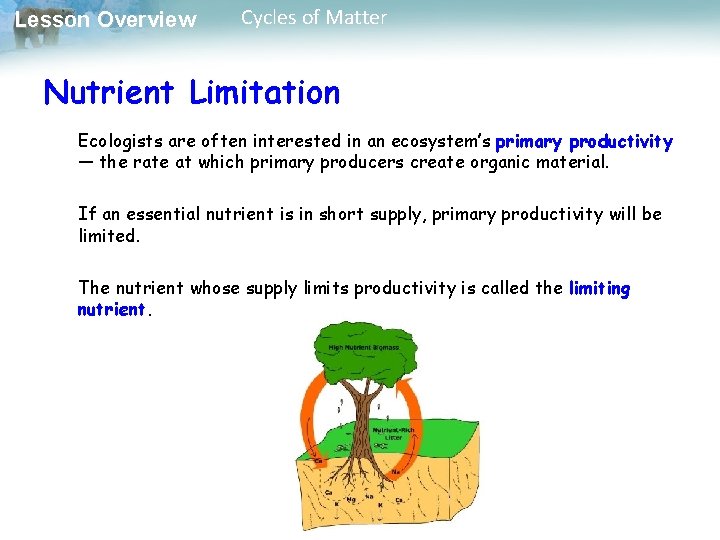
Lesson Overview Cycles of Matter Nutrient Limitation Ecologists are often interested in an ecosystem’s primary productivity — the rate at which primary producers create organic material. If an essential nutrient is in short supply, primary productivity will be limited. The nutrient whose supply limits productivity is called the limiting nutrient.
- Slides: 6