
Lesson One Phases of Soft Tissue Healing Unit


- Slides: 22
Lesson One: Phases of Soft Tissue Healing Unit 1 – Tissue Response to Injury
THINK-PAIR-SHARE § The starting running back has sprained his ankle 2 days before the 1 st playoff game. § The coach, parents, and athlete want to know what can be done to make him well more quickly. § Question: What does the athletic trainer need to know to answer their question?
Objective § By the end of the lesson: § Define the 3 Phases of Healing § Identify factors that impede healing
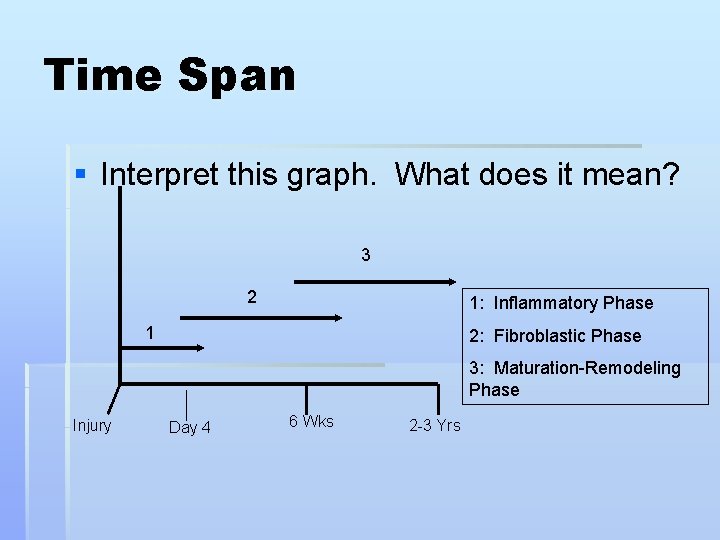
Three Phases of healing § There are 3 phases that an injury will go through in order to heal. 1. Inflammatory Response Phase 2. Fibroblastic Repair Phase § Aka: Proliferation Phase 3. Maturation Phase § Aka: Remodeling Phase
Time Span § Interpret this graph. What does it mean? 3 2 1: Inflammatory Phase 1 2: Fibroblastic Phase 3: Maturation-Remodeling Phase Injury Day 4 6 Wks 2 -3 Yrs
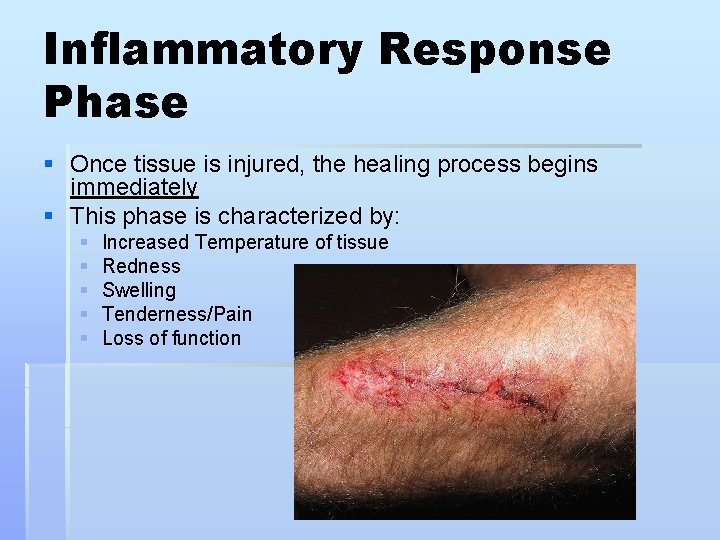
Inflammatory Response Phase § Once tissue is injured, the healing process begins immediately § This phase is characterized by: § § § Increased Temperature of tissue Redness Swelling Tenderness/Pain Loss of function
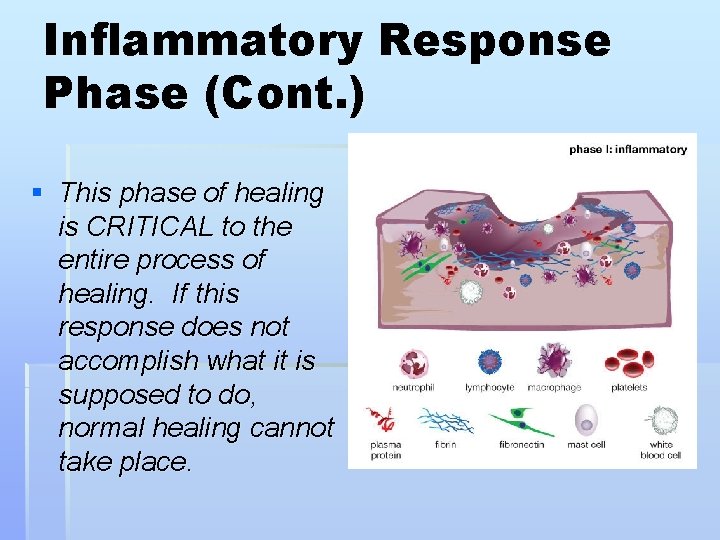
Inflammatory Response Phase (Cont. ) § This phase of healing is CRITICAL to the entire process of healing. If this response does not accomplish what it is supposed to do, normal healing cannot take place.
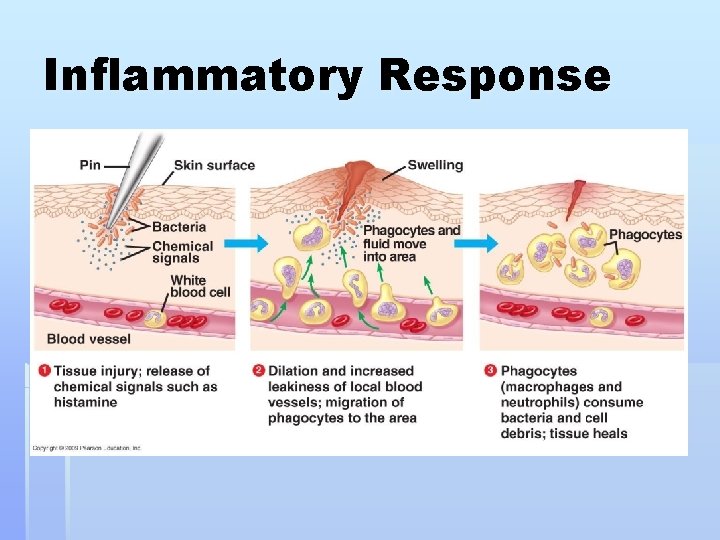
Inflammatory Response
Inflammatory Response § White blood cells are delivered to the site of injured tissue – begin the clean up! § Vasoconstriction lasts for 5 -10 minutes § Chemical mediators then produce dilation – causing swelling § Swelling is directly related to how damaged the blood & lymph vessels are § Formation of a clot begins – scab/scar § This phase lasts 2 -4 days after initial injury
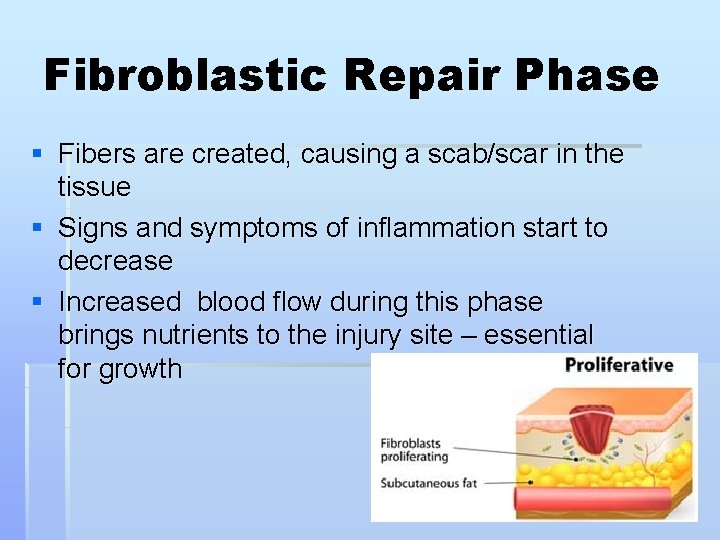
Fibroblastic Repair Phase § Fibers are created, causing a scab/scar in the tissue § Signs and symptoms of inflammation start to decrease § Increased blood flow during this phase brings nutrients to the injury site – essential for growth
Fibroblastic Repair Phase § Granulation tissue—containing fibroblasts, collagen, & small capillaries— is formed § The fibroblasts create a matrix filled with more collagen, elastin, & other chemicals § This stage can begin 2 hrs after injury and last up to 4 wks
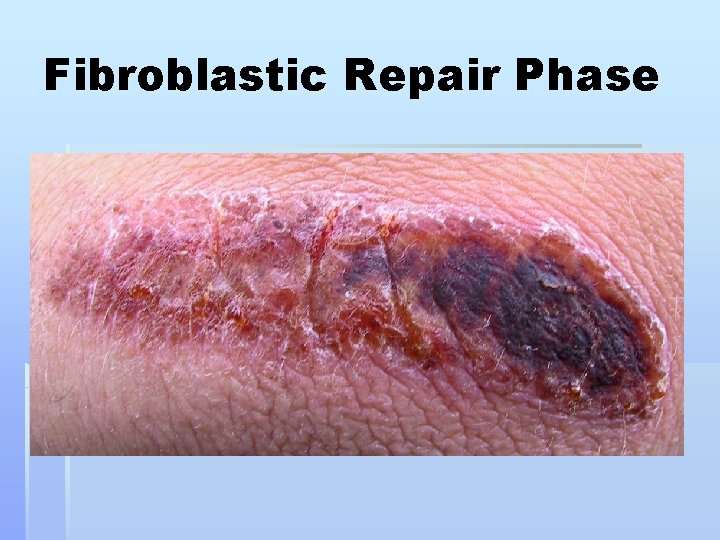
Fibroblastic Repair Phase
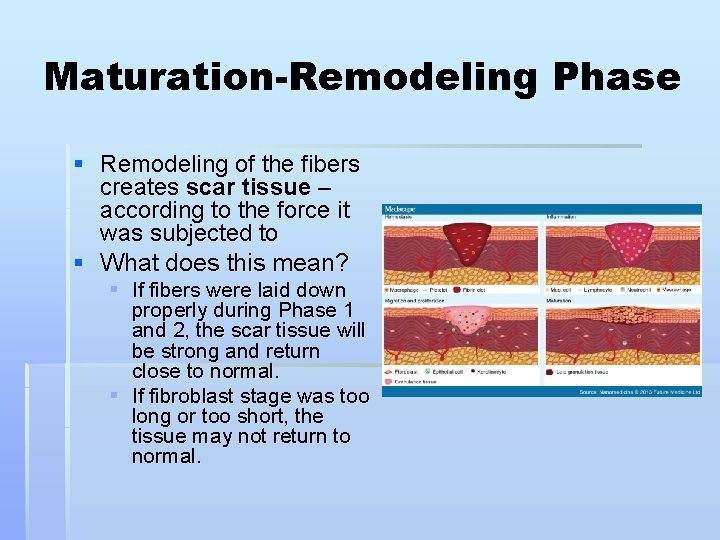
Maturation-Remodeling Phase § Remodeling of the fibers creates scar tissue – according to the force it was subjected to § What does this mean? § If fibers were laid down properly during Phase 1 and 2, the scar tissue will be strong and return close to normal. § If fibroblast stage was too long or too short, the tissue may not return to normal.
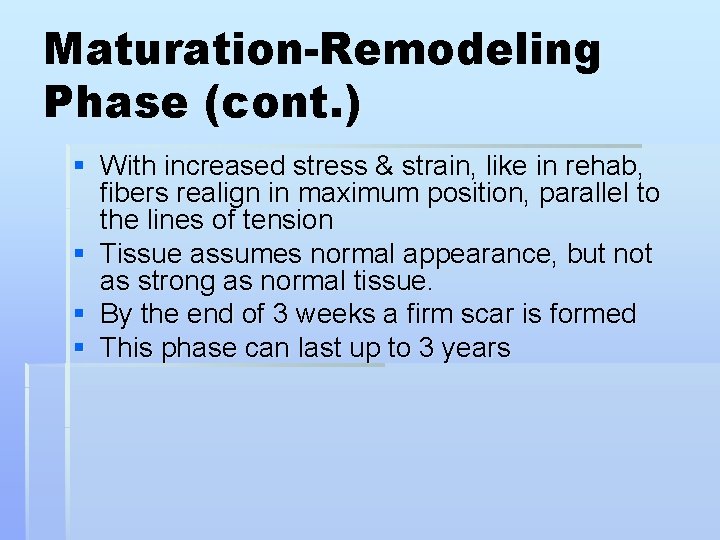
Maturation-Remodeling Phase (cont. ) § With increased stress & strain, like in rehab, fibers realign in maximum position, parallel to the lines of tension § Tissue assumes normal appearance, but not as strong as normal tissue. § By the end of 3 weeks a firm scar is formed § This phase can last up to 3 years
Take note § On the 6 th -7 th day collagen fibers are deposited in a random formation which creates a scar § As more fibers are laid down, the scar becomes stronger – which begins the maturation phase § What would happen if the inflammatory response and fibroblast phases are prolonged? What do you think would happen to the scar?
Questions § What could make the healing process slow down? § What factors could impede healing?
Answers § Extent of injury § If severe, each phase could be prolonged. § Microtears will damage the more superficial skin layers which are more easily replaced. § Macrotears can penetrate several layers of skin, requiring more nutrients & supplies to heal.
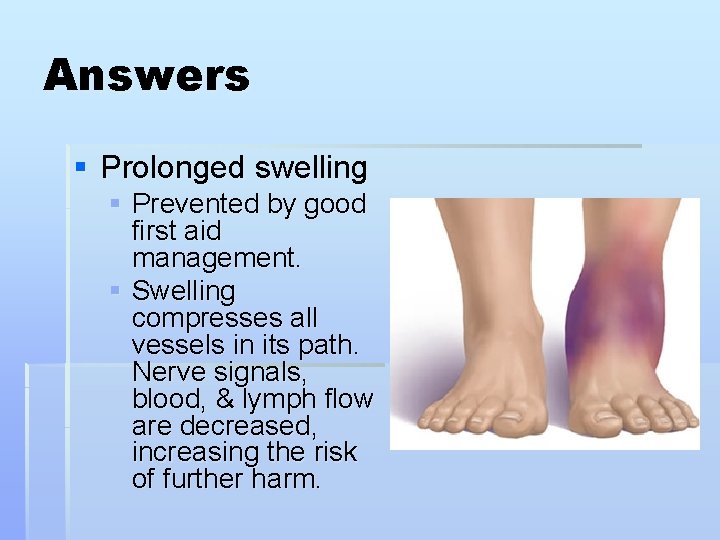
Answers § Prolonged swelling § Prevented by good first aid management. § Swelling compresses all vessels in its path. Nerve signals, blood, & lymph flow are decreased, increasing the risk of further harm.
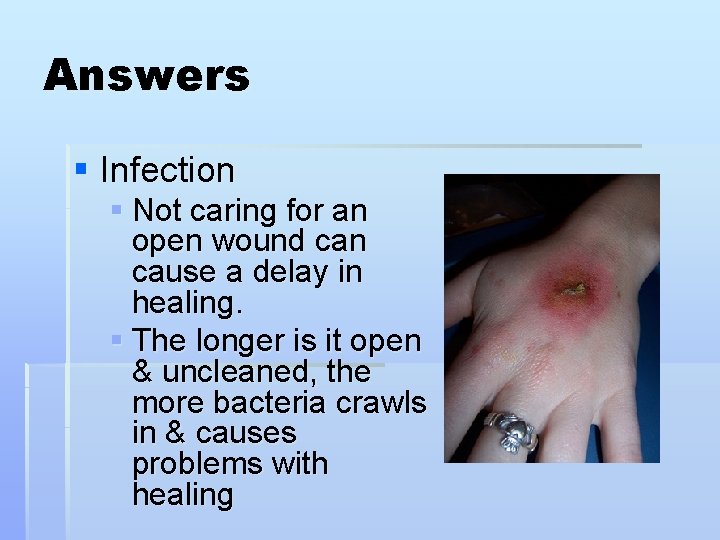
Answers § Infection § Not caring for an open wound can cause a delay in healing. § The longer is it open & uncleaned, the more bacteria crawls in & causes problems with healing
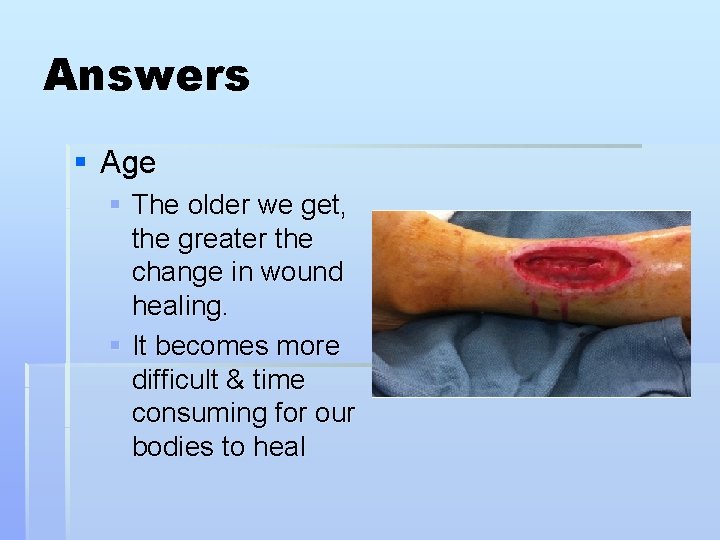
Answers § Age § The older we get, the greater the change in wound healing. § It becomes more difficult & time consuming for our bodies to heal
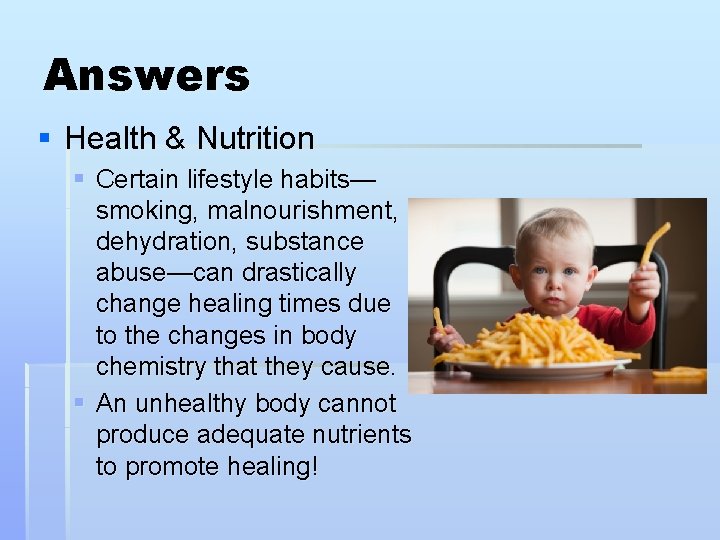
Answers § Health & Nutrition § Certain lifestyle habits— smoking, malnourishment, dehydration, substance abuse—can drastically change healing times due to the changes in body chemistry that they cause. § An unhealthy body cannot produce adequate nutrients to promote healing!
Exit Cards § A wrestler receives a sudden twist to his right shoulder, causing a grade 2 muscle tear. What happens in the first hour of this injury? § What is the timeline for an injury? How long is each phase?