
Lesson Objectives P 1 a 1 5 Heat
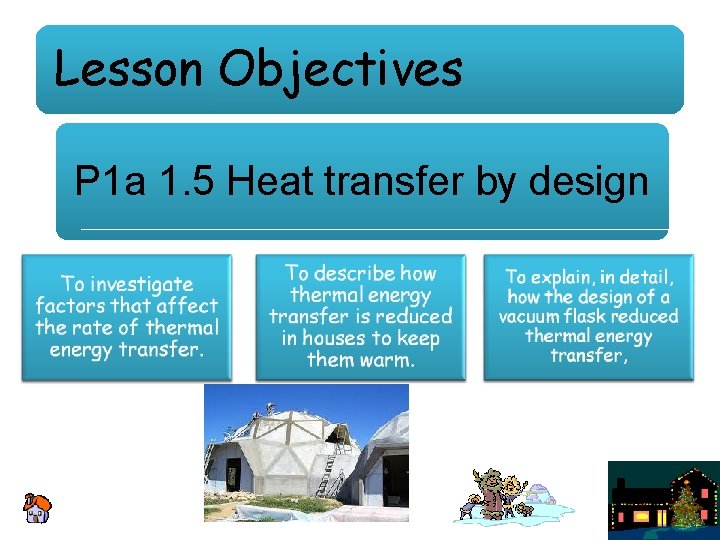
Lesson Objectives P 1 a 1. 5 Heat transfer by design
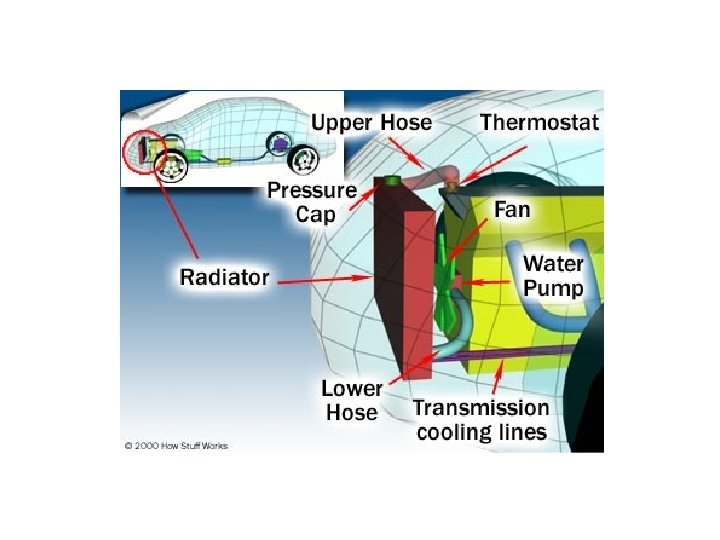
Factors affecting energy transfer by heating Energy is transferred from hotter objects to cooler ones. The greater the temperature difference, the greater the rate at which energy is transferred. Monitoring thermal energy is important in devices. For example: The car engine – if the engine get too hot then it can overheat and go up in flames. Therefore, there is a cooling system in the car which transfers thermal energy from the engine to the radiator. The radiator is flat and so has a large surface area. Therefore heat can be lost through convection. Also a fan can increase the air flow across the radiator to increase the heat loss.
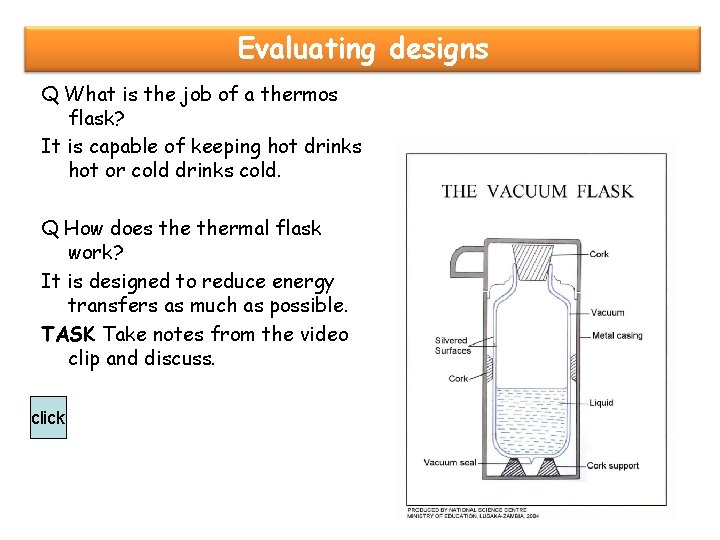
Evaluating designs Q What is the job of a thermos flask? It is capable of keeping hot drinks hot or cold drinks cold. Q How does thermal flask work? It is designed to reduce energy transfers as much as possible. TASK Take notes from the video clip and discuss. click

Q) How are these animals adapted to their environments?
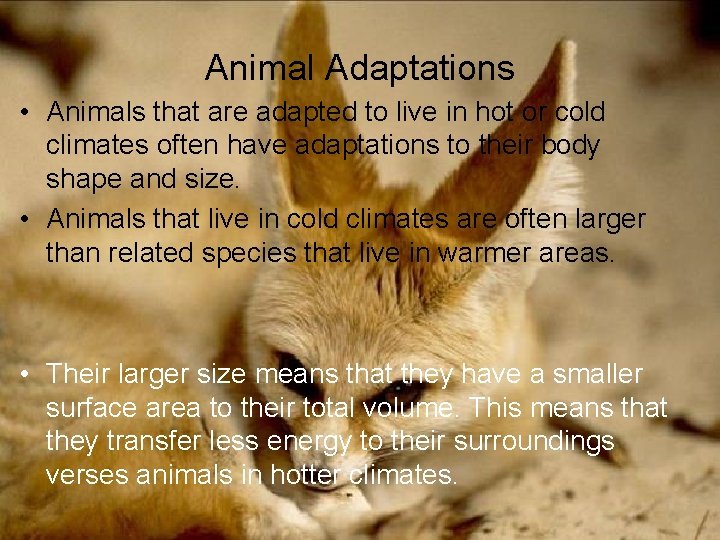
Animal Adaptations • Animals that are adapted to live in hot or cold climates often have adaptations to their body shape and size. • Animals that live in cold climates are often larger than related species that live in warmer areas. • Their larger size means that they have a smaller surface area to their total volume. This means that they transfer less energy to their surroundings verses animals in hotter climates.
Questions o o o Many vacuum flasks have steel walls instead of glass. How would this affect how fast hot coffee in the flask cools? Explain your answer. Why do you think steel is used instead of glass? Would the flask keep a cold drink cold on a hot day? Explain.
o o Explain why the desert fox’s large ears help to keep it cool. Describe two adaptations the Arctic fox has for living in a cold climate. Explain why air moving over an object can increase its rate of cooling. A* Explain how and why parts of the solar panel are designed to reduce heat transfer by convection, conduction and radiation.
- Slides: 9