
LESSON OBJECTIVE To understand key concepts and definitions
LESSON OBJECTIVE • To understand key concepts and definitions. LESSSON OUTCOME • To be able to explain the key concepts and definitions and give examples of the characteristics for each. 1
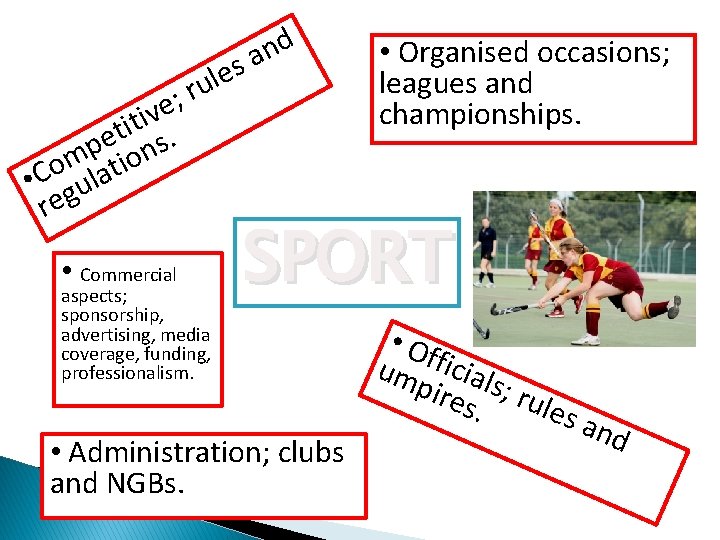
; e v i t. e s p n m o i • Cogulat re • Commercial s e l ru aspects; sponsorship, advertising, media coverage, funding, professionalism. d n a • Organised occasions; leagues and championships. SPORT • Administration; clubs and NGBs. • Of um ficials pire ; ru s. les a nd
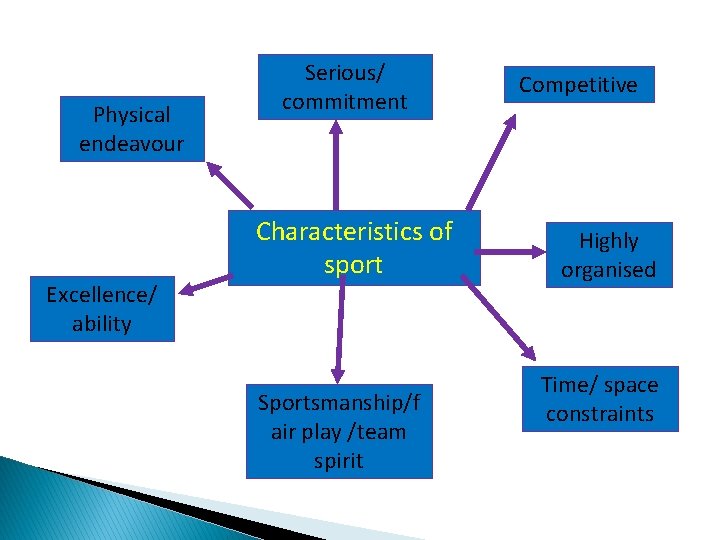
Physical endeavour Excellence/ ability Serious/ commitment Characteristics of sport Sportsmanship/f air play /team spirit Competitive Highly organised Time/ space constraints

CATEGORIES OF SPORT… SUB CATEGORIES OF GAMES: Invasion Striking and fielding Combat Target Net/wall Athletic

Problems with Sport. . • Over-emphasis on winning • More like entertainment • Crowd violence • Drugs • Poor role models • Passive involvement

Comparison of recreation and professional sport. . . • Put the characteristics under the correct headings. 6
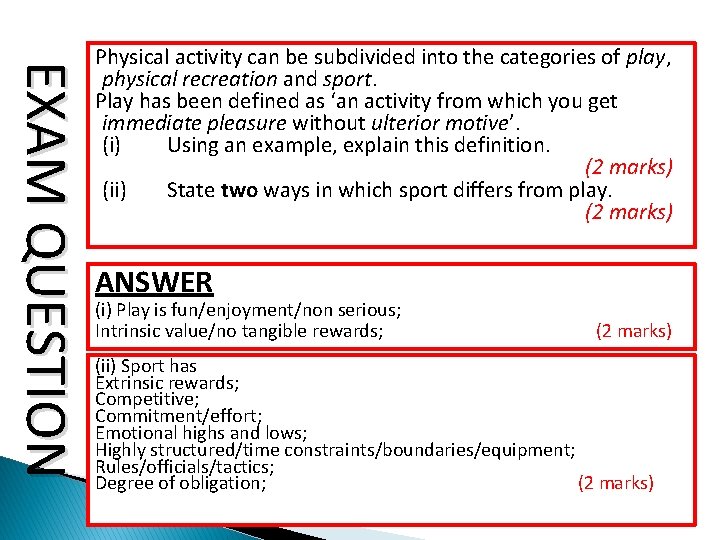
EXAM QUESTION Physical activity can be subdivided into the categories of play, physical recreation and sport. Play has been defined as ‘an activity from which you get immediate pleasure without ulterior motive’. (i) Using an example, explain this definition. (2 marks) (ii) State two ways in which sport differs from play. (2 marks) ANSWER (i) Play is fun/enjoyment/non serious; Intrinsic value/no tangible rewards; (2 marks) (ii) Sport has Extrinsic rewards; Competitive; Commitment/effort; Emotional highs and lows; Highly structured/time constraints/boundaries/equipment; Rules/officials/tactics; Degree of obligation; (2 marks)
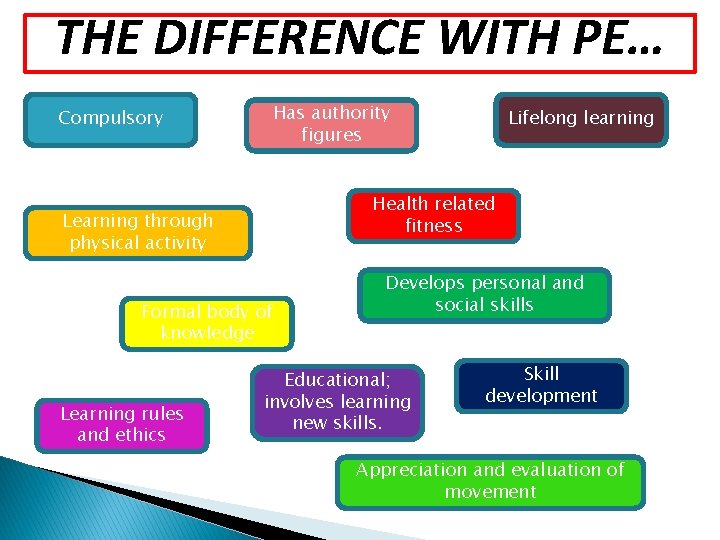
THE DIFFERENCE WITH PE… Has authority figures Compulsory Health related fitness Learning through physical activity Formal body of knowledge Learning rules and ethics Lifelong learning Develops personal and social skills Educational; involves learning new skills. Skill development Appreciation and evaluation of movement

AIMS OF PHYSICAL EDUCATION Skill development - motor Fitness development - physical Knowledge of rules etccognitive Values such as sportsmanship - values
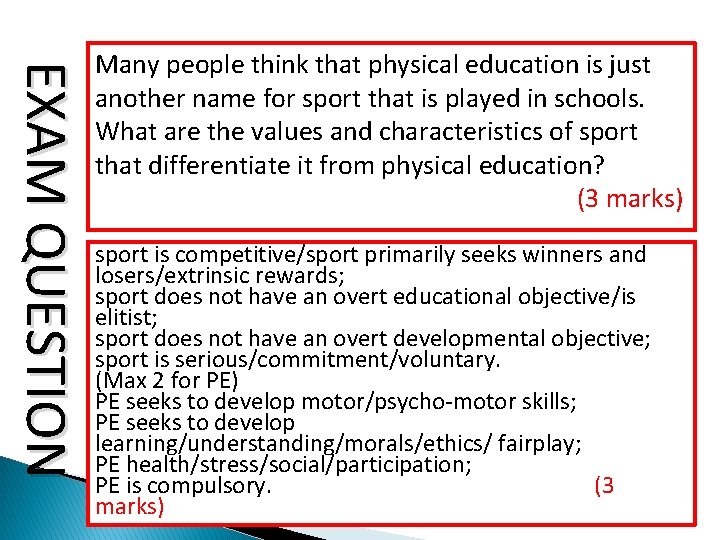
EXAM QUESTION Many people think that physical education is just another name for sport that is played in schools. What are the values and characteristics of sport that differentiate it from physical education? (3 marks) sport is competitive/sport primarily seeks winners and losers/extrinsic rewards; sport does not have an overt educational objective/is elitist; sport does not have an overt developmental objective; sport is serious/commitment/voluntary. (Max 2 for PE) PE seeks to develop motor/psycho-motor skills; PE seeks to develop learning/understanding/morals/ethics/ fairplay; PE health/stress/social/participation; PE is compulsory. (3 marks)
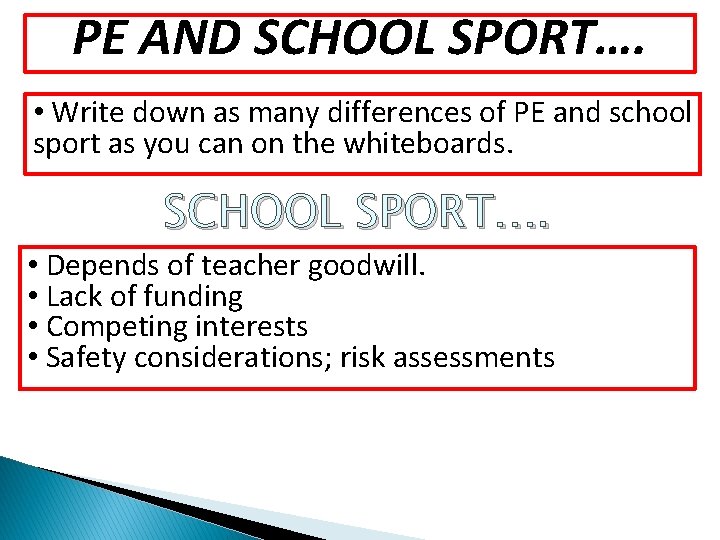
PE AND SCHOOL SPORT…. • Write down as many differences of PE and school sport as you can on the whiteboards. SCHOOL SPORT…. • Depends of teacher goodwill. • Lack of funding • Competing interests • Safety considerations; risk assessments

CLUB AND SCHOOL SPORT…. SIMILARITIES • • Same activities Skills developed Formalised PE teacher may coach • Aim to win DIFFERENCES • Teacher v coach • Conflicts in expectations • Different ethics in school and club sport
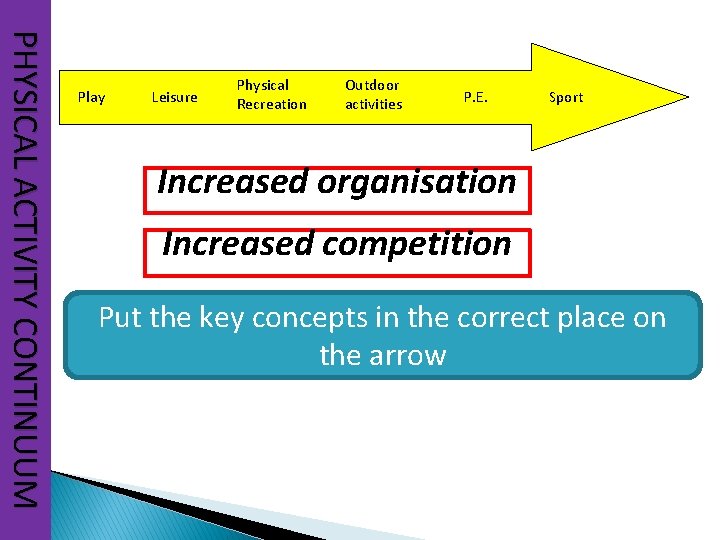
PHYSICAL ACTIVITY CONTINUUM Play Leisure Physical Recreation Outdoor activities P. E. Sport Increased organisation Increased competition Put the key concepts in the correct place on the arrow
- Slides: 13