
LESSON Learning Objectives 6 2 Allowance Method of
LESSON Learning Objectives 6 -2 Allowance Method of Recording Uncollectible Accounts Expense LO 2 Calculate and record estimated uncollectible accounts expense using the allowance method. LO 3 Write off an uncollectible account receivable. LO 4 Account for the collection of an account receivable that was written off. © 2015 Cengage Learning. All Rights Reserved.
Lesson 6 -2 Selecting a Method for Accounting for Uncollectible Accounts LO 2 ● When Matching Expenses with Revenues, uncollectible accounts expense should be recorded in the same fiscal period in which the sales revenue is received. ● Because a business has no way to know for sure which customer will not pay an amount due, the application of a matching method requires an estimate of uncollectible accounts based on past history. ● Crediting the estimated value of uncollectible accounts to a contra account is called the allowance method of recording losses from uncollectible accounts. © 2015 Cengage Learning. All Rights Reserved. SLIDE 2
Lesson 6 -2 Estimating Uncollectible Accounts Expense Two methods are commonly used to estimate uncollectible accounts expense: LO 2 Percentage of Sales Method Percentage of Accounts Receivable Method • Assumes that a percentage of each sales dollar will become an uncollectible account. • Assumes that a percentage of accounts receivable at the fiscal year-end will become uncollectible. Regardless of the method used, the estimated amount is charged to Uncollectible Accounts Expense. The difference between an asset’s account balance and its related contra account allowance balance is called book value. © 2015 Cengage Learning. All Rights Reserved. SLIDE 3
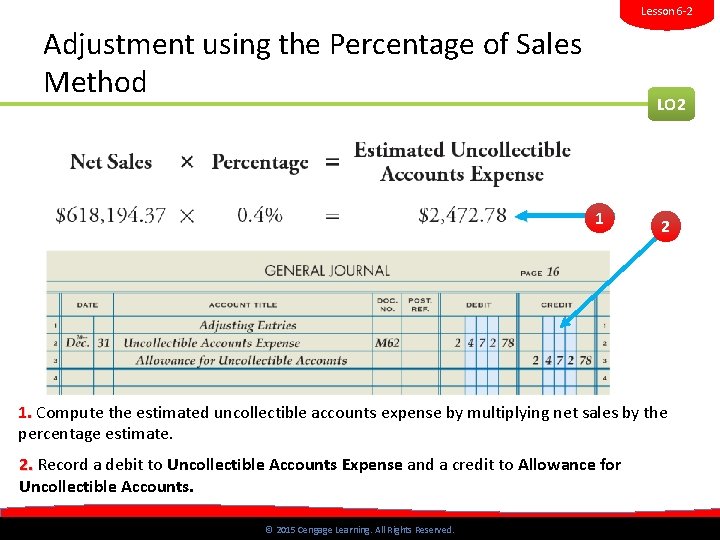
Lesson 6 -2 Adjustment using the Percentage of Sales Method LO 2 1. Compute the estimated uncollectible accounts expense by multiplying net sales by the percentage estimate. 2. Record a debit to Uncollectible Accounts Expense and a credit to Allowance for Uncollectible Accounts. © 2015 Cengage Learning. All Rights Reserved. SLIDE 4
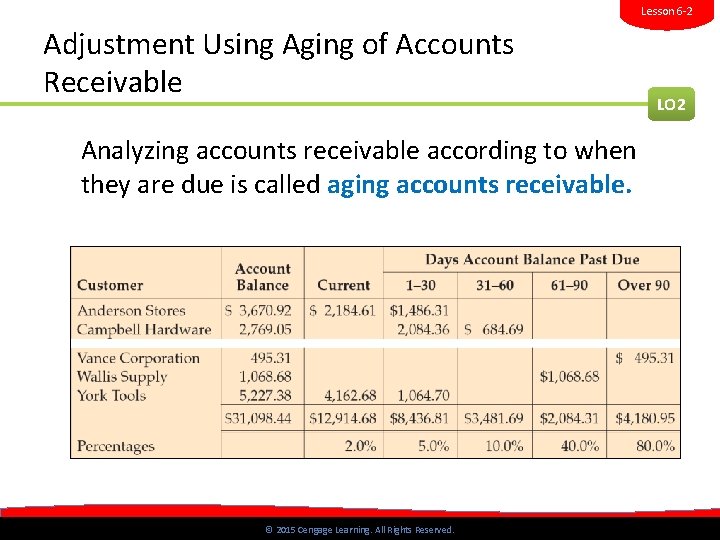
Lesson 6 -2 Adjustment Using Aging of Accounts Receivable LO 2 BEFORE ADJUSTMENT Analyzing accounts receivable according to when they are due is called aging accounts receivable. © 2015 Cengage Learning. All Rights Reserved. SLIDE 5
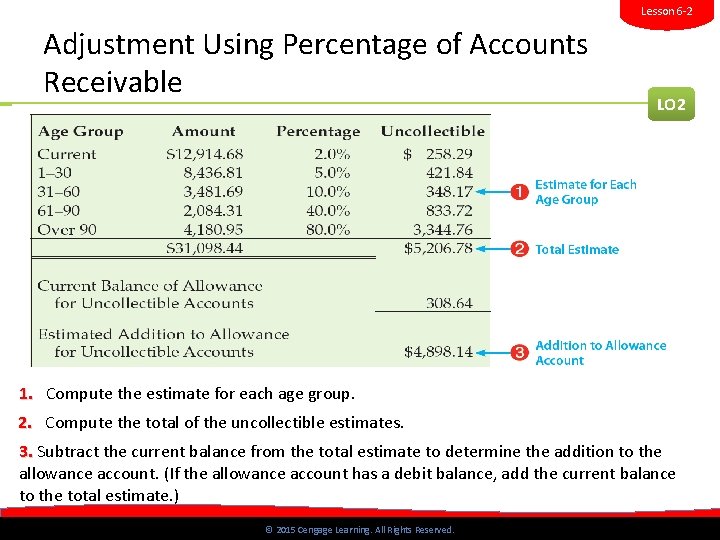
Lesson 6 -2 Adjustment Using Percentage of Accounts Receivable LO 2 1. Compute the estimate for each age group. 2. Compute the total of the uncollectible estimates. 3. Subtract the current balance from the total estimate to determine the addition to the allowance account. (If the allowance account has a debit balance, add the current balance to the total estimate. ) © 2015 Cengage Learning. All Rights Reserved. SLIDE 6

Lesson 6 -2 Writing Off An Uncollectible Account – Allowance Method LO 3 Uncollectible Accounts Expense is not affected by this entry. © 2015 Cengage Learning. All Rights Reserved. SLIDE 7
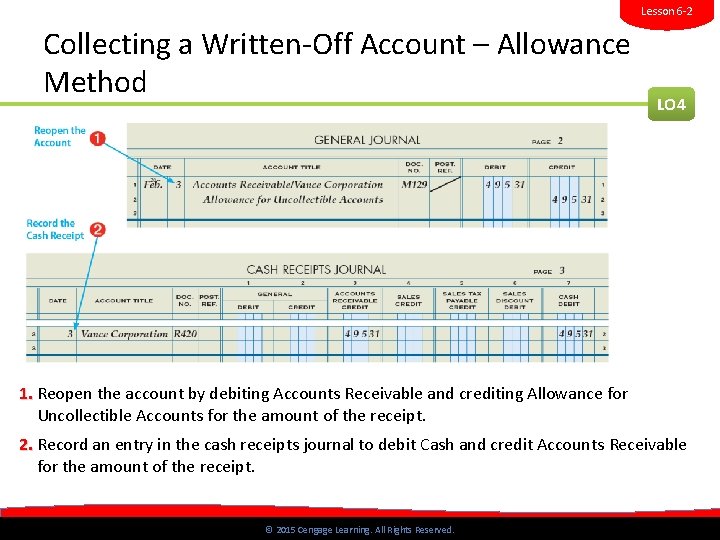
Lesson 6 -2 Collecting a Written-Off Account – Allowance Method LO 4 1. Reopen the account by debiting Accounts Receivable and crediting Allowance for Uncollectible Accounts for the amount of the receipt. 2. Record an entry in the cash receipts journal to debit Cash and credit Accounts Receivable for the amount of the receipt. © 2015 Cengage Learning. All Rights Reserved. SLIDE 8
Lesson 6 -2 Audit Your Understanding 1. What are the two methods commonly used to estimate uncollectible accounts expense? ANSWER a. Percentage of sales method. b. Percentage of accounts receivable method. © 2015 Cengage Learning. All Rights Reserved. SLIDE 9
Lesson 6 -2 Audit Your Understanding 2. What is the formula for estimating uncollectible accounts expense based on net sales? ANSWER Net sales times the percentage expected to be uncollectible equals the estimated uncollectible accounts expense. © 2015 Cengage Learning. All Rights Reserved. SLIDE 10
Lesson 6 -2 Audit Your Understanding 3. How is the addition to allowance for uncollectible accounts calculated using the percentage of accounts receivable method? ANSWER a. Compute an estimate for each age group by multiplying the amount of each group by the percentage estimate. b. Compute the total of the uncollectible estimates for all age groups. c. Subtract the current credit balance or add the current debit balance to the balance of Allowance for Uncollectible Accounts to determine the addition to the account. © 2015 Cengage Learning. All Rights Reserved. SLIDE 11
Lesson 6 -2 Audit Your Understanding 4. When can the direct write-off method be used? ANSWER The direct write-off method can be used when the difference between the accounts receivable reported on the balance sheet, using the two methods, is immaterial. © 2015 Cengage Learning. All Rights Reserved. SLIDE 12
- Slides: 12