
LESSON I The Dynamics of People and Organizations
- Slides: 32
LESSON I The Dynamics of People and Organizations Dr. Mario A. Fetalver, Jr. Professor
The Dynamics of People and Organizations Understanding Organizational Behavior Organizational behavior ## the systematic study and careful application of knowledge about how people act within organizations.
The Dynamics of People and Organizations Understanding Organizational Behavior Organizational behavior ## a scientific discipline in which a large number of research studies and conceptual developments are constantly adding to its knowledge base.
The Dynamics of People and Organizations Understanding Organizational Behavior Organizational behavior ## it is also an applied science, in that information about effective practices in one organization is being extended to many others.
The Dynamics of People and Organizations Understanding Organizational Behavior Goals Four goals of OB are: • To Describe • To understand • To predict • To control human behavior at work.
The Dynamics of People and Organizations Understanding Organizational Behavior Goals 1. To describe human behavior at work Systematically, how people behave under variety of conditions?
The Dynamics of People and Organizations Understanding Organizational Behavior Goals 1. To describe human behavior at work How to achieve this? The manager must communicate about human behavior at work using a common language
The Dynamics of People and Organizations Understanding Organizational Behavior Goals 2. To understand human behavior at work Why people behave as they do?
The Dynamics of People and Organizations Understanding Organizational Behavior Goals 2. To understand human behavior at work Managers would be highly frustrated if they could only talk about the employees behaviors, but not understanding the reasons behind those actions
The Dynamics of People and Organizations Understanding Organizational Behavior Goals 2. To understand human behavior at work Therefore, inquisitive managers learn to probe for underlying explanations
The Dynamics of People and Organizations Understanding Organizational Behavior Goals 3. To predict human behavior at work What might be the future employee behavior?
The Dynamics of People and Organizations Understanding Organizational Behavior Goals 3. To predict human behavior at work Ideally, managers would have the capacity to predict which employees might be dedicated and productive or which ones might be absent, tardy, or disruptive on a certain day
The Dynamics of People and Organizations Understanding Organizational Behavior Goals 4. To control human behavior at work How to develop human activity at work? How to improve results through actions taken?
The Dynamics of People and Organizations Understanding Organizational Behavior Goals 4. To control human behavior at work Managers are held responsible for performance outcomes, they are vitally interested in being able to make an impact on employee behavior, skill development, team effort, and productivity
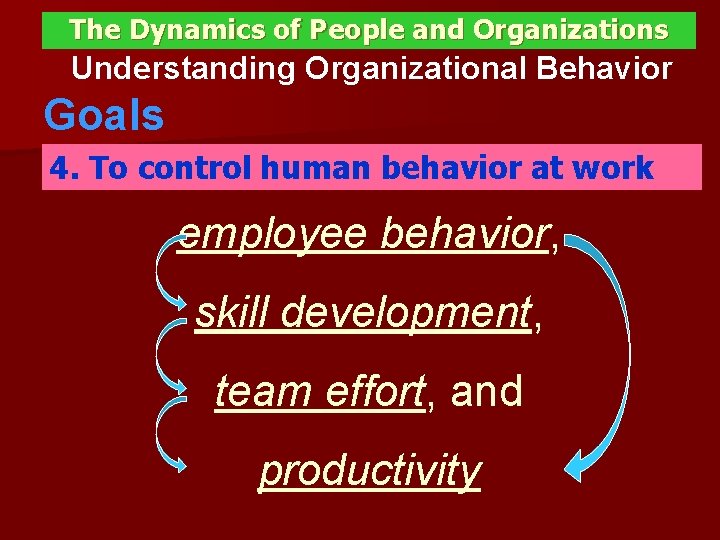
The Dynamics of People and Organizations Understanding Organizational Behavior Goals 4. To control human behavior at work employee behavior, skill development, team effort, and productivity
The Dynamics of People and Organizations Understanding Organizational Behavior Goals 4. To control human behavior at work Managers need to be able to improve results through the actions they and their employees take, and OB can aid them in their pursuit of this goal
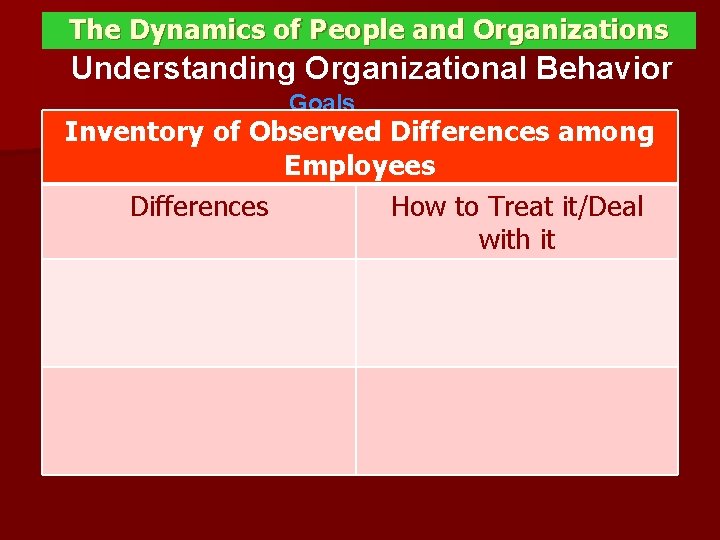
The Dynamics of People and Organizations Understanding Organizational Behavior Goals Inventory of Observed Differences among Employees Differences How to Treat it/Deal with it
The Dynamics of People and Organizations Understanding Organizational Behavior Forces A complex set of forces affects the nature of organizations today.
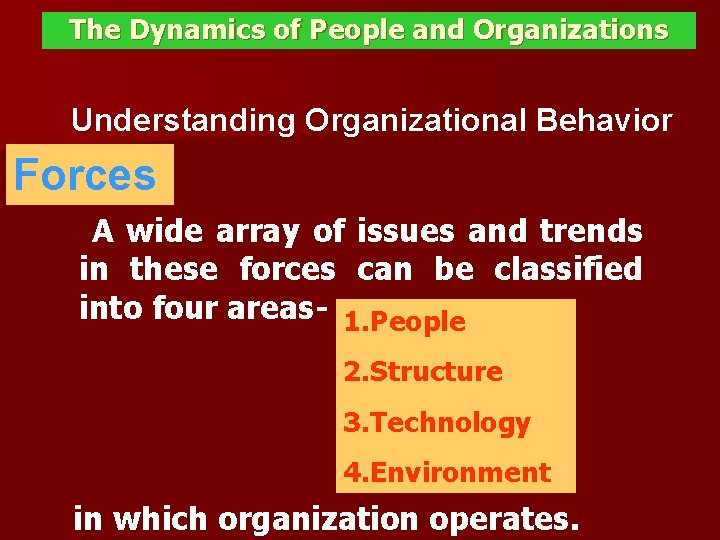
The Dynamics of People and Organizations Understanding Organizational Behavior Forces A wide array of issues and trends in these forces can be classified into four areas- 1. People 2. Structure 3. Technology 4. Environment in which organization operates.
The Dynamics of People and Organizations Understanding Organizational Behavior Forces 1. People make up the internal social system of the organization.
The Dynamics of People and Organizations Understanding Organizational Behavior Forces 1. People That system that consists of individuals and groups, and large groups as well as small ones.
The Dynamics of People and Organizations Understanding Organizational Behavior Forces 2. Structure Defines the formal relationship and use of people in organization.
The Dynamics of People and Organizations Understanding Organizational Behavior Forces 2. Structure Different jobs are required to accomplish all of an organization’s activities.
The Dynamics of People and Organizations Understanding Organizational Behavior Forces 3. Technology Provides the resources with which people work and affects the tasks that they perform.
The Dynamics of People and Organizations Understanding Organizational Behavior Forces 3. Technology The great benefit of technology is that it allows people to do more and better work, but it also restricts people in various ways.
The Dynamics of People and Organizations Understanding Organizational Behavior Forces 4. Environment All organizations operate within an internal and external environment.
The Dynamics of People and Organizations Understanding Organizational Behavior Positive Characteristics of the Organizational Behavior Field One major strength of organizational behavior is its interdisciplinary nature.
The Dynamics of People and Organizations Understanding Organizational Behavior Positive Characteristics of the Organizational Behavior Field It integrates the behavioral sciences with other social sciences that can contribute to the subject.
The Dynamics of People and Organizations Understanding Organizational Behavior Positive Characteristics of the Organizational Behavior Field Another strength of organizational behavior is its emerging base of research knowledge, models and conceptual framework.
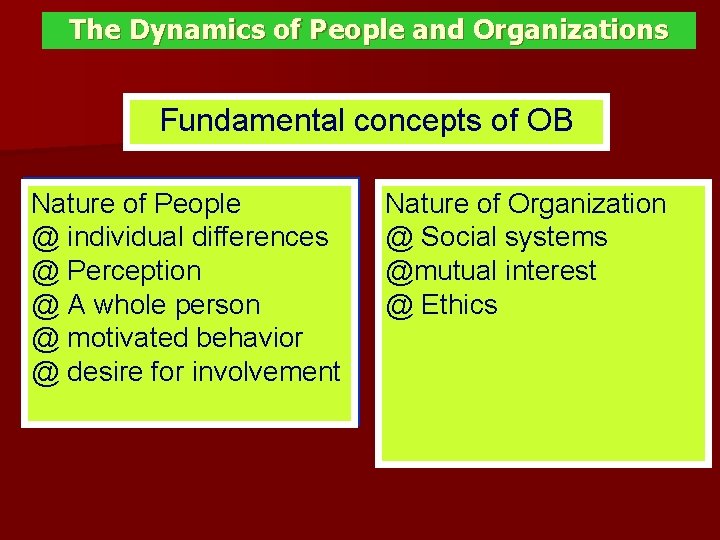
The Dynamics of People and Organizations Fundamental concepts of OB Nature of People @ individual differences @ Perception @ A whole person @ motivated behavior @ desire for involvement Nature of Organization @ Social systems @mutual interest @ Ethics
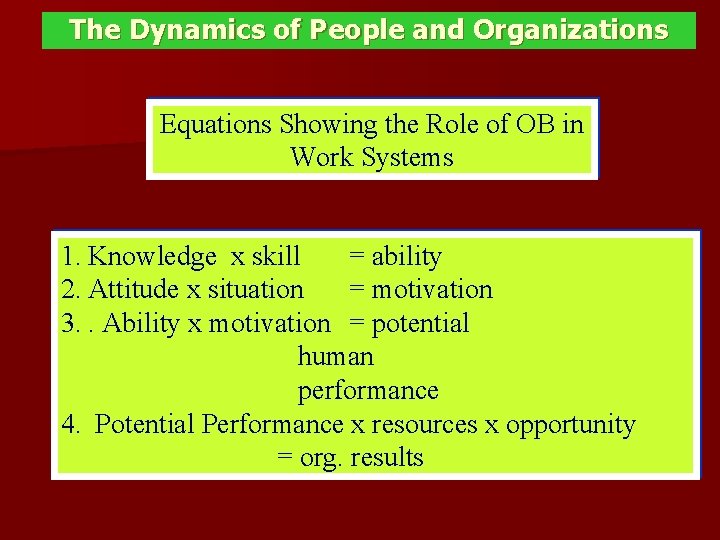
The Dynamics of People and Organizations Equations Showing the Role of OB in Work Systems 1. Knowledge x skill = ability 2. Attitude x situation = motivation 3. . Ability x motivation = potential human performance 4. Potential Performance x resources x opportunity = org. results
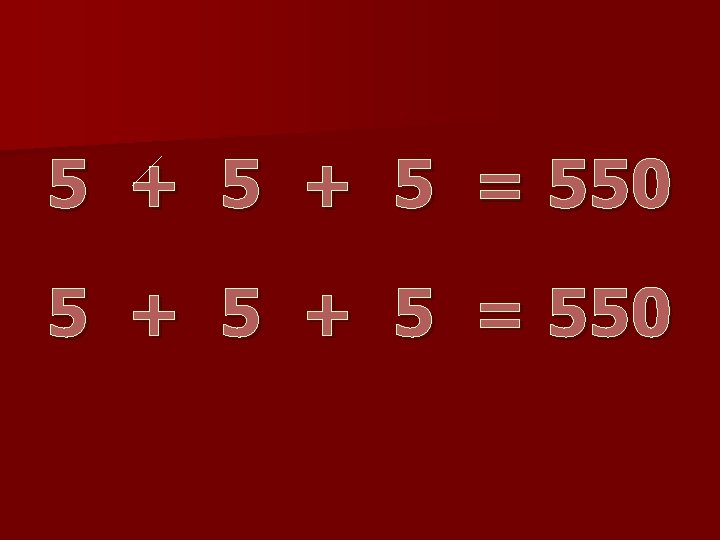
5 + 5 + 5 = 550