
Lesson B 3 4 Understanding the Role of
Lesson B 3– 4 Understanding the Role of Fire in Forest Management Reminder: student learning activities are at the end of this power point.
Next Generation Science/Common Core Standards Addressed! · · HS‐LS 2‐ 6. Evaluate the claims, evidence, and reasoning that the complex interactions in ecosystems maintain relatively consistent numbers and types of organisms in stable conditions, but changing conditions may result in a new ecosystem. [Clarification Statement: Examples of changes in ecosystem conditions could include modest biological or physical changes, such as moderate hunting or a seasonal f. HS‐LS 2‐ 7. lood; and extreme changes, such as volcanic eruption or sea level rise. ] HS‐LS 2‐ 7. Evaluate the evidence for the role of group behavior on individual and species’ chances to survive and reproduce. [Clarification Statement: Emphasis is on: (1) distinguishing between group and individual behavior, (2) identifying evidence supporting the outcomes of group behavior, and (3) developing logical and reasonable arguments based on evidence. Examples of group behaviors could include flocking, schooling, herding, and cooperative behaviors such as hunting, migrating, and swarming. RST. 11‐ 12. 7 Integrate and evaluate multiple sources of information presented in diverse formats and media (e. g. , quantitative data, video, multimedia) in order to address a question or solve a problem. (HS‐LS 2‐ 6), (HS‐LS 2‐ 7), (HS‐LS 2‐ 8)
Agriculture, Food, and Natural Resource Standards Addressed · NRS. 04. Manage fires in natural resource systems. · NRS. 04. 01. a. Differentiate between desirable and undesirable fires and research the role fire plays in a healthy ecosystem.
Bell Work/Student Learning Objectives . · 1. Explain the purpose of prescribed fire. · 2. Describe the different types of forest fires. · 3. Identify sources of forest fires. · 4. Explain the fire triangle. · 5. Explain various factors that effect fire behavior.

Terms. · · · Crown fires Crowning out Fire behavior Fire season Fire triangle Ground fires · Ignition temperature · Incendiary fires · Prescribed fire · Surface fires · Updrafts · Wildfire
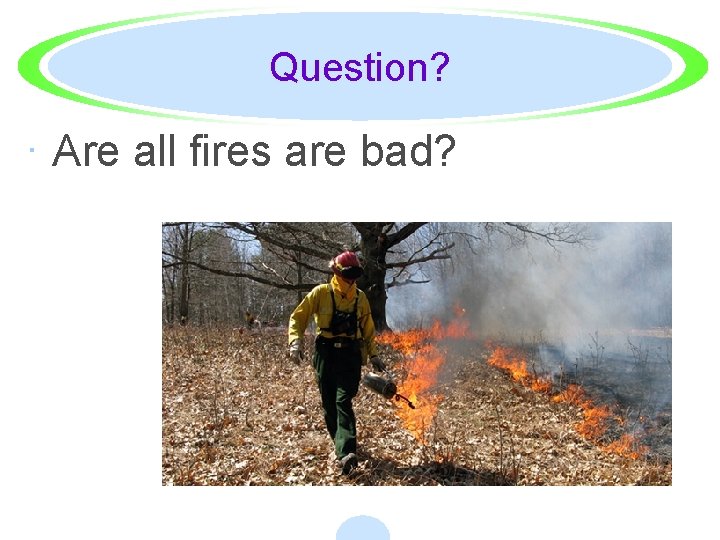
Question? · Are all fires are bad?
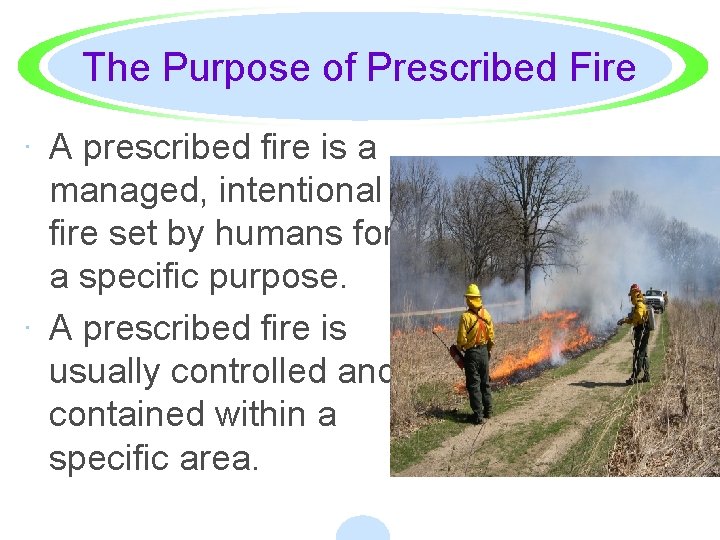
The Purpose of Prescribed Fire · A prescribed fire is a managed, intentional fire set by humans for a specific purpose. · A prescribed fire is usually controlled and contained within a specific area.
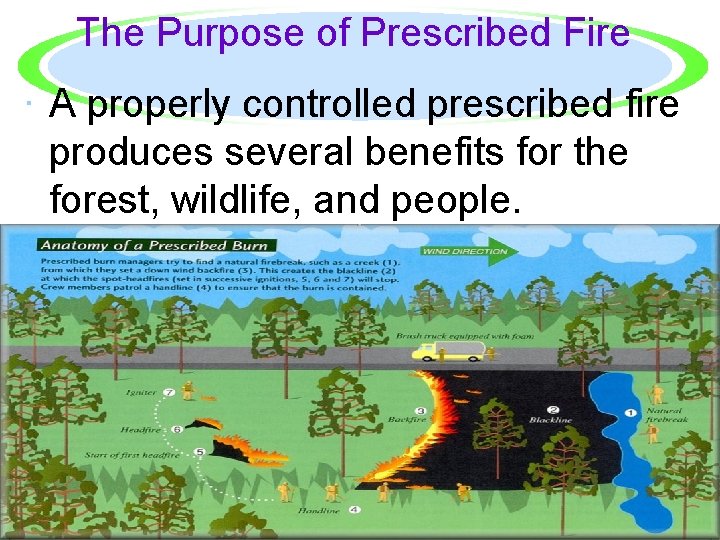
The Purpose of Prescribed Fire · A properly controlled prescribed fire produces several benefits for the forest, wildlife, and people.
Some of the benefits are: · 1. Reducing the hazard of wildfire by removing fuel from the forest floor. · A wildfire is a fire that endangers people or property, which is not within an area designated to be managed by the use of fire, or that, in conjunction with weather or other conditions, may threaten to expand, thus endangering people, property, or non fire-management areas.
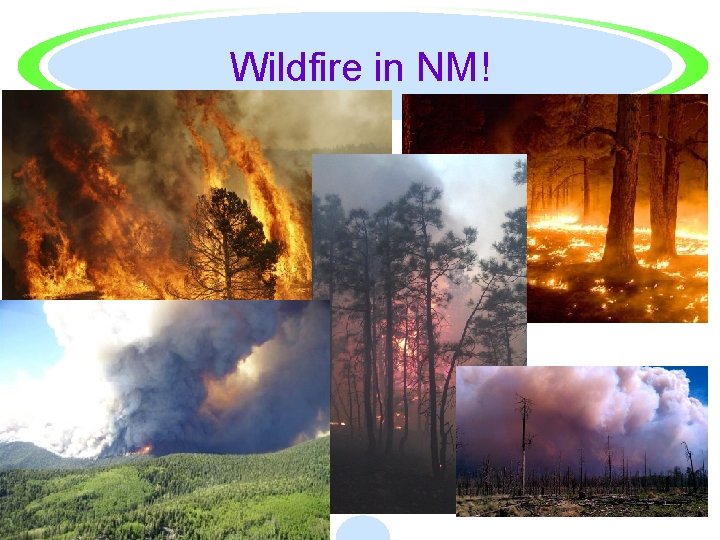
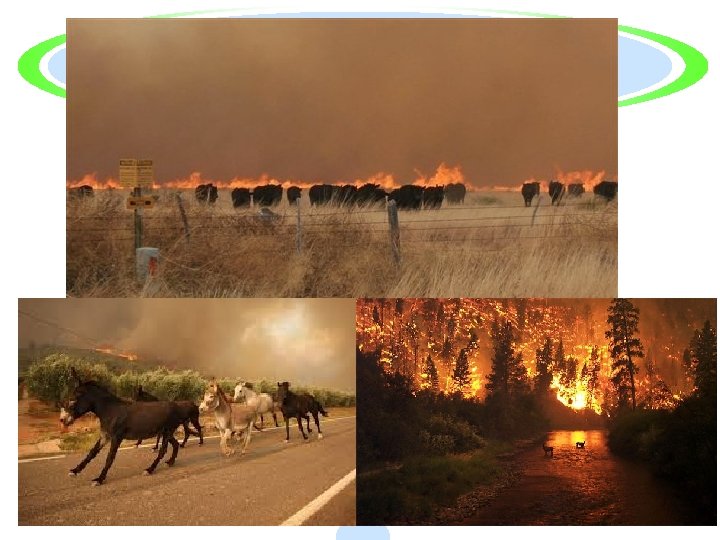
Wildfire in NM!
Benefits of a Prescribed Fire · 2. Preparing sites for seedlings and planting. · A prescribed burn can remove other plants that will act as competition for nutrients and water to the new trees. · 3. Removing undesirable trees and brush cluttering the forest understory.
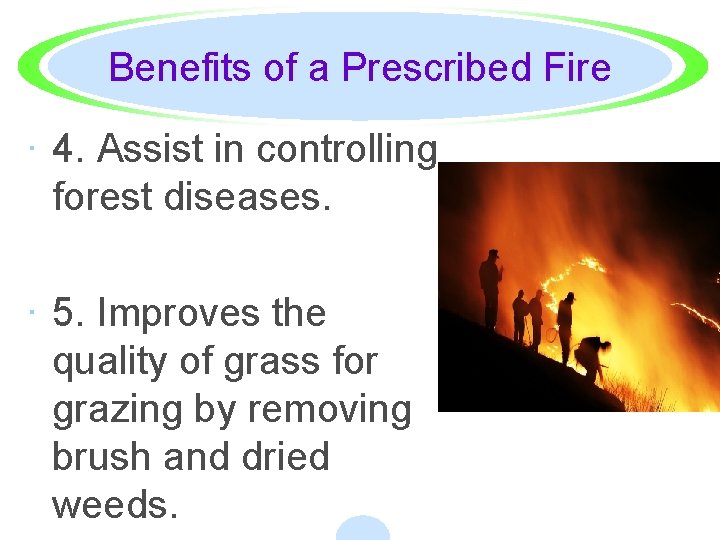
Benefits of a Prescribed Fire · 4. Assist in controlling forest diseases. · 5. Improves the quality of grass for grazing by removing brush and dried weeds.
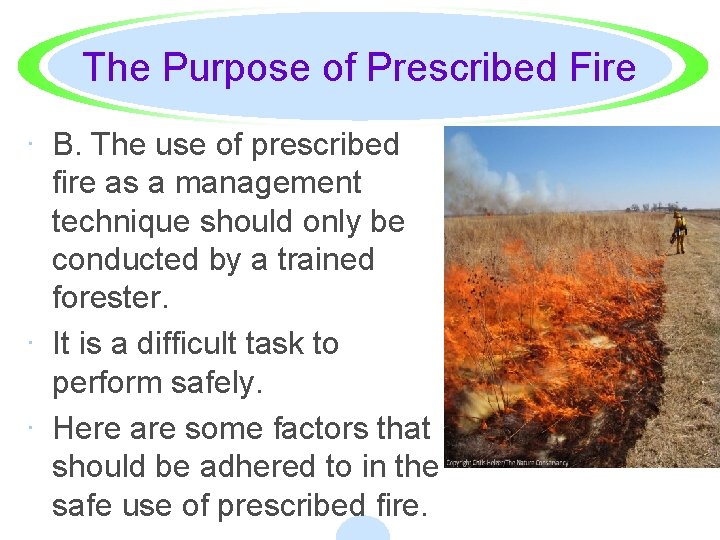
The Purpose of Prescribed Fire · B. The use of prescribed fire as a management technique should only be conducted by a trained forester. · It is a difficult task to perform safely. · Here are some factors that should be adhered to in the safe use of prescribed fire.
Safe Use of Prescribed Fires · 1. Weather conditions - Only a small area should be burned at a time. · The humidity and moisture content in the forest must not be too low. · There should only be a slight breeze. Wind is a problem that has moved prescribed burns in NM to the wildfire category.
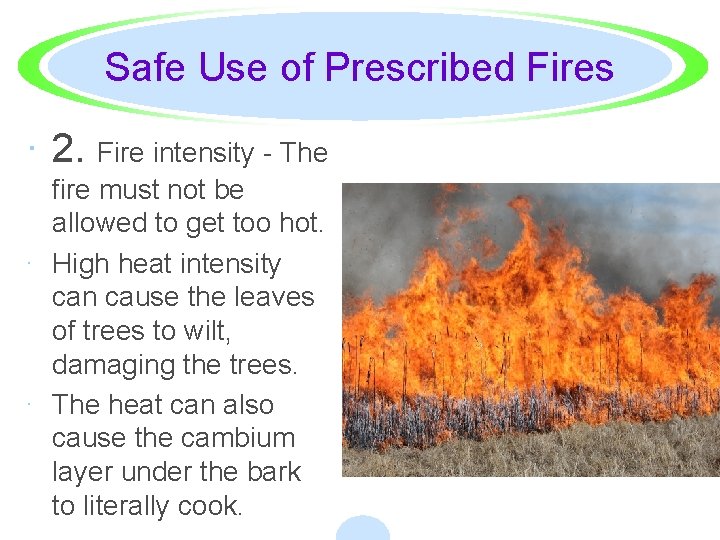
Safe Use of Prescribed Fires · 2. Fire intensity - The fire must not be allowed to get too hot. · High heat intensity can cause the leaves of trees to wilt, damaging the trees. · The heat can also cause the cambium layer under the bark to literally cook.
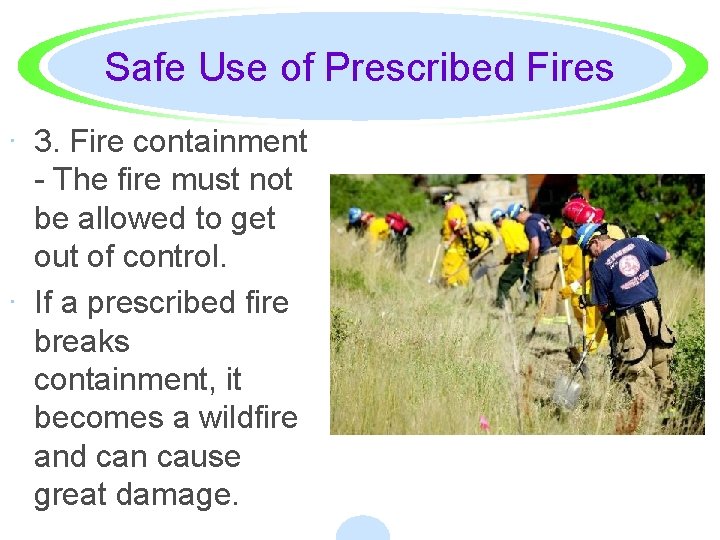
Safe Use of Prescribed Fires · 3. Fire containment - The fire must not be allowed to get out of control. · If a prescribed fire breaks containment, it becomes a wildfire and can cause great damage.
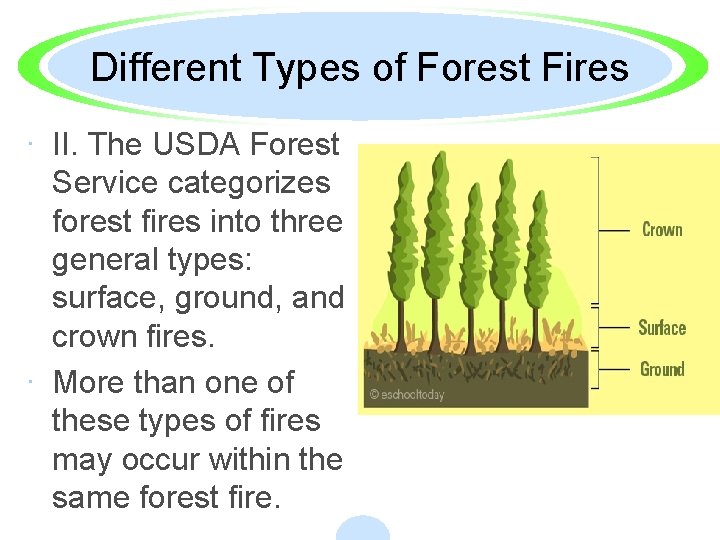
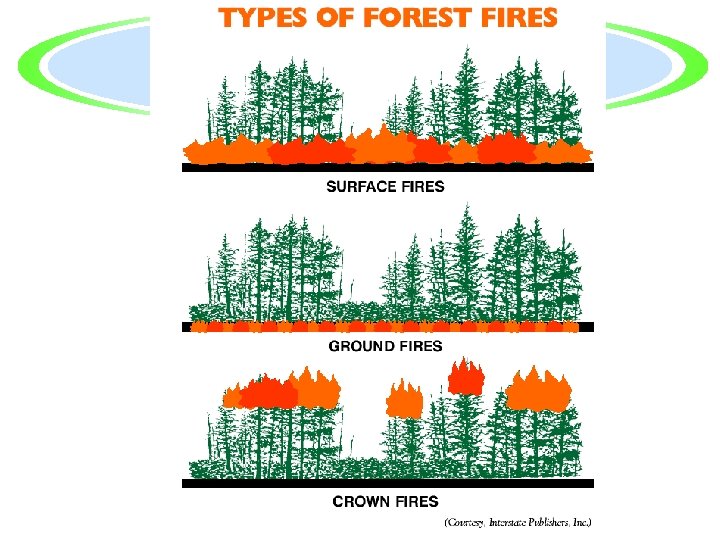
Different Types of Forest Fires · II. The USDA Forest Service categorizes forest fires into three general types: surface, ground, and crown fires. · More than one of these types of fires may occur within the same forest fire.
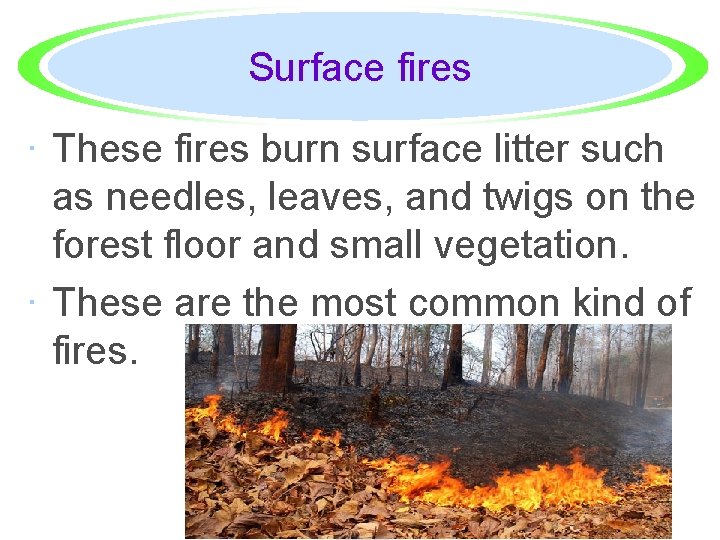
Surface fires · These fires burn surface litter such as needles, leaves, and twigs on the forest floor and small vegetation. · These are the most common kind of fires.
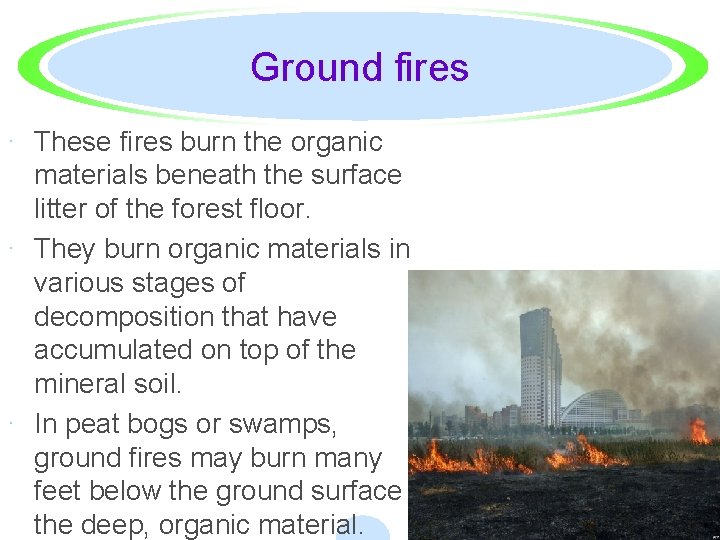
Ground fires · These fires burn the organic materials beneath the surface litter of the forest floor. · They burn organic materials in various stages of decomposition that have accumulated on top of the mineral soil. · In peat bogs or swamps, ground fires may burn many feet below the ground surface in the deep, organic material.
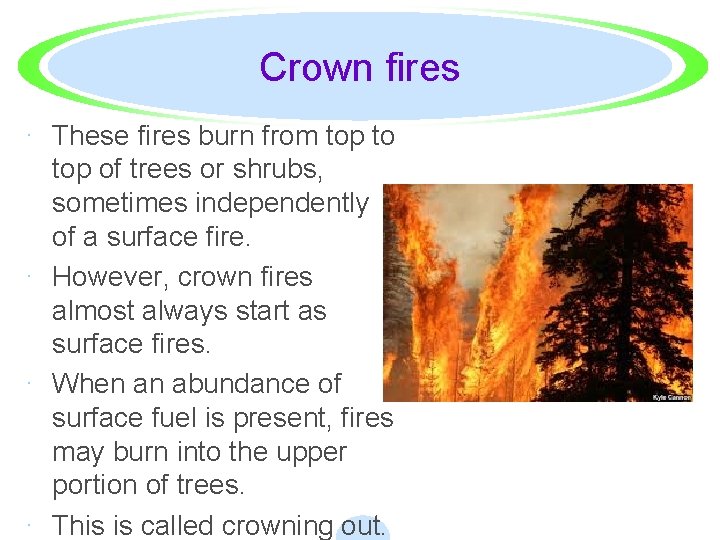
Crown fires · These fires burn from top to top of trees or shrubs, sometimes independently of a surface fire. · However, crown fires almost always start as surface fires. · When an abundance of surface fuel is present, fires may burn into the upper portion of trees. · This is called crowning out.
Crown fires · Crown fires are the fastest spreading of all types of fires. · They are more common in coniferous forests than deciduous forests because of the higher flammability of the coniferous foliage.
Sources of Forest Fires · III. Forest fires can be caused naturally, often by lightning strikes. · However, people cause the majority of forest fires. · Some of the major sources of forest wildfires are:
Incendiary fires · This category of fires included malicious burning or arson. · This also includes fires that were set as prescribed fires, but got out of control.
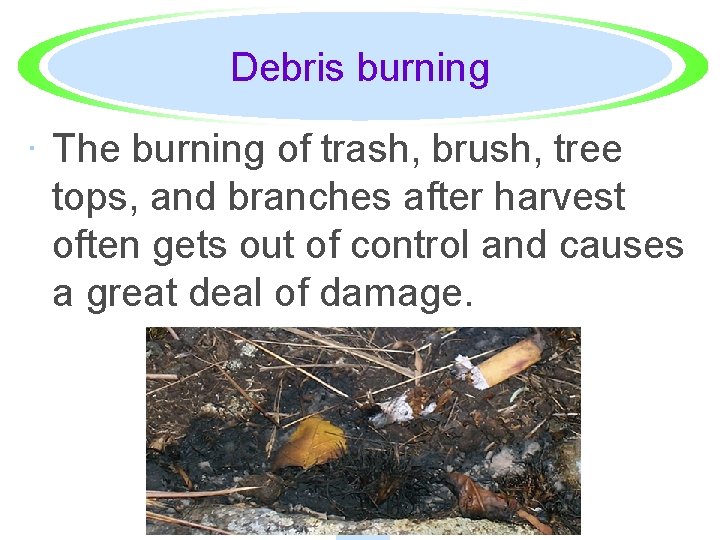
Debris burning · The burning of trash, brush, tree tops, and branches after harvest often gets out of control and causes a great deal of damage.
Smokers · Smokers were once a much more serious problem than they are today. · Through education campaigns, the number of fires started by the careless discarding of a match or cigarette has been reduced.
Lightning · This is the main natural cause of forest fires. · A bolt of lightning produces great heat, but during a rainstorm there is little danger of forest fire. · Electrical storms without rain produce up to 9 percent of the fires on protected forest lands in the United States. The percentage is much higher in the western US.
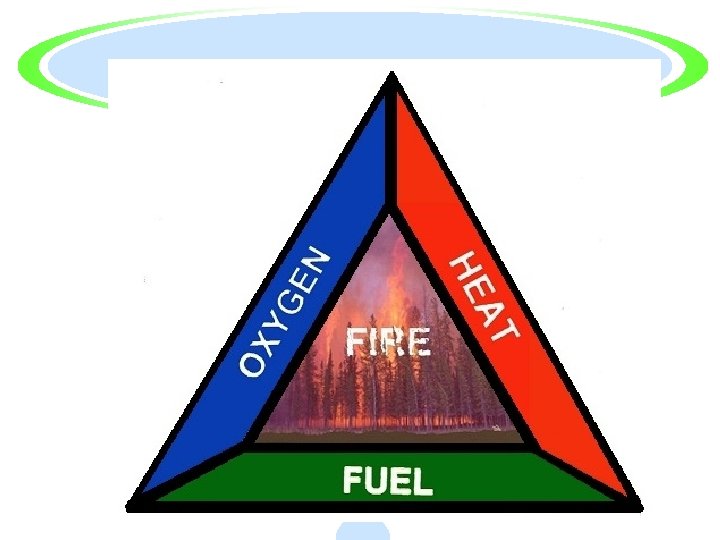
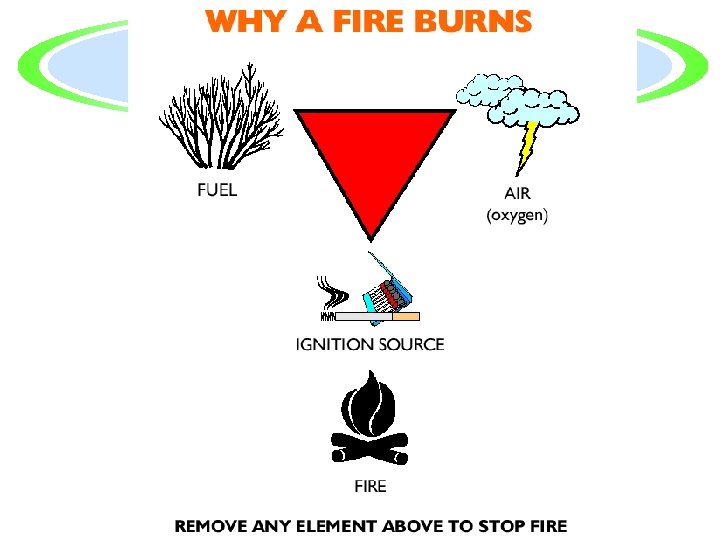
What is a Fire Triangle? · IV. Fire is both a physical and chemical process. · It is the result of quick combustion of oxygen with another substance. · For a forest fire to occur, three things are required: fuel, oxygen, and heat. · The relationship between these three can be illustrated as the fire triangle.
Fire Triangle · For a fire to start all three factors within the fire triangle must be present. · If one factor is removed, the fire goes out. · This simple idea forms the basis for the very complicated and difficult processes of fighting forest wildfires and controlling prescribed fires.
Fuel · Fuel is something that can burn. · Trees, dead leaves, grasses, forest litter, and many other things in the forest are combustible.
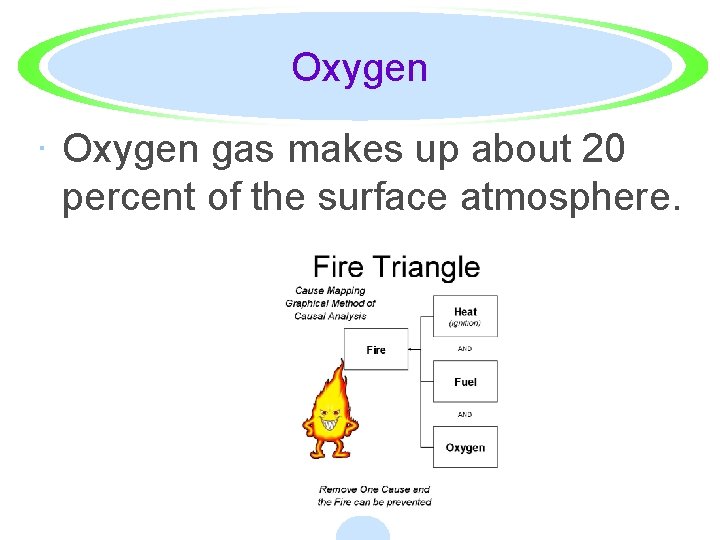
Oxygen · Oxygen gas makes up about 20 percent of the surface atmosphere.
Heat · For a combustible material to burn, it must reach its ignition temperature. · Most forest fuels have ignition temperatures of 600° to 880°F (316° to 471°C). · The ignition temperature of an item is the same whether the material is wet or dry.
Heat · However, since water boils at a lower temperature, wet leaves and wood exposed to open flame do not get much above the boiling point of water until all the water evaporates.
Factors that Affect the Behavior of Forest Fires · V. Fire behavior relates to what a fire does. · Forest fires are capable of doing many things under a wide range of conditions. · Some may burn very slowly while others may whip quickly through the tops of trees or brush at up to 5 miles per hour.
· · Factors that Affect the Behavior of Forest Fires For this reason, a knowledge of fire behavior is essential to fire management activities. The behavior of a fire is related to its intensity and speed. Several factors must be considered in understanding fire behavior. These include:
Fire Seasons · Fire seasons vary by areas of the United States. · In the North and the West, the summer months are generally the period of most fires.
Fire Seasons · In the South, the fall or the spring may be the “hottest” wildfire period. · The fire season refers to the time when the buildup of fuels and the occurrence of extended dry periods are greatest.
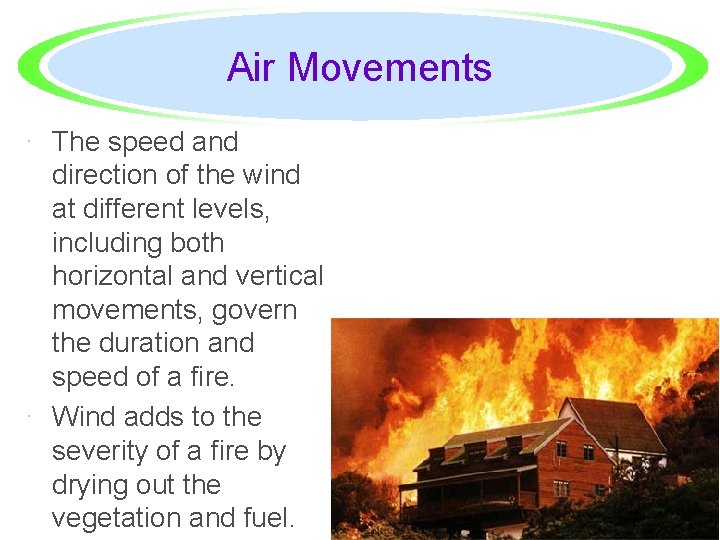
Air Movements · The speed and direction of the wind at different levels, including both horizontal and vertical movements, govern the duration and speed of a fire. · Wind adds to the severity of a fire by drying out the vegetation and fuel.
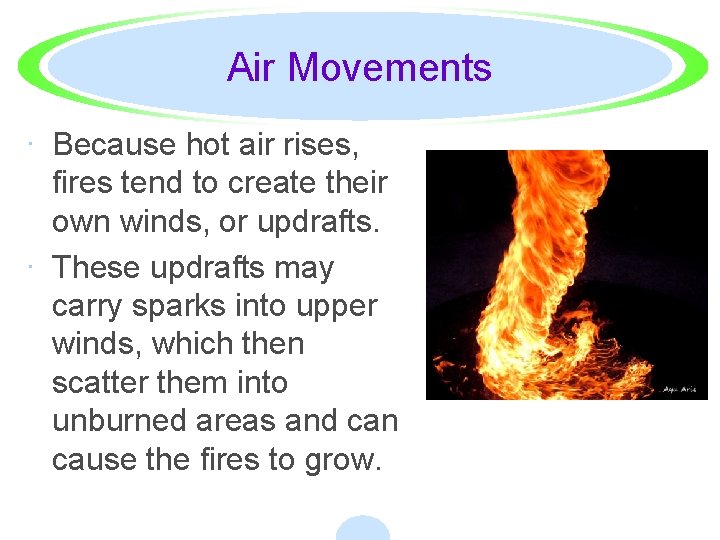
Air Movements · Because hot air rises, fires tend to create their own winds, or updrafts. · These updrafts may carry sparks into upper winds, which then scatter them into unburned areas and can cause the fires to grow.
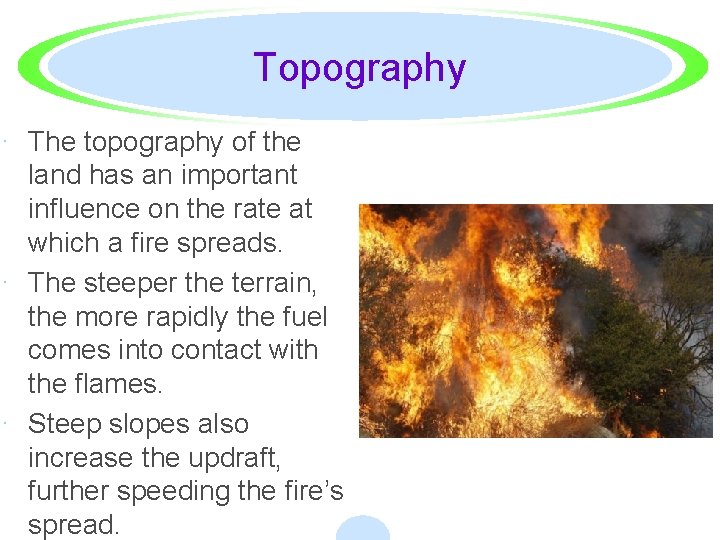
Topography · The topography of the land has an important influence on the rate at which a fire spreads. · The steeper the terrain, the more rapidly the fuel comes into contact with the flames. · Steep slopes also increase the updraft, further speeding the fire’s spread.
Topography · Generally, fires move up slopes, but some have also spread downward. · Streams, highways, fields, and other areas serve as natural barriers to fires.
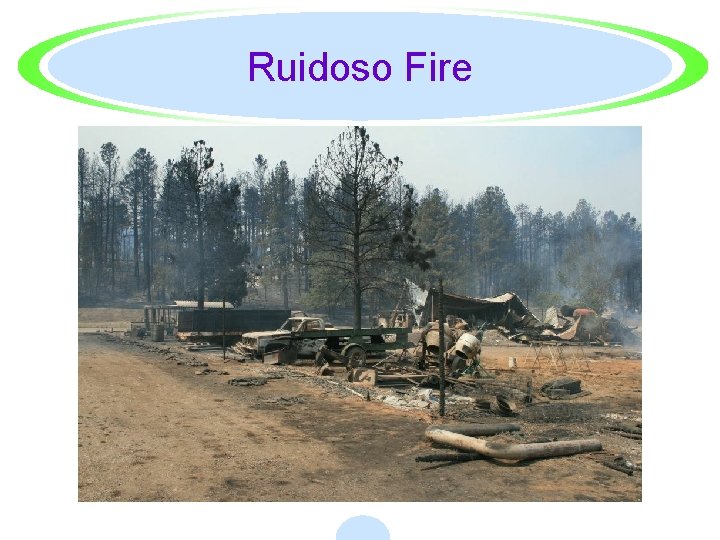
Ruidoso Fire
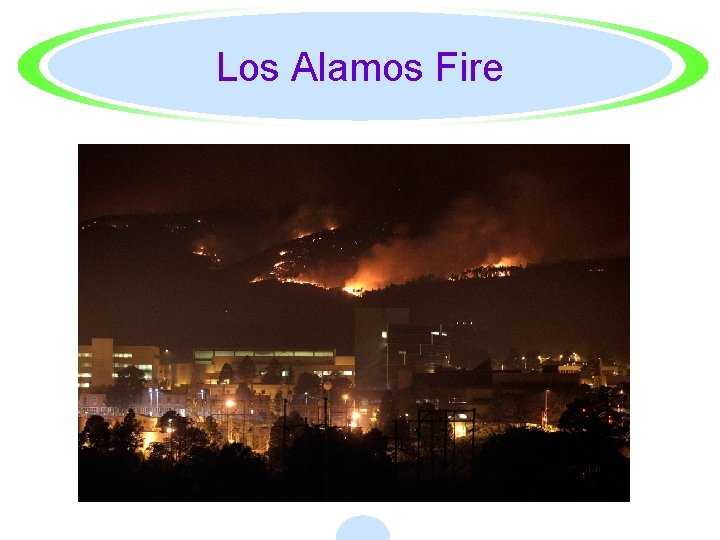
Los Alamos Fire
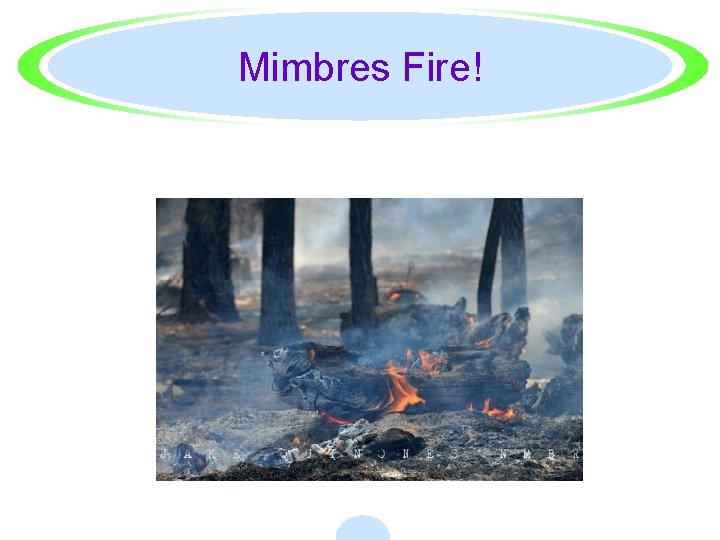
Mimbres Fire!
Review / Summary. · 1. Explain the purpose of prescribed fire. · 2. Describe the different types of forest fires. · 3. Identify sources of forest fires. · 4. Explain the fire triangle. · 5. Explain various factors that effect fire behavior.
The End!

Student Learning Activities · Sample tests are available in the Lesson Plan tab.
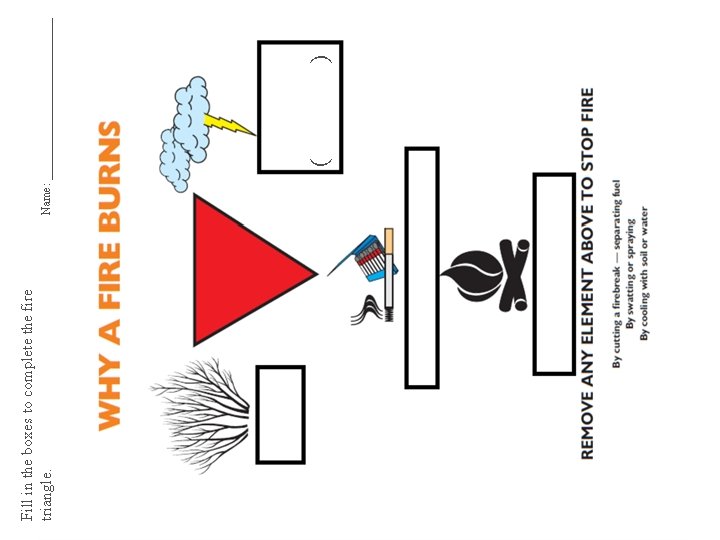
Fill in the boxes to complete the fire triangle. ( ) Name: ______________
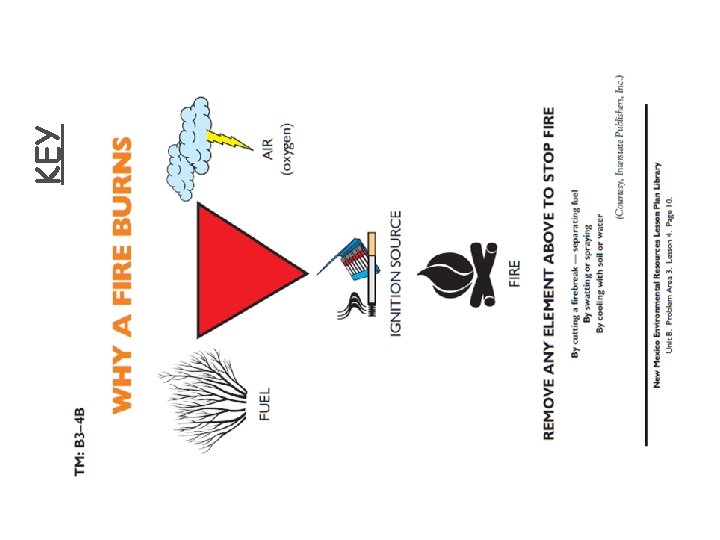
KEY
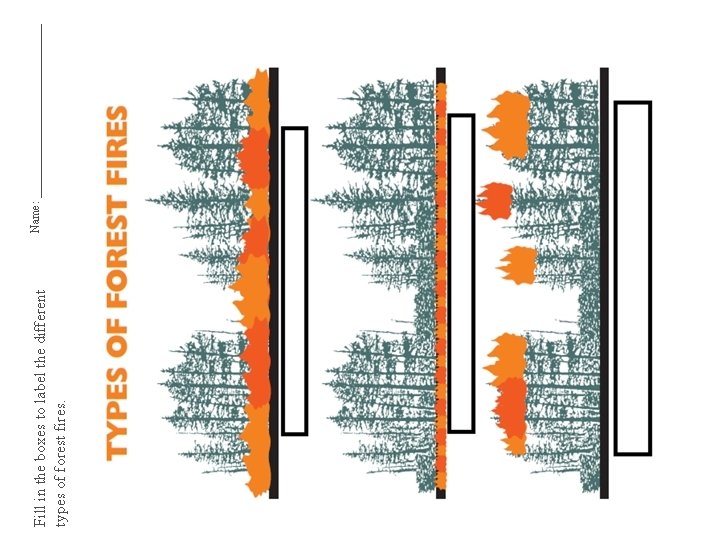
Fill in the boxes to label the different types of forest fires. Name: _______________
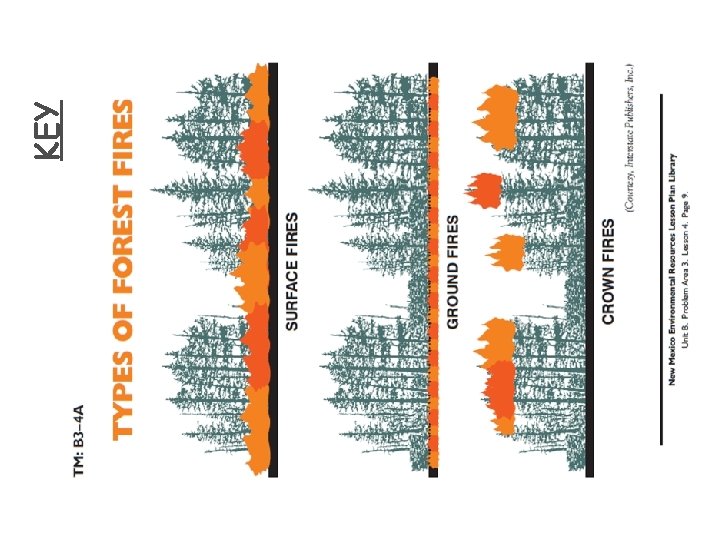
KEY
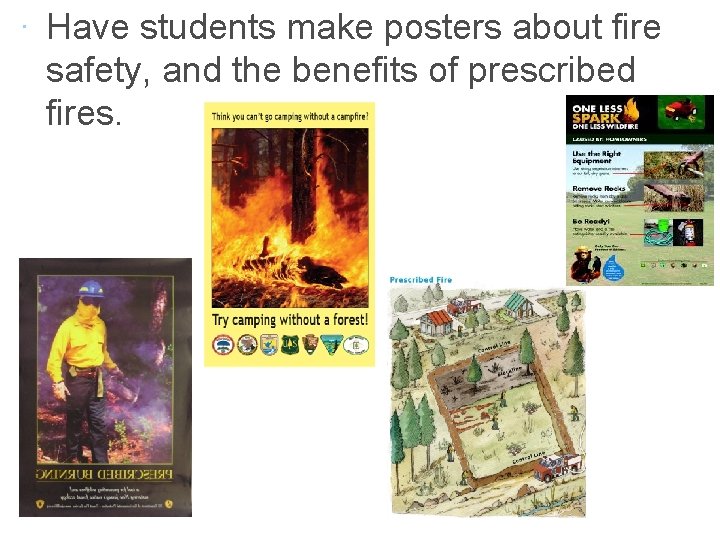
· Have students make posters about fire safety, and the benefits of prescribed fires.
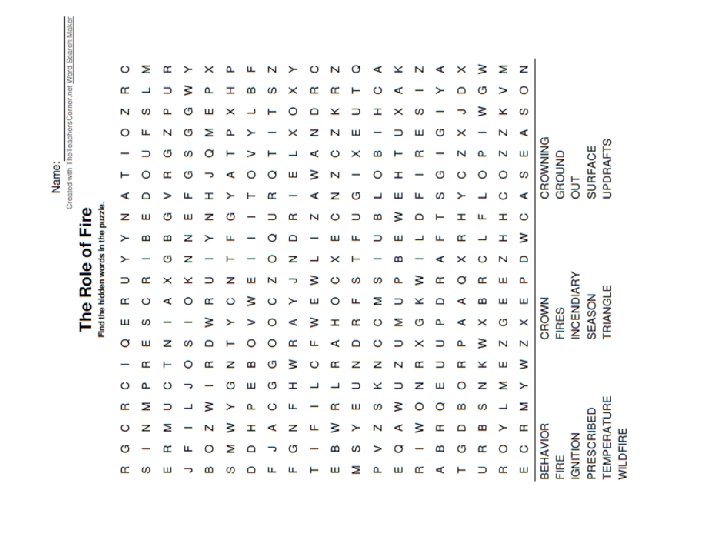

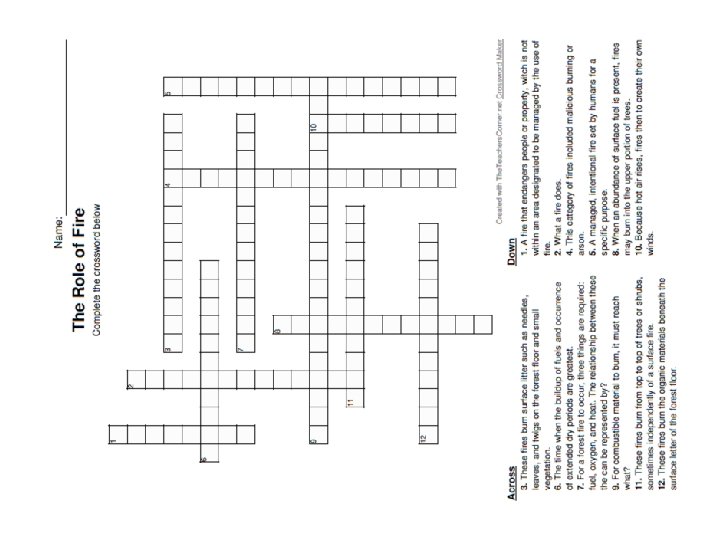
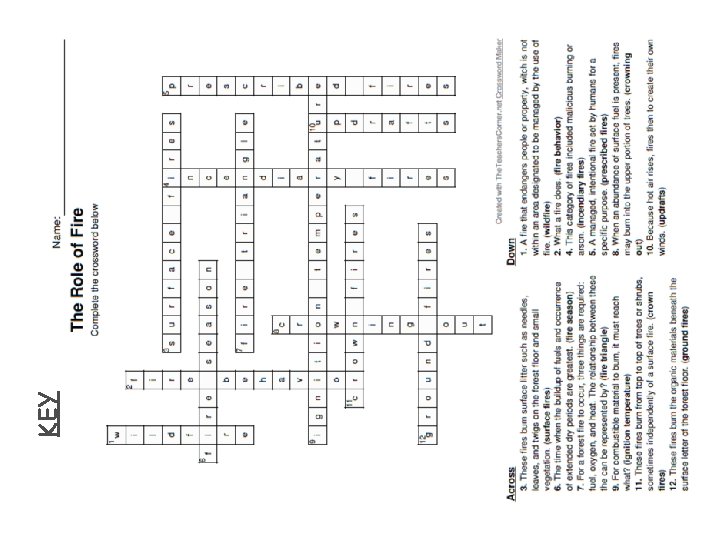
KEY
Jeopardy Understanding the Role of Fire in Forest Management.
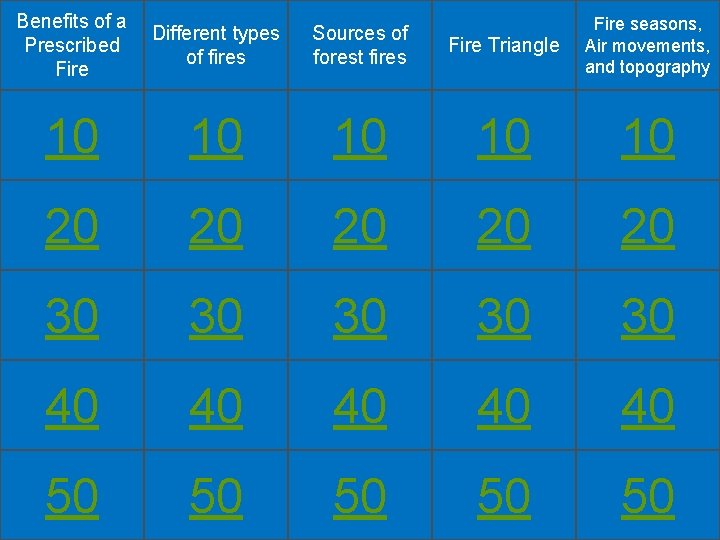
Benefits of a Prescribed Fire Different types of fires Sources of forest fires Fire Triangle Fire seasons, Air movements, and topography 10 10 10 20 20 20 30 30 30 40 40 40 50 50 50
Question 1 -10 · Prescribed burns help reduce the hazard of wildfires by?
Answer 1 -10 · Prescribed burns help reduce the hazard of wildfires by removing fuel from the forest floor.
Question 1 -20 · How can prescribed burns help in preparing sites for seedling and planting?
Answer 1 -20 · A prescribed burn can remove other plants that will act as competition for nutrients and water to the new trees.
Question 1 -30 · How do prescribed burns help unclutter forest understory?
Answer 1 -30 · Prescribed burns help unclutter forest understory by removing undesirable trees and brush.
Question 1 -40 · What do prescribed burns assist in controlling?
Answer 1 -40 · Prescribed burns assist in controlling forest diseases.
Question 1 -50 · How do prescribed burns help improve the quality of grass for grazing?
Answer 1 -50 · Prescribed burns helps improve the quality of grass for grazing by removing brush and dried weeds.
Question 2 -10 · What are three general groups of forest fires?
Answer 2 -10 1. Surface fires 2. Ground fires 3. Crown fires
Question 2 -20 · How many different types of fires can occur within the same forest fire?
Answer 2 -20 · More than one type of fire may occur within the same forest fire.
Question 2 -30 · In peat bogs or swamps where do ground fires burn?
Answer 2 -30 · In pear bogs or swamps, ground fires may burn many feet below the ground surface in the deep, organic material.
Question 2 -40 · What type of fire is the fastest spreading?
Answer 2 -40 · Crown fires are the fastest spreading of all types of fires.
Question 2 -50 · What is the most common kind of fire?
Answer 2 -50 · Surface fires are the most common kind of fires.
Question 3 -10 · What is the cause of the majority of forest fires?
Answer 3 -10 · People cause the majority of forest fires.
Question 3 -20 · What is the main natural cause of forest fires?
Answer 3 -20 · Forest fires can be caused naturally, often by lighting strikes.
Question 3 -30 · Describe incendiary fires.
Answer 3 -30 · Incendiary fires are fires that include malicious burning or arson. They also includes fires that were set as prescribed fires, but hot out of control.
Question 3 -40 · Describe Debris burning.
Answer 3 -40 · Debris burning is the burning of trash, brush, tree tops, and branches after harvest often gets out of control and causes a great deal of damage.
Question 3 -50 · Why are smokers less of a problem then in the past?
Answer 3 -50 · Through education campaigns, the number of fires started by the careless discarding of a match or cigarette had been reduced.
Question 4 -10 · What kind of process in fire?
Answer 4 -10 · Fire is both a physical and chemical process.
Question 4 -20 · For a forest fire to occur what three things are required?
Answer 4 -20 · For a forest fire to occur, three things are required: 1. Fuel 2. Oxygen 3. Heat
Question 4 -30 · What happens if one factor is removed?
Answer 4 -30 · If one factor is removed, the fire goes out.
Question 4 -40 · What is fuel?
Answer 4 -40 · Fuel is something that can burn. · For example: trees, dead leaves, grasses, forest litter, and many other things in the forest are combustible.
Question 4 -50 · What must happen for a combustible material to burn?
Answer 4 -50 · For a combustible material to burn, it must reach its ignition temperature.
Question 5 -10 · When is fire season in the North and the West?
Answer 5 -10 · In the North and the West, the summer months are generally the period of most fires.
Question 5 -20 · What dose “Fire Season” mean?
Answer 5 -20 · The fire season refers to the time when the buildup of fuels and the occurrence of extended dry periods are greatest.
Question 5 -30 · What can updrafts in fires do?
Answer 5 -30 · Updrafts may carry sparks into upper winds, which then scatter them into unburned areas and can cause the fires to grow.
Question 5 -40 · Why do fires move up steeper slopes faster?
Answer 5 -40 · The steeper the terrain, the more rapidly the fuel comes into contact with the flames.
Question 5 -50 · Why is wind a bad thing when trying to fight fires?
Answer 5 -50 · The speed and direction of the wind at different levels, including both horizontal and vertical movements, govern the duration and speed of the fire. · Wind adds to the severity of the fire by drying out the vegetation and fuel.
- Slides: 111