
Lesson Aims 1 Examine the skills needed in
- Slides: 26
Lesson Aims 1. Examine the skills needed in order to conduct a good interview 2. Identify the main types of interviews used in sociological research 3. Examine the usefulness of interviews in sociological research
Research Methods: Interviews Tuesday 25 th April 2017.
When would the use of Interviews be most appropriate in social research?
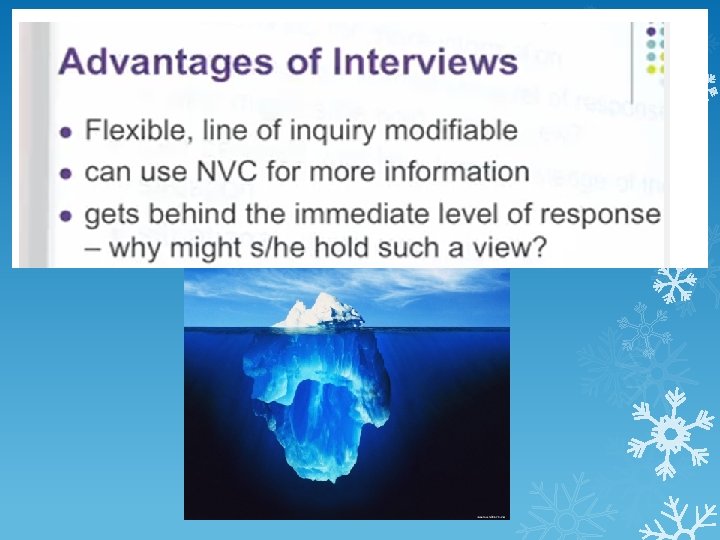
Interviews remain the most common data collection method in qualitative research Interviews are a familiar and flexible way of asking people about their opinions and experiences.
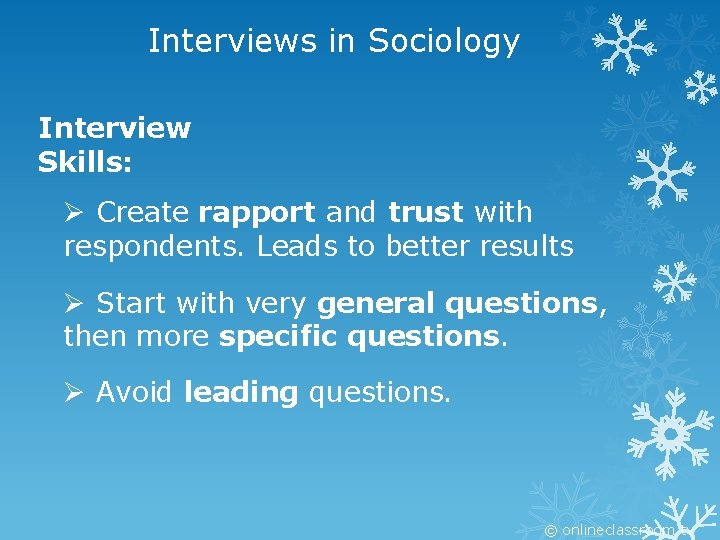
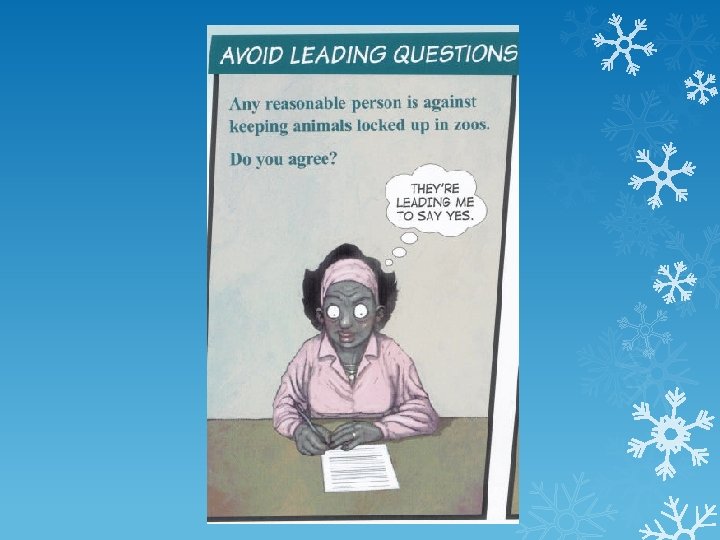
Interviews in Sociology Interview Skills: Ø Create rapport and trust with respondents. Leads to better results Ø Start with very general questions, then more specific questions. Ø Avoid leading questions. © onlineclassroom. tv
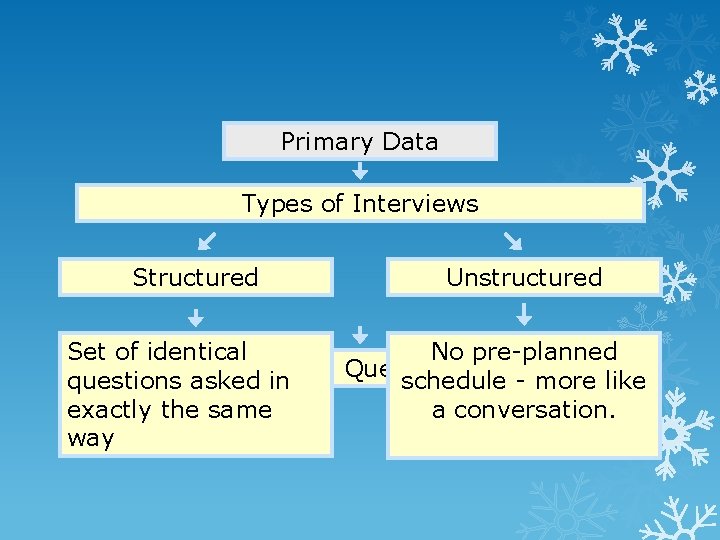
Primary Data Types of Interviews Structured Unstructured Set of identical No pre-planned Questions questions asked. Asking in schedule - more like exactly the same a conversation. way
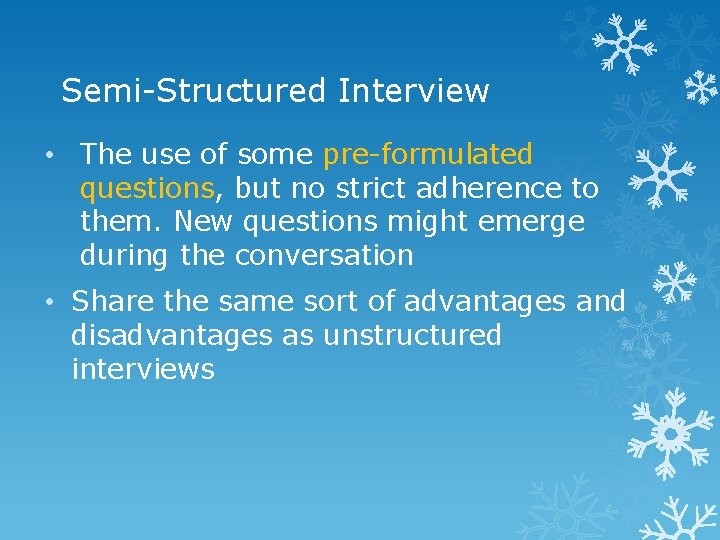
Semi-Structured Interview • The use of some pre-formulated questions, but no strict adherence to them. New questions might emerge during the conversation • Share the same sort of advantages and disadvantages as unstructured interviews
Validity vs Reliability
Structured Interviews • Structured Interviews are based on a standardised list of prepared questions administered by an interviewer • Questions can be open and closed
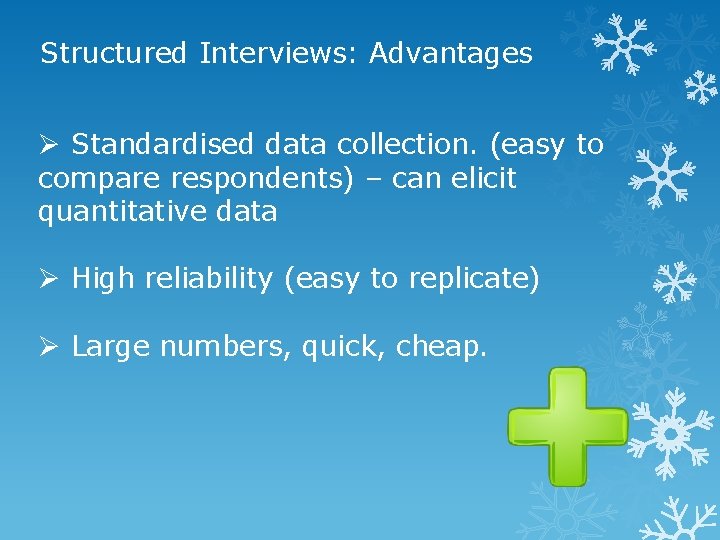
Structured Interviews: Advantages Ø Standardised data collection. (easy to compare respondents) – can elicit quantitative data Ø High reliability (easy to replicate) Ø Large numbers, quick, cheap.
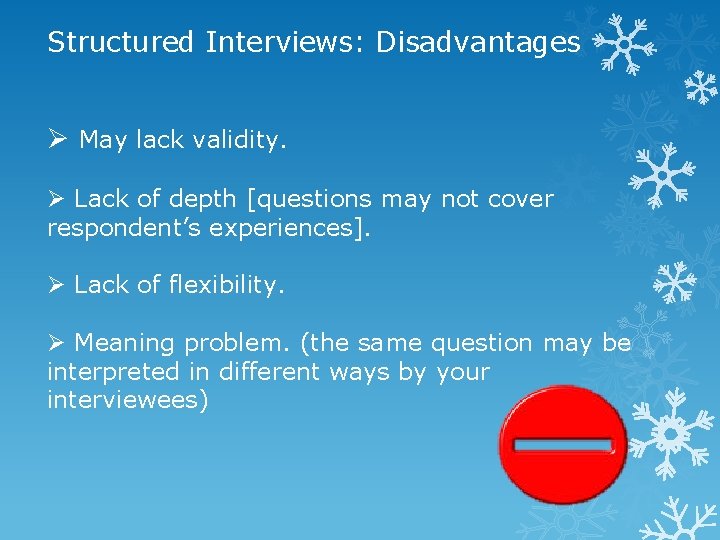
Structured Interviews: Disadvantages Ø May lack validity. Ø Lack of depth [questions may not cover respondent’s experiences]. Ø Lack of flexibility. Ø Meaning problem. (the same question may be interpreted in different ways by your interviewees)
Unstructured interview • Unstructured interviews are like conversations • No pre planned questions • Questions are added or adapted at the interview progresses.
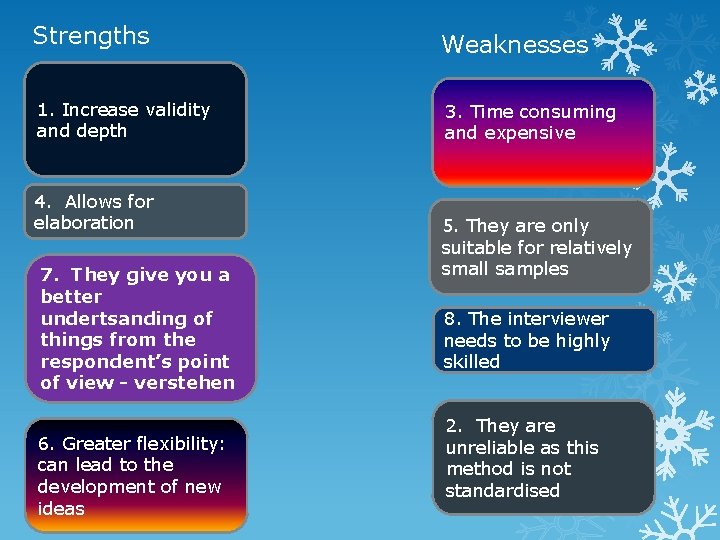
Strengths Weaknesses 1. Increase validity and depth 3. Time consuming and expensive 4. Allows for elaboration 7. They give you a better undertsanding of things from the respondent’s point of view - verstehen 6. Greater flexibility: can lead to the development of new ideas 5. They are only suitable for relatively small samples 8. The interviewer needs to be highly skilled 2. They are unreliable as this method is not standardised
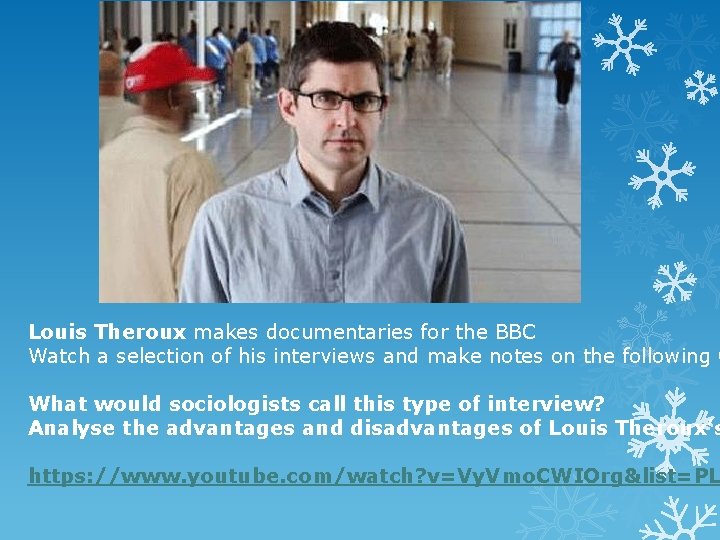
Louis Theroux makes documentaries for the BBC Watch a selection of his interviews and make notes on the following Q What would sociologists call this type of interview? Analyse the advantages and disadvantages of Louis Theroux’s https: //www. youtube. com/watch? v=Vy. Vmo. CWIOrg&list=PL
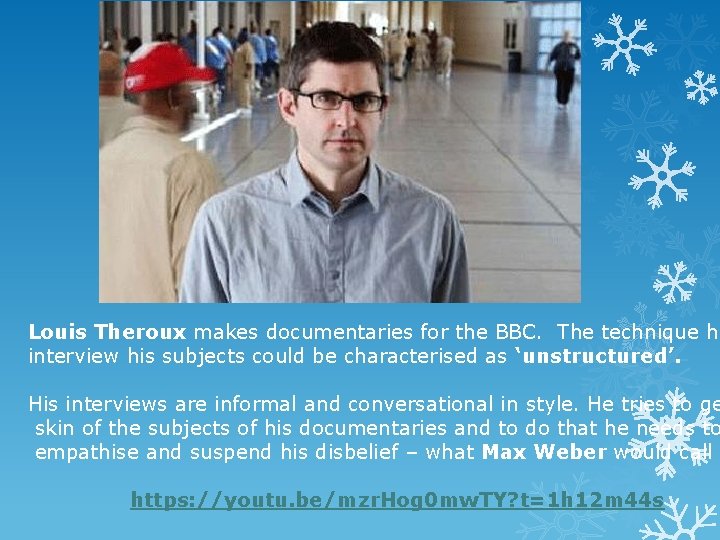
Louis Theroux makes documentaries for the BBC. The technique he interview his subjects could be characterised as ‘unstructured’. His interviews are informal and conversational in style. He tries to ge skin of the subjects of his documentaries and to do that he needs to empathise and suspend his disbelief – what Max Weber would call ‘ https: //youtu. be/mzr. Hog 0 mw. TY? t=1 h 12 m 44 s
Different stances taken by the interviewer Non-Directive style of interviewing The interviewer should adopt a neutral role and avoid any commentary on the answers respondents give, to avoid affecting the answers to later questions. Would there be any advantages in using a more assertive, aggressive style of interviewing such as the style sometimes seen on news programmes? https: //youtu. be/Uwlsd 8 RAoq. I? t=2 m 36 s
Different stances taken by the interviewer Assertive, aggressive style of interviewing Becker suggests this approach is more likely to squeeze information out of some respondents This may involve the interviewer playing the devil’s advocate or ‘winding people up’ in the hope of prompting the respondent into saying more
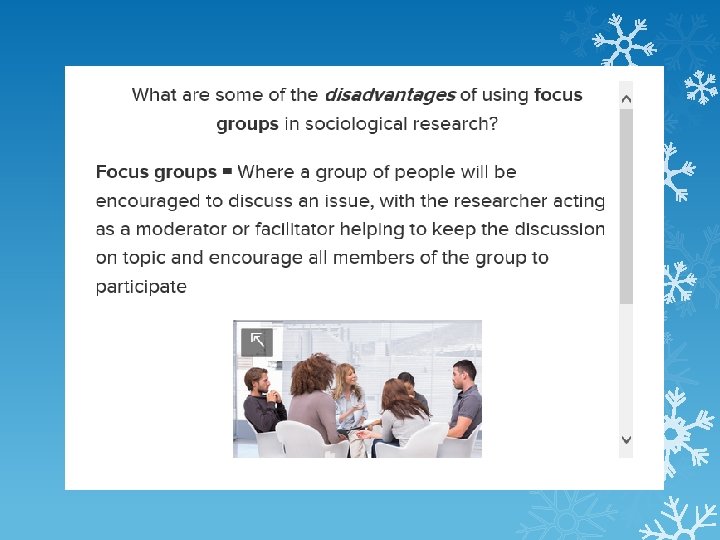
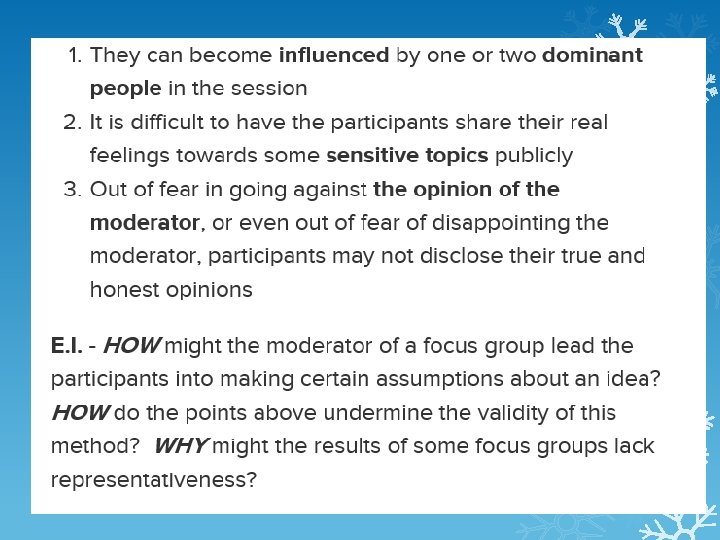
Group Interviews Done with multiple interviewees at the same time WHEN MIGHT THIS BE USEFUL OR APPROPRIATE? This is used when the researcher is particularly interested in the interaction between the people being interviewed Group interviews can be transformed into focus groups if you do more than simply ask questions (e. g. case study material, card sorts, deciding a list of priorities etc. ) It is argued that focus groups provide a supportive environment for people to express themselves https: //www. youtube. com/watch? v=ZLw 0 YXcse. G 0
Limitations of All Interviews: • Interviewer bias – Interviewer may ask leading questions, which is more of a danger in unstructured interview as this can influence the answer. Versheten (pronounced ‘ferchaen’) - try to see it from interviewees perspective, prevents the imputing of meanings and values into research • Interview Effect - may give ‘socially expected’ answers. Hawthorne Effect - Changes in the behaviour of participants resulting from an awareness that they are taking part in an experiment/research. • Lack of ecological validity - cannot tell us how people really behave. • Ethical issues – not informing interviewees the real purpose of interview
EXTENSION TASK: Read the statements at the end of your worksheet and indicate whether they apply to structured or unstructured interviews 10 mins
TASK: Worksheet – exam practice 10 mins