
Lesson 9 Articulations Dynamics Dynamics and Articulations tell
- Slides: 14
Lesson #9 : Articulations & Dynamics • Dynamics and Articulations tell you HOW to play the music. – Loud/Soft – Short/Connected – Accented/Marcato (Terminology) • We will discuss what to look for and how to interpret these markings. All contents of this presentation: © 2007 TB Music Some definitions were taken from : The Hal Leonard Pocket Music Dictionary (1993) The Basic Guide to How to Read Music by Helen Cooper (1986)
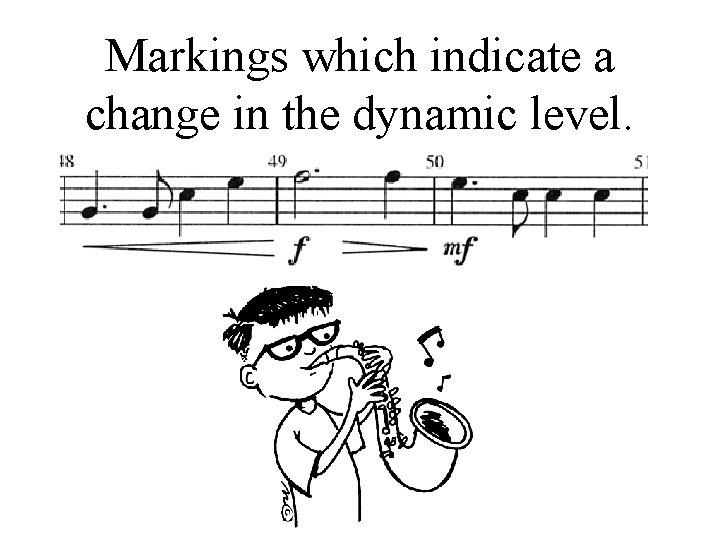
Dynamics indicate how loud or soft to play. • Two types of Dynamics : –Stable or Step Dynamic indicators –Markings which indicate a change in the dynamic level.
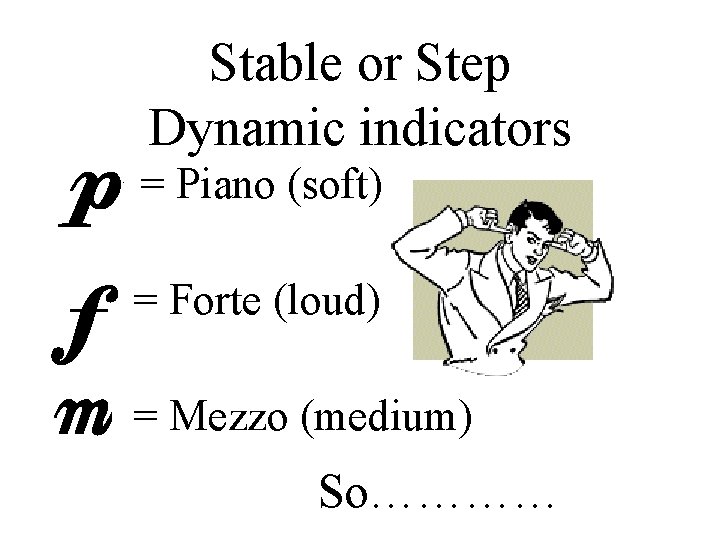
Stable or Step Dynamic indicators = Piano (soft) = Forte (loud) = Mezzo (medium) So…………
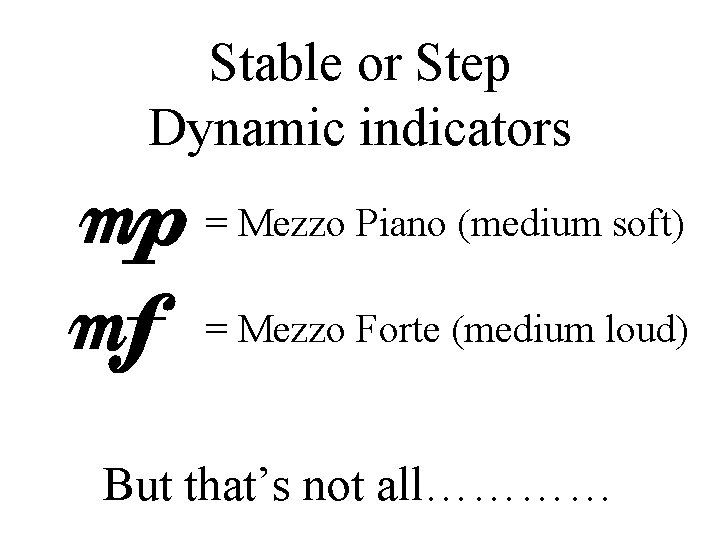
Stable or Step Dynamic indicators = Mezzo Piano (medium soft) = Mezzo Forte (medium loud) But that’s not all…………
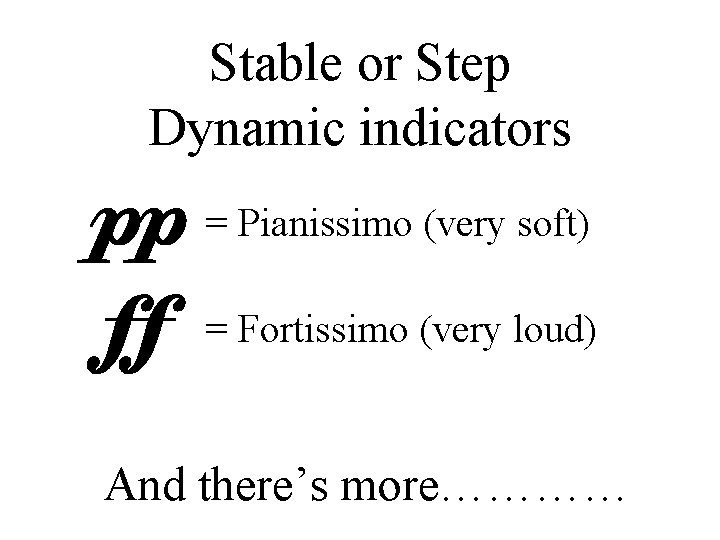
Stable or Step Dynamic indicators = Pianissimo (very soft) = Fortissimo (very loud) And there’s more…………
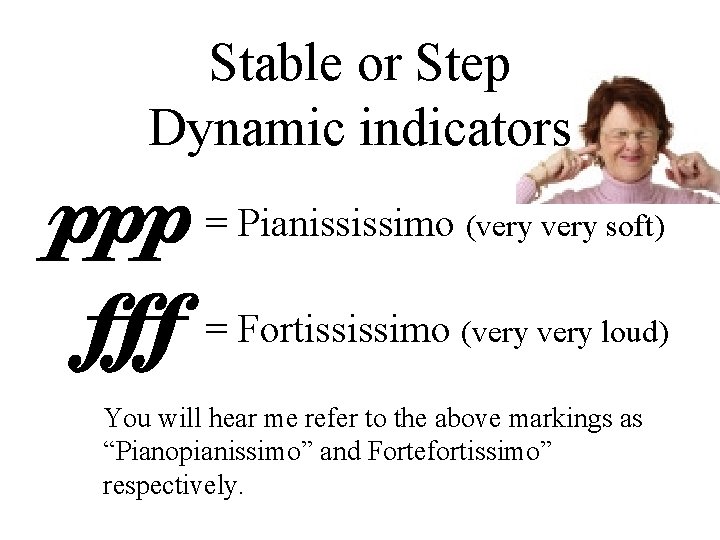
Stable or Step Dynamic indicators = Pianississimo (very soft) = Fortississimo (very loud) You will hear me refer to the above markings as “Pianopianissimo” and Fortefortissimo” respectively.
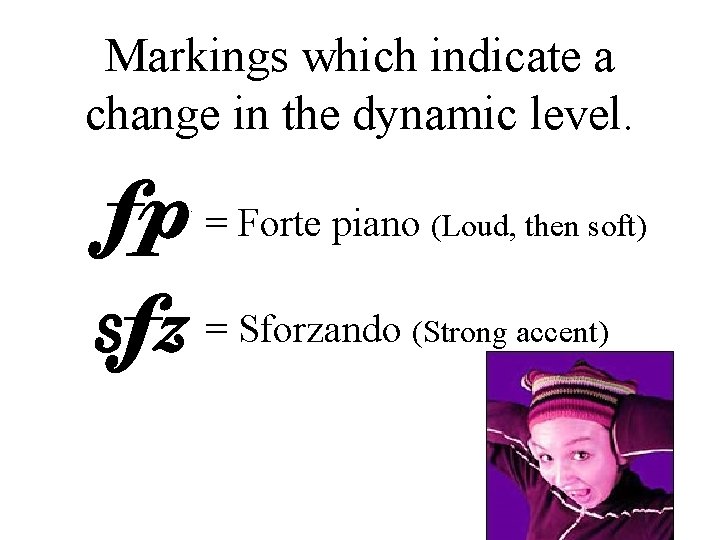
Markings which indicate a change in the dynamic level. = Forte piano (Loud, then soft) = Sforzando (Strong accent)
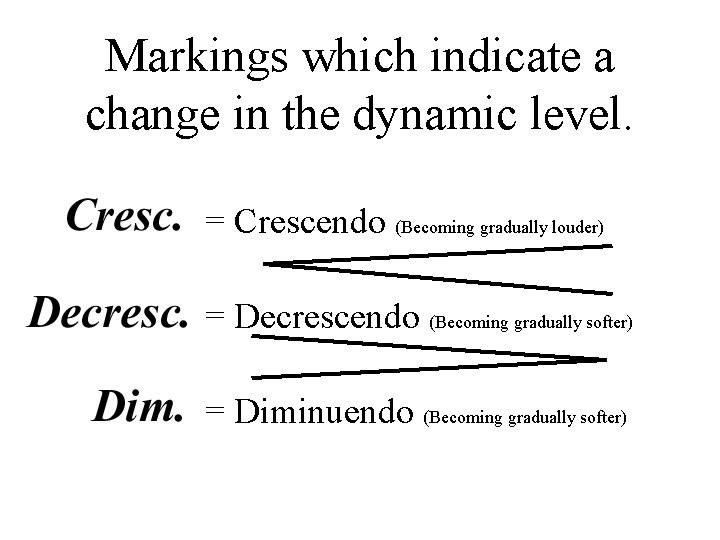
Markings which indicate a change in the dynamic level. = Crescendo (Becoming gradually louder) = Decrescendo (Becoming gradually softer) = Diminuendo (Becoming gradually softer)
Markings which indicate a change in the dynamic level.
Articulations : Markings assigned to individual notes which indicate the degree to which notes are separated or connected.
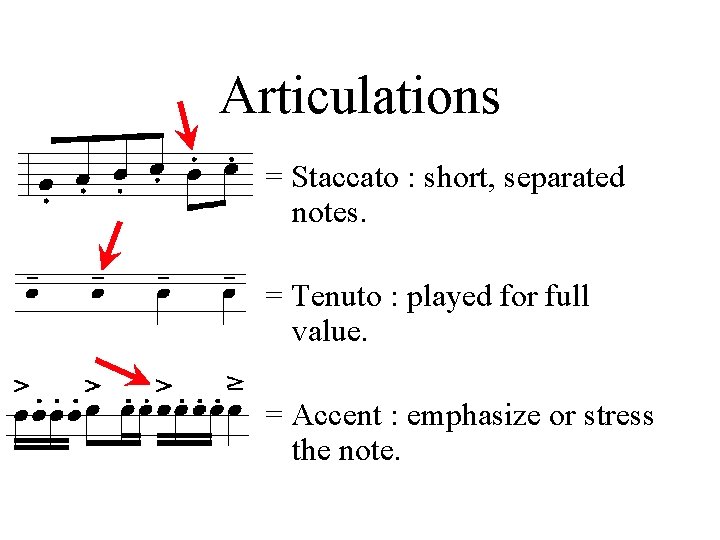
Articulations = Staccato : short, separated notes. = Tenuto : played for full value. = Accent : emphasize or stress the note.
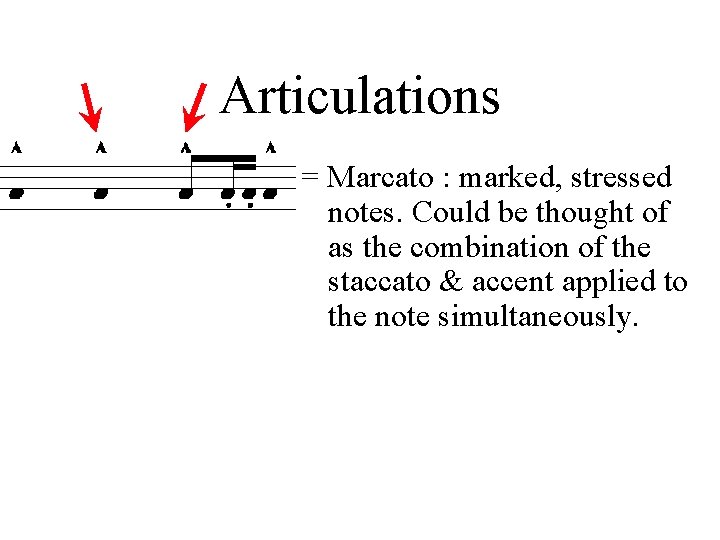
Articulations = Marcato : marked, stressed notes. Could be thought of as the combination of the staccato & accent applied to the note simultaneously.
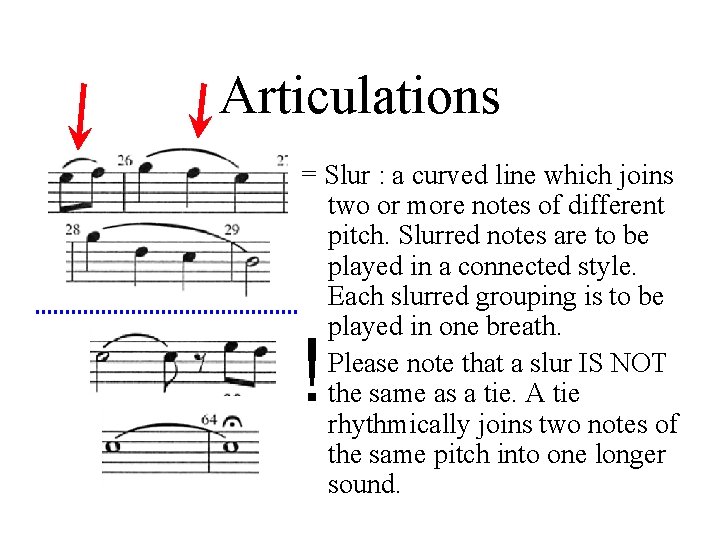
Articulations = Slur : a curved line which joins two or more notes of different pitch. Slurred notes are to be played in a connected style. Each slurred grouping is to be played in one breath. Please note that a slur IS NOT the same as a tie. A tie rhythmically joins two notes of the same pitch into one longer sound. !
Next Lesson : Lesson #10 : Sight Reading! • Playing a printed piece of music for the first time WITHOUT rehearsing it. • But HOW can I play this music the first time I see it without practicing? ? !!! • Like anything else the key to success is all in the way you THINK about it. • With the right thought sequence you will be able to play music you’ve never seen before with most of the right rhythms and notes without getting lost!