
Lesson 9 3 Algae VS Plants Refer to

- Slides: 16
Lesson 9. 3: Algae VS Plants *Refer to Chapter 5 in your Textbook
Learning Goals: 1. I can differentiate between algae and marine plants. 2. I can label & describe the structure of both algae and marine plants. 3. I can explain the ecological role of both algae and marine plants.
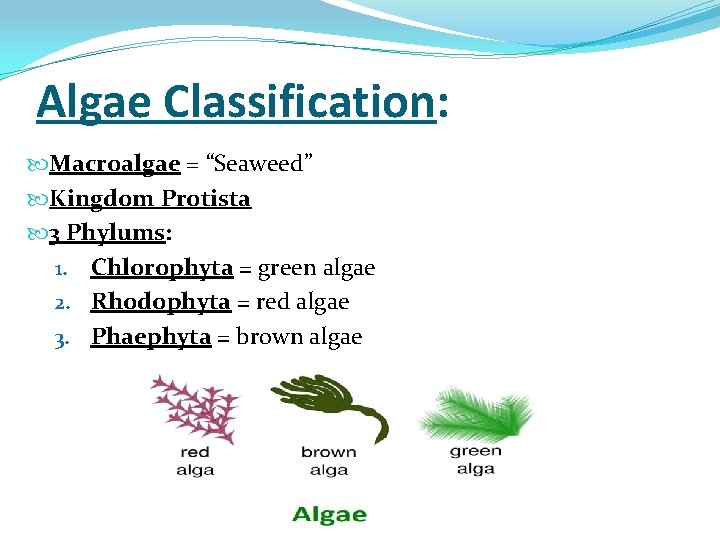
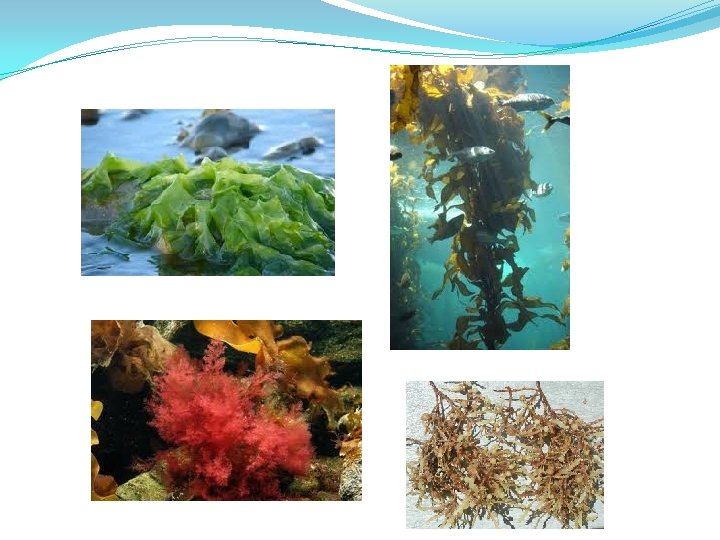
Algae Classification: Macroalgae = “Seaweed” Kingdom Protista 3 Phylums: 1. Chlorophyta = green algae 2. Rhodophyta = red algae 3. Phaephyta = brown algae
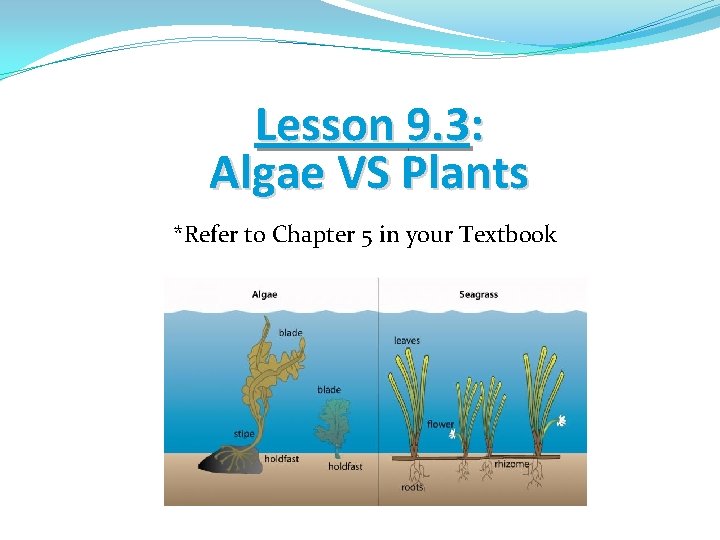
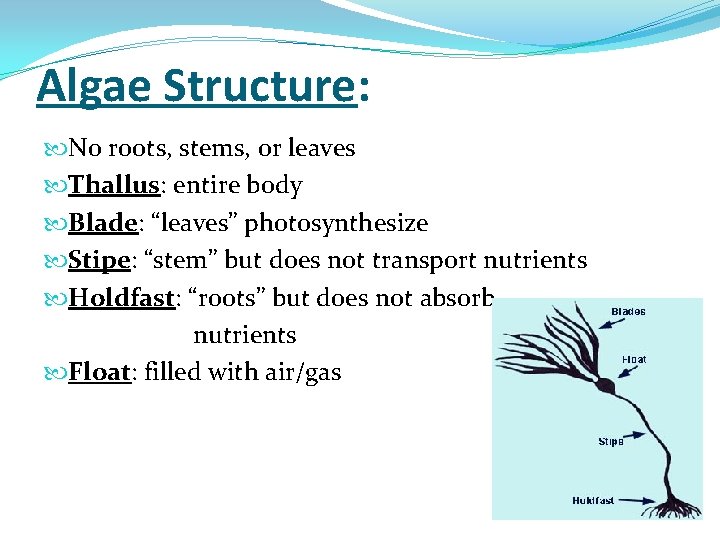
Algae Structure: No roots, stems, or leaves Thallus: entire body Blade: “leaves” photosynthesize Stipe: “stem” but does not transport nutrients Holdfast: “roots” but does not absorb nutrients Float: filled with air/gas
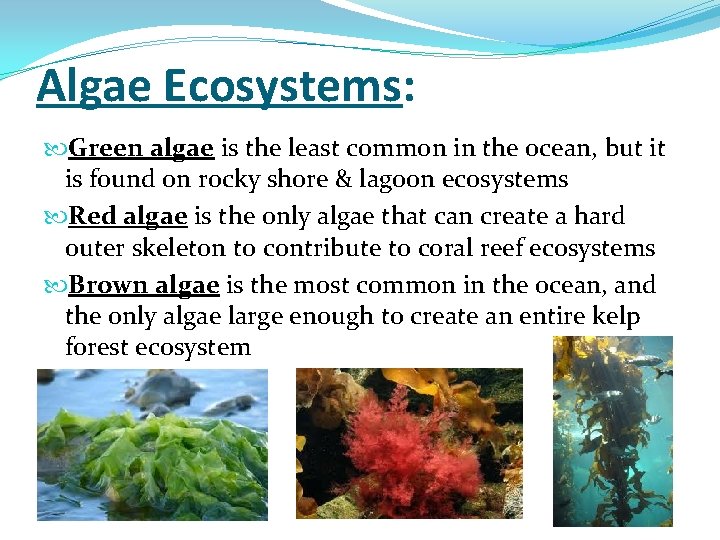
Algae Ecosystems: Green algae is the least common in the ocean, but it is found on rocky shore & lagoon ecosystems Red algae is the only algae that can create a hard outer skeleton to contribute to coral reef ecosystems Brown algae is the most common in the ocean, and the only algae large enough to create an entire kelp forest ecosystem
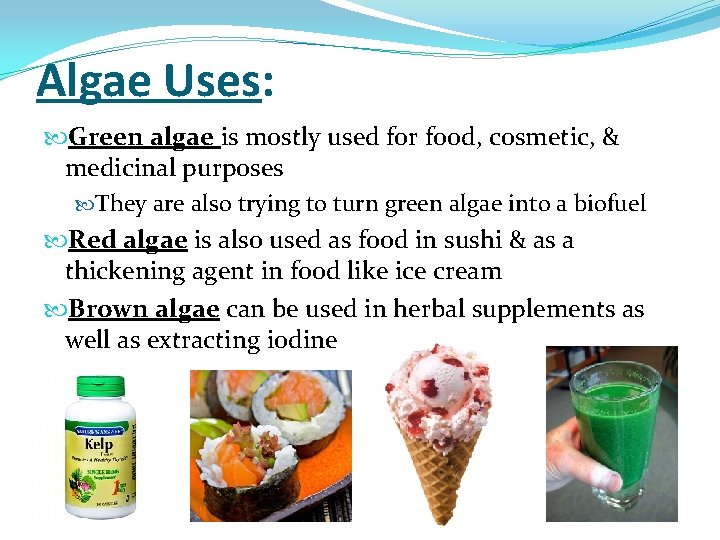
Algae Uses: Green algae is mostly used for food, cosmetic, & medicinal purposes They are also trying to turn green algae into a biofuel Red algae is also used as food in sushi & as a thickening agent in food like ice cream Brown algae can be used in herbal supplements as well as extracting iodine
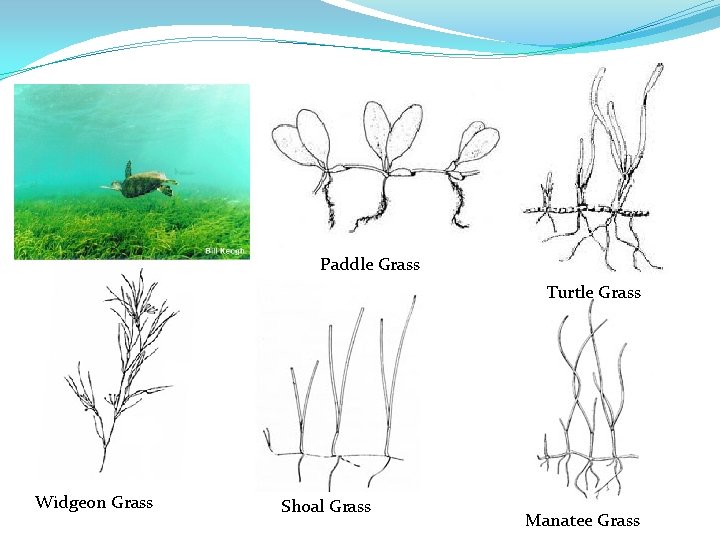
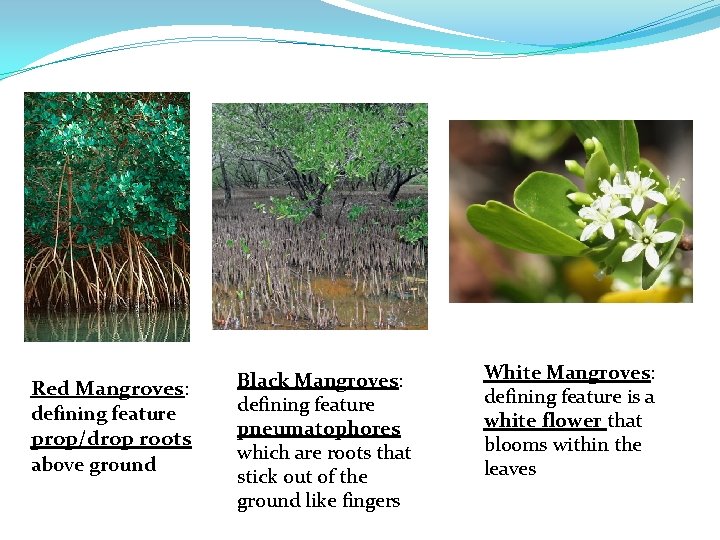
Marine Plant Classification: Kingdom Plantae Phylum Anthophyta = flowering plants (seagrass & mangroves) 3 Types of Mangroves = 1. Red 2. Black 3. White LOTS of types of Seagrass is considered to be the only “truly marine plant” Hydrophyte: lives submerged beneath the water
Paddle Grass Turtle Grass Widgeon Grass Shoal Grass Manatee Grass
Red Mangroves: defining feature prop/drop roots above ground Black Mangroves: defining feature pneumatophores which are roots that stick out of the ground like fingers White Mangroves: defining feature is a white flower that blooms within the leaves
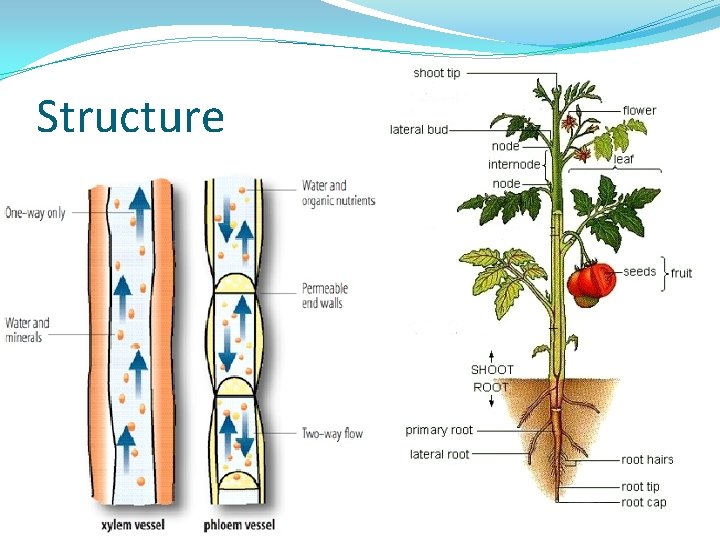
Marine Plant Structure: Structurally more complex than algae: Leaf: where photosynthesis occurs & gas is released Stem: transports water & nutrients through plant Roots: absorb water & nutrients, anchor plant Seed: contains a dormant embryonic plant Fruit: layers of tissue protecting the seed Vascular Tissues: Phloem: carries nutrients from roots to other parts of the plant Xylem: carries water, provides structural support
Structure
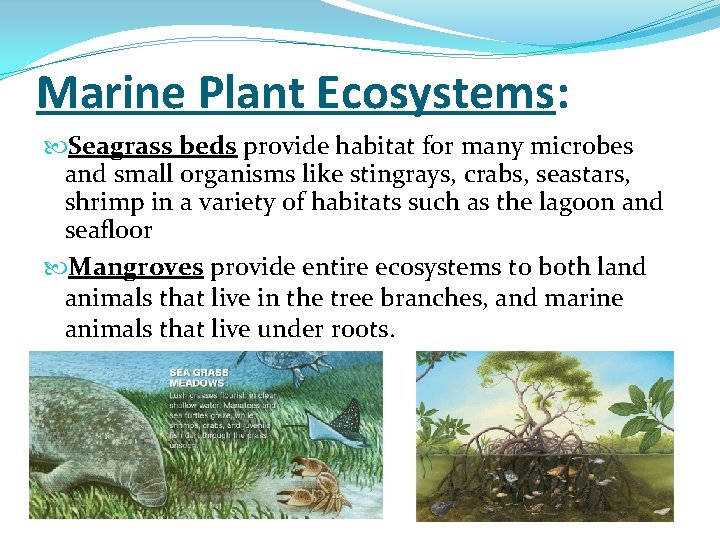
Marine Plant Ecosystems: Seagrass beds provide habitat for many microbes and small organisms like stingrays, crabs, seastars, shrimp in a variety of habitats such as the lagoon and seafloor Mangroves provide entire ecosystems to both land animals that live in the tree branches, and marine animals that live under roots.
Marine Plant Uses: Both seagrass and mangrove leaves are food for herbivores Seagrass reduces turbidity (cloudiness) because the roots stabilize the ocean floor preventing currents and waves from stirring up sediments Mangroves protect coastlines from storm erosion and create nurseries for baby animals Plant Human Uses: Wood for hunting tools, contruction Creating furniture, rooftops, footwear, fishing line, etc Herbal medicinal recipes Etc.
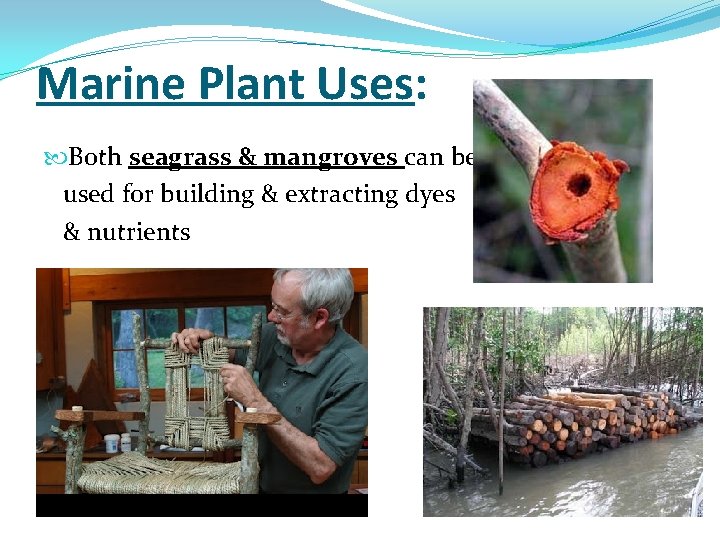
Marine Plant Uses: Both seagrass & mangroves can be used for building & extracting dyes & nutrients
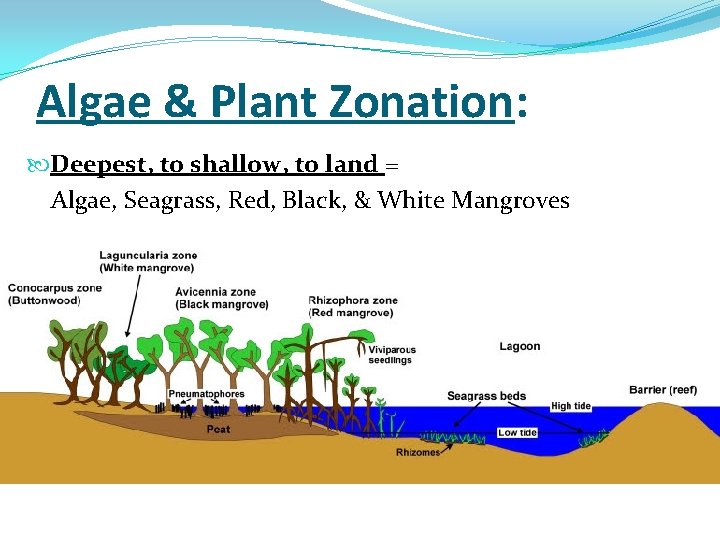
Algae & Plant Zonation: Deepest, to shallow, to land = Algae, Seagrass, Red, Black, & White Mangroves