
Lesson 8 Writing Body Paragraphs The Body Paragraphs
Lesson 8 Writing Body Paragraphs
The Body Paragraphs Now that you’ve written your introductory paragraph, you need to write your body paragraphs. The body paragraphs are where you present your paper’s main points and details that support your thesis or claim. The body paragraphs are the middle paragraphs that lie between the introduction and conclusion. Your body paragraphs should contain ample textual evidence, be correctly formatted, and have seamless transitions.
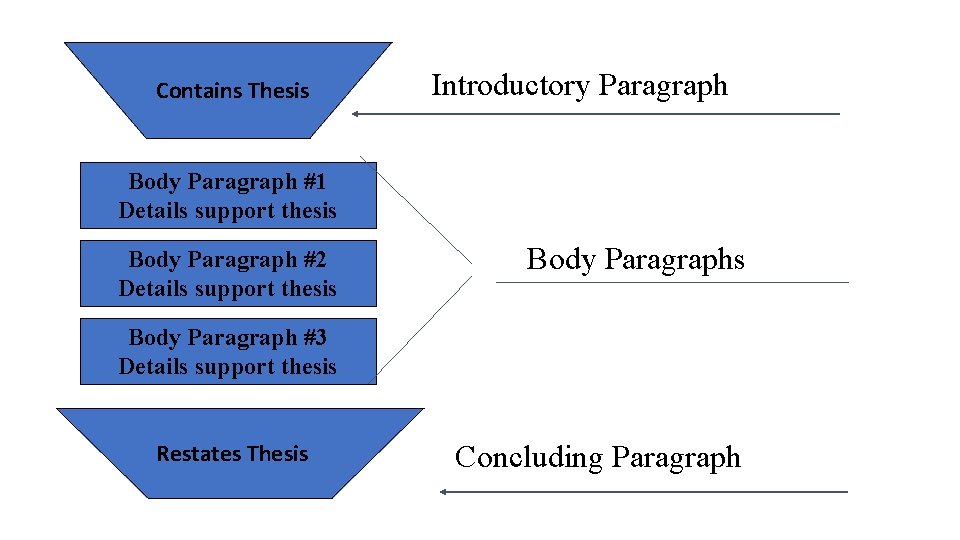
Contains Thesis Introductory Paragraph Body Paragraph #1 Details support thesis Body Paragraph #2 Details support thesis Body Paragraph #3 Details support thesis Restates Thesis Concluding Paragraph
Body Paragraphs Each body paragraph contains one main idea, backed up by textual evidence and your own analysis. Remember that (unless your teacher specifically says so), there’s nothing magic about having three body paragraphs. Have as many as you need to get your ideas across. But, for this assignment, we will use three body paragraphs. The topic sentences of your body paragraphs should be determined by how you grouped your notes when you were outlining.
Each body paragraph will have the same basic structure. Start by writing down one of your main ideas, in sentence form. This is your topic sentence. Readers like to know why they're reading a particular passage as soon as possible. That's why topic sentences are placed at the beginnings of paragraphs.
Supporting Information & Evidence Paragraphs should be constructed with some sense of internal order, so after the topic sentence, writers will need to deliver their first supporting detail. Supporting details should be facts, statistics, examples, quotes, transitions, and other sentences which support the topic sentence.
So, If your main idea is “Congestion on the highways is interfering with transportation, " you might say: Public transportation reduces freeway congestion. Then you might add the following supporting point and elaboration: Supporting Point: Commuters have turned to taking public transportation to save money and time. Elaboration: Less driving time means less maintenance and gas expenses and in many cases, these savings amount to more than the cost of riding public transportation.
This is the time to introduce evidence that proves thesis. Be certain to cite the source (author’s last name and page #) after each piece of evidence and explain how the evidence proves thesis in your own words.
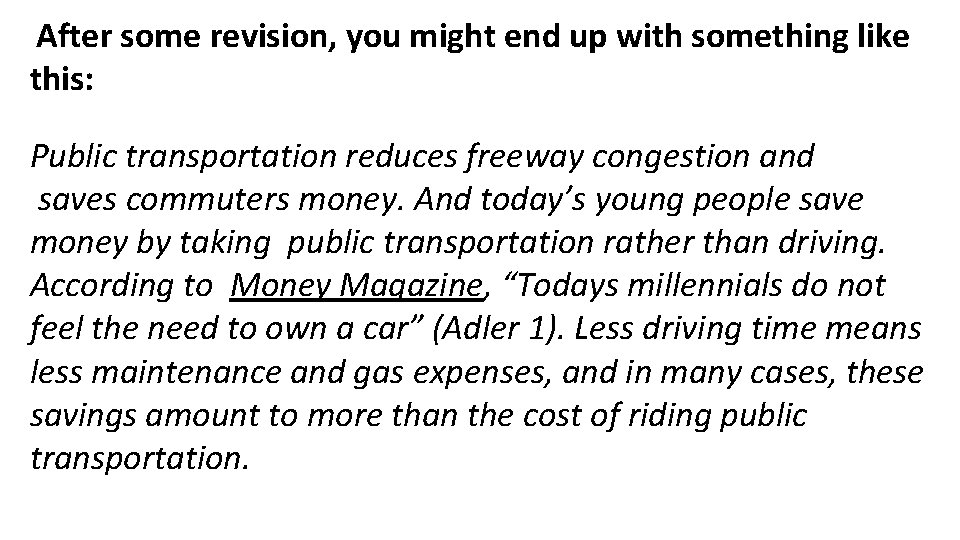
After some revision, you might end up with something like this: Public transportation reduces freeway congestion and saves commuters money. And today’s young people save money by taking public transportation rather than driving. According to Money Magazine, “Todays millennials do not feel the need to own a car” (Adler 1). Less driving time means less maintenance and gas expenses, and in many cases, these savings amount to more than the cost of riding public transportation.
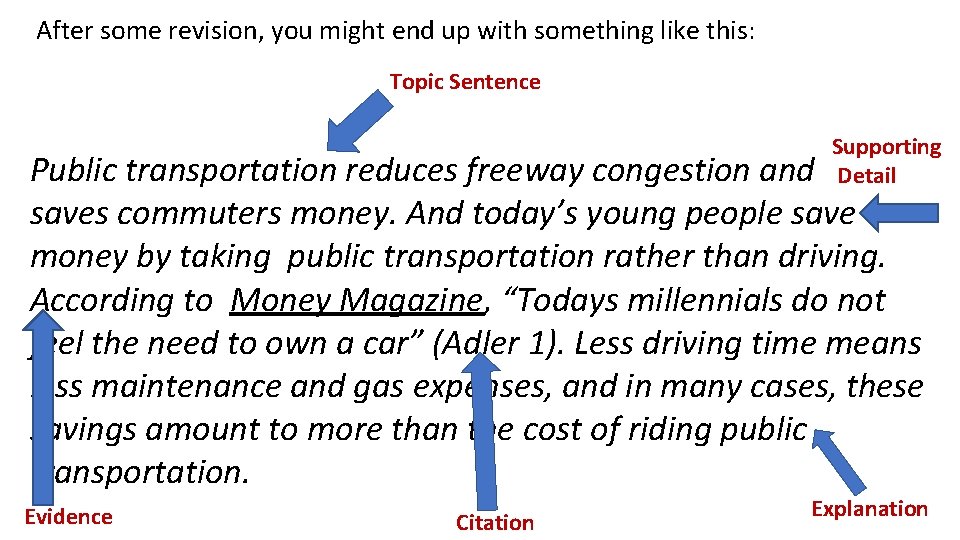
After some revision, you might end up with something like this: Topic Sentence Supporting Detail Public transportation reduces freeway congestion and saves commuters money. And today’s young people save money by taking public transportation rather than driving. According to Money Magazine, “Todays millennials do not feel the need to own a car” (Adler 1). Less driving time means less maintenance and gas expenses, and in many cases, these savings amount to more than the cost of riding public transportation. Evidence Citation Explanation
Let’s not forget transitions Transitions are a crucial part of every body paragraph, but not all topic sentences require a transition. If writers are composing their 1 st body paragraph, a transition within that first topic sentence will probably be useful. But if writers are composing their 2 nd or 3 rd body paragraph, a transition may not be necessary because the previous paragraph might have been concluded with a transition. Writers will have to decide where a transitional word or phrase fits best.
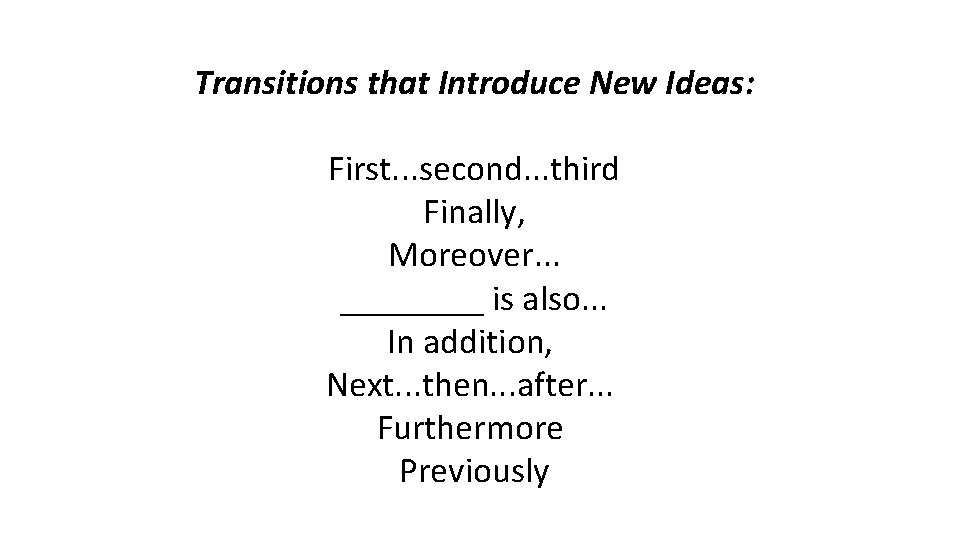
Transitions that Introduce New Ideas: First. . . second. . . third Finally, Moreover. . . ____ is also. . . In addition, Next. . . then. . . after. . . Furthermore Previously
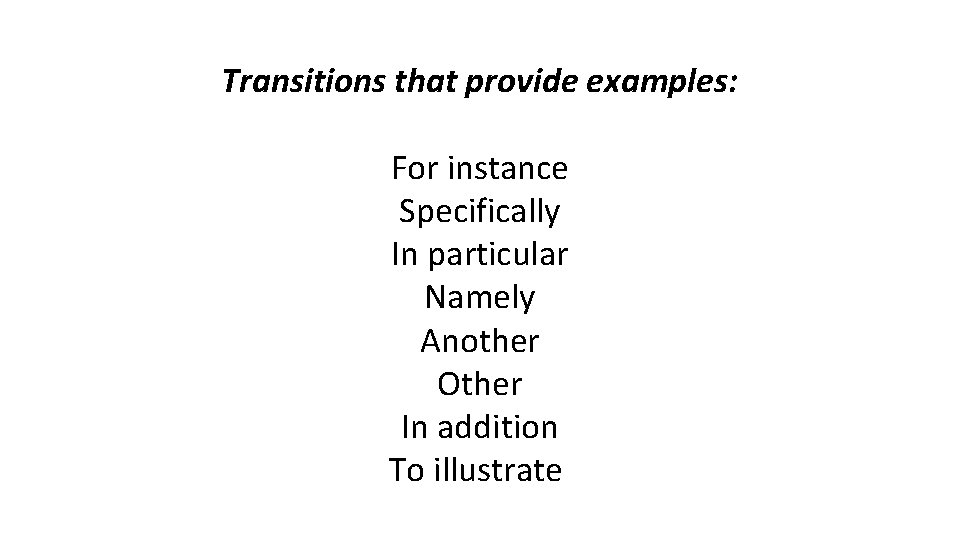
Transitions that provide examples: For instance Specifically In particular Namely Another Other In addition To illustrate
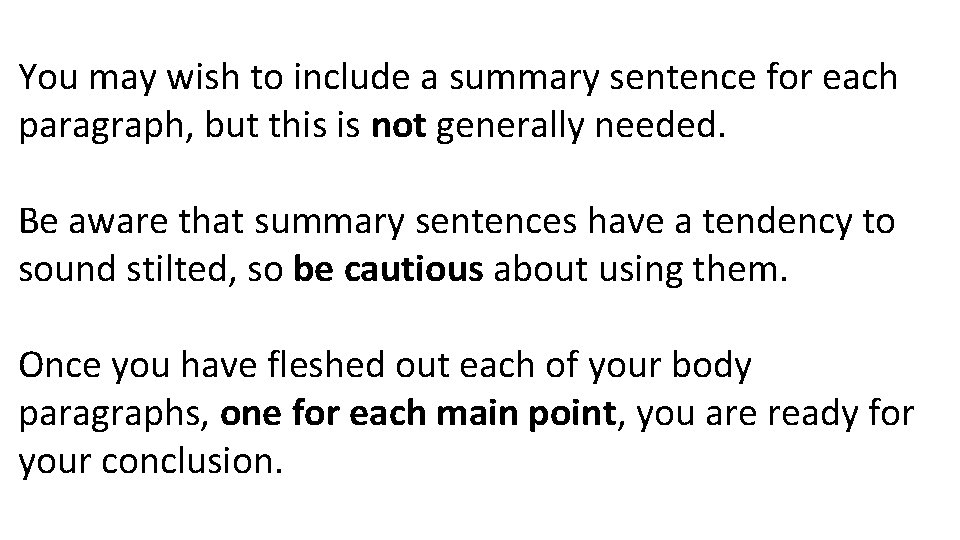
You may wish to include a summary sentence for each paragraph, but this is not generally needed. Be aware that summary sentences have a tendency to sound stilted, so be cautious about using them. Once you have fleshed out each of your body paragraphs, one for each main point, you are ready for your conclusion.
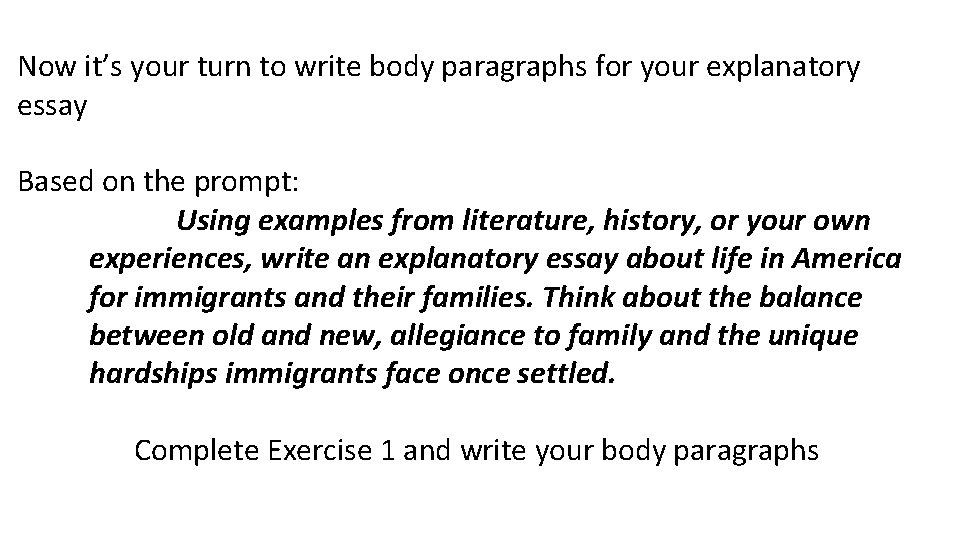
Now it’s your turn to write body paragraphs for your explanatory essay Based on the prompt: Using examples from literature, history, or your own experiences, write an explanatory essay about life in America for immigrants and their families. Think about the balance between old and new, allegiance to family and the unique hardships immigrants face once settled. Complete Exercise 1 and write your body paragraphs
- Slides: 15