
LESSON 8 BUILDING DESIGN AND CONSTRUCTION Learning Objectives
LESSON 8 BUILDING DESIGN AND CONSTRUCTION
Learning Objectives • List some objectives of fire safe building design • Describe several types of building construction • List common materials used in building construction • Explain the impact of fire in buildings • Describe possible building failures and concerns © 2004 National Fire Protection Association 2
Fire Protection Planning • Review systems effective in: – Detecting – Containing – Controlling • Integrated systems approach © 2004 National Fire Protection Association 3
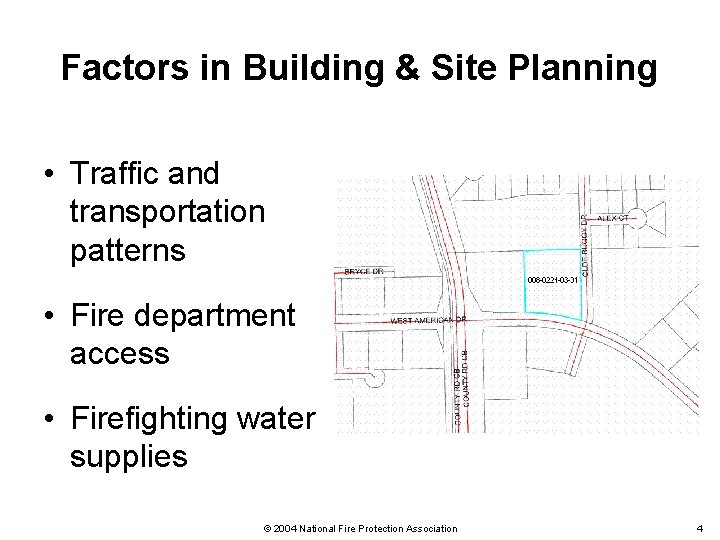
Factors in Building & Site Planning • Traffic and transportation patterns • Fire department access • Firefighting water supplies © 2004 National Fire Protection Association 4
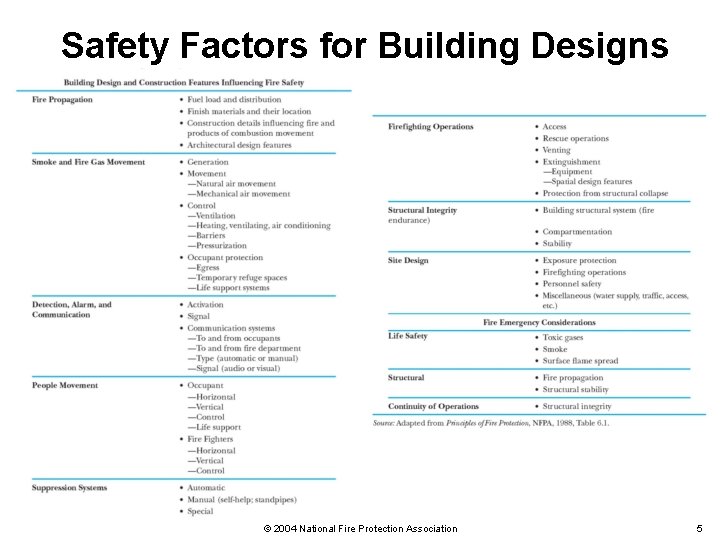
Safety Factors for Building Designs © 2004 National Fire Protection Association 5
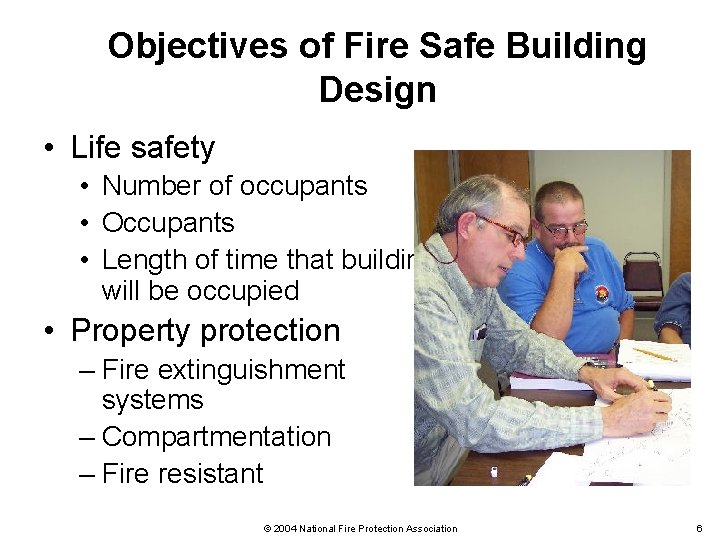
Objectives of Fire Safe Building Design • Life safety • Number of occupants • Occupants • Length of time that building will be occupied • Property protection – Fire extinguishment systems – Compartmentation – Fire resistant © 2004 National Fire Protection Association 6
Objectives of Fire Safe Building Design (cont. ) • Continuity of operations – Downtime – Install automatic fire extinguishment systems • Environmental protection – Air pollution – Water runoff – “Let it burn? ” © 2004 National Fire Protection Association 7
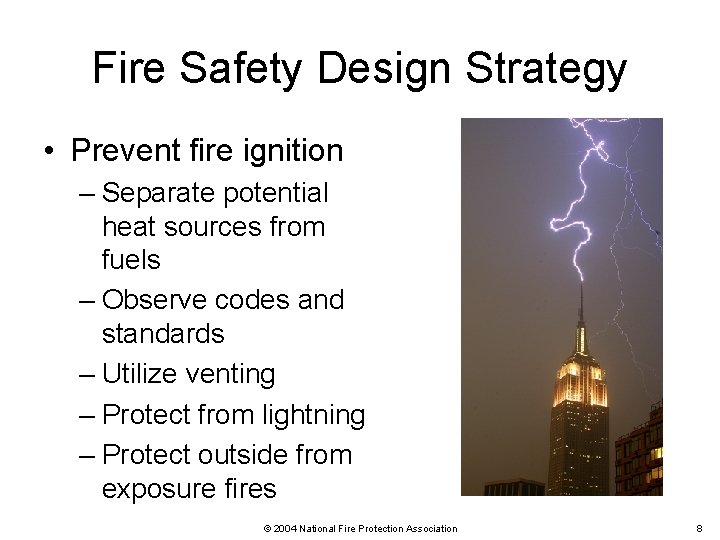
Fire Safety Design Strategy • Prevent fire ignition – Separate potential heat sources from fuels – Observe codes and standards – Utilize venting – Protect from lightning – Protect outside from exposure fires © 2004 National Fire Protection Association 8
Control Combustion Process • • • Fuel load Interior finish of the room Air supply Size shape and construction of the room Fire Load © 2004 National Fire Protection Association 9
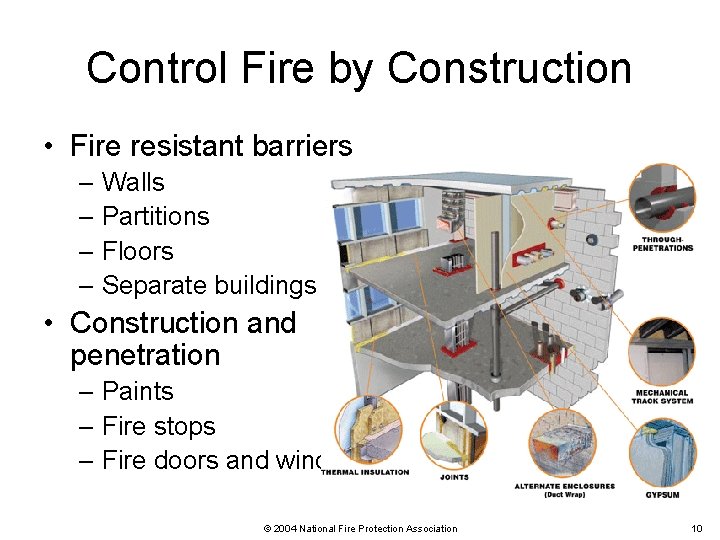
Control Fire by Construction • Fire resistant barriers – Walls – Partitions – Floors – Separate buildings • Construction and penetration – Paints – Fire stops – Fire doors and windows © 2004 National Fire Protection Association 10
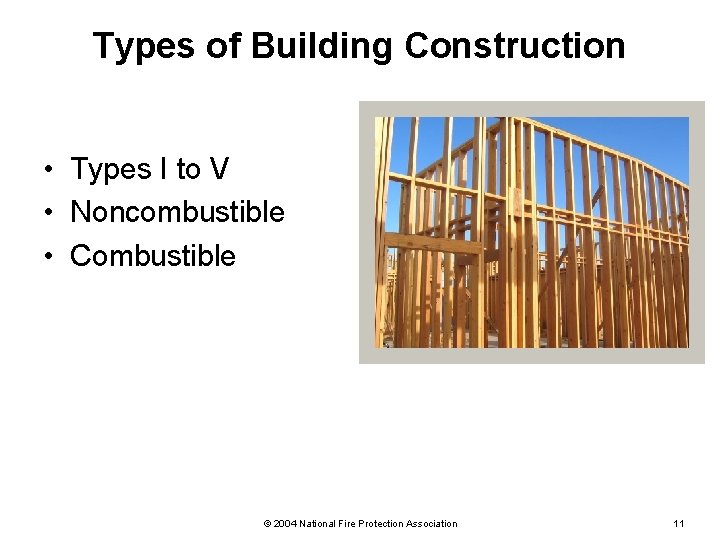
Types of Building Construction • Types I to V • Noncombustible • Combustible © 2004 National Fire Protection Association 11
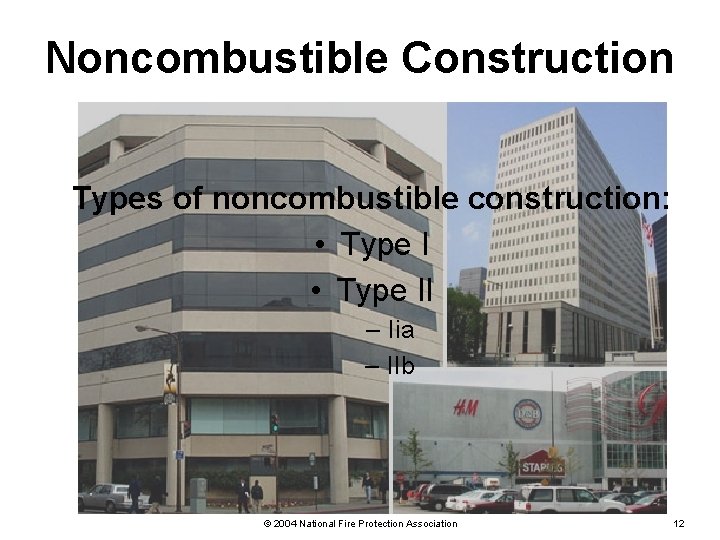
Noncombustible Construction Types of noncombustible construction: • Type II – Iia – IIb © 2004 National Fire Protection Association 12
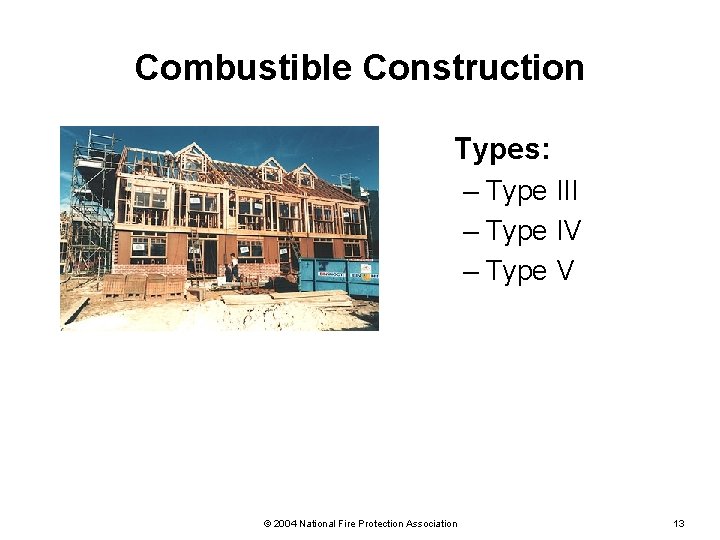
Combustible Construction Types: – Type III – Type IV – Type V © 2004 National Fire Protection Association 13
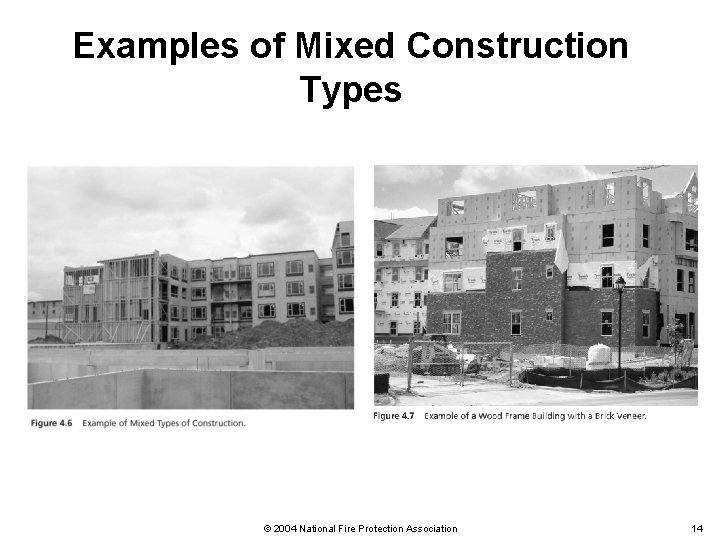
Examples of Mixed Construction Types © 2004 National Fire Protection Association 14
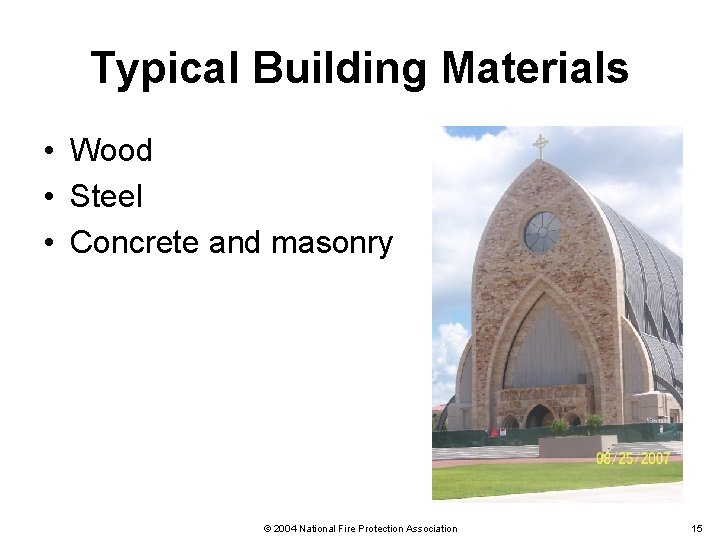
Typical Building Materials • Wood • Steel • Concrete and masonry © 2004 National Fire Protection Association 15
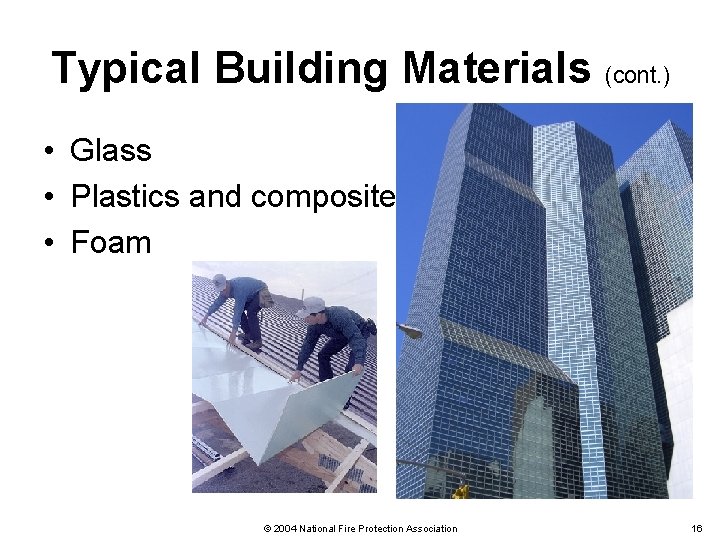
Typical Building Materials (cont. ) • Glass • Plastics and composites • Foam © 2004 National Fire Protection Association 16
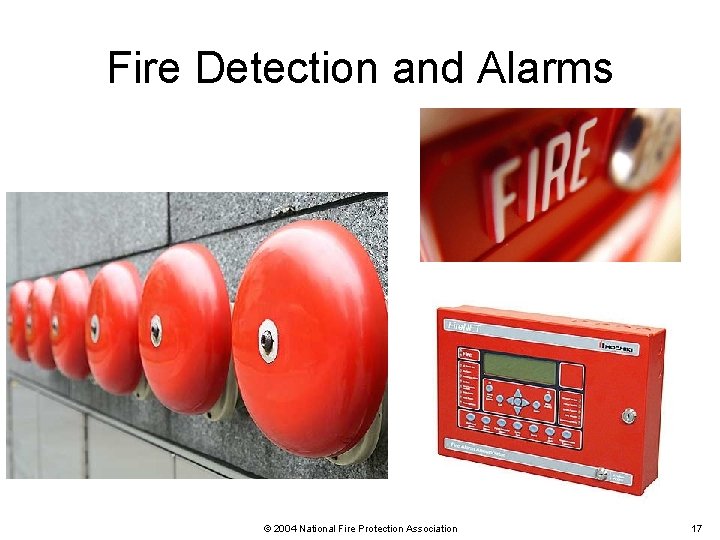
Fire Detection and Alarms © 2004 National Fire Protection Association 17
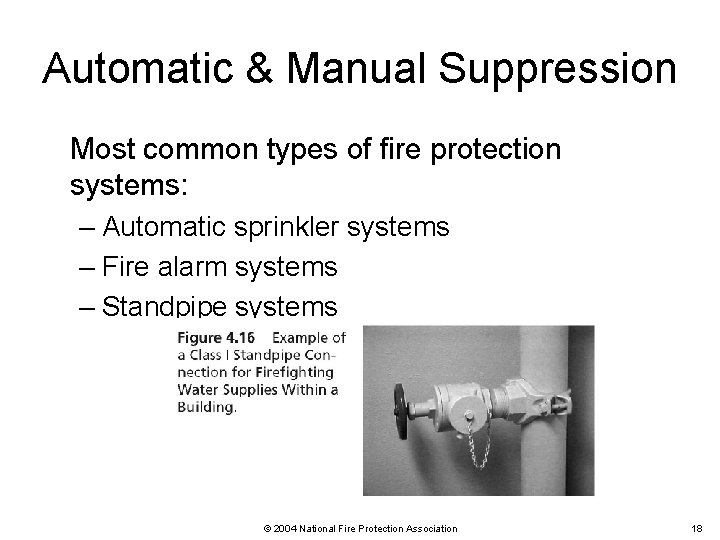
Automatic & Manual Suppression Most common types of fire protection systems: – Automatic sprinkler systems – Fire alarm systems – Standpipe systems © 2004 National Fire Protection Association 18
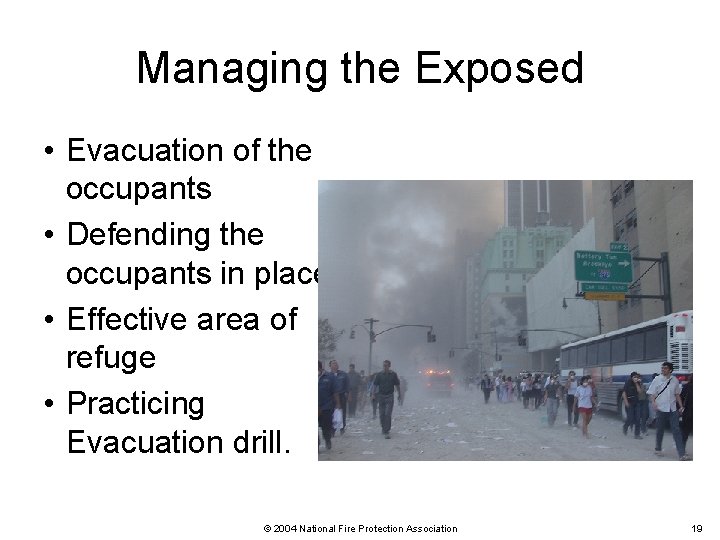
Managing the Exposed • Evacuation of the occupants • Defending the occupants in place • Effective area of refuge • Practicing Evacuation drill. © 2004 National Fire Protection Association 19
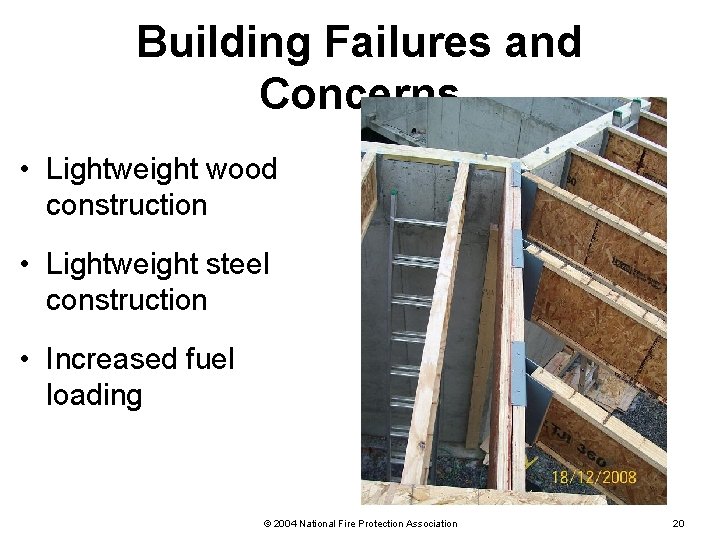
Building Failures and Concerns • Lightweight wood construction • Lightweight steel construction • Increased fuel loading © 2004 National Fire Protection Association 20
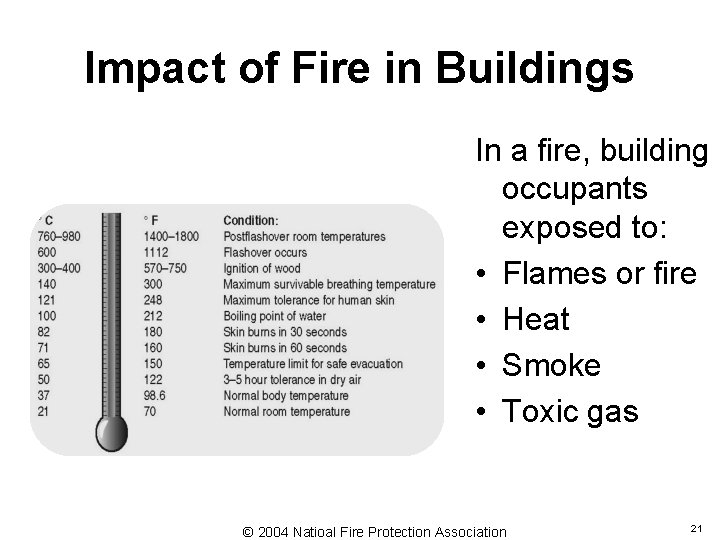
Impact of Fire in Buildings In a fire, building occupants exposed to: • Flames or fire • Heat • Smoke • Toxic gas © 2004 Natioal Fire Protection Association 21
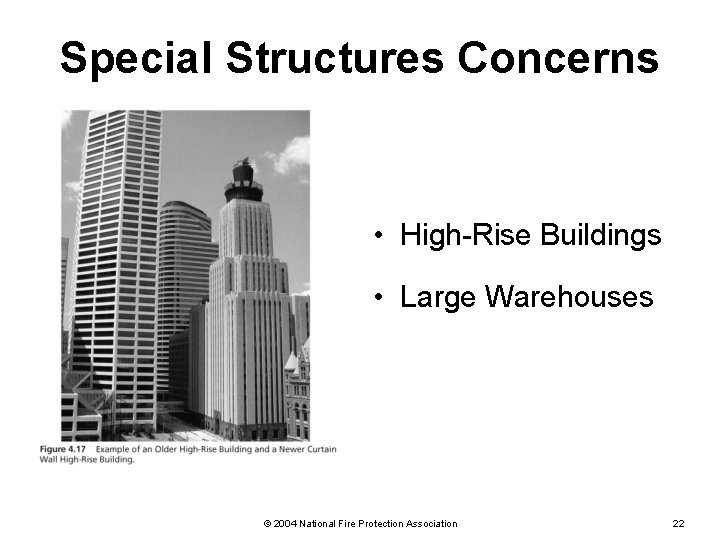
Special Structures Concerns • High-Rise Buildings • Large Warehouses © 2004 National Fire Protection Association 22
Summary • Fire safety issues should be considered during design of all buildings, structures, and sites • Variety of materials and methods used in construction • Interior materials and furnishings can impact fire growth and development • Certain construction features and automatic sprinklers can aid in confining fires or limiting fire growth. © 2004 National Fire Protection Association 23
Review Questions 1. What have been some of the significant improvements in the fire safety aspects of building design over the past several decades? 2. When should decisions be made in the design or planning process for a new building and why? 3. What should always be the primary consideration in the design and construction of any building? © 2004 National Fire Protection Association 24
Additional References • NFPA’s Critical Fireground Factors video • http: //www. ulasia. com/Home. aspx? Site. Id=2 • NFPA Journal®, July/August 2009, Earls • Fundamentals of Fire Protection for the Fire Safety Professional, Ferguson © 2004 National Fire Protection Association 25
- Slides: 25