
Lesson 7 Natural Hazards Tornadoes 1 A tornado

- Slides: 27
Lesson 7: Natural Hazards Tornadoes 1
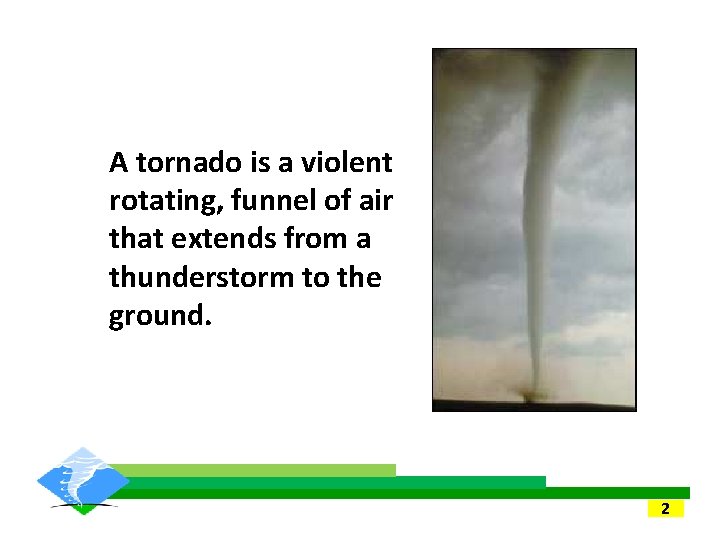
A tornado is a violent rotating, funnel of air that extends from a thunderstorm to the ground. 2
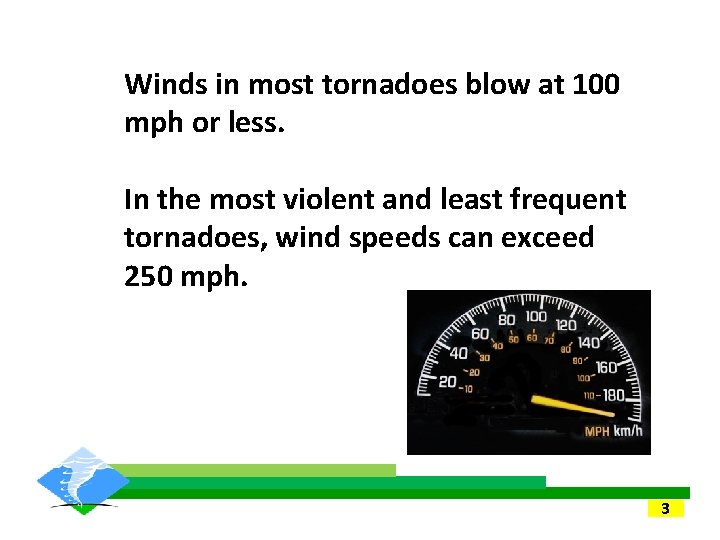
Winds in most tornadoes blow at 100 mph or less. In the most violent and least frequent tornadoes, wind speeds can exceed 250 mph. 3
Tornadoes are caused by long-lasting, large thunderstorms. 4
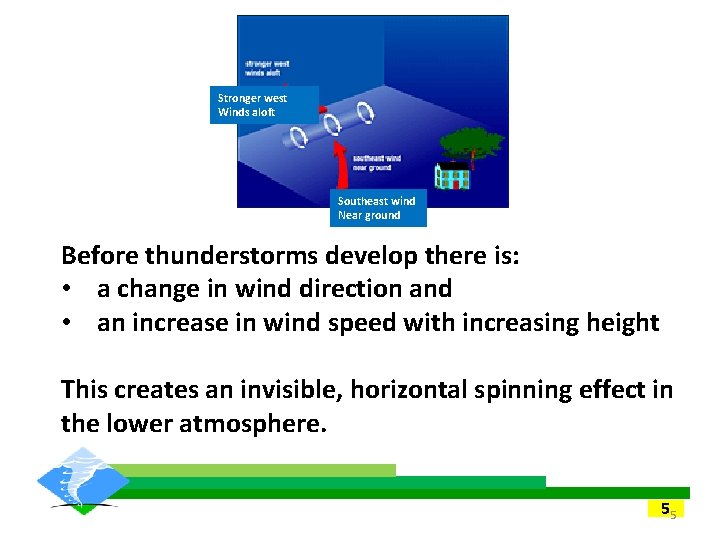
Stronger west Winds aloft Southeast wind Near ground Before thunderstorms develop there is: • a change in wind direction and • an increase in wind speed with increasing height This creates an invisible, horizontal spinning effect in the lower atmosphere. 55
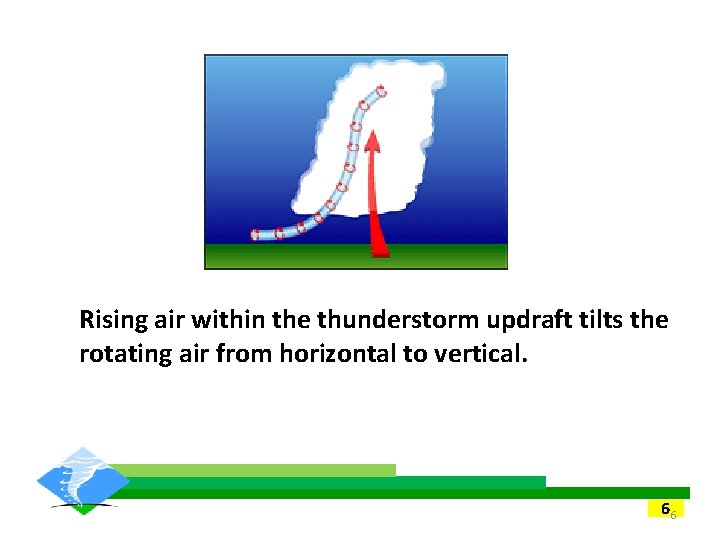
Rising air within the thunderstorm updraft tilts the rotating air from horizontal to vertical. 66
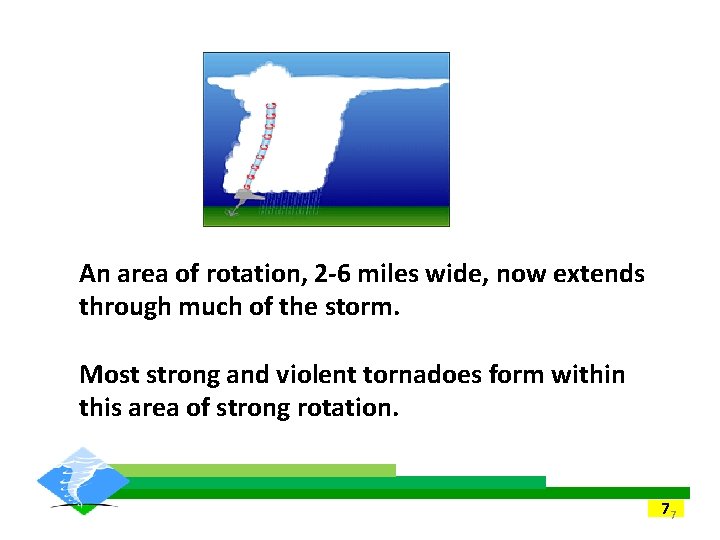
An area of rotation, 2 -6 miles wide, now extends through much of the storm. Most strong and violent tornadoes form within this area of strong rotation. 77
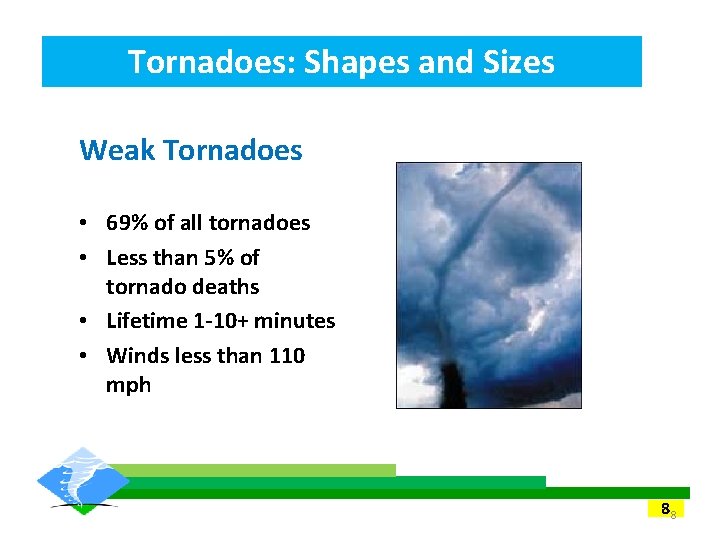
Tornadoes: Shapes and Sizes Weak Tornadoes • 69% of all tornadoes • Less than 5% of tornado deaths • Lifetime 1 -10+ minutes • Winds less than 110 mph 88
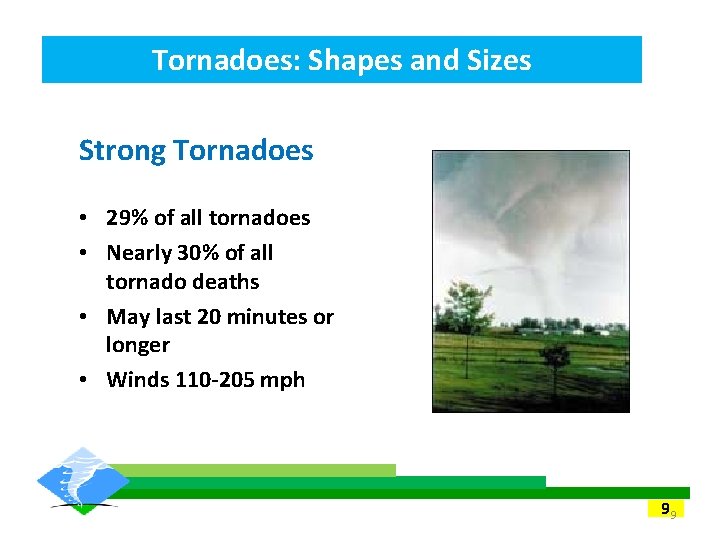
Tornadoes: Shapes and Sizes Strong Tornadoes • 29% of all tornadoes • Nearly 30% of all tornado deaths • May last 20 minutes or longer • Winds 110 -205 mph 99
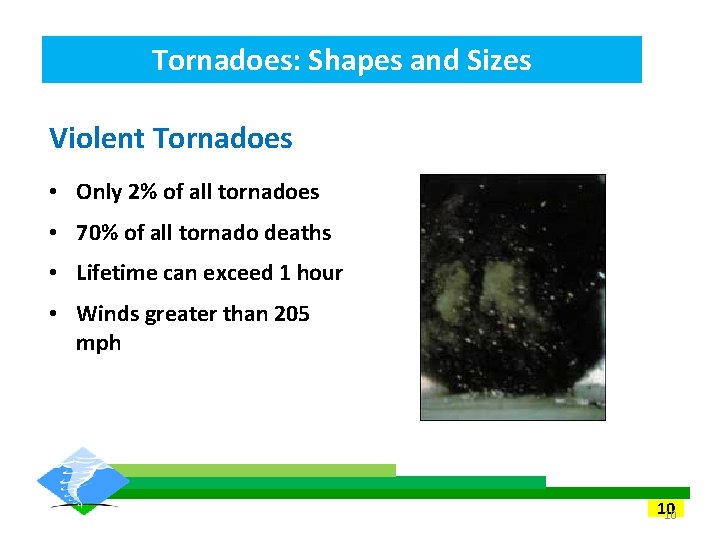
Tornadoes: Shapes and Sizes Violent Tornadoes • Only 2% of all tornadoes • 70% of all tornado deaths • Lifetime can exceed 1 hour • Winds greater than 205 mph 10 10
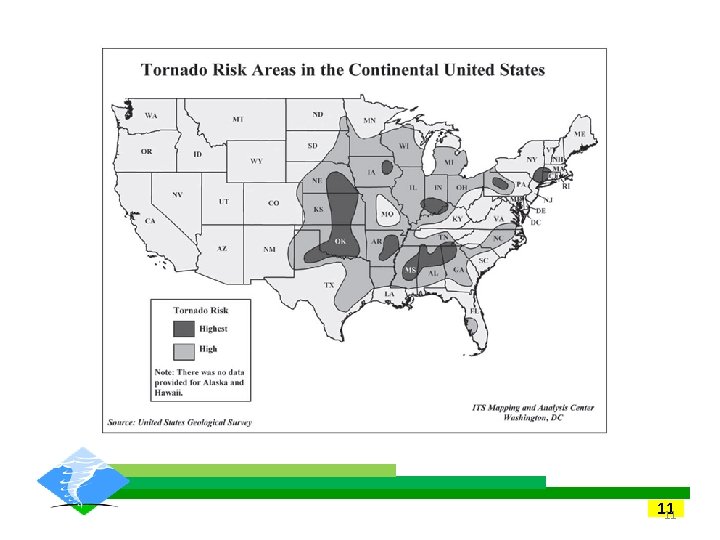
11 11
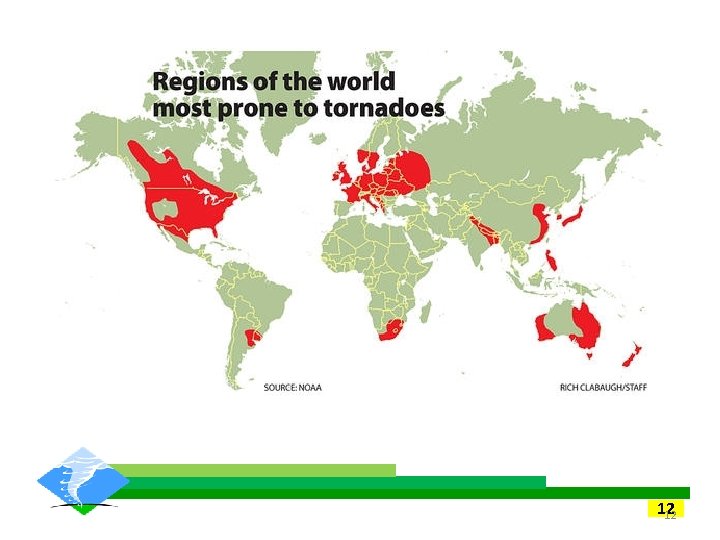
12 12
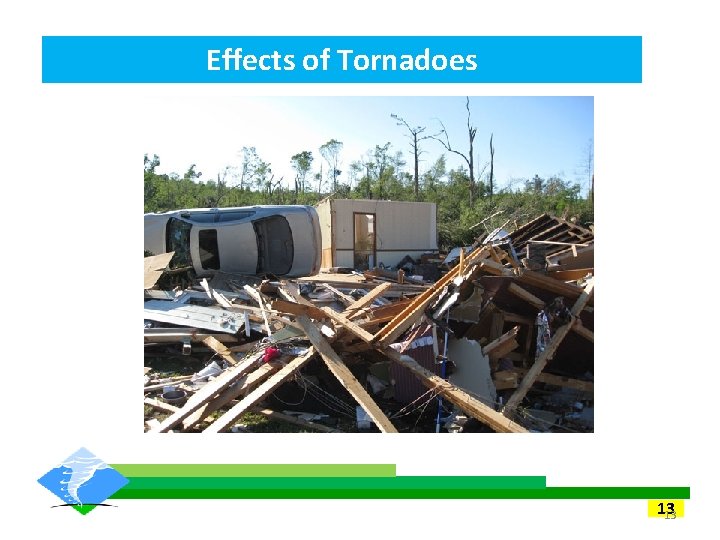
Effects of Tornadoes 13 13
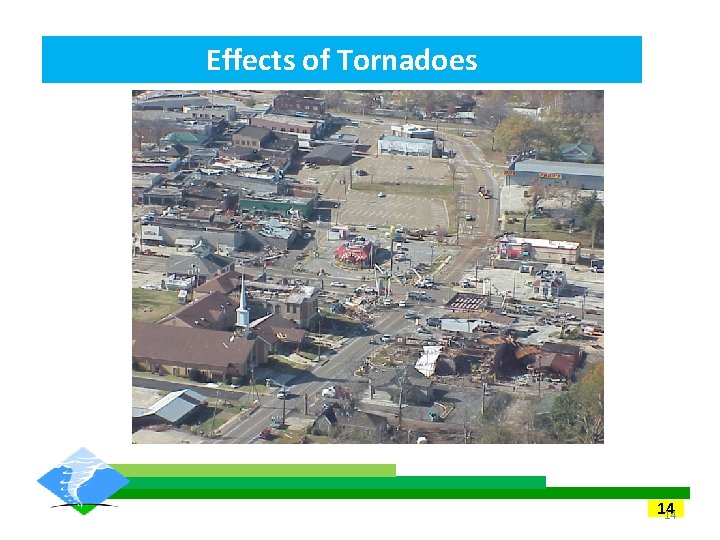
Effects of Tornadoes 14 14
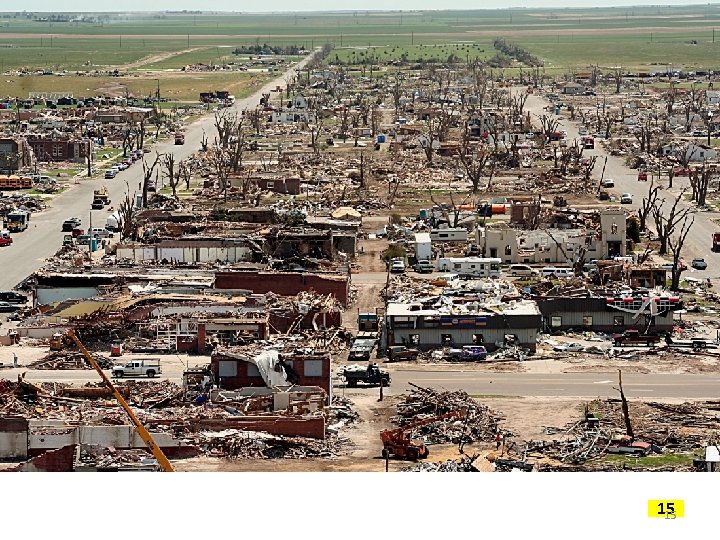
15 15
Who is most at risk? • People in automobiles • The elderly, very young, and the physically or mentally impaired • People in mobile homes • People who may not understand the warning due to a language barrier 16 16
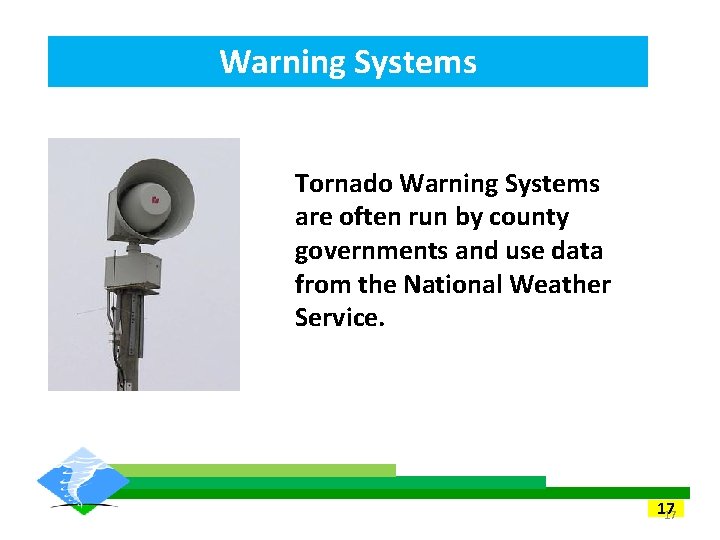
Warning Systems Tornado Warning Systems are often run by county governments and use data from the National Weather Service. 17 17
Warning Systems TORNADO WATCH: Tornadoes are possible in your area. Remain alert for approaching storms. 18 18
Warning Systems TORNADO WATCH: Tornadoes are possible in your area. Remain alert for approaching storms. TORNADO WARNING: A tornado has been sighted or indicated by weather radar. If a tornado warning is issued for your area and the sky becomes threatening, move to your pre-designated place of safety. 19 19
Tornado Myths MYTH: Areas near rivers, lakes, and mountains are safe from tornadoes. 20 20
What is a myth? Two Definitions • A traditional, typically ancient story dealing with supernatural beings or phenomena or explaining aspects of the natural world or outlining the customs or ideals of society. • A fiction or half-truth 21
Tornado Myths MYTH: Areas near rivers, lakes, and mountains are safe from tornadoes. FACT: No terrain is safe from tornadoes. In the late 1980's, a tornado swept through Yellowstone National Park leaving a path of destruction up and down a 10, 000 ft. mountain. 22 22
Tornado Myths MYTH: The low pressure with a tornado causes buildings to "explode" as the tornado passes overhead. 23 23
Tornado Myths MYTH: The low pressure with a tornado causes buildings to "explode" as the tornado passes overhead. FACT: Violent winds and debris slamming into buildings cause most structural damage. 24 24
Tornado Myths MYTH: Windows should be opened before a tornado approaches to equalize pressure and minimize damage. 25 25
Tornado Myths MYTH: Windows should be opened before a tornado approaches to equalize pressure and minimize damage. FACT: Opening windows allows damaging winds to enter the structure. Leave the windows alone; instead, immediately go to a basement, interior room, or bathroom without windows. 26 26
Michigan Citizenship Collaborative Curriculum Copyright © 2010 -2014 by Oakland Schools 27