
Lesson 7 Cell Structures Differences in Cells Usually
- Slides: 17
Lesson 7 Cell Structures
Differences in Cells Usually the shape of a cell is related to its function (job) Plant cells have a boxlike shape and animal cells do not have a particular shape Plant cells have some structures that animal cells do not – cell wall and chloroplasts A plant cell usually has one large vacuole and an animal cell usually has several small ones
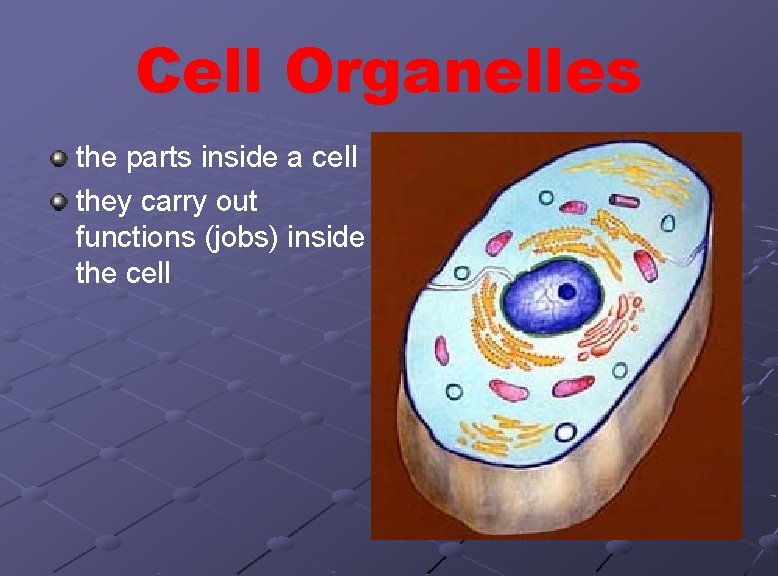
Cell Organelles the parts inside a cell they carry out functions (jobs) inside the cell
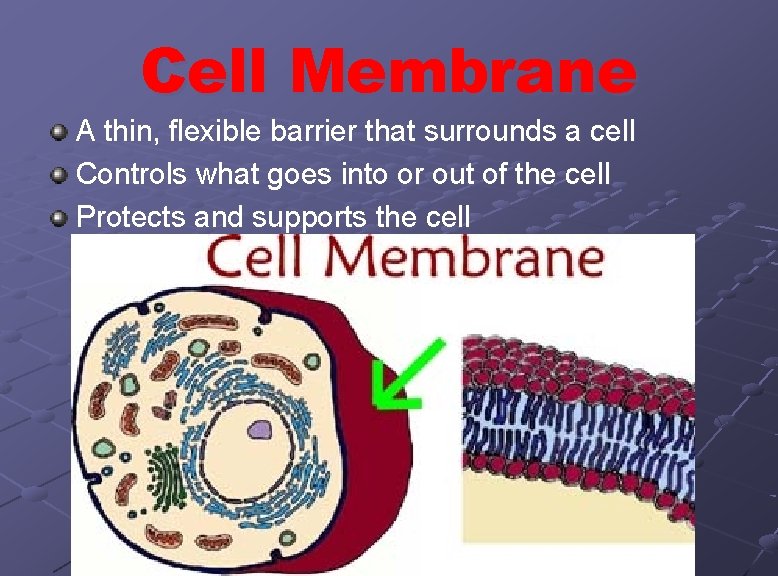
Cell Membrane A thin, flexible barrier that surrounds a cell Controls what goes into or out of the cell Protects and supports the cell
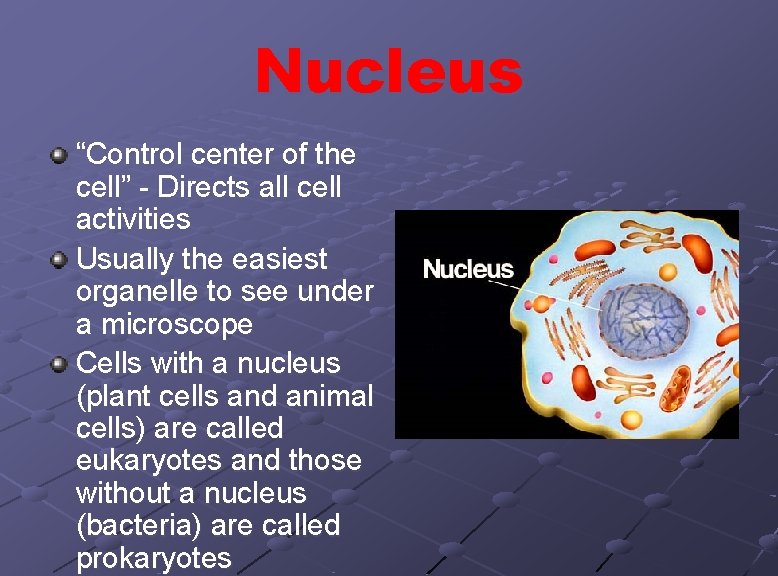
Nucleus “Control center of the cell” - Directs all cell activities Usually the easiest organelle to see under a microscope Cells with a nucleus (plant cells and animal cells) are called eukaryotes and those without a nucleus (bacteria) are called prokaryotes
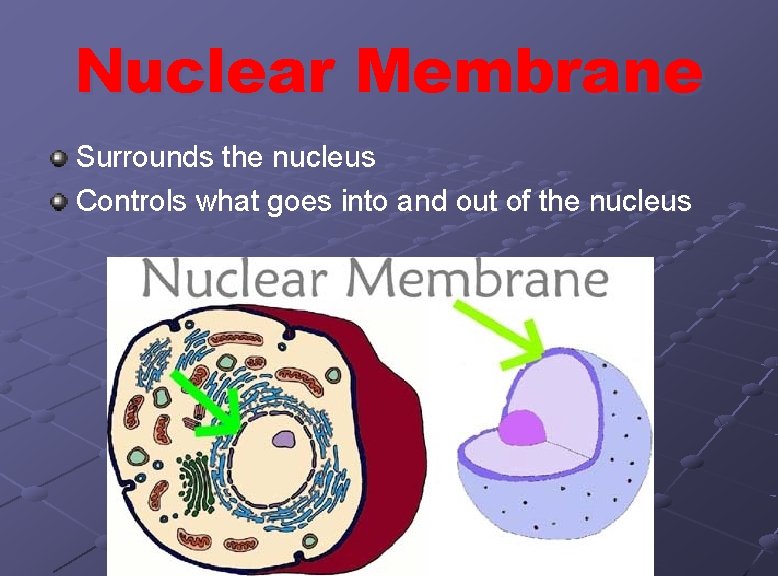
Nuclear Membrane Surrounds the nucleus Controls what goes into and out of the nucleus
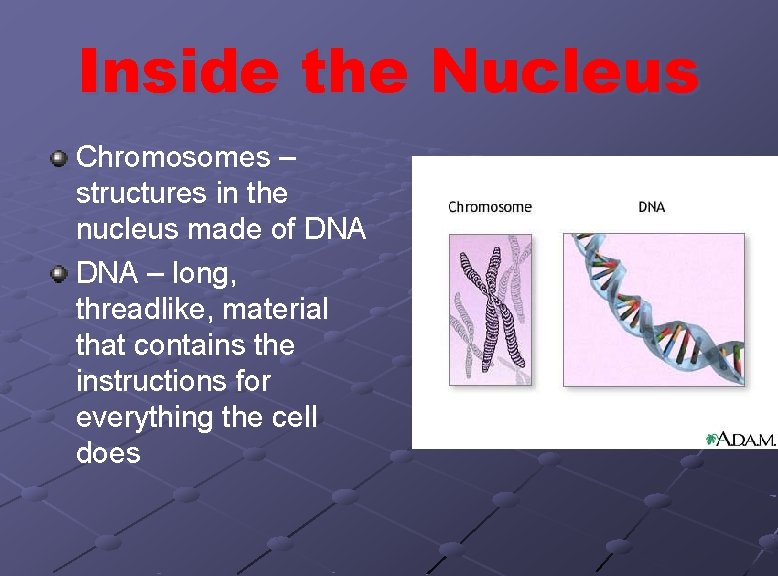
Inside the Nucleus Chromosomes – structures in the nucleus made of DNA – long, threadlike, material that contains the instructions for everything the cell does
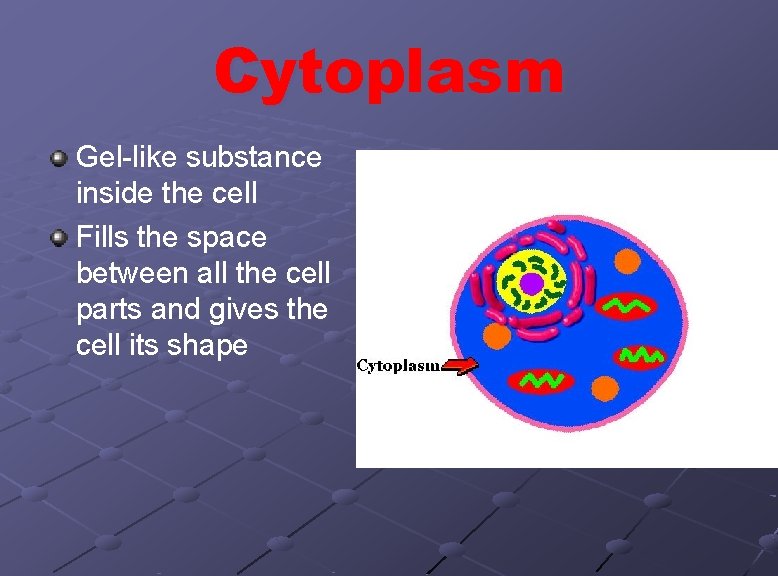
Cytoplasm Gel-like substance inside the cell Fills the space between all the cell parts and gives the cell its shape
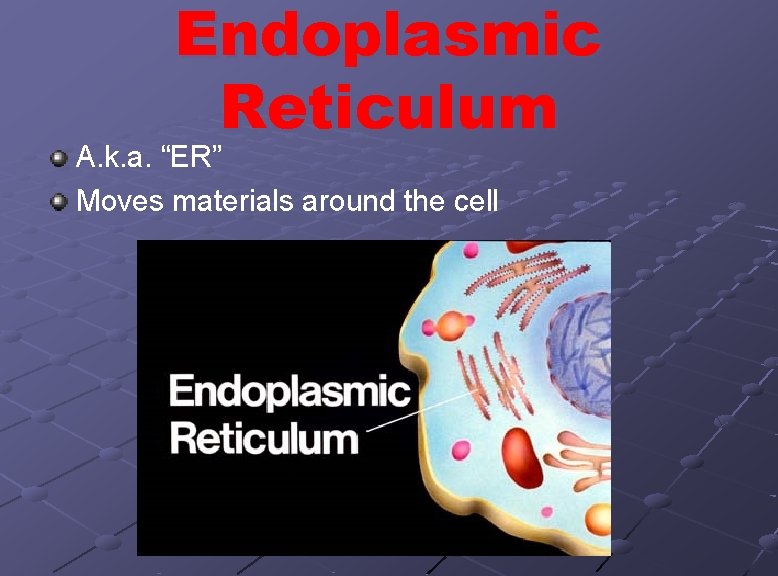
Endoplasmic Reticulum A. k. a. “ER” Moves materials around the cell
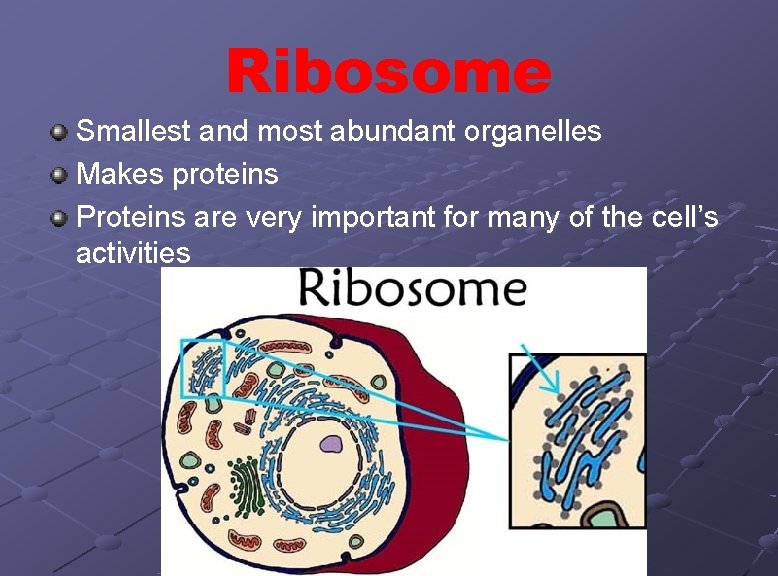
Ribosome Smallest and most abundant organelles Makes proteins Proteins are very important for many of the cell’s activities
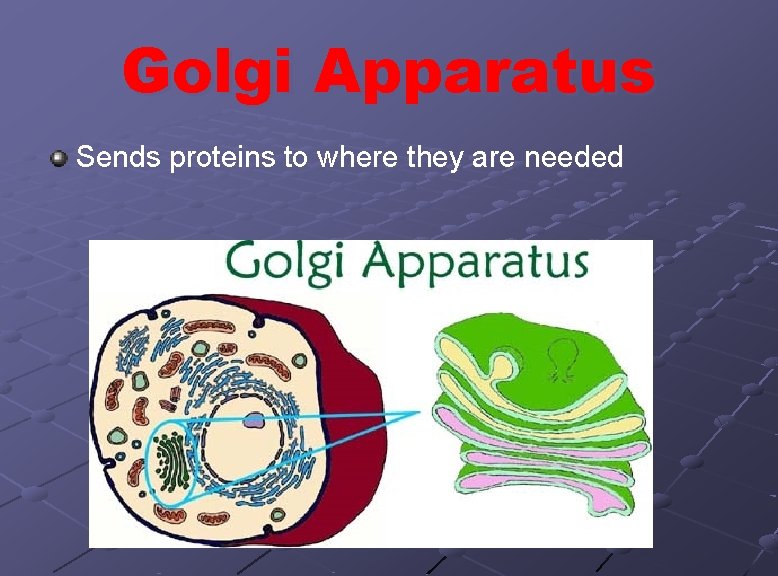
Golgi Apparatus Sends proteins to where they are needed
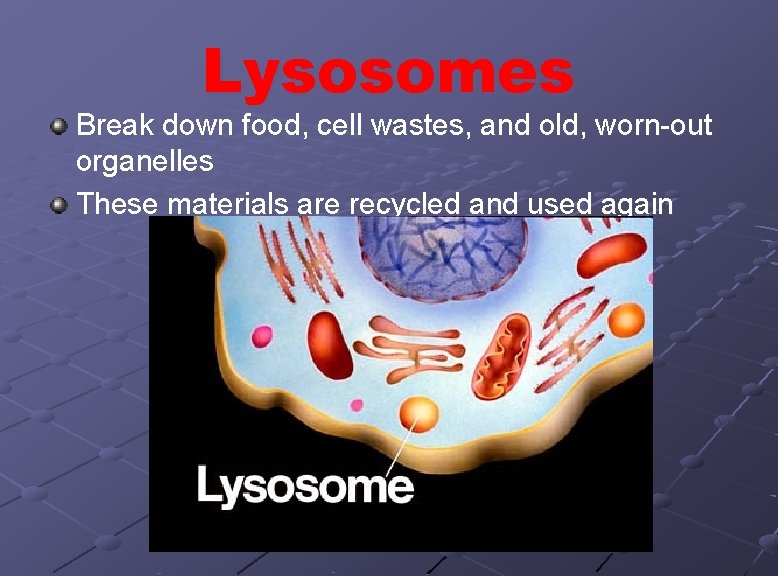
Lysosomes Break down food, cell wastes, and old, worn-out organelles These materials are recycled and used again
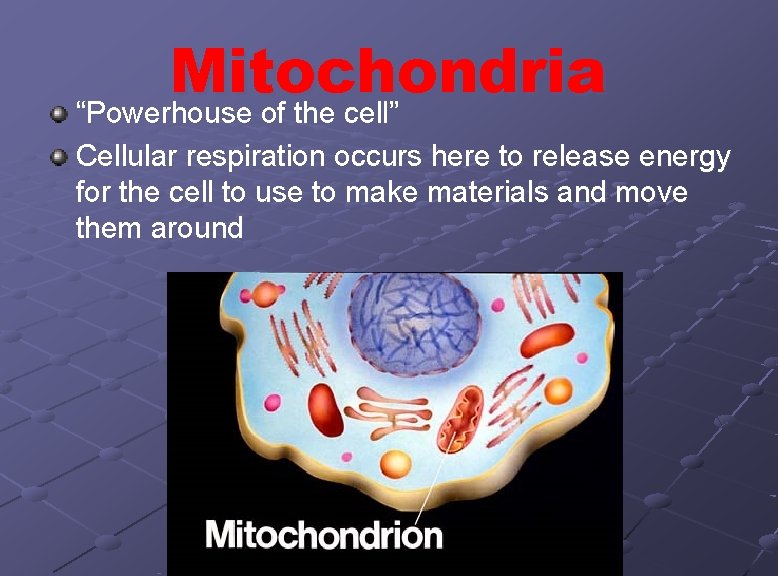
Mitochondria “Powerhouse of the cell” Cellular respiration occurs here to release energy for the cell to use to make materials and move them around
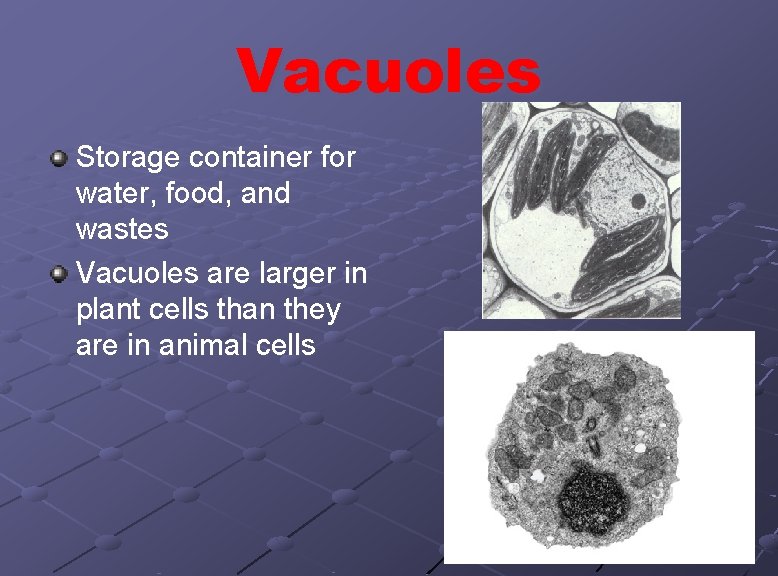
Vacuoles Storage container for water, food, and wastes Vacuoles are larger in plant cells than they are in animal cells
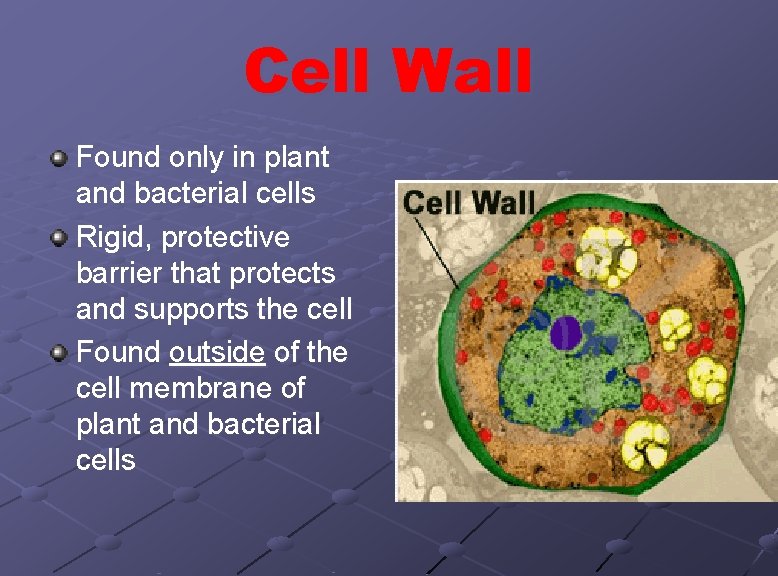
Cell Wall Found only in plant and bacterial cells Rigid, protective barrier that protects and supports the cell Found outside of the cell membrane of plant and bacterial cells
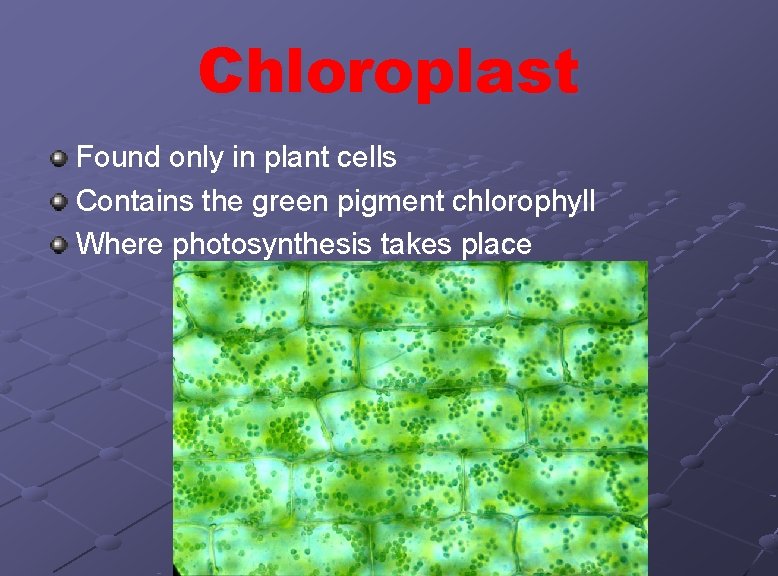
Chloroplast Found only in plant cells Contains the green pigment chlorophyll Where photosynthesis takes place
Review Which organelle directs all cell activities? Nucleus Which organelle controls what goes into or out of the cell? Cell membrane Which organelle controls what goes into and out of the nucleus? Nuclear membrane What substance contains the instructions for everything the cell does? DNA