
Lesson 7 4 The Gram Stain Overview Bacterial

Lesson 7 -4 The Gram Stain
Overview Bacterial smears • From culture or specimen swab Bacterial stain – Gram stain • Gram reaction • Bacterial morphology • Results guide identification procedures and susceptibility testing
Bacterial Smear and Gram Stain Safety precautions Quality assessment • Use control slides • Timing is important
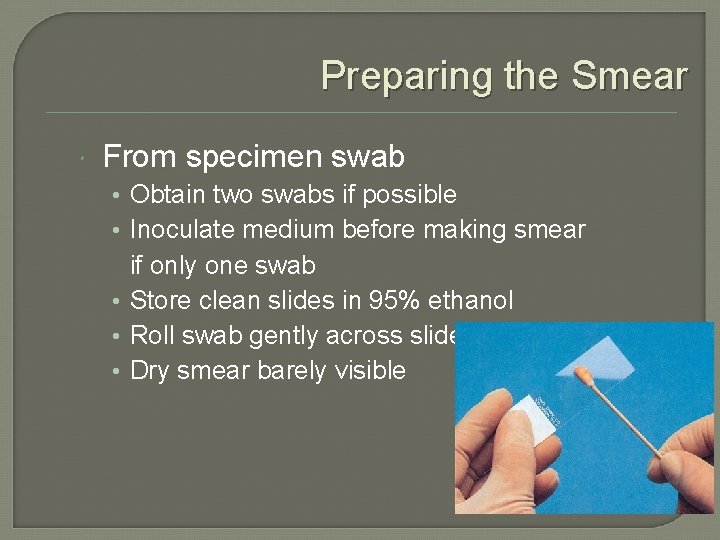
Preparing the Smear From specimen swab • Obtain two swabs if possible • Inoculate medium before making smear if only one swab • Store clean slides in 95% ethanol • Roll swab gently across slide • Dry smear barely visible
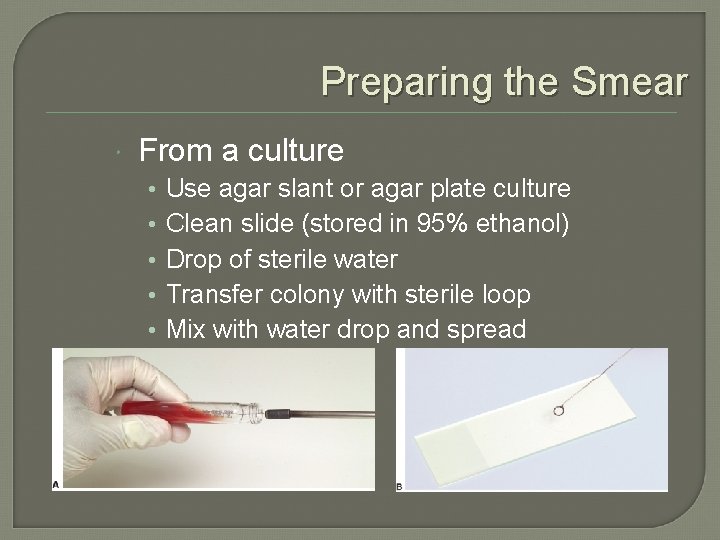
Preparing the Smear From a culture • • • Use agar slant or agar plate culture Clean slide (stored in 95% ethanol) Drop of sterile water Transfer colony with sterile loop Mix with water drop and spread
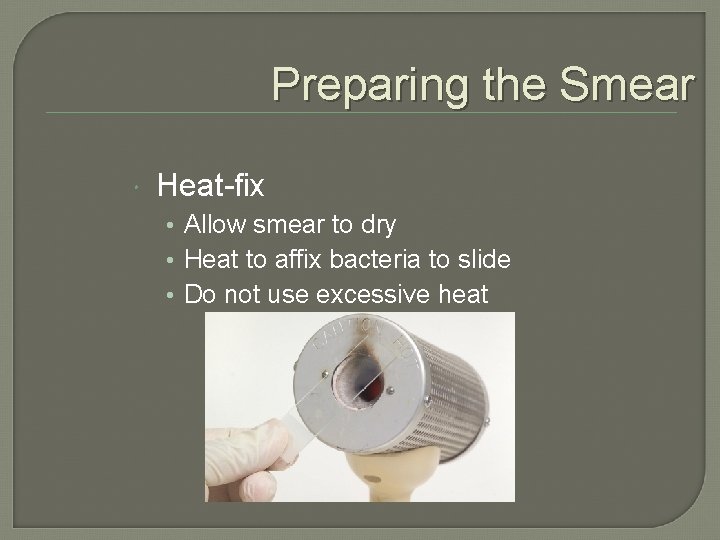
Preparing the Smear Heat-fix • Allow smear to dry • Heat to affix bacteria to slide • Do not use excessive heat
Gram Stain Gram reaction determined by bacterial cell wall structure • Peptidoglycan – in all bacterial cell walls • Gram-positive cells Simpler structure than gram-negative cells • Gram-negative cells More complex cell wall structure More lipids, lipoproteins
Gram Stain Procedure Four steps • • Primary stain – crystal violet (purple) Gram’s iodine – mordant Decolorizer – acetone-alcohol Counterstain – safranin (pink)
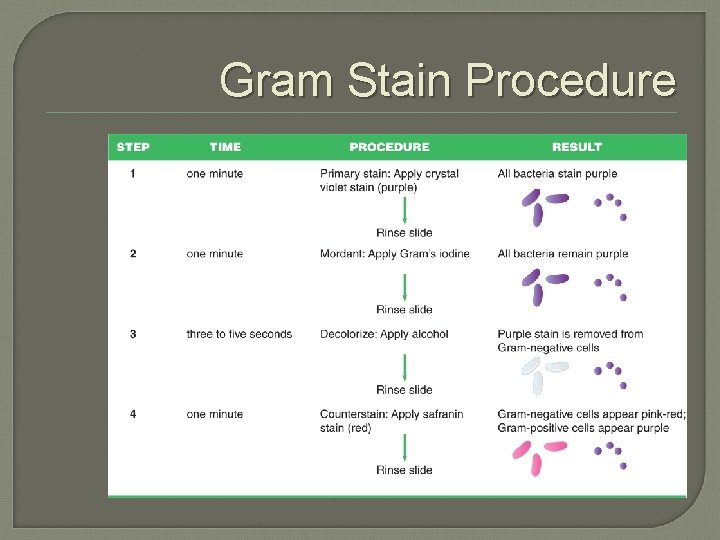
Gram Stain Procedure
Observe the Stained Smear Use oil immersion Determine Gram reactions • Gram positive (+) → purple • Gram negative (–) → pink • See Table 7 -18
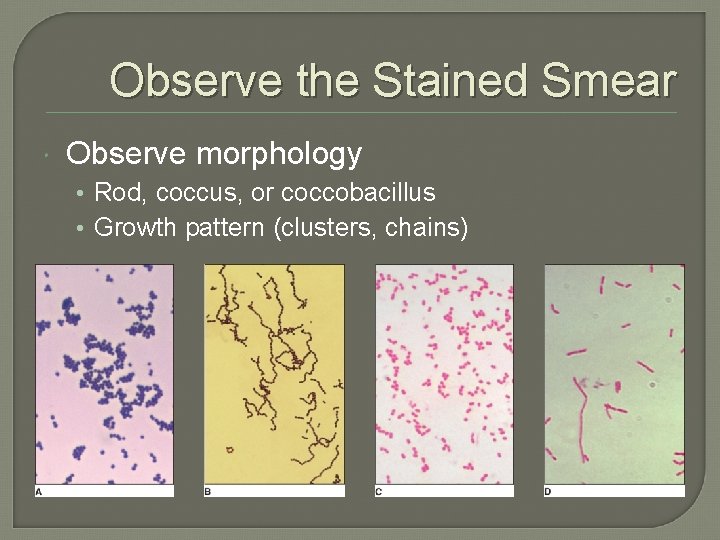
Observe the Stained Smear Observe morphology • Rod, coccus, or coccobacillus • Growth pattern (clusters, chains)
- Slides: 11