
Lesson 7 1 Traditional Classification Refer to Chapter
- Slides: 14
Lesson 7. 1: Traditional Classification *Refer to Chapter 5 in your Textbook
Learning Goals: 1. I can list the traditional classification hierarchy in order. 2. I can explain what binomial nomenclature is, and where an organism gets its first and last name. 3. I can read and create a dichotomous key.
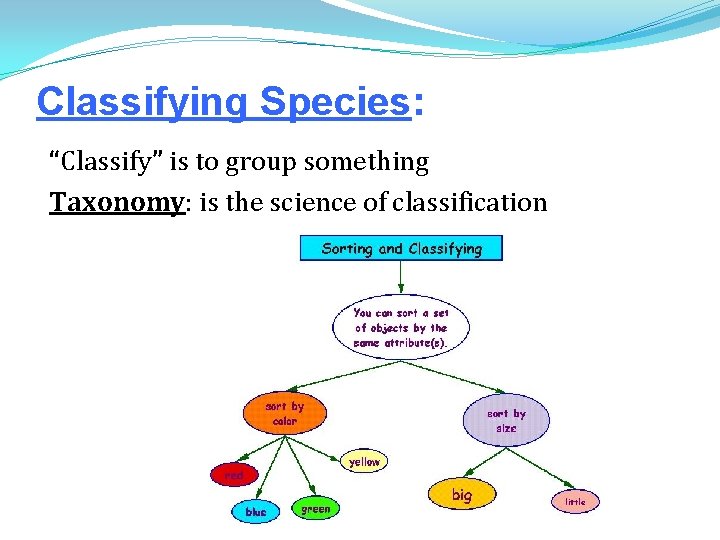
Classifying Species: “Classify” is to group something Taxonomy: is the science of classification
Traditional Classification: Carolus Linnaeaus: early 1700’s • Groups were organized using a hierarchy, from largest to smallest • These groups were created using similarities between organisms
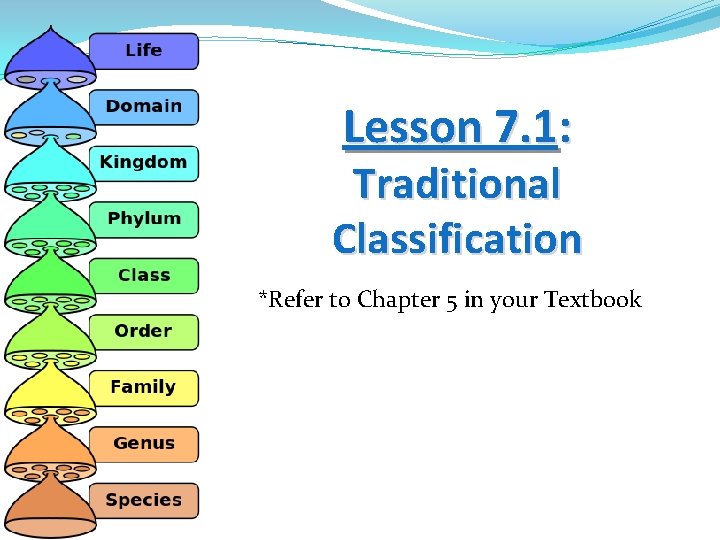
Traditional Classification: *Will need to know in order • Kingdom • Phylum • Class • Order • Family • Genus • species (King) (Phil) (Came) (Over) (For) (Good) (soup)
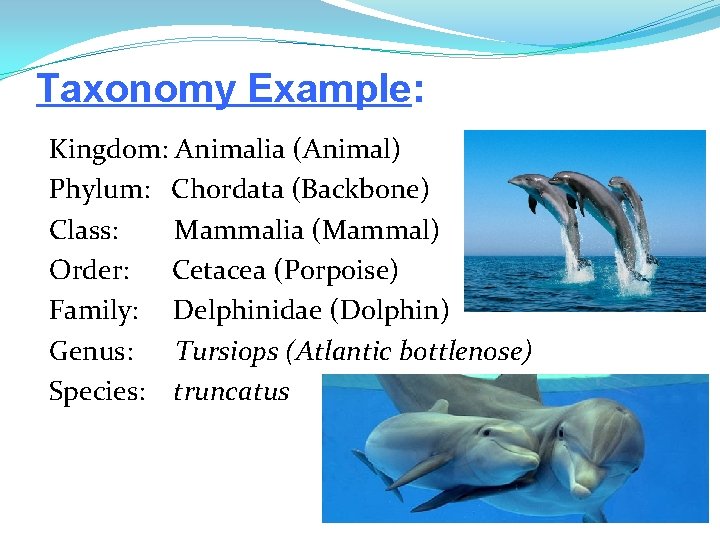
Taxonomy Example: Kingdom: Animalia (Animal) Phylum: Chordata (Backbone) Class: Mammalia (Mammal) Order: Cetacea (Porpoise) Family: Delphinidae (Dolphin) Genus: Tursiops (Atlantic bottlenose) Species: truncatus
Naming Organisms: Binomial Nomenclature is a system used to name organisms (means two names) • First name = Genus and last name = species • Genus is CAPITAL and species is lower case • Either in italics or underlined • In Latin: universal language • Human = Homo sapien
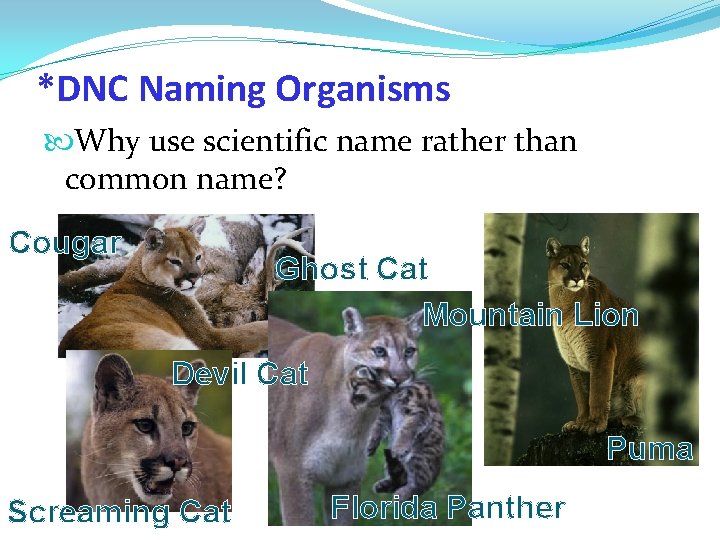
*DNC Naming Organisms Why use scientific name rather than common name? Cougar Ghost Cat Mountain Lion Devil Cat Puma Screaming Cat Florida Panther
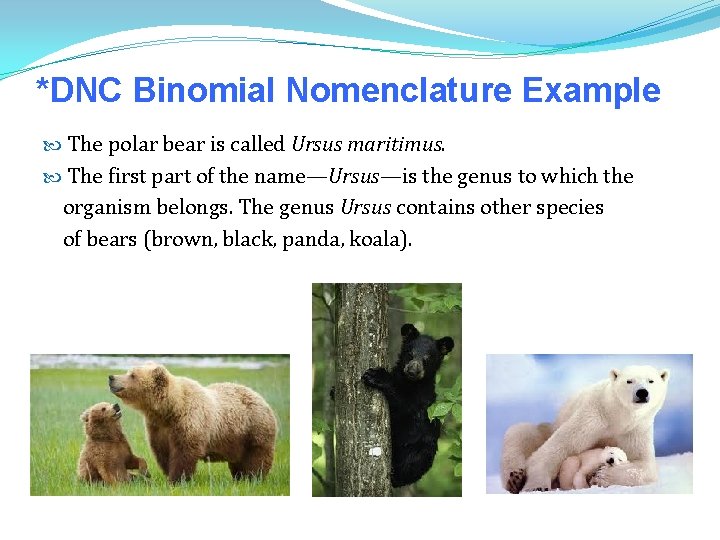
*DNC Binomial Nomenclature Example The polar bear is called Ursus maritimus. The first part of the name—Ursus—is the genus to which the organism belongs. The genus Ursus contains other species of bears (brown, black, panda, koala).
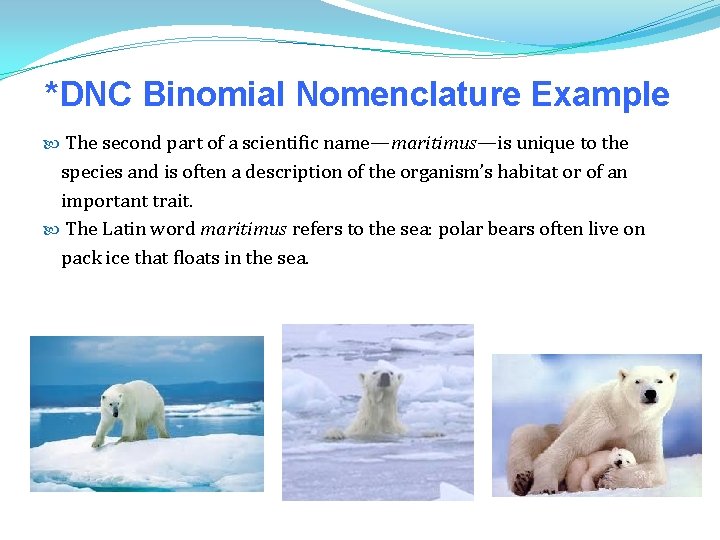
*DNC Binomial Nomenclature Example The second part of a scientific name—maritimus—is unique to the species and is often a description of the organism’s habitat or of an important trait. The Latin word maritimus refers to the sea: polar bears often live on pack ice that floats in the sea.
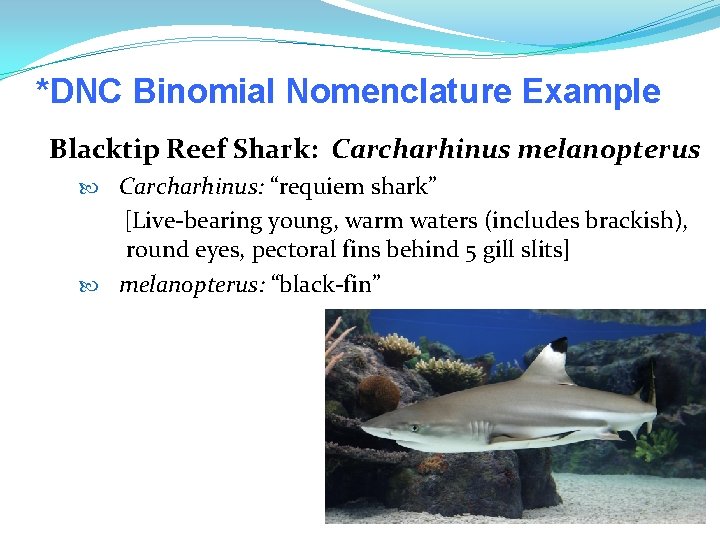
*DNC Binomial Nomenclature Example Blacktip Reef Shark: Carcharhinus melanopterus Carcharhinus: “requiem shark” [Live-bearing young, warm waters (includes brackish), round eyes, pectoral fins behind 5 gill slits] melanopterus: “black-fin”
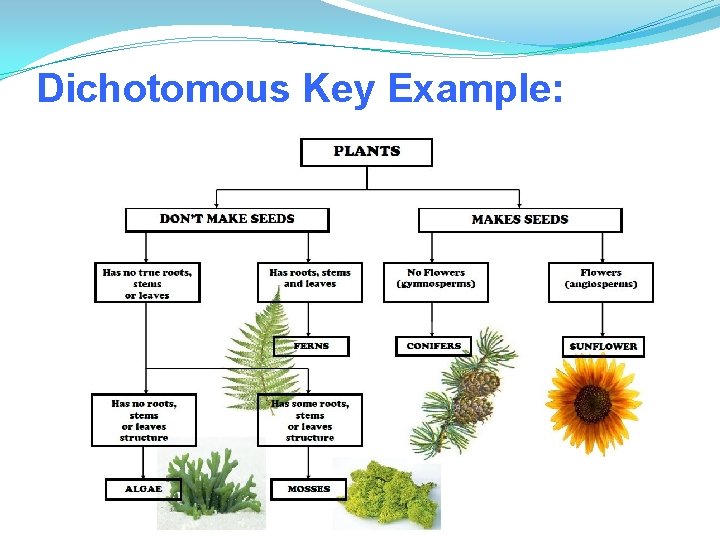
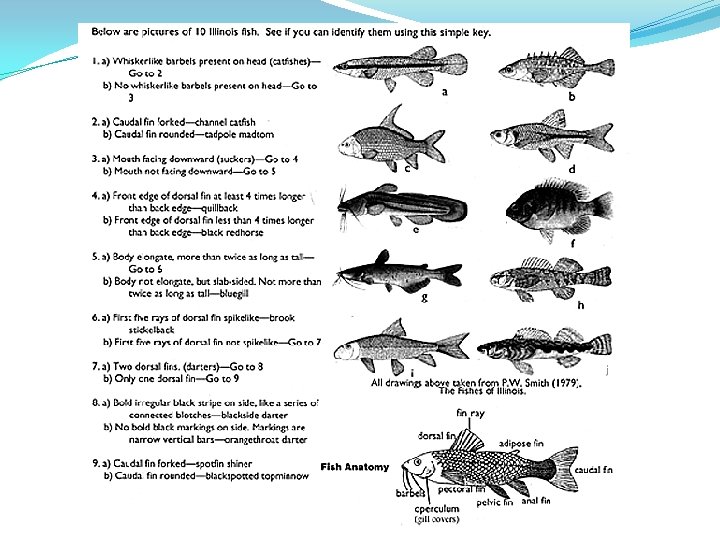
Dichotomous Key: Dichotomous Keys: are organizational tools that allow you to group and identify organisms based on similar traits 1. The top word represents your entire group: � Ex: Marine Animals 2. The branching words must be traits: � Ex: shape of fin, lays eggs, color 3. The last words must be your organism name: � Sea turtle, blue whale, bottlenose dolphin
Dichotomous Key Example: