
Lesson 6 The 20 th Century Social Progress






- Slides: 44
Lesson 6: The 20 th Century
Social Progress - early 20 th century ● Britain now a global superpower ● Financial help: unemployed, old-age pensions and free school meals ● Better support to single mothers ● Local government more democratic and MPs receive salary for the first time
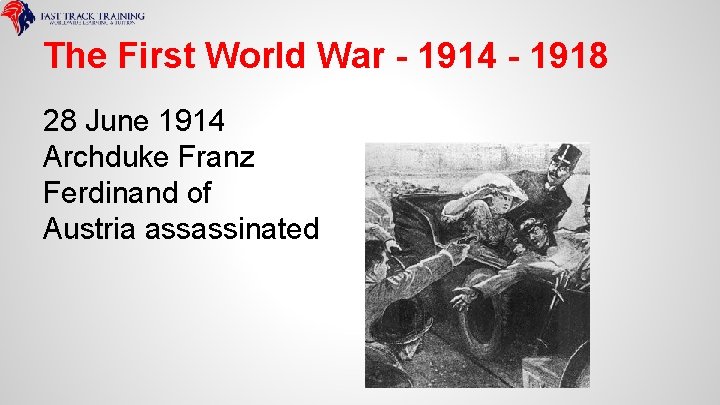
The First World War - 1914 - 1918 28 June 1914 Archduke Franz Ferdinand of Austria assassinated
The First Word War global: Allied Powers: Britain, France, Russia, Japan, Belgium, Serbia, Greece, Italy, Romania, US Central Powers: Germany, the Austro-Hungarian Empire, the Ottoman Empire and later Bulgaria Millions of people killed or wounded including 2 million British
The First World War
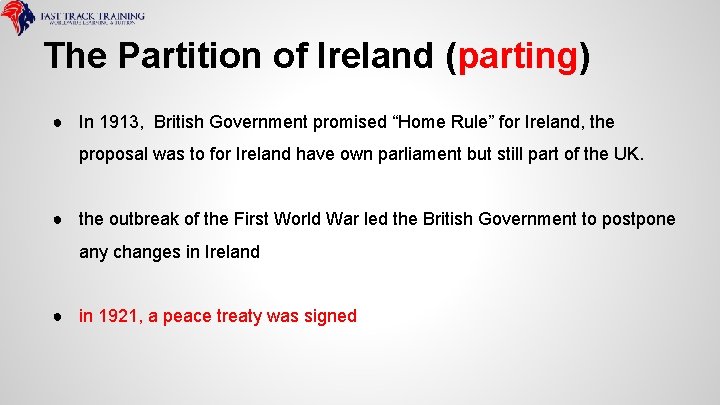
The Partition of Ireland (parting) ● In 1913, British Government promised “Home Rule” for Ireland, the proposal was to for Ireland have own parliament but still part of the UK. ● the outbreak of the First World War led the British Government to postpone any changes in Ireland ● in 1921, a peace treaty was signed
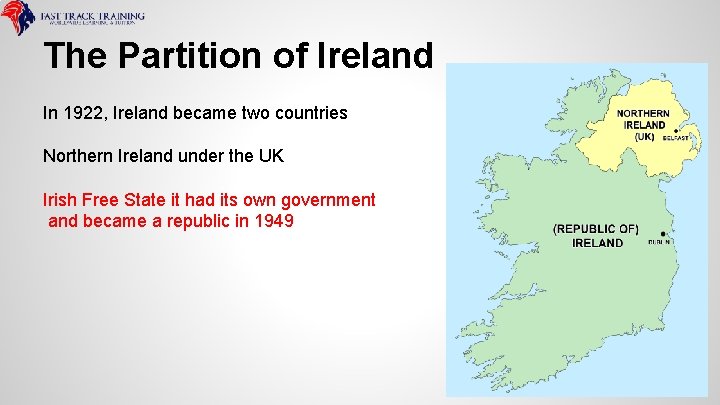
The Partition of Ireland In 1922, Ireland became two countries Northern Ireland under the UK Irish Free State it had its own government and became a republic in 1949
Between wars In 1929, the world entered the “Great Depression”, UK suffered mass unemployment a time of cultural blossoming:
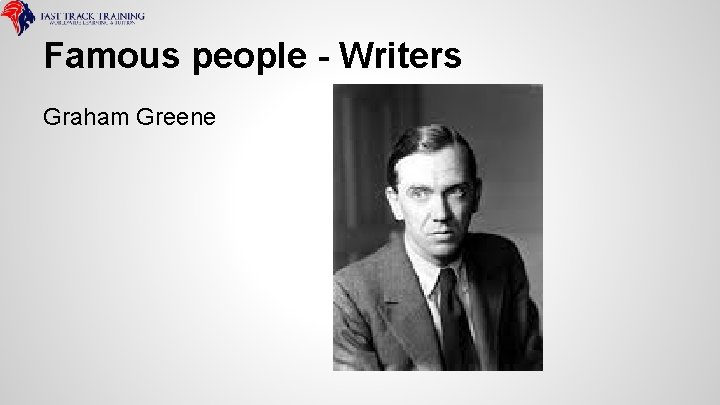
Famous people - Writers Graham Greene
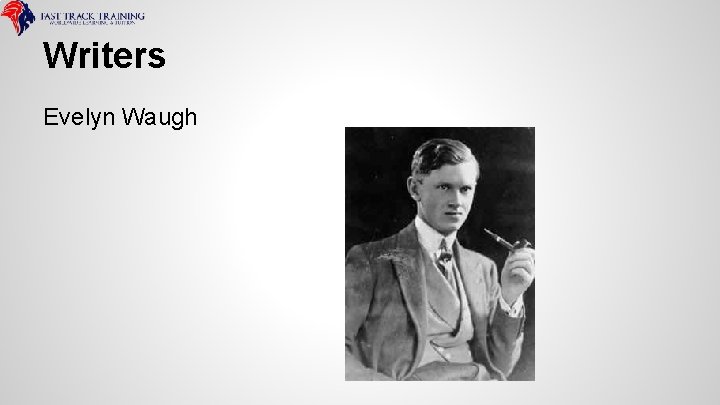
Writers Evelyn Waugh
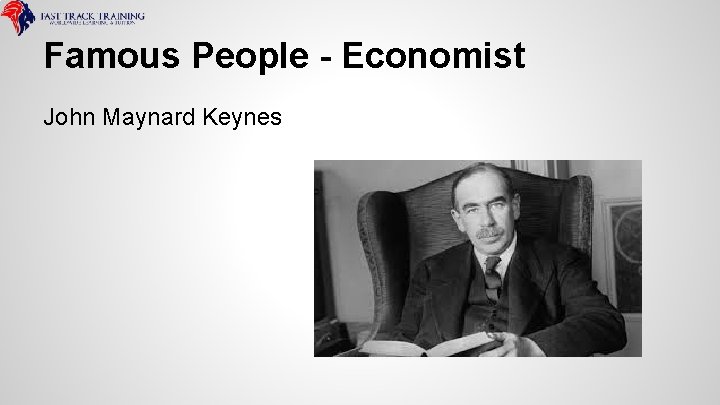
Famous People - Economist John Maynard Keynes
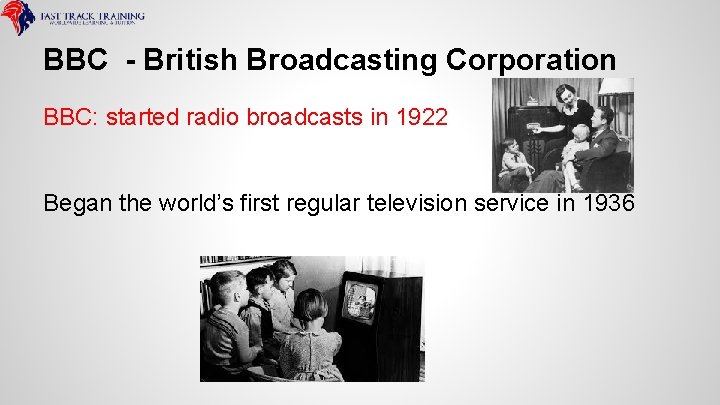
BBC - British Broadcasting Corporation BBC: started radio broadcasts in 1922 Began the world’s first regular television service in 1936
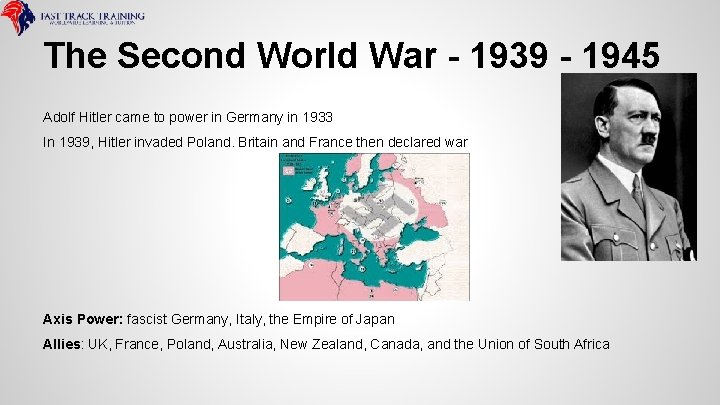
The Second World War - 1939 - 1945 Adolf Hitler came to power in Germany in 1933 In 1939, Hitler invaded Poland. Britain and France then declared war Axis Power: fascist Germany, Italy, the Empire of Japan Allies: UK, France, Poland, Australia, New Zealand, Canada, and the Union of South Africa
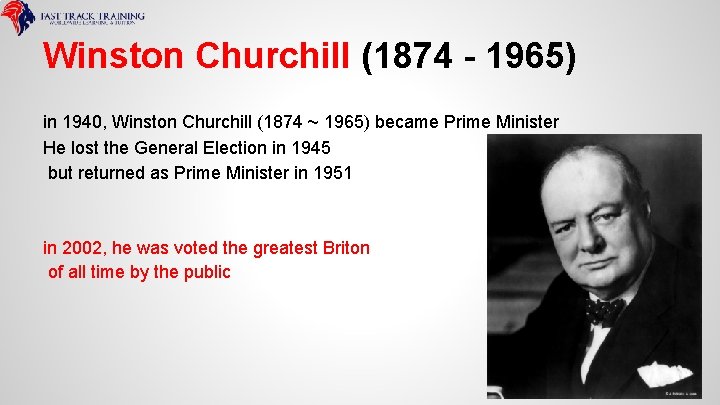
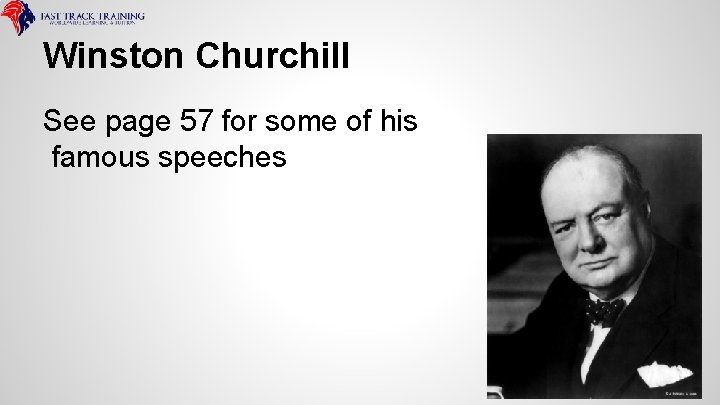
Winston Churchill (1874 - 1965) in 1940, Winston Churchill (1874 ~ 1965) became Prime Minister He lost the General Election in 1945 but returned as Prime Minister in 1951 in 2002, he was voted the greatest Briton of all time by the public
Winston Churchill See page 57 for some of his famous speeches
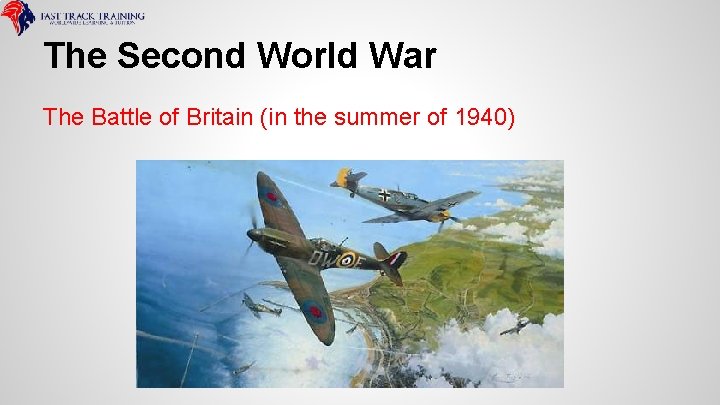
The Second World War The Battle of Britain (in the summer of 1940)
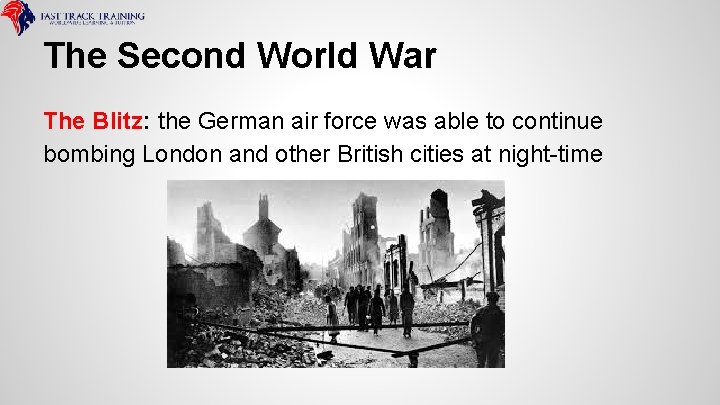
The Second World War The Blitz: the German air force was able to continue bombing London and other British cities at night-time
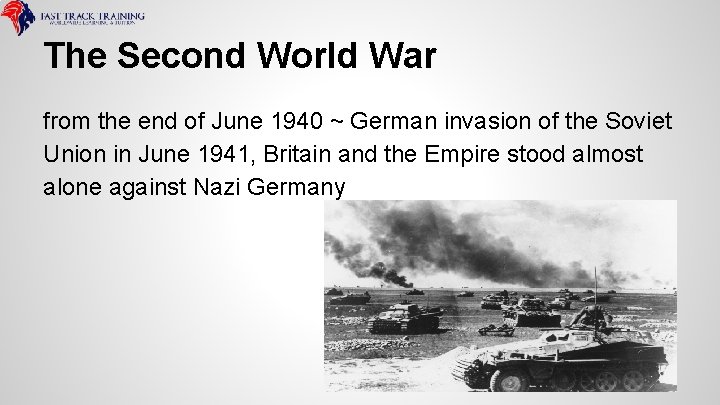
The Second World War from the end of June 1940 ~ German invasion of the Soviet Union in June 1941, Britain and the Empire stood almost alone against Nazi Germany
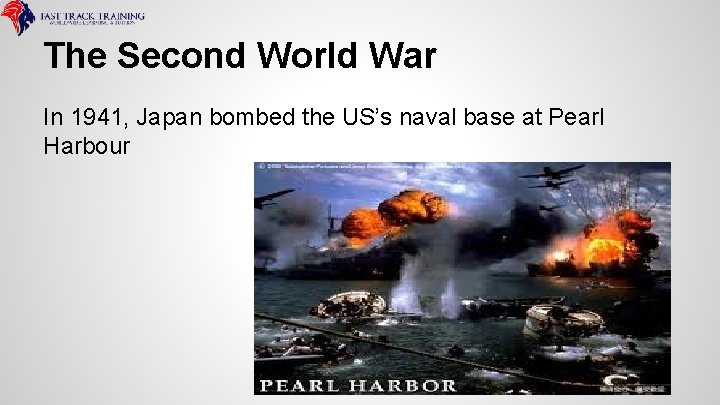
The Second World War In 1941, Japan bombed the US’s naval base at Pearl Harbour
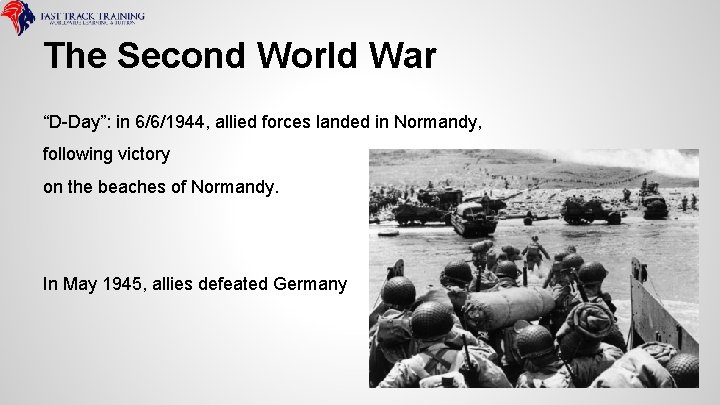
The Second World War “D-Day”: in 6/6/1944, allied forces landed in Normandy, following victory on the beaches of Normandy. In May 1945, allies defeated Germany
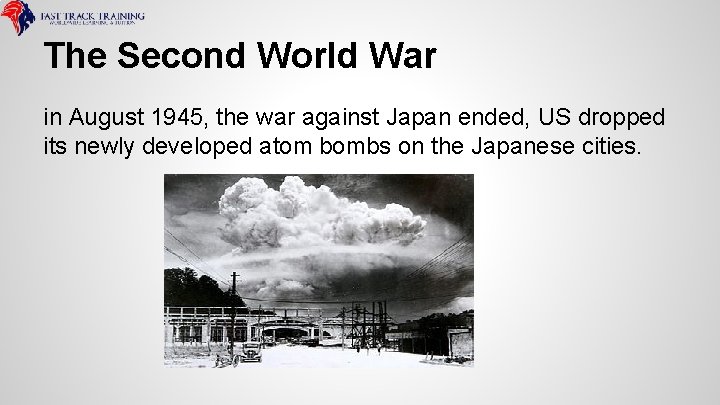
The Second World War in August 1945, the war against Japan ended, US dropped its newly developed atom bombs on the Japanese cities.
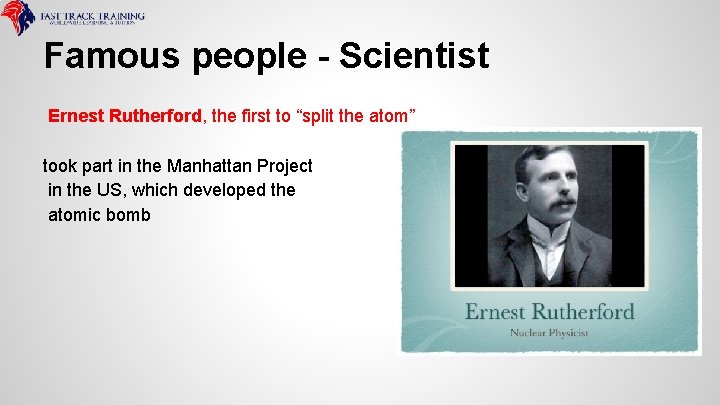
Famous people - Scientist Ernest Rutherford, the first to “split the atom” took part in the Manhattan Project in the US, which developed the atomic bomb
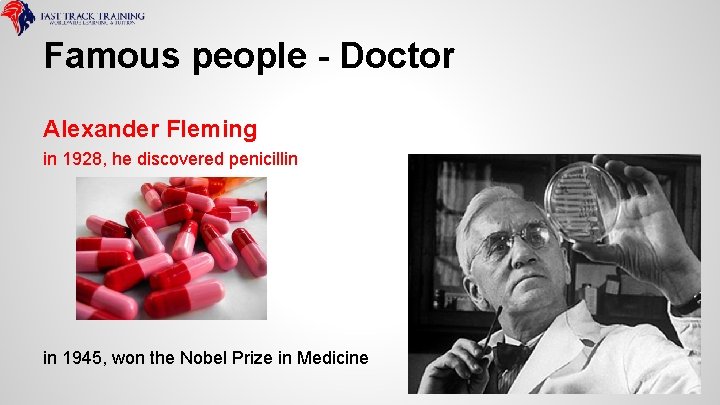
Famous people - Doctor Alexander Fleming in 1928, he discovered penicillin in 1945, won the Nobel Prize in Medicine
Lesson 6: The 20 th Century Questions and Answers
Question 1 Which of the following statement is TRUE ? a)The Battle of Britain in 1940 was fought in the skies b) The Battle of Britain in 1940 was fought at sea.
Question 1 Which of the following statement is TRUE ? a)The Battle of Britain in 1940 was fought in the skies
Question 2 When did the First World War end? a) 1917 b) 1918 c) 1919 d) 1920
Question 2 When did the First World War end? b) 1918
Question 3 During the First World War the British suffered 60, 000 casualties on the first day of the battle of ______ a) The Somme b) El Alamein c) Waterloo d) Agincourt
Question 3 During the First World War the British suffered 60, 000 casualties on the first day of the battle of ______ a) The Somme
Question 4 Germany invaded ______ in 1939 that led to the UK declaring war on Germany a) Finland b) France c) Poland d) Austria
Question 4 Germany invaded ______ in 1939 that led to the UK declaring war on Germany c) Poland
Question 5 Which of the following statements is correct? a) During the First World War Winston Churchill was the British Prime Minister. b) During the Second World War Winston Churchill was the British Prime Minister.
Question 5 Which of the following statements is correct? b) During the Second World War Winston Churchill was the British Prime Minister.
Question 6 Alexander Fleming discovered a) paracetamol b) atom bomb c) penicillin d) radiation
Question 6 Alexander Fleming discovered c) penicillin
Question 7 Which TWO were introduced before the First World War (1914)? a) National Health Service (NHS) b) Child Benefit payments c) State retirement pension d) Free school meals
Question 7 Which TWO were introduced before the First World War (1914)? c) State retirement pension d) Free school meals
Question 8 Is the statement below TRUE or FALSE? A public vote in 2002 decided that Winston Churchill was the Greatest Briton of all time.
Question 8 Is the statement below TRUE A public vote in 2002 decided that Winston Churchill was the Greatest Briton of all time.
Question 9 Is the statement below TRUE or FALSE? In 1921 a treaty gave independence to the south of Ireland.
Question 9 Is the statement below TRUE In 1921 a treaty gave independence to the south of Ireland (now republic of Ireland ROI)
Question 10 Is the following statement TRUE or FALSE? 'We shall fight them on the beaches' is a famous quote from a speech by Queen Elizabeth I about the Spanish Armada.
Question 10 Is the following statement FALSE 'We shall fight them on the beaches' is a famous quote from a speech by Queen Elizabeth I about the Spanish Armada.